

Ia Drang Battle commander to speak at W&J
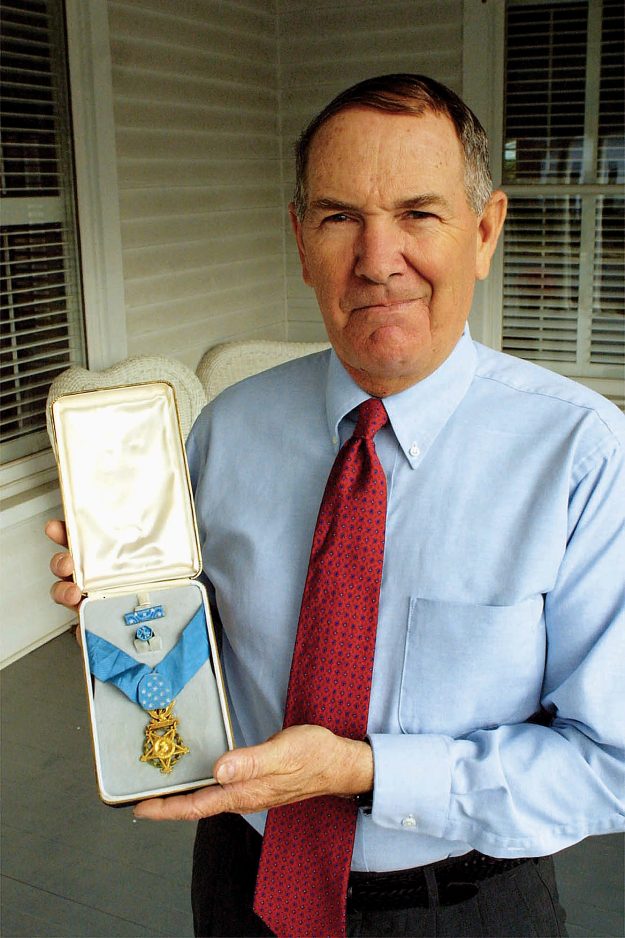
Joe Marm displays his Congressional Medal of Honor in 2002 at his home in Fremont, N.C.
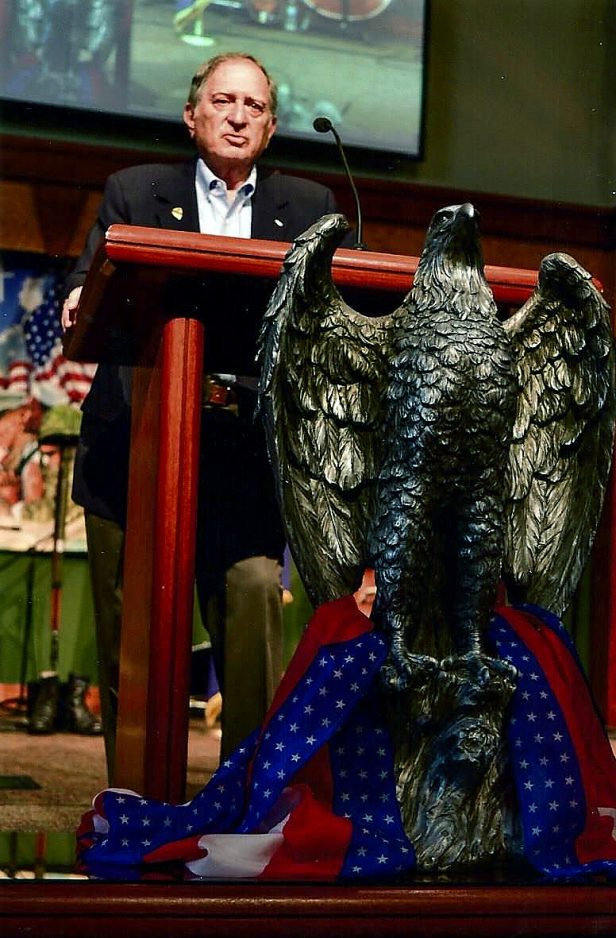
Retired Army Col. Ramon “Tony” Nadal will speak Monday at Washington & Jefferson College about the Battle of Ia Drang in the Vietnam War.
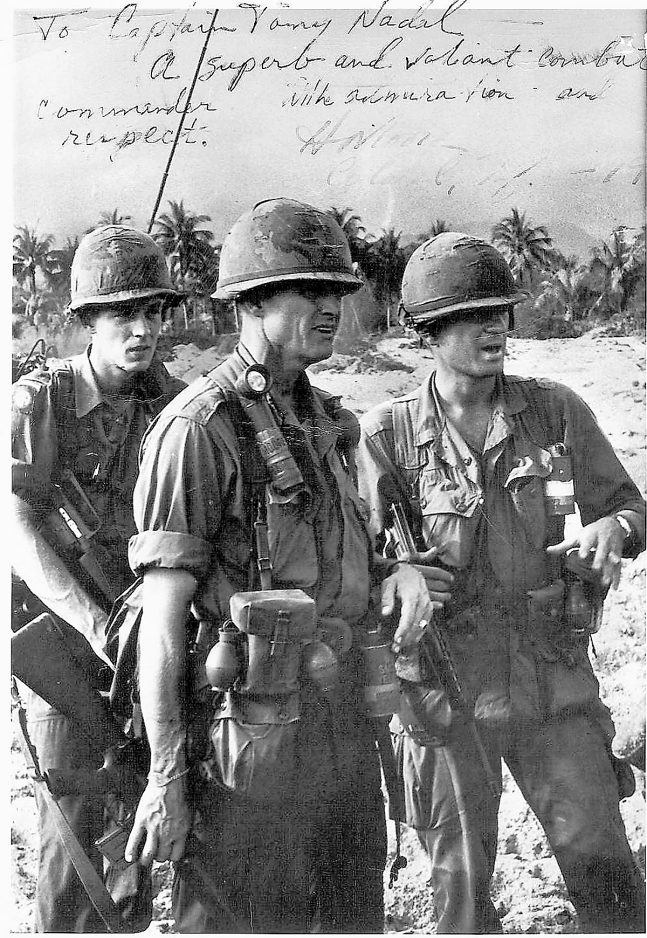
From left, Spec. Robert Ouellette, Col. Harold G. Moore and then-Capt. Ramon “Tony” Nadal are shown in 1965 in Bong Son, Vietnam. The inscription on the photo reads, “To Captain Tony Nadal, a superb and valiant combat commander, with admiration and respect - Col. H. Moore 1965.”
With a U.S platoon trapped by enemy fire on a grassy hillside in Vietnam, troop leader Walter Joseph Marm Jr. waved his arm as a signal for one of his soldiers to sprint ahead and toss a grenade into a line of enemy fire that was holding up the rescue plan.
That soldier, instead, tossed his grenade from where he was positioned, and it did nothing to silence the North Vietnamese machine gun assault in what became the first major battle of the Vietnam War 50 years ago this weekend, Marm said.
“In the heat of battle, rather than waste any more time, I decided to do it myself,” said the Washington native, whose commander at the time will speak about the war Monday at Washington & Jefferson College.
The commander of the Battle of Ia Drang, Ramon “Tony” Nadal, went on to nominate Marm for the Congressional Medal of Honor for his heroics Nov. 14, 1965, that forced back the enemy and allowed American troops to continue their duties that day.
“It turned out to be the survival of the fittest,” said Nadal, 79, of Williamsburg, Va.
“It very quickly turned into who was going to live and who was going to die,” said Nadal, who arrived at W&J today as part of a class on the war taught by physics professor William Sheers.
“It was a difficult battle, yet in the end both sides said they won,” Sheers said.
The U.S. mission in the Ia Drang River Valley was to hunt down and kill communist North Vietnamese forces near Pleiku and Vietnam’s border with Cambodia. U.S. troops soon found themselves greatly outnumbered by the enemy, and they would rely on air artillery as their savior before the four-day battle ended.
“We had overwhelming firepower,” Nadal said.
The story of the battle was retold in the 2002 movie, “We Were Soldiers,” starring Mel Gibson. The movie was based on the 1992 bestseller “We Were Soldiers Once … and Young: Ia Drang – the Battle That Changed the War in Vietnam,” by Hal Moore and Joseph L. Galloway.
The battle was known for setting the tone for nearly every hostile engagement that followed in the war, with U.S. forces facing a seemingly never-ending flow of enemy forces, who had the ability to retreat to hiding places that were difficult to find. North Vietnam also learned a great lesson from Ia Drang – stay close to the battle line, deterring U.S. air and napalm strikes because they would have put American troops in great danger of friendly fire.
From that day forward, enemy soldiers stayed close enough to U.S. soldiers during firefights that they could almost “grab your belt buckle,” said Marm, 73, of Fremont, N.C., who made the U.S. Army his career, retiring in 1995.
Marm was evacuated from Ia Drang on the first day of battle after he was shot through the jaw by an enemy soldier following his heroics that earned him the nation’s highest military award.
The medal honors his “indomitable courage” for exposing himself to draw fire from the machine gun in order to find its location. He unsuccessfully attempted to destroy the machine gun location with an antitank weapon before rushing ahead and hurling grenades at the eight soldiers who were firing the gun.
Marm, who volunteered to return to Vietnam after his wounds healed, learned he was awarded the Medal from Honor when a reporter called him for a reaction to the news.
“I’m very fortunate to be a living recipient. Most of them are given posthumously,” said Marm, the only living Pennsylvania native who still wears one of the medals.
“Joe was one of my platoon leaders,” Nadal said. “He’s humble.”
Nadal said he hopes to deliver a message at W&J that all Vietnam War veterans did not return home addicted to drugs, as many of them went on to lead successful lives.
He will speak at 7 p.m. Monday in Room 100 of the Dieter-Porter Life Sciences Building. The event is a joint effort of W&J’s first-year seminar program and its history department, and sponsored by a grant from the National Endowment for the Humanities. Nadal’s presentation is free and open to the public.