

Vanishing ink Removing unwanted tattoos is a growth industry
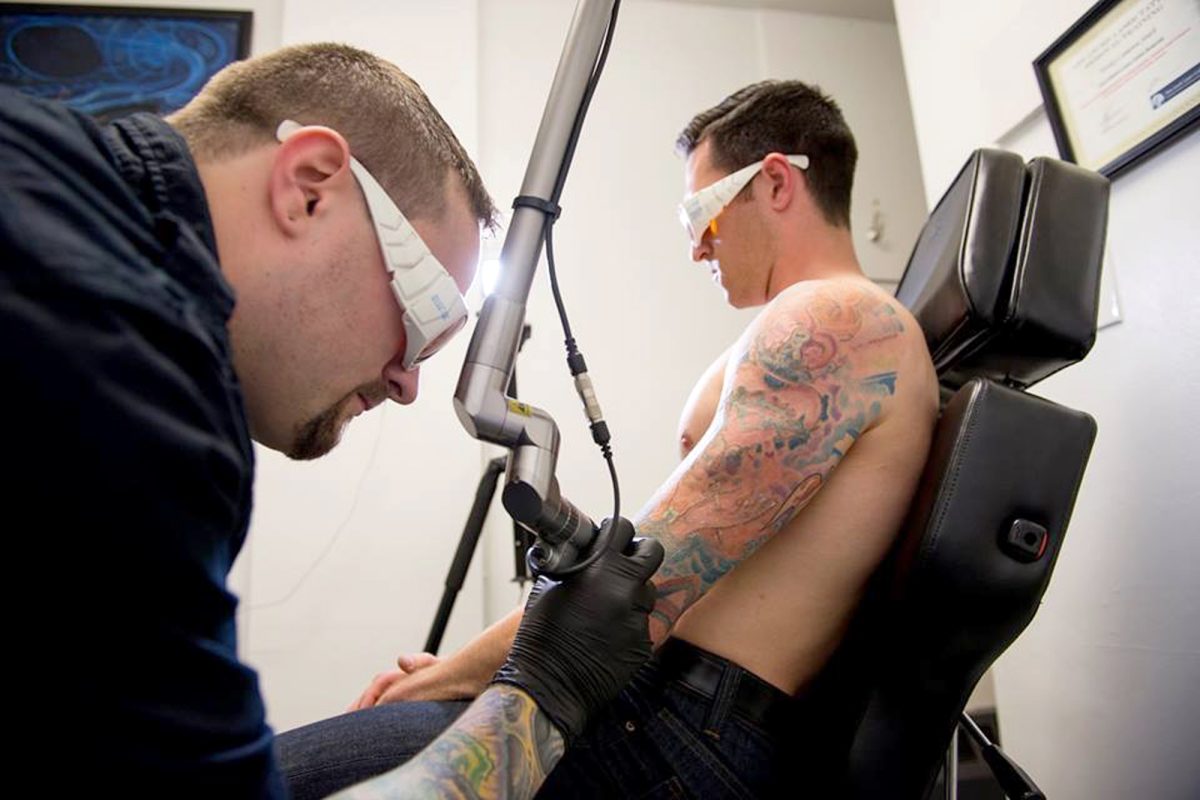
Wes South works with the laser to remove a tattoo from a client at Disappearing Ink in Penn Hills.

Wes South is the lead technician for Disappearing Ink, a laser tattoo removal company. South graduated from New Look Laser College in Houston, Texas, and then started working for a medical spa before starting his own business.
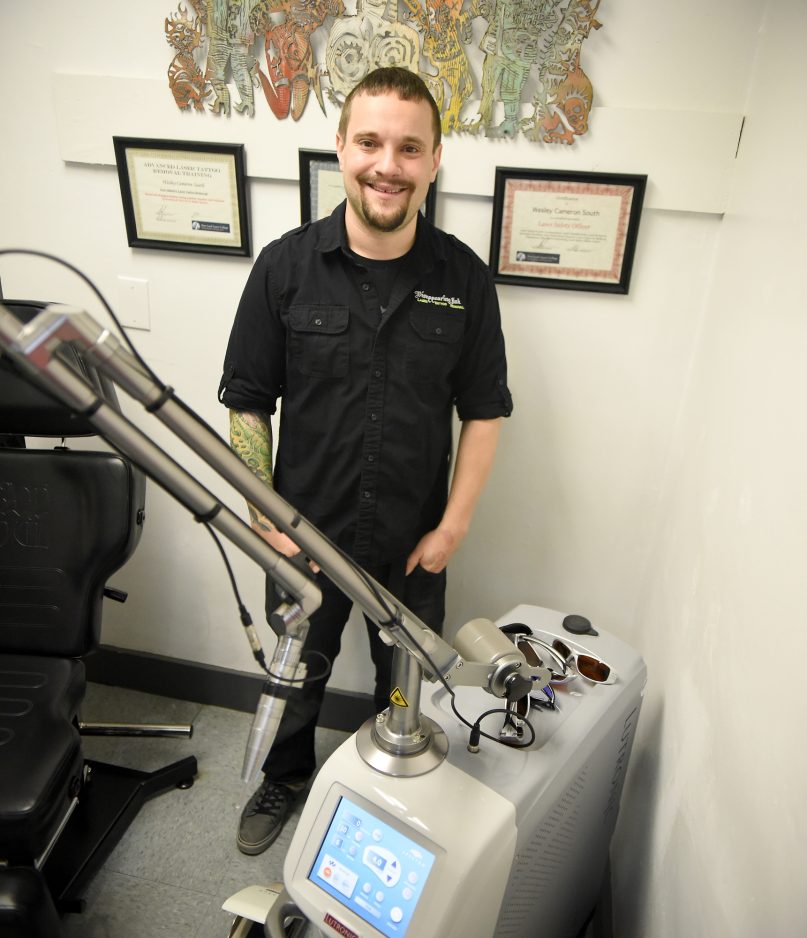
Wes South operates a Lutronic Spectra laser to remove tattoos. The laser breaks down the pigment from tattoos allowing the ink to be flushed from the body.
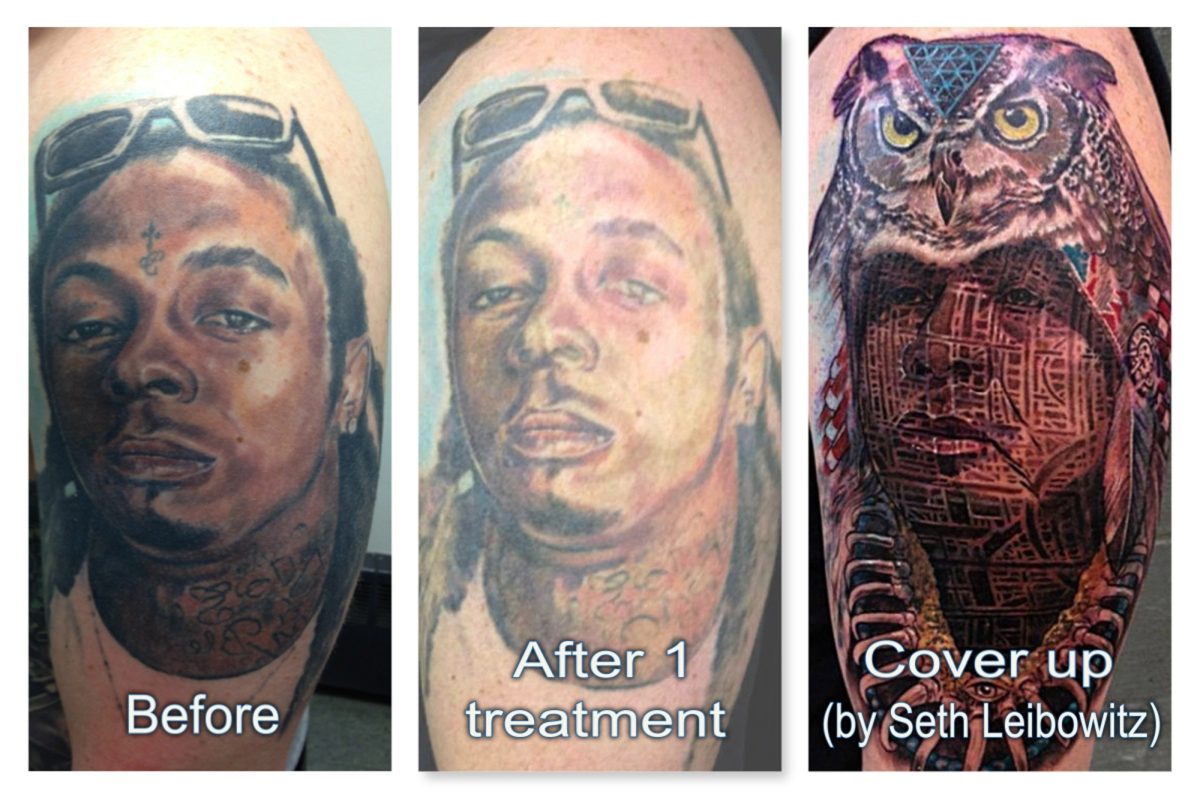
An example of a cover-up option where the tatoo is partially removed and then covered up by new tattoo artwork
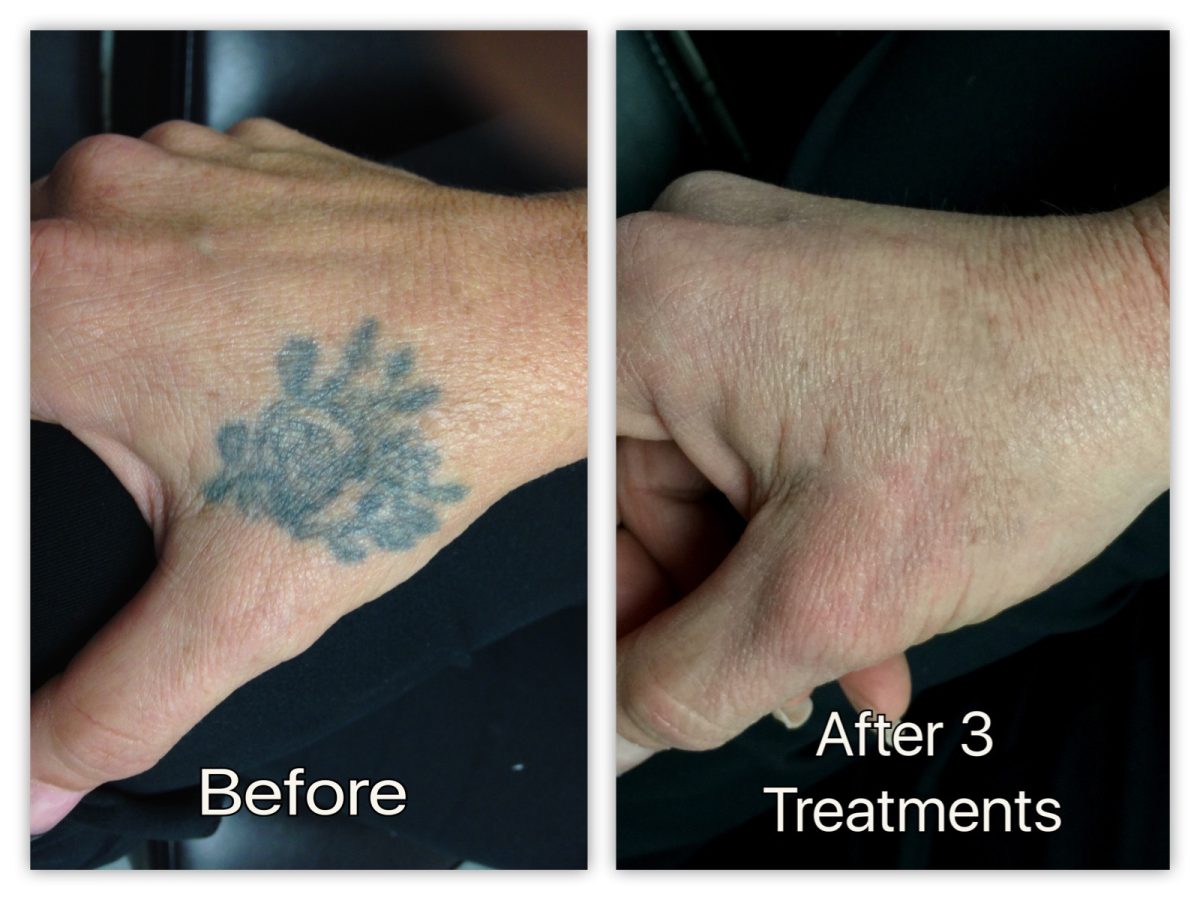
An example of tattoo removal after three laser treatments
PITTSBURGH – As long as there have been buyers, there has been buyer’s remorse.
And that remorse can be particularly acute when it’s engraved on your arm, leg or any other part of your body. It’s there to remind you all day, every day.
That’s the thing about tattoos. What can seem cool, fun, fashionable or rebellious at age 18 can seem dated or wildly inappropriate by the time you’re 28 and wanting to leap on the corporate fast track, or 38 when you’re feeding a mortgage and a preschooler and hoping for a promotion.
Then, yes, there are the tattoos pledging everlasting love to someone whose phone number you’ve long forgotten, or the band whose compact discs have been vanquished to the thrift store or whose songs have been deleted from an iPod.
The explosion in the number of Americans getting tattoos – it’s estimated 20 percent of us now have them – has fueled a corresponding demand to get some of those tattoos removed. While not yet as ubiquitous as tattoo shops, tattoo removal emporiums are starting to turn up alongside them, ready to wipe unwanted tattoos from the epidermis and into memory.
The American Society for Dermatologic Surgery reported its members performed about 96,000 tattoo removals in 2013, and that was close to a 50 percent increase over the year before.
“Even from day to day or year to year, people change,” said Jamie Barnes, general manager for Invisible Ink, a tattoo removal store in Robinson Township, Allegheny County. She added that there’s “a huge void” in the marketplace for tattoo removal outlets. A burgeoning chain that also has stores in St. Louis, Minneapolis and Richmond, Va., Invisible Ink is following a blueprint that will see it add five new stores per year across the country for the forseeable future.
Because the creation of a tattoo involves injecting ink beneath the surface of the skin, removing tattoos used to involve skin being more or less sanded away, the application of acid that removes layers of skin or even skin grafts. Some of these treatments tended to be expensive and more than a little disagreeable. Now, getting a tattoo removed is typically done with lasers that zap away at an unwanted tattoo and break it up. Once the tattoo is shattered into small chunks, the ink is absorbed into the body and flushed away. As more of the ink is soaked up by the body, the more the tattoo fades away.
There’s a school in Houston, Texas, that has been established in order to teach the fundamentals of removing tattoos utilizing laser technology. According to its website, New Look Laser College, which claims it offers the first tattoo removal training program in the world, was established in 2007 and offers training on how to master the lasers that can erase tattoos. While no one at New Look Laser College responded to a phone call seeking comment, the school offers three levels of certification, has a curriculum that explores tattoo assessment, laser safety, clinic operation and marketing.
One of its graduates is Wes South, the proprietor of Disappearing Ink, a tattoo removal store in Penn Hills. Situated within a building that also houses a tattoo studio, the 30-year-old South said he has removed tattoos over the last six years or so from individuals who thought it would help their job prospects or who wanted to join the military and needed to comply with restrictive tattoo policies (earlier this year, the U.S. Army relaxed its tattoo requirements).
Many names have been removed after relationships have gone awry, along with “wedding bands” that were still tattooed onto ring fingers after the divorce papers arrived.
The most memorable tattoo South has ever cleared away was one depicting a can of Bud Light that one man got during a stint in jail in exchange for two packs of cigarettes. Perhaps the most ironic tattoo South ever removed was one that simply stated, “No Regrets.” He takes customers both on a walk-in basis and by appointment, and has had customers from out of state come to his store.
His own arms covered in tattoos, South said that he also has had some removed. He got rid of some thanks to his own second thoughts, while others he did away with so he could replace them with fresh tattoos. He saw his own entry into the tattoo removal business as a way to nurture his own interest in tattoos while carving out his own niche.
“I love the art behind it,” South said on a recent afternoon before he opened his doors for the day.
Using your body as a canvas costs a few bucks, and getting the canvas cleared can cost even more. Smaller tattoos can typically be erased in about one, $100 treatment, South said, while larger ones can demand several visits and even more of an expenditure. This underscores the importance of being certain you want a tattoo before you get it, South said.
He also believes the cost of the equipment is the paramount reason why there are not as many businesses that, at least right now, handle tattoo removal. The Lutronic Spectra laser he uses costs about $100,000, and that’s aside from the training and certification needed to operate it.
Another reason to think long and hard before you get a tattoo: the discomfort. While perhaps not as nasty as older methods of tattoo removal, getting a tattoo removed via laser technology is not unlike having a rubber band repeatedly snapped against the skin, South said.
“It definitely stings,” South said. “The good thing about it is that it’s very, very quick.”
And, it could be argued, the transitory sting of the laser is perhaps less painful than the perpetual sting of seeing an old flame’s name tattooed to your arm.