

Taking stand against heroin
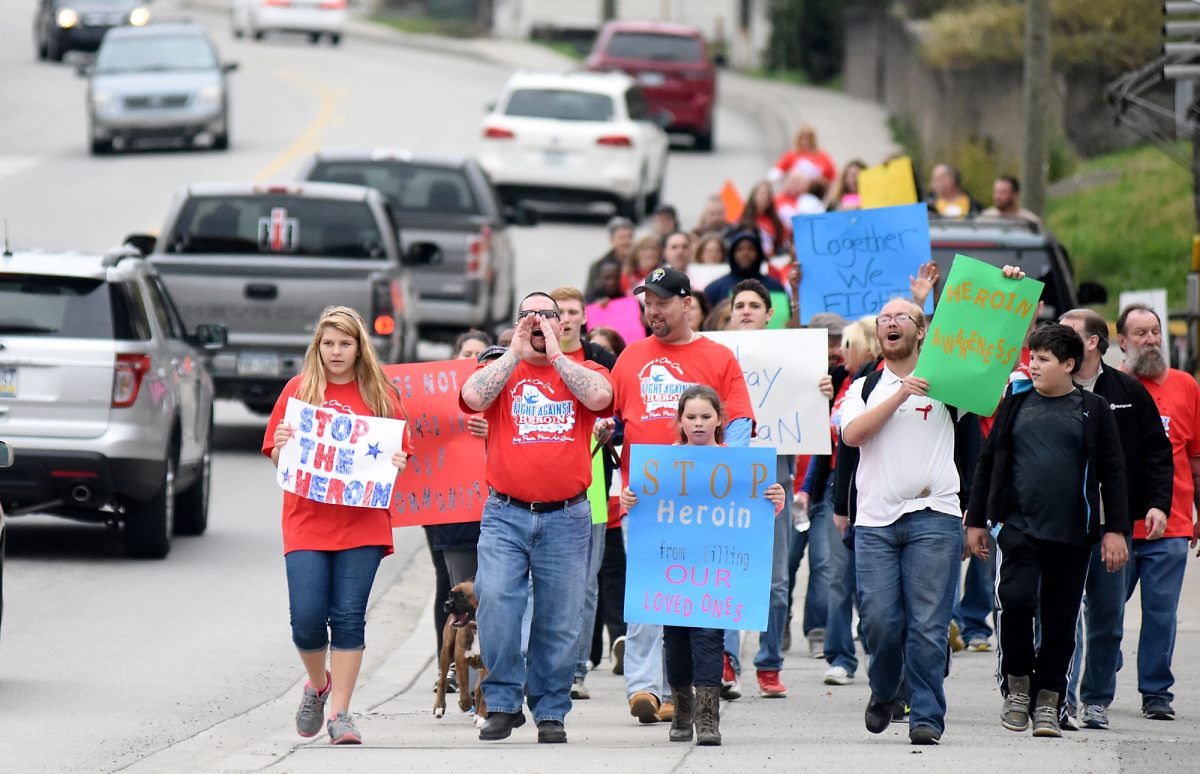
Participants in the Fight Against Heroin march along West Chestnut Street in Washington on Saturday. A group gathered at the Eighth Ward playground to listen to speakers talk about how heroin affected their lives.
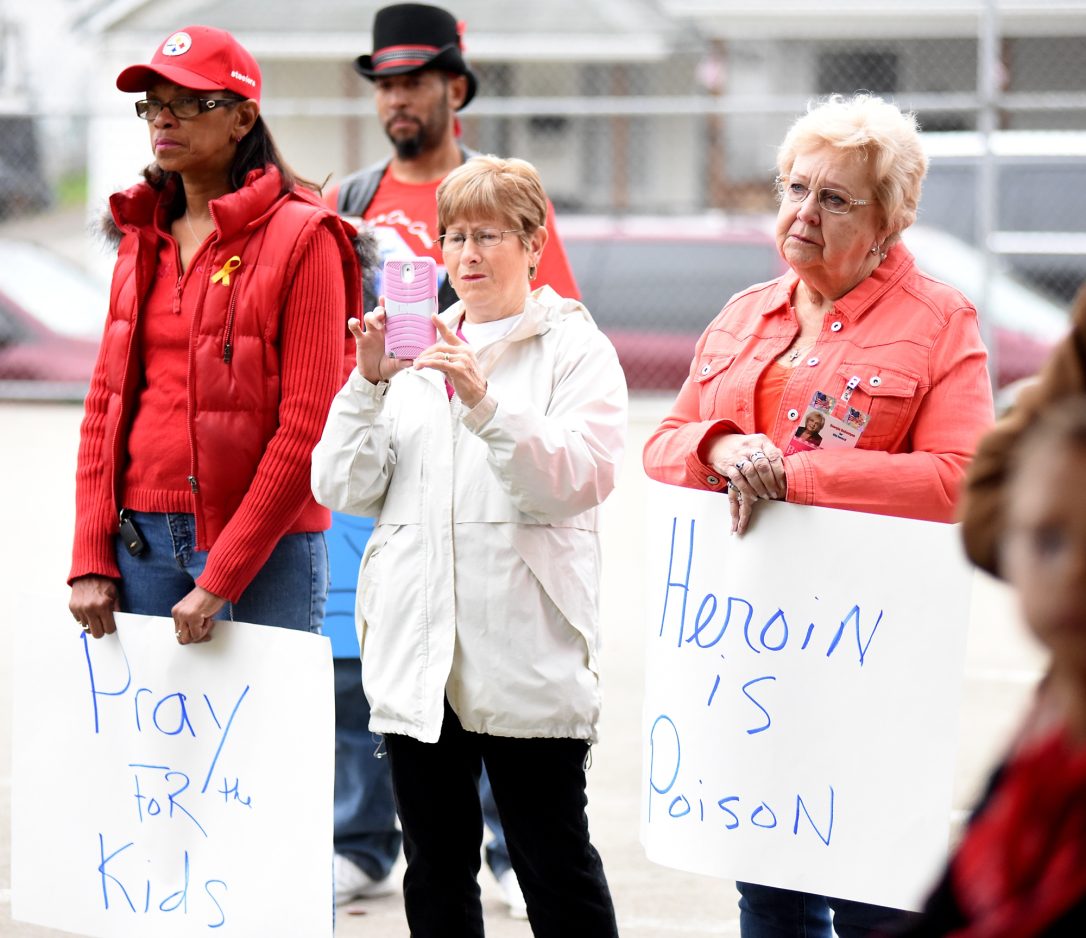
The Fight against Heroin participants listen Saturday to prayers, singing and stories about heroin’s affect on people’s lives.
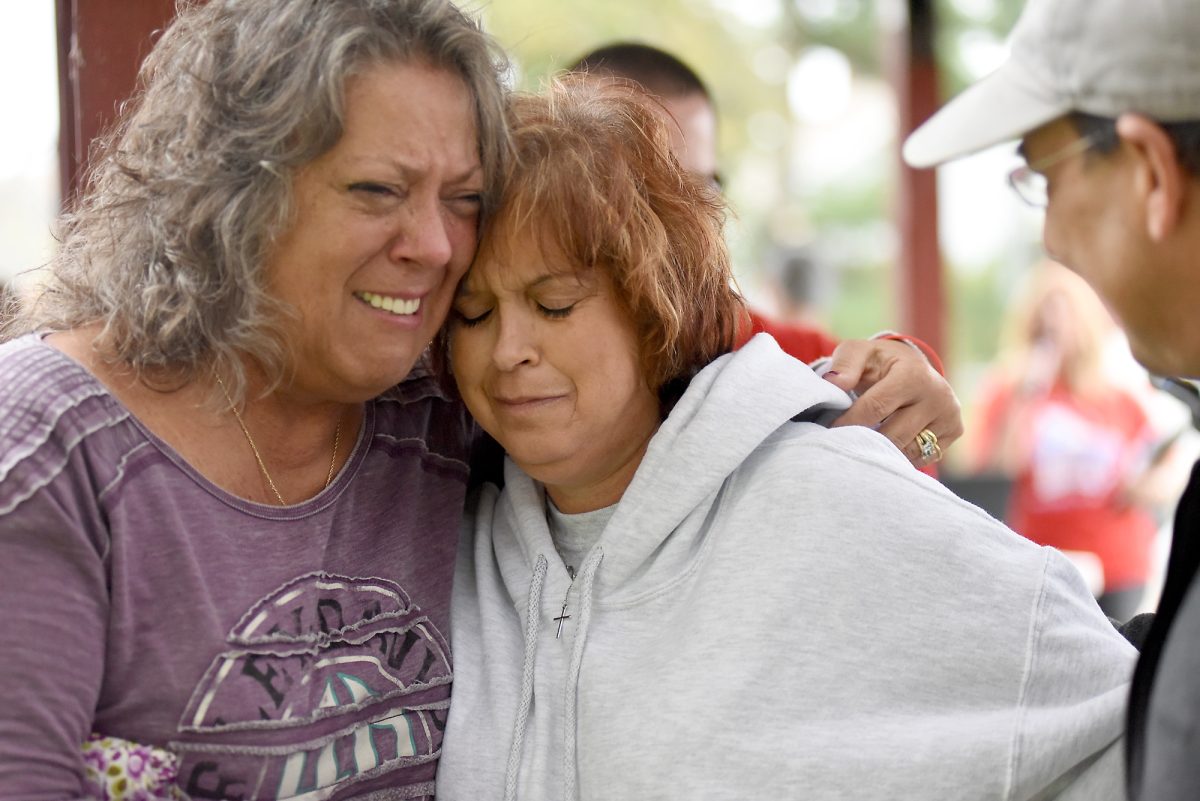
Denise Griffith comforts her friend, Kathy Guffey, Saturday after Guffey shared her personal story about losing two nephews to heroin addiction problems.
“I didn’t have a wake-up call until I was a literal train wreck,” Megan Moore said. She was recalling how she woke up pinned beneath a train after taking more than two dozen antidepressants following using what she thought was heroin. It was methamphetamine laced with PCP, and she was trying to “come down from two days of no sleep and insanity.”
Moore recounted her tumultuous journey of addiction Saturday before a supportive crowd in Washington’s West End as dozens prepared to march from the Eighth Ward playground to Washington High School to raise their voices and signs encouraging addicts to get help, and for children to heed their warnings.
Ten years ago, this was a great community,” said organizer Mike “M.J.” Markley, a native of the city’s Seventh Ward and a member of the group The Fight Against Heroin, “but this heroin – this poison – has brought it down.
“As you know, the first march we organized was stopped because there were overdoses happening right here where we stand. It turned out the people did live,” Markley said, explaining this was the second of many events to come. An event will be held in the city every other month until further notice.
“Right now, our focus is the kids. Any epidemic like this, it starts and stops with kids. It’s affecting everyone, but we need to address it when it has the ability to be stopped, period,” Markley said. Kids were marching, too.
“I was born and raised in West End, but now I’m petrified to let my kids run around this neighborhood,” said Bobbi Jo Novak, who was with her kids, ages 5, 11 and 15. Novak’s mother, Sally McKahan, said the drug activity changed the vibe of the neighborhood.
“I’ve been in my house for 33 years. And I’ve never seen it like this. There are so many strangers, so much foot traffic and house visits that last minutes. It’s gotten really bad in the past few months,” McKahan said. Though this family hadn’t been directly affected by drugs, plenty in attendance have – including Markley – who lost two friends to drugs.
Beth Vernau, a nurse at Greenbriar Treatment Center, was an addict who lost her 19-year-old son to drugs.
“My addiction became active in 2004. Up until that point, I was living the dream: married my high school sweetheart, three kids … then my husband died in November of a heart attack, as did my stepfather, and my dad was diagnosed with brain cancer. I turned to drugs to cope and ended up a patient at Greenbriar,” Vernau said. “I lost my son two years ago to addiction.”
“And they thought I would relapse because I became an addict because of a sudden death. I told myself, ‘No. I’m not making this mistake again.’ But I couldn’t do it without the support around me,” she said. “We need a smoother transition for people who overdose, go to the hospital and then back to their lives. … They want to use again. A regular person would say, ‘Ok. This is enough.’ That is not an addict’s brain.”