

Coalition tackles addiction
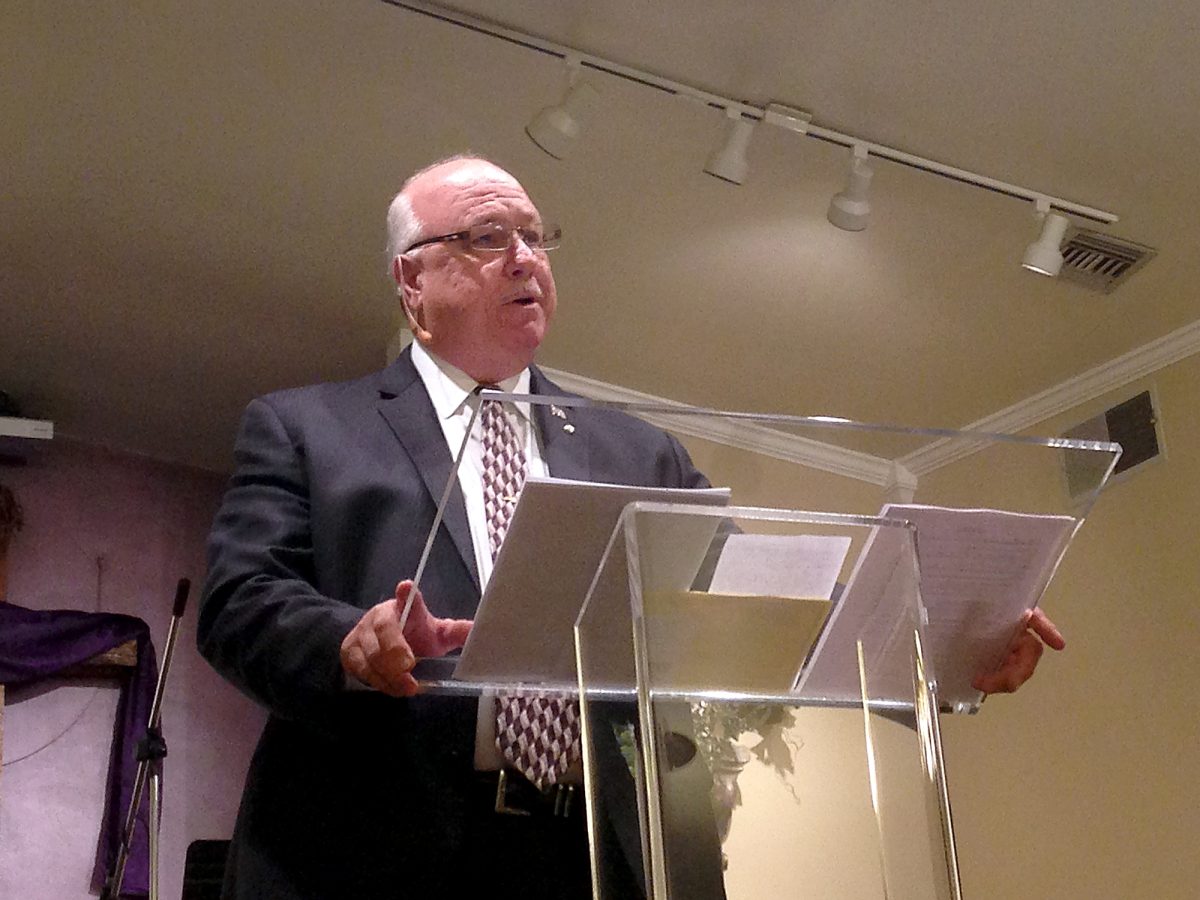
David Singer/Observer-Reporter Canonsburg Mayor Dave Rhome speaks Sunday at the pulpit at South Canonsburg Church, which he hopes to do at other regional churches as part of an effort to confront heroin addiction in faith communities.
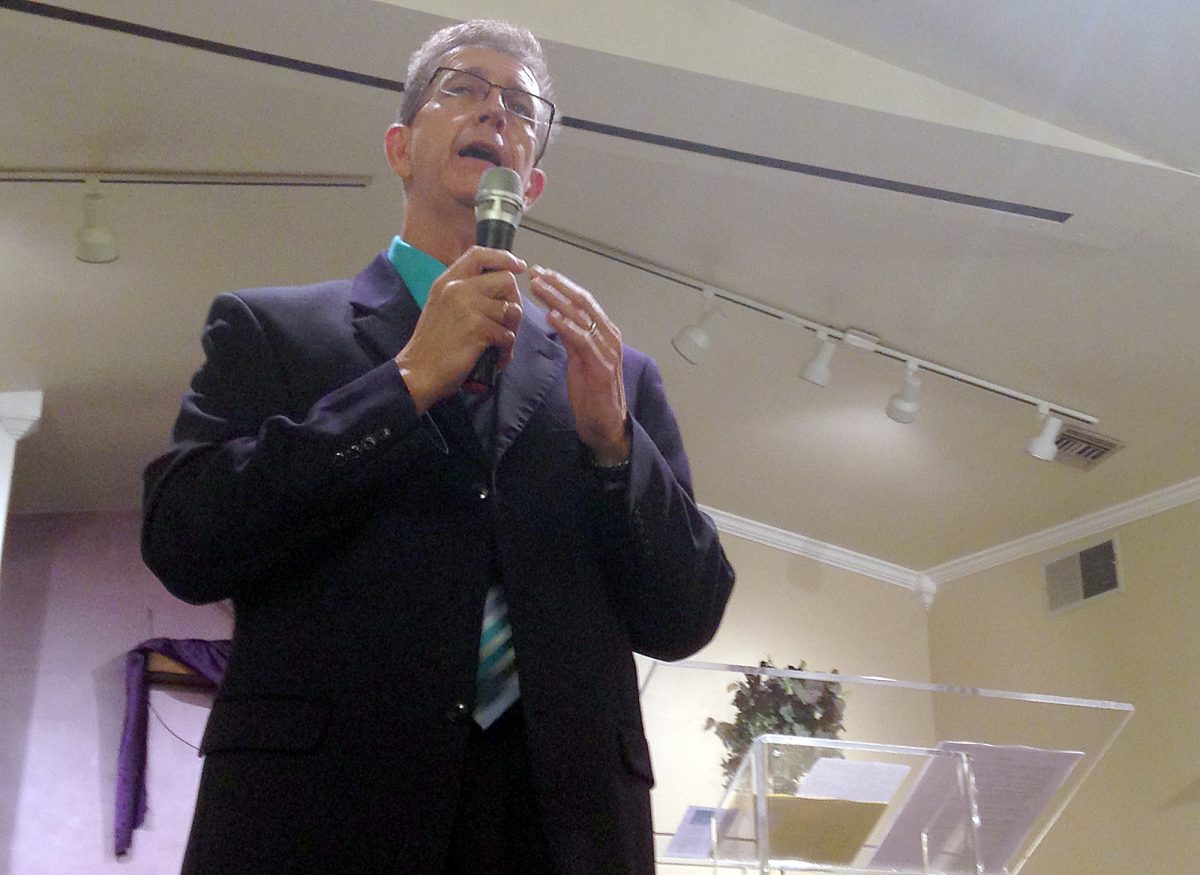
David Singer/Observer-Reporter Pastor Steven Parkhil of South Canonsburg Church adapted his Sunday sermon to touch on the themes of addiction and bondage and how to escape them.
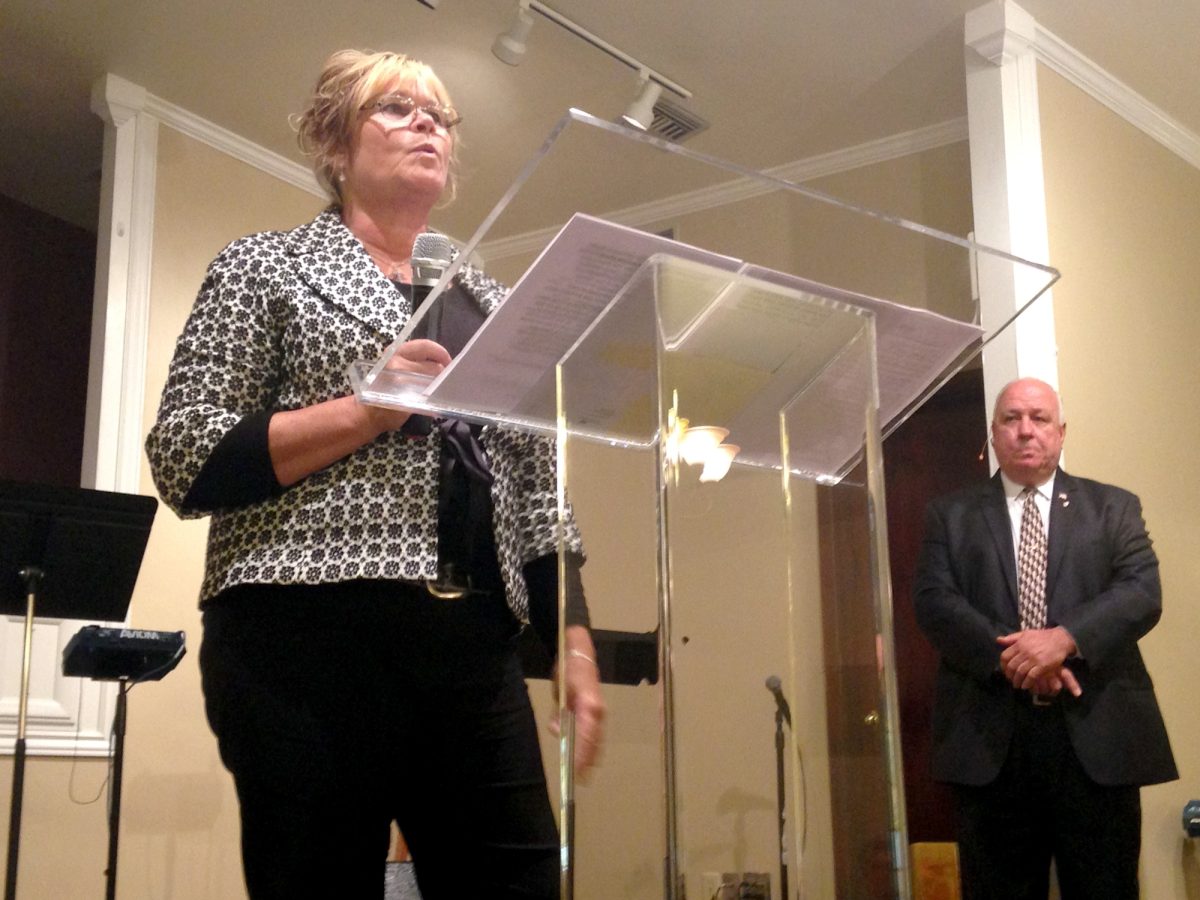
Sue Pryor tells her story of addiction during a service Sunday at South Canonsburg Church.
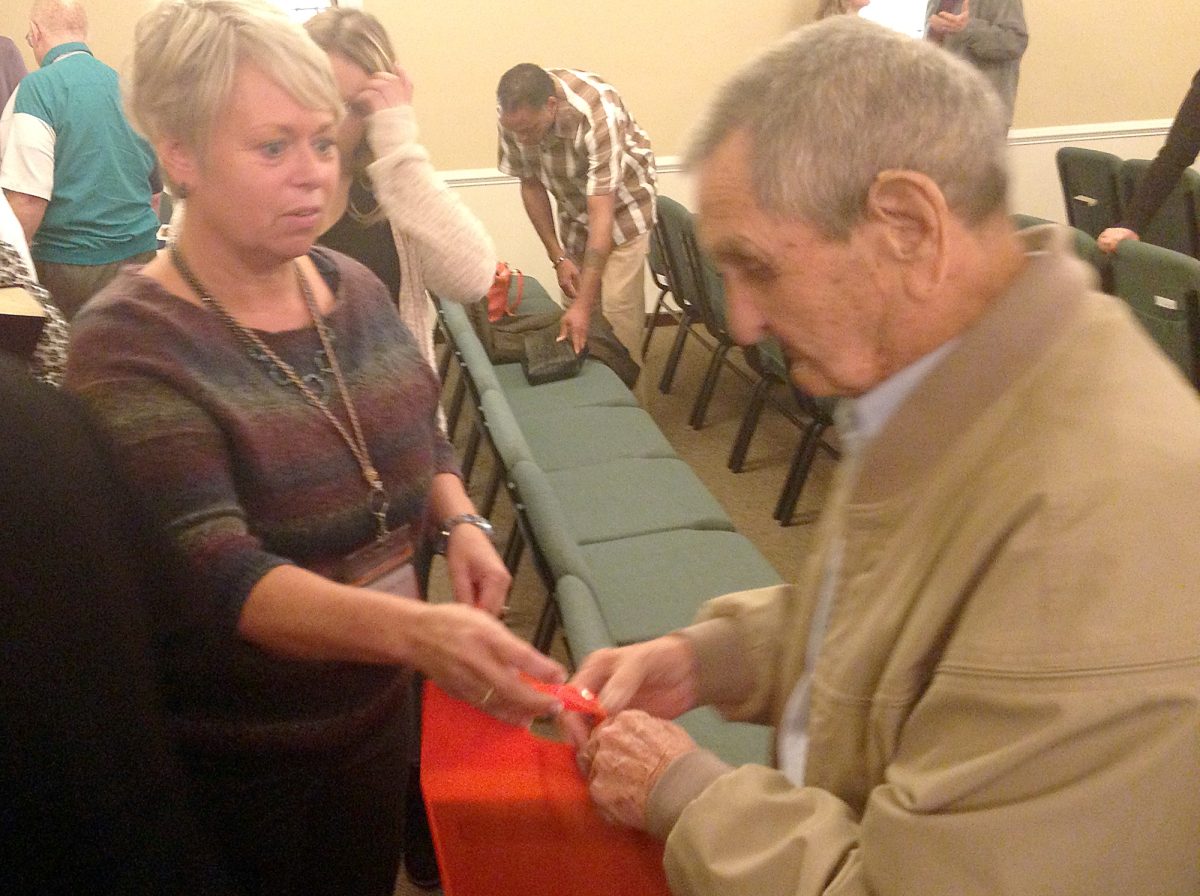
David Singer/Observer-Reporter Tammy Taylor, a prevention supervisor at Washington Drug and Alcohol Commission, passes out information packets following Sunday’s service at South Canonsburg Church.
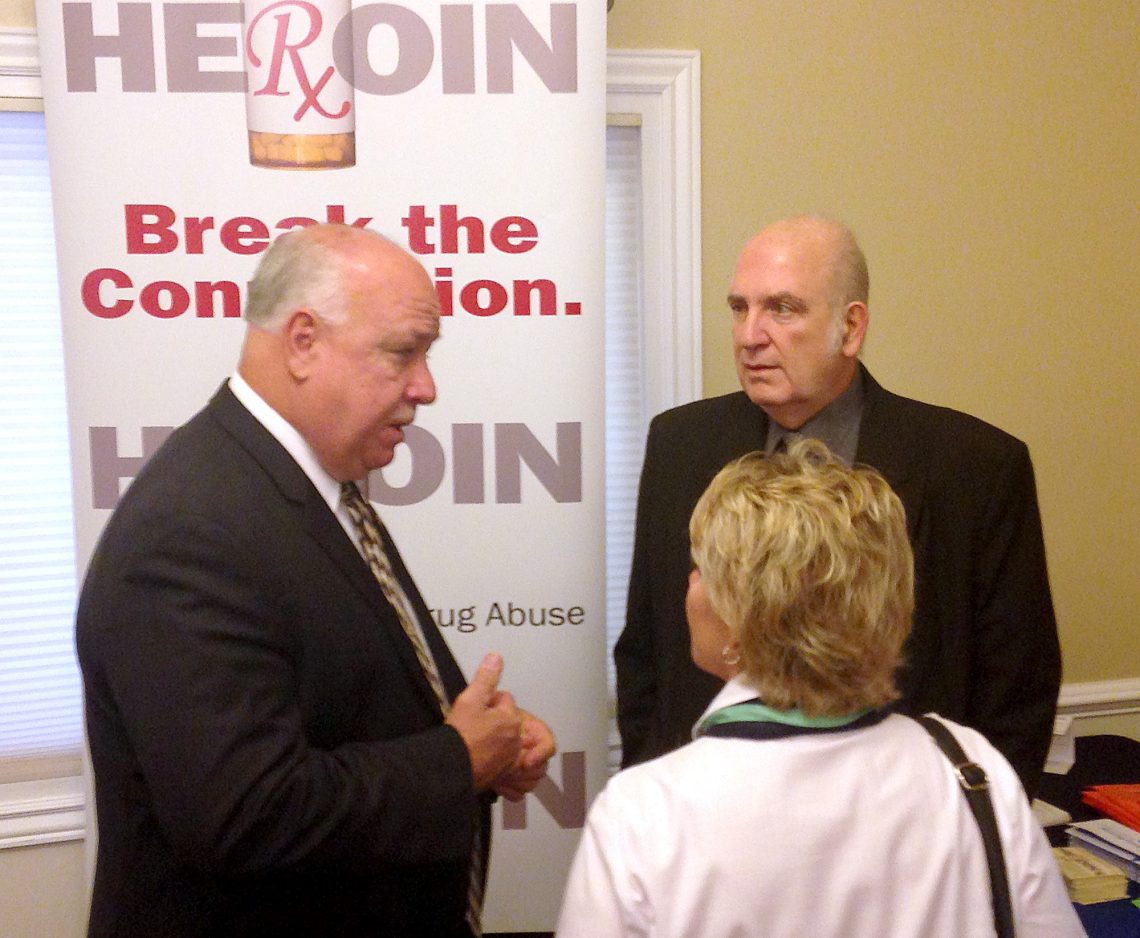
David Singer/Observer-Reporter Mayor Rhome and members of the Communities Moving Forward Coalition meet with South Canonsburg Church congregation members to help dispel stigma and offer resources for addicts.
CANONSBURG – Marches and rallies have taken heroin awareness to the streets, but now a regional anti-heroin group is bringing its message to the pulpit.
Unveiled after months of workshops, the Communities Moving Forward Coalition held its first program Sunday at South Canonsburg Church.
Canonsburg Mayor Dave Rhome hopes the initiative will catch on with other municipal government leaders. Rhome, Pastor Steve Parkhill and Sue Pryor, a recovering addict, collaborated on a joint sermon and testimonial that dominated the service.
“I’m grateful that I don’t wake up in the morning needing to stick something in my arm,” said Pryor, a Children and Youth Services counselor through the Washington Drug and Alcohol Commission.
Pryor said she became a counselor with CYS because she knows the feeling of having her children taken away and placed with another family member. Pryor’s turbulent journey of addiction started at 12 after suffering abuse and surviving a car accident that killed other members of her family.
“Every next drug felt like the comfortable drug. In 2000, I tried Oxycontin, and it’s like no other drug. It makes you fall in love with it,” she said. Over the next decade, she would have run-ins with the law and refused help even when she knew it was in her best interest. She overdosed, technically died, and was revived with Narcan, but still refused rehabilitation until she ultimately joined a help group in 2012.
Now sober, she explained why an addict often pushes away from family and friends.
“Drug users create an overabundance of seratonin in their brain, and it has nowhere to go. So your brain creates more receptors to receive the endorphins, and when the drug use stops, that’s what withdrawal is – all those receptors are now doubled, and crying out for that drug, and you feel like hell,” she said.
Pryor’s testimony was the centerpiece of the service, bookended by Rhome and Parkhill delivering messages touting the benefits of faith to fight addiction.
Pryor’s a believer, too.
“I wouldn’t be clean without a 12-step program, finding God. I get up every day to read my Bible. I pray and lean on God to help me through,” she said.
Rhome said the committee is looking for more people to join. The group meets at 1:30 p.m. the second Monday of each month at the Frank Sarris Public Library.
“How many of you grew up wanting to be an addict,” Rhome asked the audience.
“No one. And most studies we’re looking at show 55-65 are the at-risk group not many are thinking about – it’s seen a 700 percent increase in prescription drug overdoses,” Rhome said. He said police saved two people with Narcan nasal sprays since the department received the pens in May, and that other first responders have saved several others.
“And by those same statistics, we could estimate 70 percent of this audience has been touched by the effects of opioid drug use,” Rhome said.
Dennis Puskarich, of Canonsburg, said a high school friend – whom he declined to identify – was actually the one to invite him to the congregation more than two decades ago. But he became addicted to heroin.
“I haven’t talked to him for about two years. He struggled up and down and unfortunately embraced the lifestyle over trying to get away from it,” Puskarich said. “Two years ago, I brought him on a construction job site and he ended up trying to sell heroin. I still pray for him, but I don’t know where he is.”
Pastor Parkhill closed the service adapting scripture from Romans and the writings of Peter.
“Just like each body part has a purpose, we each have a function in the eyes of God. We must use our talents and our anointed wisdom in our calling to serve God, and he does not want us to walk in bondage,” Parkhill said.
“Drugs – or anything outside of ourselves that dictates our lives – we then are living as slaves in bondage. These controlling habits must be replaced by good ones,” he said.
Those interested in helping the coalition are asked to call 1-800-247-8379, or emailing CMF@wdacinc.org
Coalition members said they are setting up future programs with interested congregations. The coalition is also trying to work with Canonsburg Hospital to ensure continuity of care and supervision for those who overdose and are released without guidance or help. Those to-be-determined measures, however, would have to work around health care privacy laws.
“I’m looking to other mayors, other elected officials. We can’t just sit and say there’s a problem. We need them to get up from behind their desks and get in front of people on this issue. Change can happen,” Rhome said.