

Schools scrap over costs, benefits of cyber programs
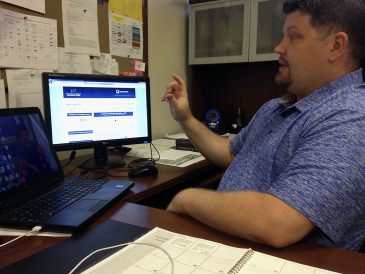
Washington High School was paying close to a million dollars for cyberschool education in 2012. Principal Paul Kostelnik pushed the district to host its own cyber program at an initial annual savings of $258,000, leading to a four-year reduction of $1.4 million in costs.
“Larger districts can eat up that money, but districts like ours, that is lifeblood cash flow that can be used to – as we did – hire a career coaching counselor and improve our media and fabrication labs,” Kostelnik said. The district pays nearly $11,000 for an average cyber charter student in high school – like most in the region – while it pays $1,000 for each in-house cyber student, according to Superintendent Roberta DiLorenzo.
A report released Thursday by the Pennsylvania School Boards Association found charter school tuition has increased 139 percent since 2007, while enrollment increased 97 percent. On average, districts spend 6 percent of total expenditures on administration, while charters spend 13 percent. And cyber charters spend significantly more on advertising than brick-and-mortar charters, with five cyber programs paying a collective $3.7 million, compared to $591,000 by 129 brick-and-mortar charters.
State Rep. Mike Reese, R-Somerset, has been pushing House Bill 530 to reform public education, and reining in cyber charter costs is among the proposed amendments to education laws passed in 1949.
“The bill calls for a funding commission to determine what the actual costs for cyber are in the commonwealth. … It would establish a standardized funding formula. I support school choice … but brick-and-mortar schools have costs and accountability that cyber charters don’t have to deal with,” Reese said.
Wash High’s move to partner with Avella Area and Western Beaver school districts on an in-house cyberschool program was, in part, an attempt to increase accountability for students’ grades, attendance and prospects for a quality education.
“The problem with cyber charters is that kids come and go. And if they do ‘stay,’ they don’t have to pick up the phone or answer emails. … With our in-house program, it’s a way to keep them accountable. We had kids who would come back from an outside program – they’re 17, looking to graduate, and they’re not beyond a ninth-grade level. And if they drop out, that dropout record comes back on us,” Kostelnik said.
Accountability effectively lands with the district, despite the fact responsibility for educating the student is contracted through any one of the nine charters Washington coordinates with. And privacy provisions in the Family Educational Rights and Privacy Act can prevent administrators from helping struggling students.
“We had one student come back to us with a 0.95 GPA. We were paying $9,000, and there was no accountability for a year. I called up asking, ‘What is going on with this student? Perfect attendance but they had straight Fs.’ I’ve had to take pictures of ‘For Sale’ signs outside homes to convince these charters to take us off their billing list because the student’s family moved away,” Kostelnik said.
But not everything is in dire straits. Despite many administrators’ complaints about the costs not matching the benefits of a brick-and-mortar public school, principals and superintendents tout cyber as the wave of the future when it comes to multifaceted education.
“Students can try out foreign languages before committing to a full two- or three-year program,” said Scott Martin, superintendent at Bentworth, which has its own internal cyber program, as well.
“For the disciplined child, because they travel, or have a career path set already, it’s ideal. But the majority of students who choose to go with it are doing so because the family doesn’t feel accountable to the district, or a struggle with behavior or attendance,” said Bentworth Assistant Superintendent George Lammay, who supervises the in-house cyber program.
For kids with behavior problems, cyber school can be a last chance.
“Before, if a kid was expelled, that was it. Now, if a kid’s expelled – here’s your laptop,” Kostelnik said.
But more than anything, Kostelnik said, the quality of education isn’t assured with a cyber charter.
“With algebra or a math component online, a kid isn’t going to be motivated to email a teacher to figure out why they can’t solve the middle portion of an equation. They’re just going to look up the answer and fill it out and move on,” Kostelnik said.
In Charleroi School District, Superintendent Ed Zelich said the district has recorded savings with its in-house program, too. “It costs us approximately $5,000 to educate a student in our CSI cyberschool. That cost is doubled if a student attends a charter,” Zelich said.
Superintendent Brian Uplinger said Central Greene School District pays $11,000 for outside cyber students, but he noted there is sometimes a cost for which there is no accounting.
“There is, unfortunately, a lack of social appropriateness when they come back to us (from cyber) or come from private online schooling. They’re often behind our traditional students,” Uplinger said.
Burgettstown Superintendent James Walsh said that’s one of the most important aspects of public school.
“Whether it’s sports, clubs, common schedules or even buses or the lunchroom – kids need to be social with age-alike peers to develop social skills they will carry into adulthood. … I admit the social scene can be very caustic (with bullying and drama), yet we’d love to have cyber kids come on campus every day, even if it were just for a sports team or club or elective class,” Walsh said.
Statewide enrollment for cyber students was 1.74 million in 2015, according to the State Department of Education.