

Homeless students get more attention under new education law
BUFFALO, N.Y. – School administrators this year are being pushed to get better at recognizing homeless students – those “hidden” in other people’s homes or whose families are staying in places like campgrounds, motels and cars – and to keep them in school even if they’re missing paperwork or move around.
The count of homeless students enrolled in American schools, now more than 1.3 million, is nearly double what it was a decade ago. The number is expected to grow – or rather, become more accurate – as schools relax enrollment barriers and strengthen the role of district liaisons charged with identifying and connecting homeless students with services.
The provisions take effect Oct. 1 under an expansion of homeless services in a new education law, which also will require states to break out achievement and graduation rates among the homeless. Homeless children are especially vulnerable to chronic absence and poor grades.
“I think there are many, many more of them than any one is counting,” said Kris Amundson, a former homeless shelter executive who heads the National Association of State Boards of Education.
Barbara Duffield, director of policy and programs for the National Association for the Education of Homeless Children and Youth, attributes the rise in student homelessness to lingering effects from the recession, the opioid crisis and better reporting.
Tyren Jones managed to find places to stay after his grandmother would no longer let him stay in her Buffalo apartment – a crack house, his godmother’s home, with a friend – what’s called “couch surfing.”
With no birth certificate or other records, Jones said, it was impossible to get a job. But without a legal guardian – his father is in prison, his mother out of state – he couldn’t get back into school, either, after a suspension. He stumbled upon a youth shelter, which got him placed in a suburban Buffalo homeless residence and helped navigate the road back to school. He begins his senior year this month.
“Eventually, we will see an increase in the number of homeless students who graduate and go on to college,” Duffield said, “because there are many, many provisions about making school more stable, getting credit for work you’ve done, having access to early childhood programs.”
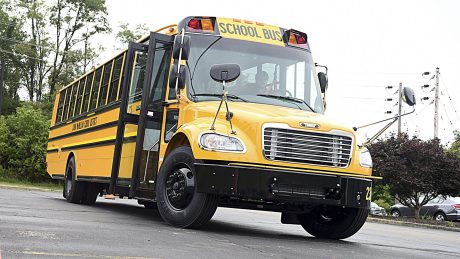
Administrators expect transportation to pose the biggest financial challenge under the changes as more families become aware of the ability to keep students in their home schools. Amundson said educators are hoping for flexibility to shift funding as needed that may be earmarked for other programs.
The 2017 budget proposes a 21 percent increase for homeless education, according to the U.S. Education Department.