

Readers easily recognize Bucktown in Mystery Photo
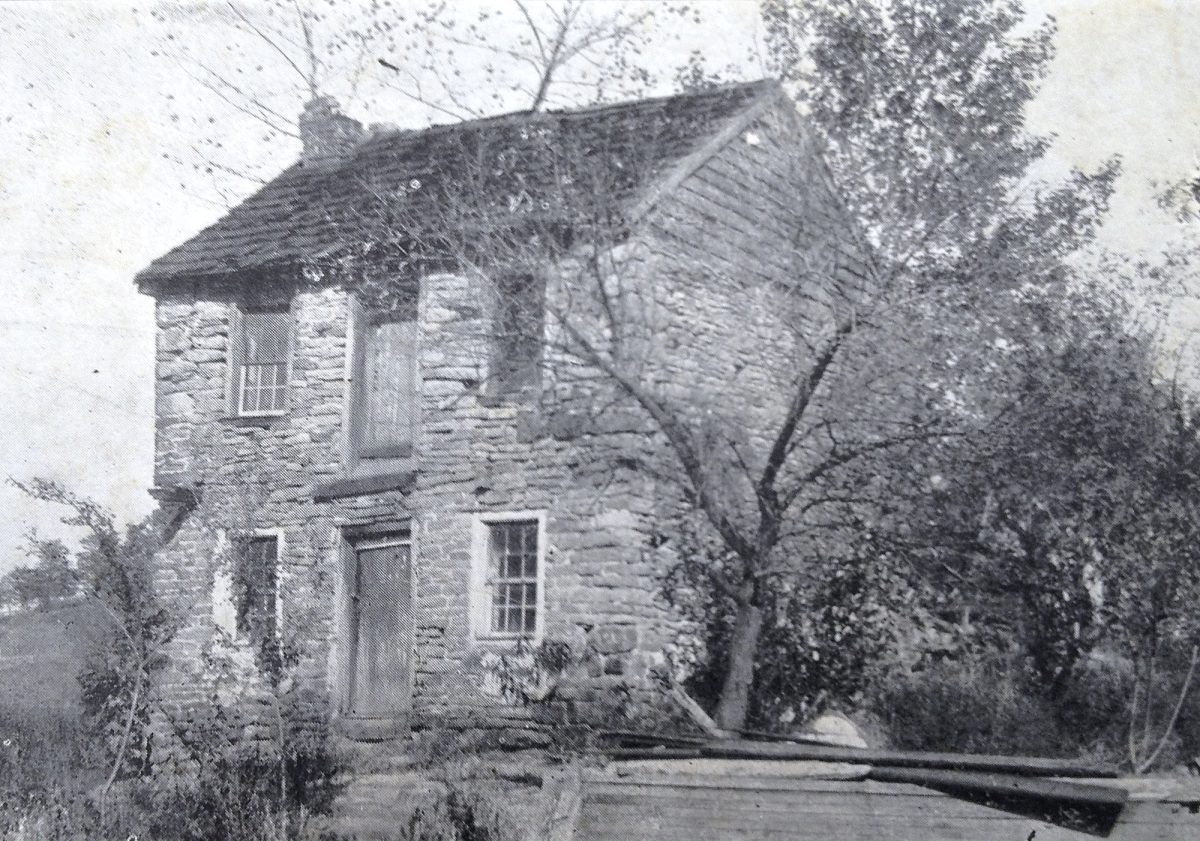
Another view of the Capt. James Seals house circa 1920

This view of West Waynesburg, or Bucktown, was photographed circa 1870 and shows the stone farmhouse of Capt. James Seals in the foreground.
This pastoral view of farmland in winter could have been taken anywhere, and we were not optimistic that our readers would be helpful in determining the location.
Oh, were we wrong.
We received more than a dozen emails and just as many phone calls from readers who recognized Buchanan Hill in the background and the stone farmhouse of Capt. James Seals in the foreground.
Greene County Judge Farley Toothman compared the old photograph (made in about 1870 and included in the archives of the Greene County Historical Society) with the West Waynesburg, or Bucktown (Buch-town, short for Buchanan Town) of today:
”The picture is taken from the knoll in Waynesburg, about where the former welfare office is across the street from the Baptist Church, looking west. The creek is Ten Mile Creek. The stone house to the right is typical of the few original houses that had been built in the area. …” The covered bridge “was later replaced with a metal bridge, which is still there, but all grown over, and the road/bridge were abandoned when Emerald Mine was built … The land to the left of the creek is now Emerald Mine. The land to the right of the creek in the foreground is Levine’s junkyard. On down would be Rohanna’s and Wayne Lumber and what is now the Stockyard. First was the Waynesburg Tin Mill. The road at the right is Route 21.”
Candice Buchanan, genealogist and archivist for GreeneConnections.com, informed us that the photograph appears in the book “Images of America: Waynesburg,” and she dates the stone house to 1792. Another reader, Mary Beth Pastorius, said the photo was also printed in “Waynesburg Prosperous and Beautiful,” published in 1907.
Seals served in the Revolutionary War as a scout, soldier and spy. He was one of the five men chosen to lay out the county seat when Greene County came into existence in 1796. He was born in Maryland in 1755 and died in November 1832 in the farmhouse in the photo.
Terry Cole of Holbrook, Greene County, provided the more modern accompanying photo of the house and is Seals’ great-great-great-grandson.
”It’s a close-up of the front of the house from the late 1920s, when it was in pretty bad shape,” he said.
Other readers remember the ruins of the house, and Dave Lesako thinks that another house was built on the old foundation and is still there.
Buchanan advises those interested in seeing other views of the same landscape to visit GreeneConnections.com. “In the Photo Archives section, if you visit Keywords and click ‘West Waynesburg’ you can see the evolution of this view through the years,” she said.
Observer-Reporter.