

New methane rules would affect drillers
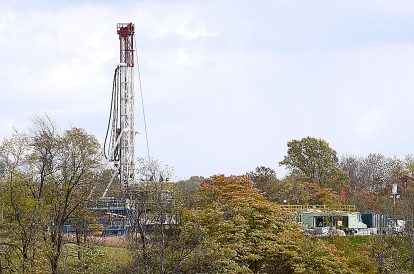
Operators drilling for natural gas in Pennsylvania’s unconventional shale fields will need to do more work to reduce methane emissions, according to the head of the state’s environmental enforcement agency.
John Quigley, secretary of the state Department of Environmental Protection, said Wednesday that DEP could deploy more inspectors to enforce new methane-reduction rules proposed Tuesday by Gov. Tom Wolf.
During a webinar for media members to discuss the upcoming rules, Quigley said the initial onus will be on drillers.
“The new regulations could require more DEP inspectors but initially will require more work on the part of the operators,” Quigley said.
During a 15-minute presentation and a brief question-and-answer period, Quigley said the regulations, which haven’t been drafted, will be aimed at further reducing the amount of methane escaping from natural gas production – from the well pad to the compressor station and pipelines.
According to Quigley, the industry released 115,000 tons of methane in 2014 from its operations, but he said those numbers come from self-reporting by companies. He said the agency wants to reduce that amount by 40 percent.
“We don’t know what the actual emissions are across Pennsylvania, but we know they are higher” than what is reported, Quigley said.
On Tuesday, Wolf described a “nation-leading strategy” designed to protect the environment and public health, reduce climate change and help businesses reduce the waste of a valuable product.
Quigley said the rules won’t require any legislation. He didn’t have a timetable for a public comment period but said the rules would go into effect later this year.
“Pennsylvania is the second-largest producer of natural gas in the nation behind Texas,” Wolf said. “We are uniquely positioned to be a national leader in addressing climate change while supporting and ensuring responsible energy development, creating new jobs and protecting public health and our environment.”
Methane, the primary component of natural gas, has been identified by the Environmental Protection Agency as the second-most prevalent greenhouse gas emitted in the U.S. from human activities. It has from 28 to 36 times more warming power than carbon dioxide, according to federal data, which also show that the natural gas and oil industries account for a quarter of methane emissions.
Despite environmentalists’ praise, industry groups took a different view of the initiative.
Stephanie Catarino Wissman, executive director of the Pennsylvania chapter of the American Petroleum Institute, said in a statement that the industry is already responding to reducing methane emissions with investment in the latest technologies.
“Safe and responsible development of energy from shale has helped the U.S. cut carbon dioxide emissions to 20-year lows,” she said. “Additional regulations on methane could discourage hydraulic fracturing and the shale energy revolution that has helped America lead the world in reducing emissions.”
Wissman noted that the EPA’s greenhouse gas inventory reported that methane emissions from hydraulically fractured natural gas wells are down 79 percent since 2005, while total methane emissions from natural gas systems are down 11 percent since 2005.
“It cannot be overstated that shale-related methane emissions continue to steeply drop as production sharply climbs,” added Marcellus Shale Coalition President Dave Spigelmyer.
“We welcome Governor Wolf’s efforts to expand new manufacturing opportunities in the commonwealth through affordable home-grown natural gas and are committed to working with lawmakers as well as state officials to focus on common-sense policies that encourage job-creating natural gas development, which has – according to EPA – helped drive down methane emissions 81 percent since 2012.”
While Quigley said some companies – he singled out driller Southwestern Energy – use the latest equipment to achieve high methane-reduction amounts, he said the entire industry would need to institute “best practices” to attain the new reduction targets.
DEP said Pennsylvania will reduce emissions during development and gas production, processing and transmission by requiring leak detection and repair measures, efficiency upgrades for equipment, improved processes, implementation of best practices and more frequent use of leak-sensing technologies.
Quigley stressed that what was being discussed Wednesday were “concepts, not regulatory language.”
DEP listed its fourfold strategy as follows:
• To reduce leaks at new unconventional natural gas well pads, DEP will develop a new general permit for oil and gas exploration, development and production facilities, requiring best-available technology for equipment and processes, better recordkeeping and quarterly monitoring inspections.
• To reduce leaks at new compressor stations and processing facilities, DEP will revise its current general permit, updating best-available technology requirements and applying more stringent … requirements to minimize leaks. A new condition will require the use of Tier 4 diesel engines that reduce emissions of particulate matter and nitrous oxide by about 90 percent.
• To reduce leaks at existing oil and natural gas facilities, DEP will develop a regulation for existing sources for consideration by the Environmental Quality Board.
• To reduce emissions along production, gathering, transmission and distribution lines, DEP will establish best-management practices, including leak detection and repair programs.