

Predicting the weather for Washington, Greene and beyond
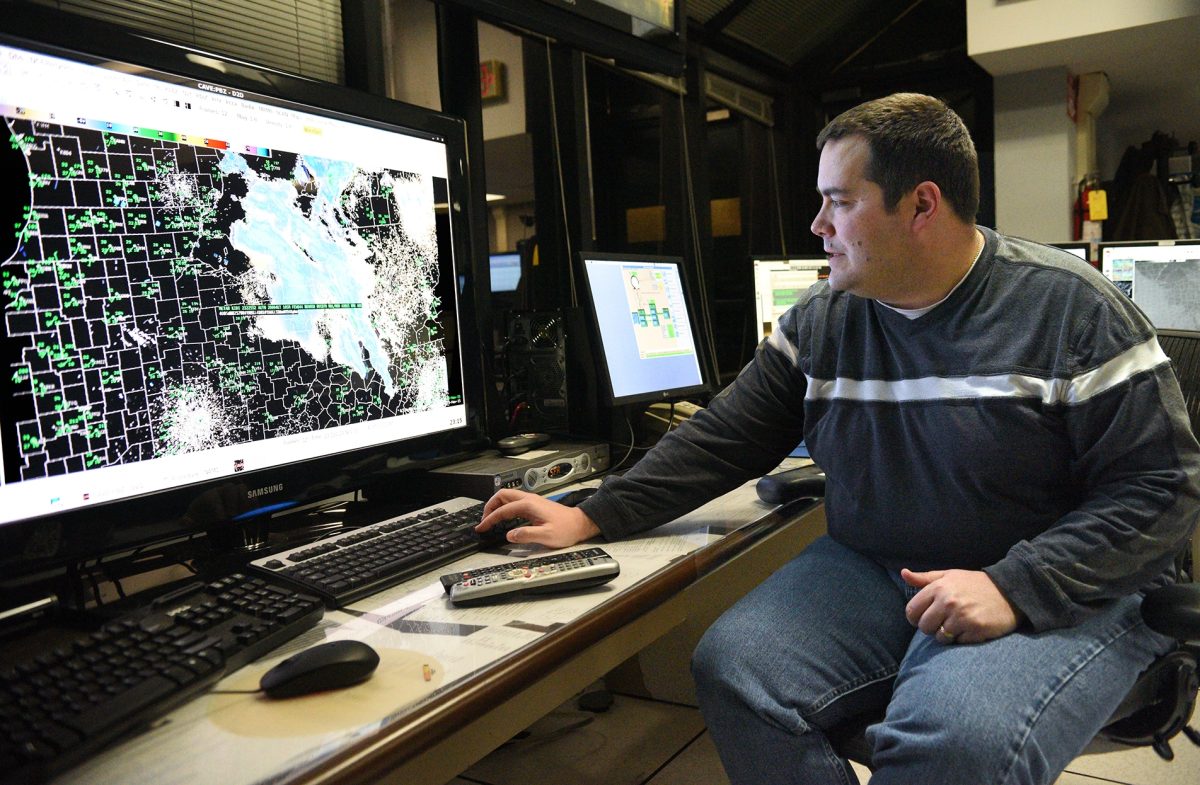
Meteorologist Chris Leonardi studies many satellite maps when putting together a weather forecast at the National Weather Service in Moon Township.
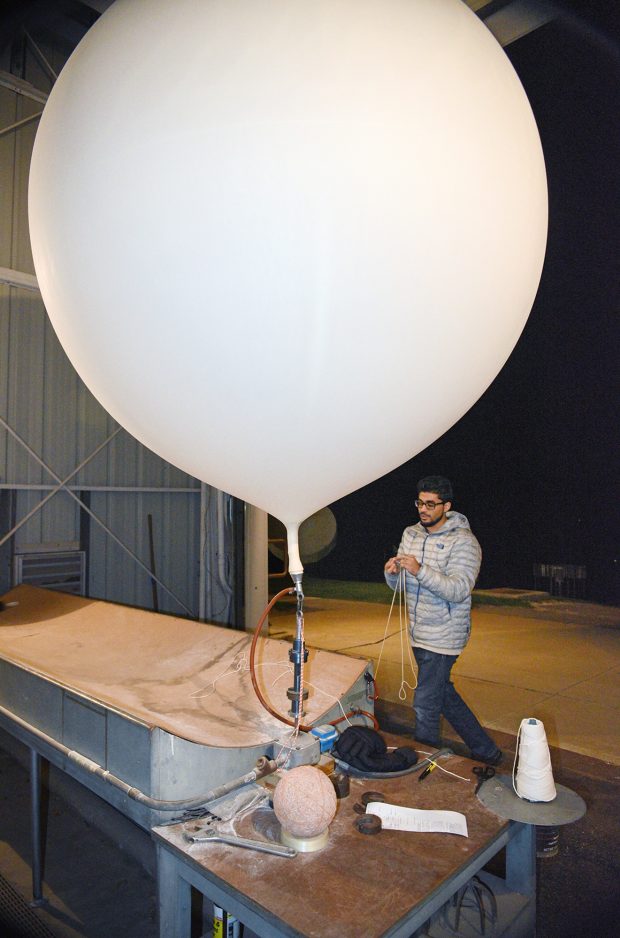
Meteorologist Rihaan Gangat gets the weather balloon ready for launch at the National Weather Service in Moon Township.
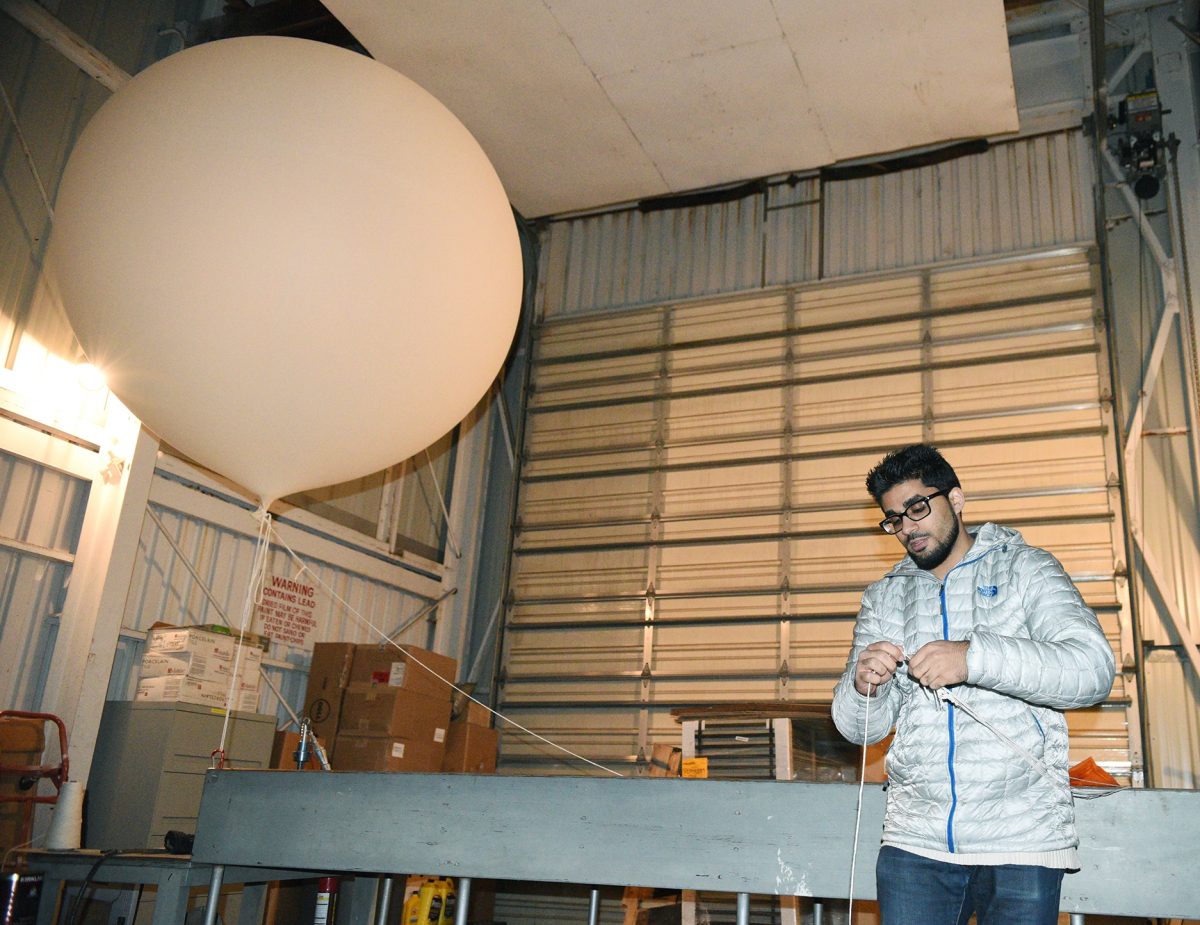
Meteorologist Rihaan Gangat ties a parachute on a weather balloon before launch at the National Weather Service in Moon Township.
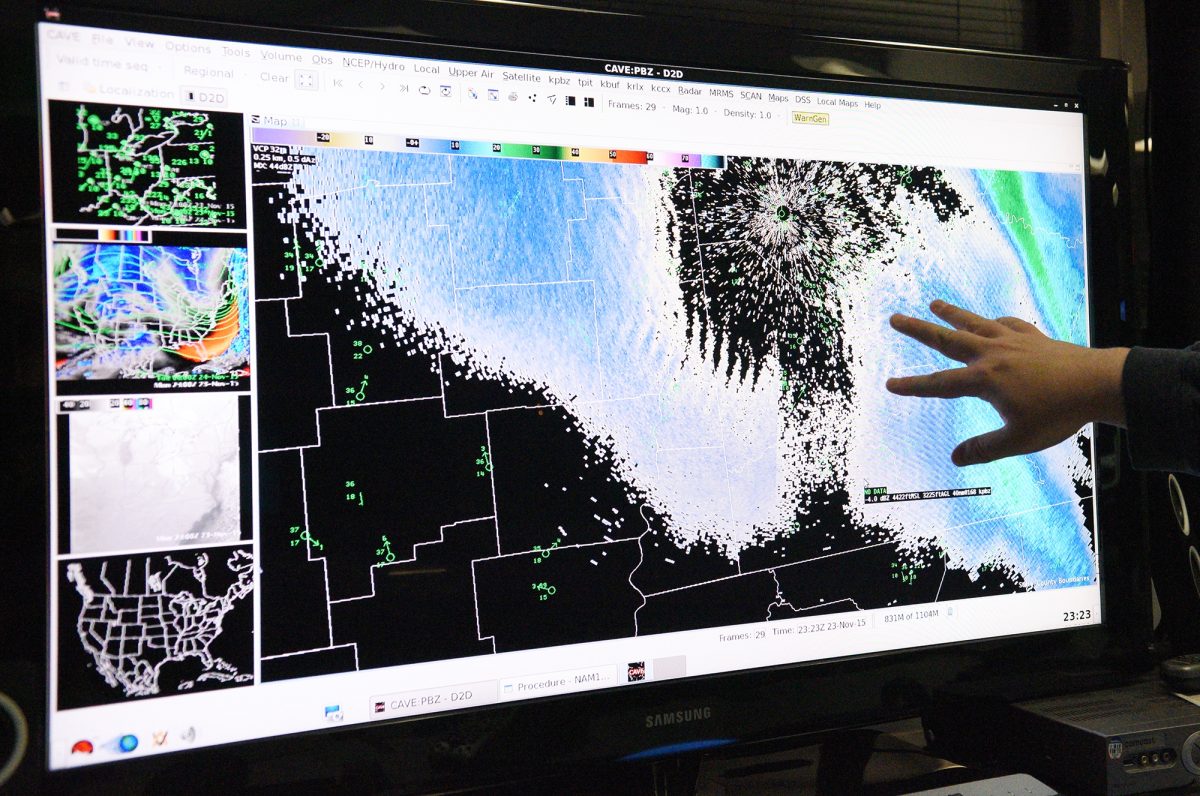
Meteorologist Chris Leonardi studies a satellite map showing precipitation over Washington County at the National Weather Service in Moon Township.
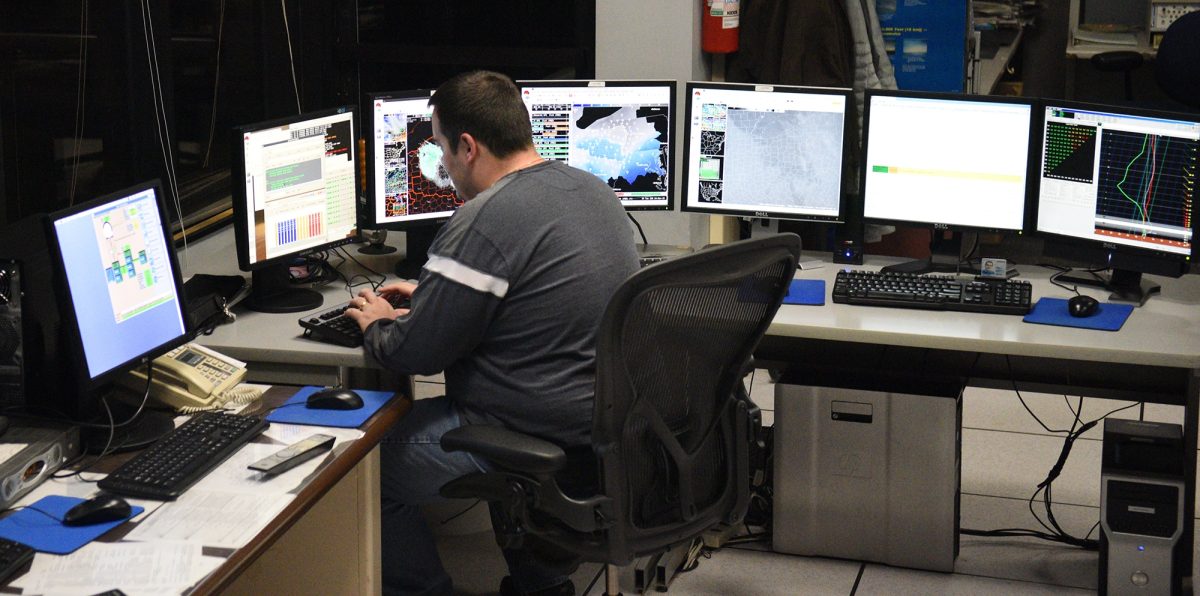
Meteorologist Chris Leonardi studies many satellite maps when putting together a weather forecast at the National Weather Service in Moon Township.
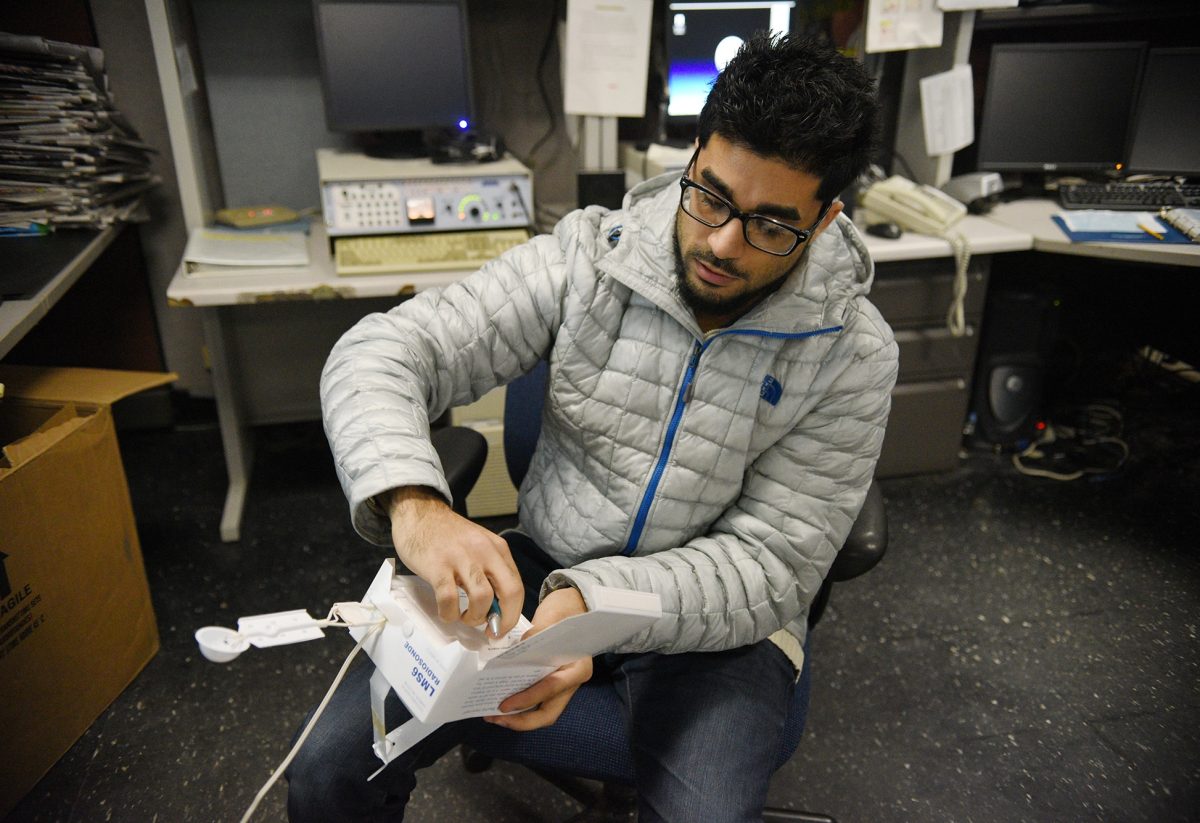
Meteorologist Rihaan Gangat gives the radiosonde a check before he attaches it to the weather balloon at the National Weather Service in Moon Township.
Meteorologist Rihaan Gangat ties a parachute on the weather balloon before the launch at the National Weather Service in Moon Township.
CORAOPOLIS – Every day, twice a day, rain, shine, wind or snow, Rihaan Gangat launches a large white balloon into the atmosphere.
It takes about 30 minutes to prepare: inserting helium to give the orb shape, unspooling and attaching twine, masterfully tying sturdy knots that can withstand up to 200 miles of flight.
As a meteorologist with the National Weather Service, Gangat is an integral cog in the wheel of weather prediction.
Every year, NWS meteorologists collect 76 billion observations and issue 1.5 million forecasts and 50,000 warnings. The twice-daily weather balloon launches – by the Pittsburgh office and 100 other national locations – are an important tool in forecasting.
“The more information you have, you can do a better job forecasting,” said Gangat.
The balloon is attached to a radiosonde, a small white box that measures and transmits air pressure, temperature, humidity, wind direction and speed. The data is sent to a computer in the well-equipped basement office, where Gangat and other meteorologists use the information to predict changes in the atmosphere and subsequent weather.
“It gathers information from the atmosphere, puts it into equations,” Gangat said. “When the information is put in, it tells meteorologists what could happen.”
Once the weather balloon reaches an altitude of about 100,000 feet, it pops and falls to the ground. Because the wind usually blows from west to east, many of the balloons launched from the Pittsburgh office end up in central Pennsylvania.
“Less than 20 percent are sent back, even though (we) provide a mailing package,” Gangat said. “We can refurbish and reuse them, but they usually fall into remote areas in the forest.”
In addition to the weather balloons, the NWS office is outfitted with all manners of weather-prediction equipment, from cutting-edge satellites, computers and radar to warhorse snow boards and rain gauges.
As a 24-hour operational forecast office, the meteorologists in Pittsburgh – or, more accurately, Moon Township – serve 36 counties in Pennsylvania, eastern Ohio, the northern panhandle of West Virginia and Garrett County, Md. They are also responsible for providing information for rivers and nine airports.
Meteorologists update the forecast at least every three hours and are the experts behind those TV warnings and watches. They also field questions from the public and answer questions on social media websites.
School superintendents, state transportation departments and other government officials rely upon their information to determine closings and strategies for severe weather.
In Southwestern Pennsylvania, winter is the busiest time, with the days and hours leading up to snowstorms the most frenzied.
“The last couple of seasons, ice on the rivers in the Upper Ohio Valley has had a huge impact,” Gangat said. “We are always updating and constantly watching.”
Chris Leonardi, a meteorologist with the weather service for 21 years, explained patterns and radar while studying large monitors displaying Washington and Greene counties.
“By watching this product, we get a sense of how things are moving,” he said while working on a forecast. “We can look west to see what kind of weather could be coming in. Friday and Saturday are the next good chance for precipitation based on what the models are telling us.”
While weather is notoriously fickle, Leonardi’s prediction, based on intricate mathematics and innovative technology, proved to be accurate.
Rain fell from the sky all day that Saturday.