

Program provides Zika prevention kits to Pa. women
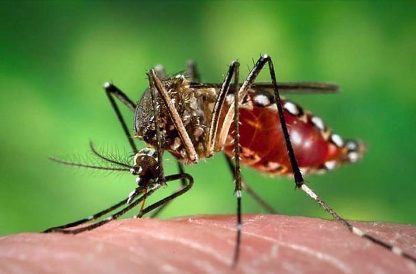
The state Department of Health launched a program to provide Zika prevention kits to low-income and homeless pregnant women.
Zika virus is a primarily mild illness mainly spread through the bite of a mosquito. Symptoms include fever, rash, joint pain and conjunctivitis, meaning red eyes. In pregnant women, however, the risk is far greater.
Infants born to women who contracted the Zika virus during pregnancy are susceptible to serious birth defects such as microcephaly, in which babies are born with heads much smaller than expected.
The kits will contain both health education materials and prevention tools. They will also include other items such as insect repellent for skin, permethrin spray repellent for treating clothing and shoes, standing water tablets for killing mosquito larva and condoms to prevent sexual transmission of Zika.
“Using the products in the Zika prevention kit can help protect you and your loved ones from the virus,” said Department of Health Secretary Karen Murphy in a statement.
Since the Zika virus can also be transmitted sexually, condoms are an important part of the kit. The Department of Health stresses the importance for pregnant women to use condoms or abstain from sex if they have a partner who has traveled or lived in a Zika-affected area, even if he tests negative for the virus. According to the Department of Health, it is still unknown how long the virus can be transmitted through sex, but it could be six months or longer.
The kits are free, and will be available to pregnant women at local health departments, federally qualified health centers, nonprofit organizations and offices for the Women, Infants and Children assistance program. A full list of these locations can be found at www.zika.pa.gov.
The only confirmed cases of Zika in Pennsylvania are of those who contracted the virus while visiting a Zika-affected area. The Centers for Disease Control confirmed 40 of these cases since winter, according to health officials.
“We advise all Pennsylvanians to take precautions to reduce and control mosquito populations in their area and to take appropriate actions to protect themselves from mosquito bites,” said state Department of Environmental Protection Acting Secretary Patrick McDonnell. “DEP personnel and county partners are monitoring for the presence of mosquitoes that have the potential to transmit the Zika virus.”
These precautions include the use of properly functioning window and door screens, weekly monitoring of any outdoor items that could hold standing water and using an outdoor flying insect spray where insects rest, and repairing gaps or cracks in septic tanks.
Pregnant women can also take certain measures to protect against Zika, such as wearing lightweight and light colored clothing that covers arms, legs, and other exposed skin, sleeping in an air-conditioned or screened room, and staying indoors when mosquitoes are most active.