

Comparisons of convention sites Cleveland, Philadelphia
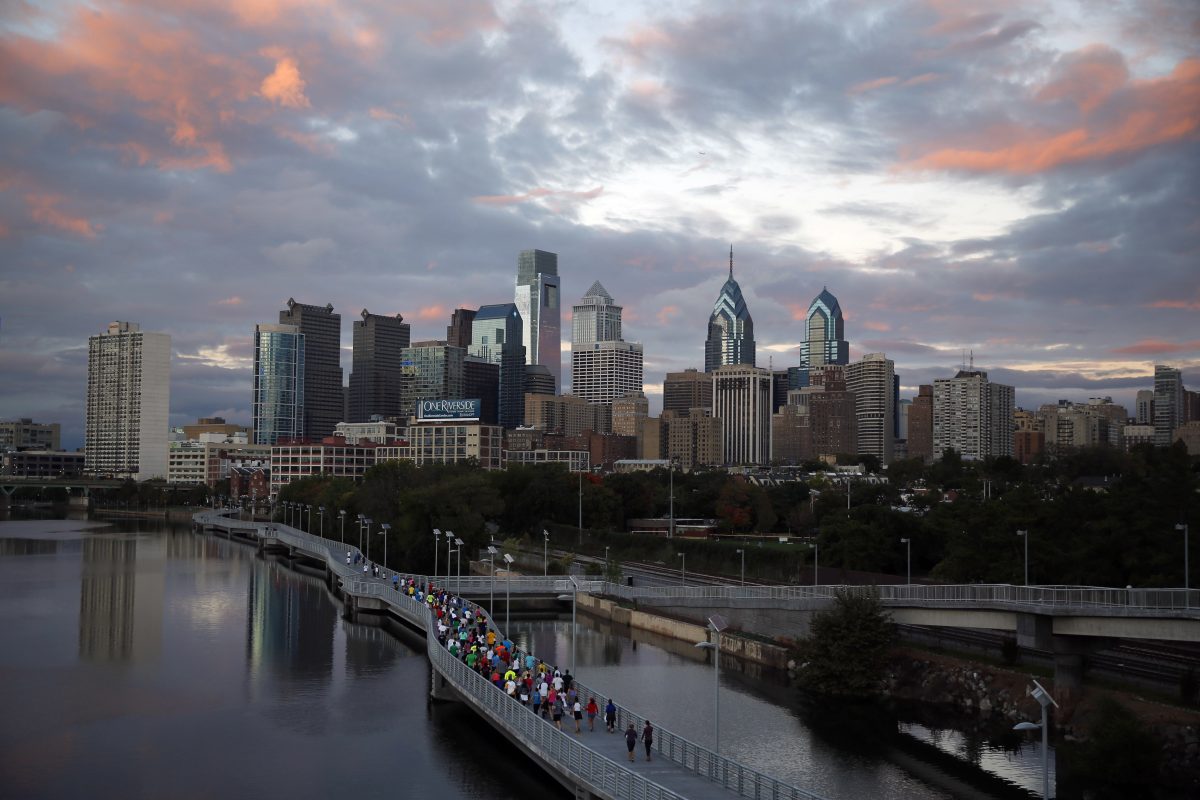
In this Oct. 1, 2014, photo, runners jog along the Schuylkill Banks Boardwalk in Philadelphia. Democrats are set to begin their convention at the end of July 2016 in a city that symbolizes both the nation’s promise and its shortcomings.
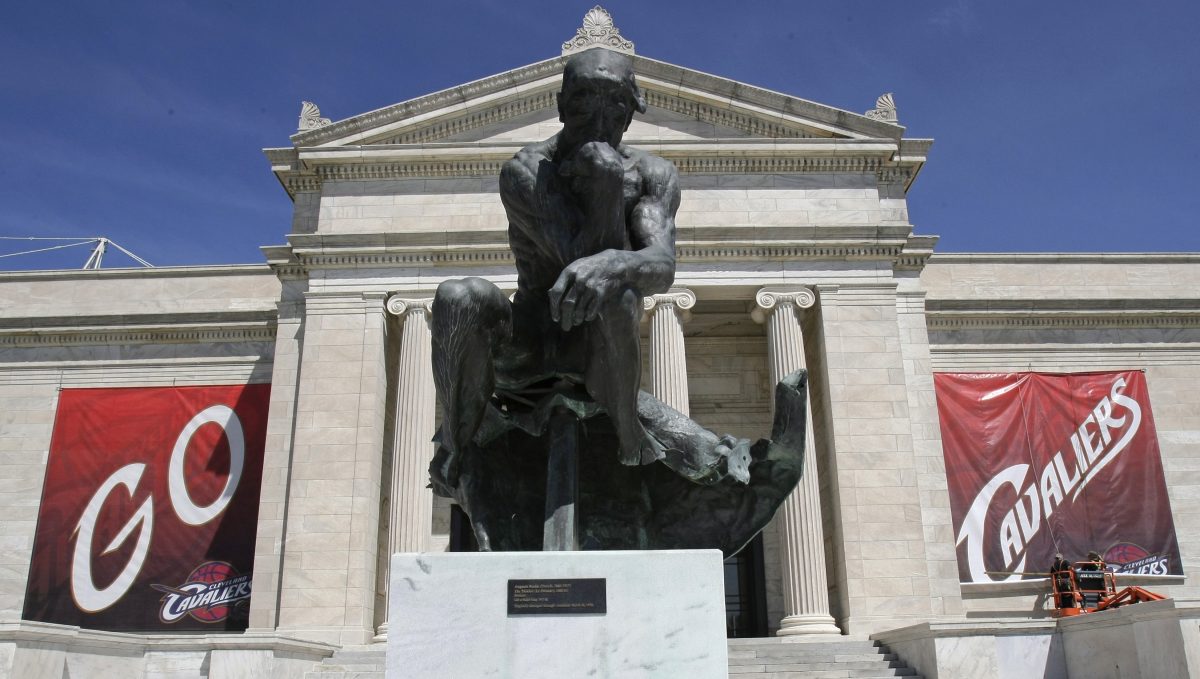
In this April 23, 2010, photo, workers unveil a “Go Cavaliers” banner to support the Cleveland Cavaliers basketball team during the NBA playoffs, flanking Auguste Rodin’s sculpture, “The Thinker,” at the Cleveland Museum of Art in Cleveland. The Cavaliers play home games at Quicken Loans Arena, the venue of the 2016 Republican National Convention.
The Republicans and Democrats both picked diverse, sports-obsessed cities with histories of industrial might in swing states for their 2016 national conventions. Here are some comparisons of Cleveland, where the Republican event opened Monday, and Philadelphia, where the Democrats gather beginning July 25.
Ohio native LeBron James led the Cleveland Cavaliers to this year’s NBA title, ending the city’s 52-year drought since its last major professional sports championship, a Browns NFL win in 1964. Before James saved the day, it was the longest active drought for a city with at least three teams in major sports. Philadelphia couldn’t touch that long stretch, but fans of its four pro teams had a miserable 25-year gap between the 76ers NBA title in 1983 and the Phillies’ World Series in 2008.
The orchestras in both cities were among the prestigious “Big Five” in the period of the 20th century when that was considered a big deal. Both were led for decades by famous Hungary-born conductors. George Szell conducted the Cleveland group from 1946 until 1970 and Eugene Ormandy was an institution in Philadelphia from 1936 until 1980. The cities also have impressive art museums with renowned collections. The Philadelphia Museum of Art sits at the end of the monumental Ben Franklin Parkway and the Cleveland Museum of Art is the centerpiece of the impressive University Circle. One advantage to budget-minded art fans in Cleveland: It’s always free to get in there.
Cleveland hosted the Republicans in 1924 and again in 1936. Philadelphia hosted the Democrats in 1936 and 1948 and the Republicans in 1865, 1872, 1900, 1940, 1948 and 2000.
Candidates nominated in Cleveland didn’t win the presidency those years. But five of the eight chosen in Philadelphia were victorious in November.