

Fort Cherry OKs more testing for air quality
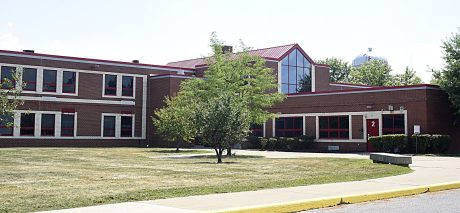
HICKORY – Fort Cherry School Board Monday approved air quality testing inside and outside of district buildings because of concerns with potential pollution from nearby natural gas drilling wells.
The action comes despite an earlier report commissioned in 2011 and released in June showing air quality at safe levels. Clean Air Council will conduct outdoor testing, and the Southwest Pennsylvania Environmental Health Project will conduct indoor tests. Both nonprofits will conduct testing for free, according to superintendent Dr. Jill Jacoby.
“We’re also going to research companies to conduct tests for radon and mold. But there’s no timetable yet for that or when the particulate matter tests for drilling would start,” Jacoby said.
The 2011 study published in June through Springer International is titled “Air monitoring of volatile compounds at relevant receptors during hydraulic fracturing operations in Washington, Pennsylvania.” The study was conducted by researchers with Cardno ChemRisk. The study, Jacoby said, was pushed by a group of concerned citizens as a well pad operated by Range Resources was just starting up. The district’s schools are within a half-mile of the Chiarelli and Toward well pad units. There are 67 active wells in Mt. Pleasant Township, according to township manager Erin Sakalik.
The three-month monitoring took samples at two sites to gauge particulate matter concentrations and the potential for health issues. The two receptor sites where air quality was monitored were the school district property and a private home at the same distance from the well sites, roughly a half mile. The report’s primary finding was that “the operation of a hydraulic fracturing well pad … did not substantially affect local air concentrations of total and individual organic compounds.”
The study detailed how testing was done in November 2011 before, during and after flaring – the burn-off method to clear gas lines – and during production for baseline readings.
“The average 24 (hour) concentrations at site B (the private home) were indeed higher during fracturing activities than during the baseline and post-flaring inactive periods; however, the differences in average concentrations were not statistically significant,” said the report, which added that “all individual (volatile organic compound) concentrations in the monitored area were well below health-protective levels.” According to data in the report, average concentrations of any given compound averaged between 0.16 and 80 parts per billion and “were consistent with background atmospheric levels measured previously at nearby sampling sites and in other areas in Washington County.”
The call for further testing comes on the heels of an eight-year study that found asthma may worsen for patients who live near fracking sites. The study from Johns Hopkins University’s Bloomberg School of Public Health found pollution and stress from the noise caused by fracking might explain the correlation. But the study did not establish if fracking directly caused or worsened asthma. The method for the study had researchers examining health records for nearly 36,000 patients, including those in Pennsylvania, from 2005 to 2012.