

Caching on
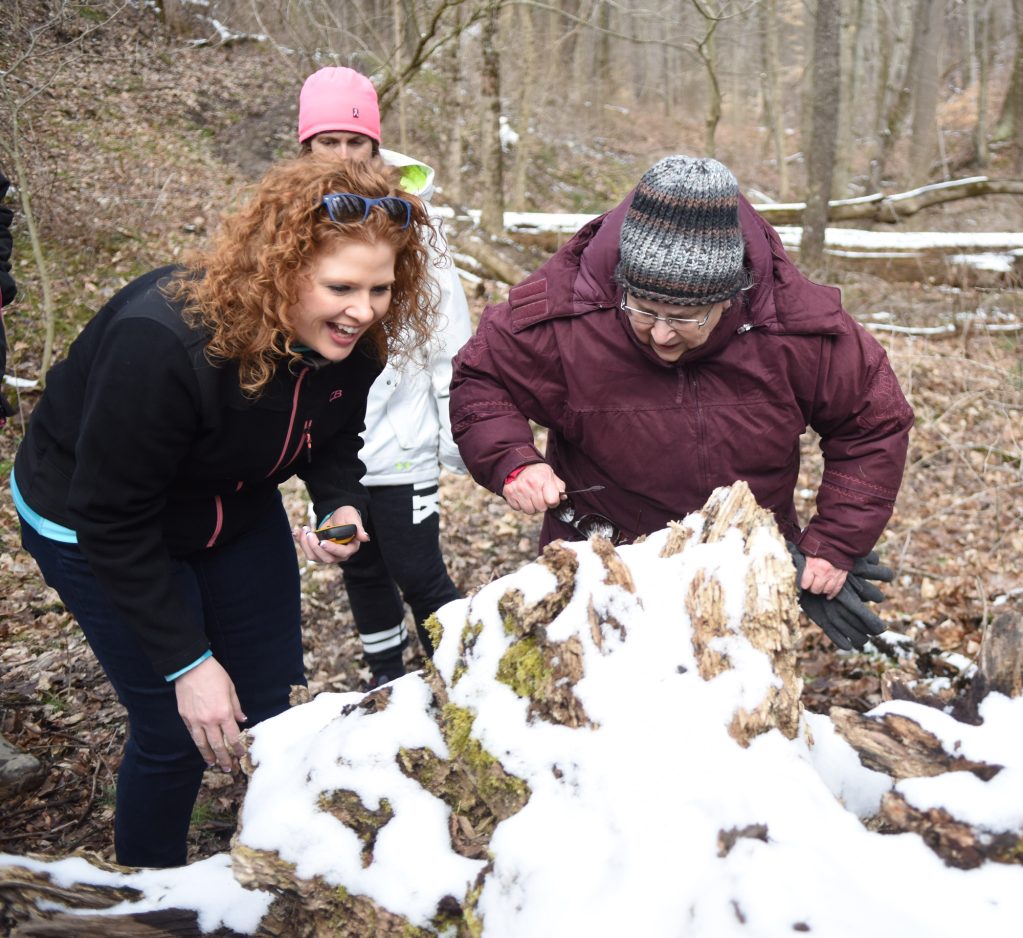
Tiffany Cernicky of Monongahela and Maggie May of West Newton search tree roots to find a geocache. There are different sizes and kinds of geocaches. Geocaches also range in type from puzzle caches that require a puzzle to be solved to get coordinates to a multi-cache where several geocaches give clues to the final geocache.
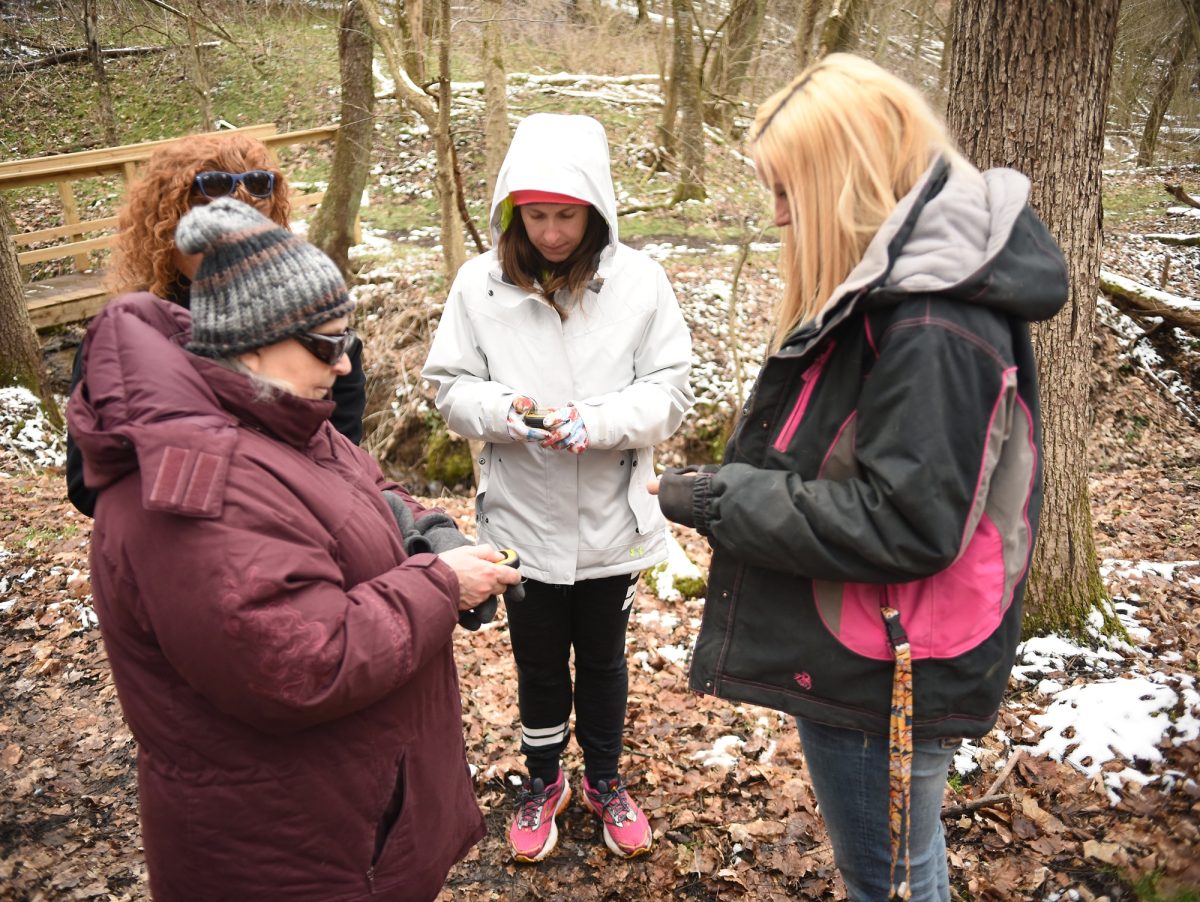
Maggie May of West Newton, Tiffany Cernicky of Monongahela and Katie May of Elizabeth get help from Sarah Sandin, Mingo Creek County Park program recreation coordinator, to program their global positioning systems for geocaching. The park hosted a “Cache me if you Can” event where Sandin showed the group how to use a GPS and find geocaches.
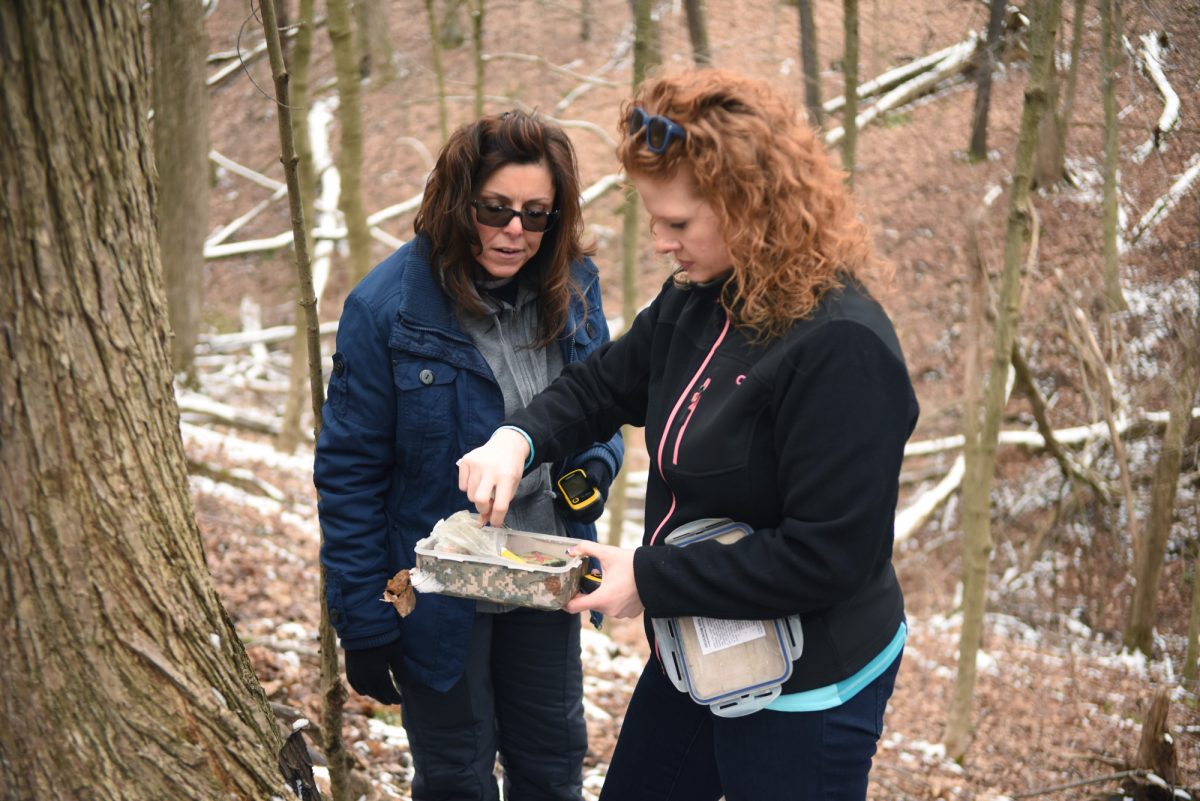
Tina Rubin of Rostraver and Tiffany Cernicky of Monongahela sort through a geocache at Mingo Creek County Park. The GPS coordinates took them to the general vicinity of the geocache and then the duo spent a few minutes before they found the container tucked behind some loose tree bark.
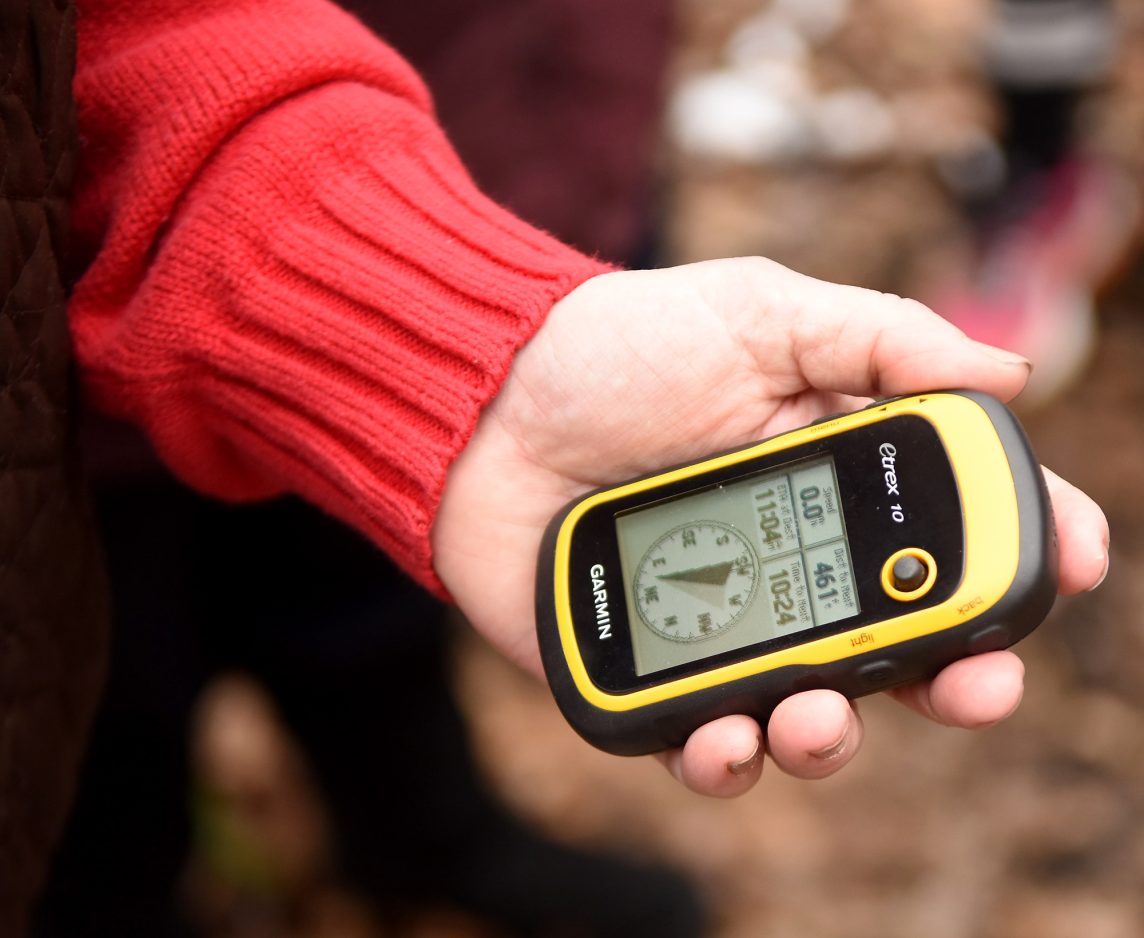
GPS coordinates for geocaches can be found at www.geocaching.com. The coordinates can then be plugged into a GPS, which can direct the user to the geocache.
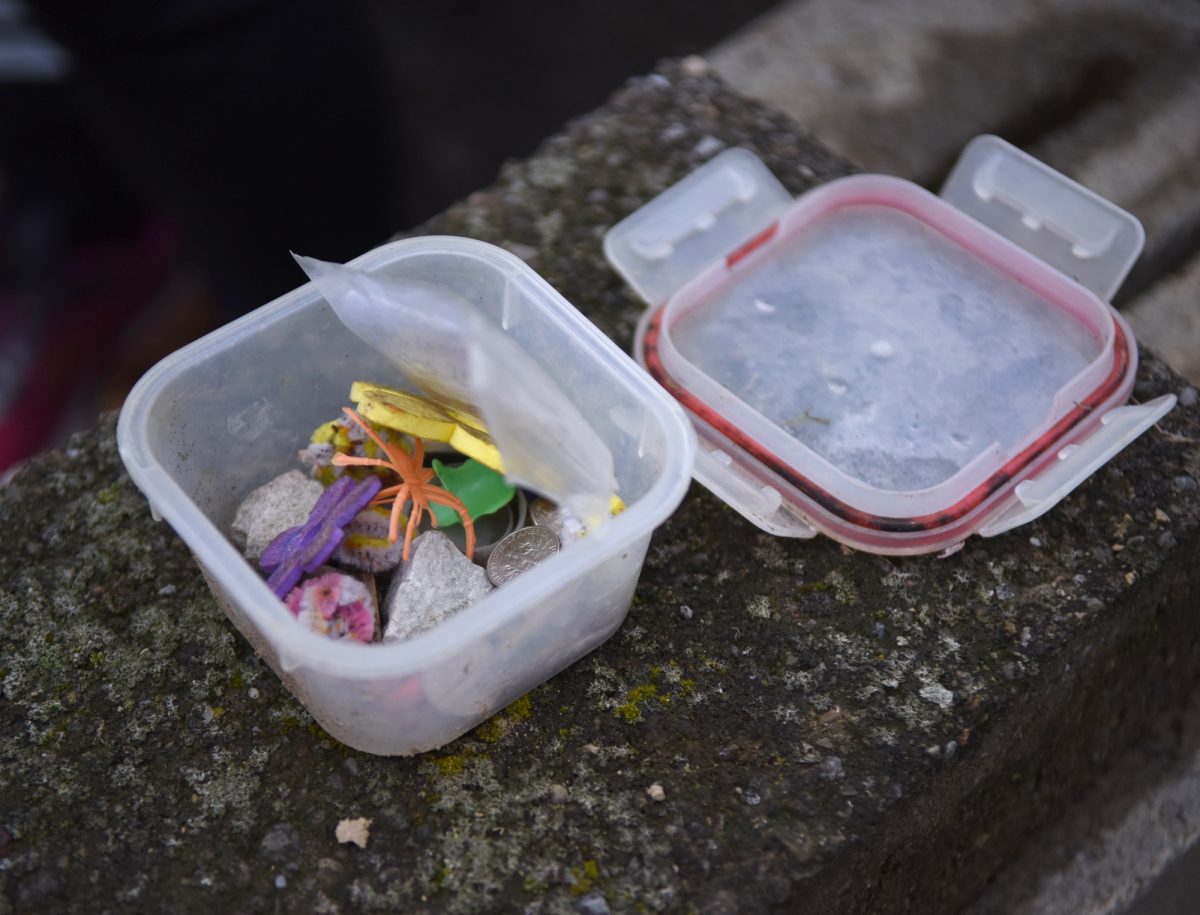
Some geocaches include small trinkets while others just include a logbook for visitors to sign when they have found the geocache.
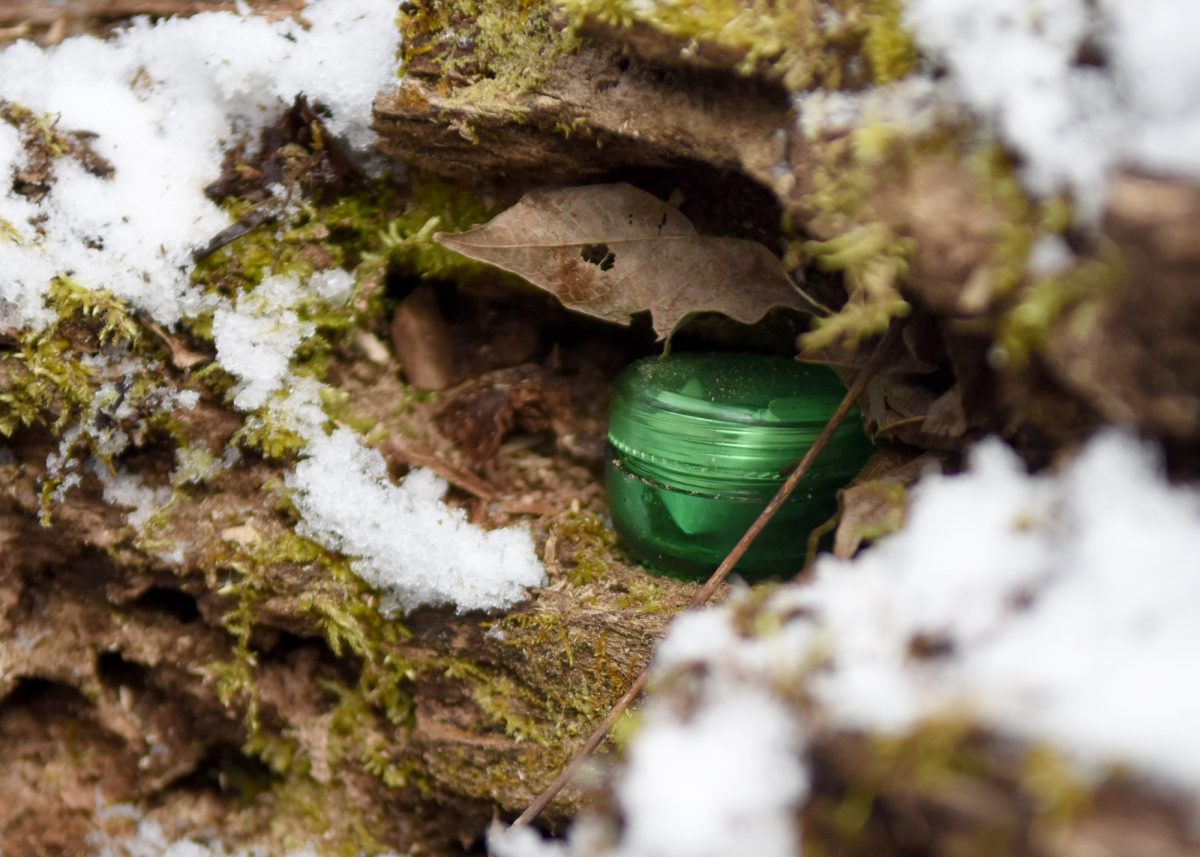
A small geocache is tucked in a hole in a tree’s roots along a trail at Mingo Creek County Park. Recreation program coordinator Sarah Sandin gave a tip to look for something that doesn’t belong when searching for a geocache.
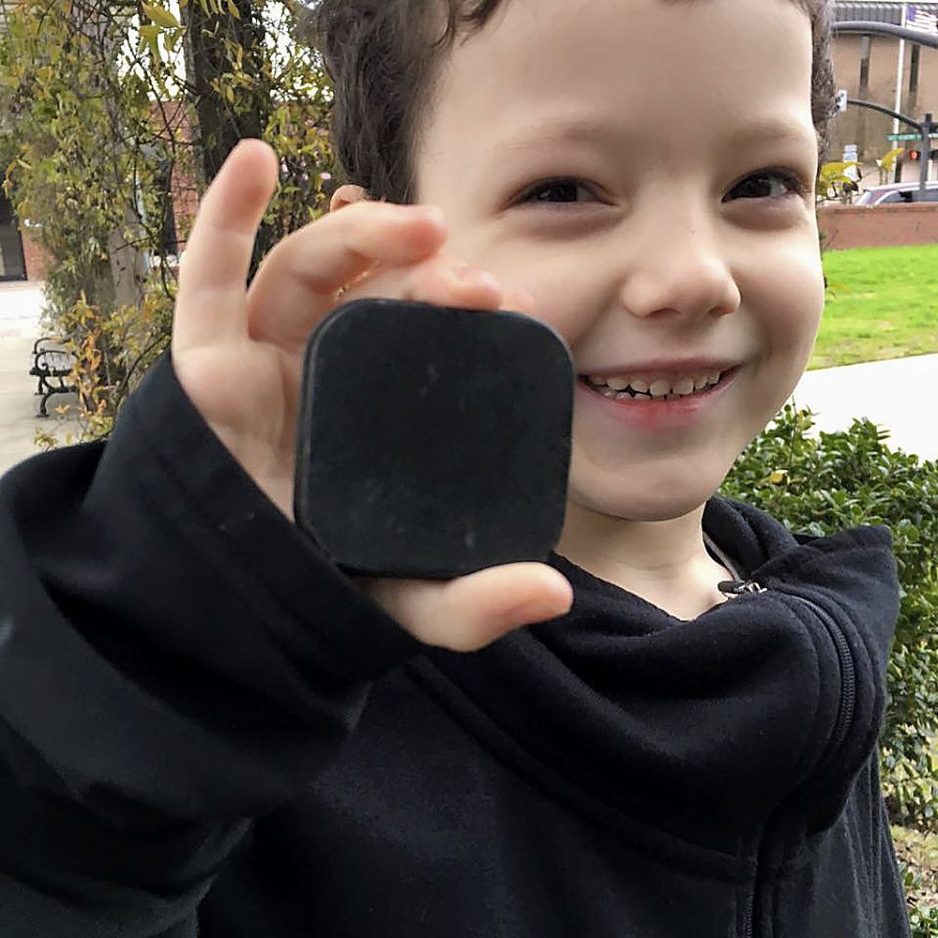
Ben Muhly, 5, holds up a geocache he found in North Carolina.
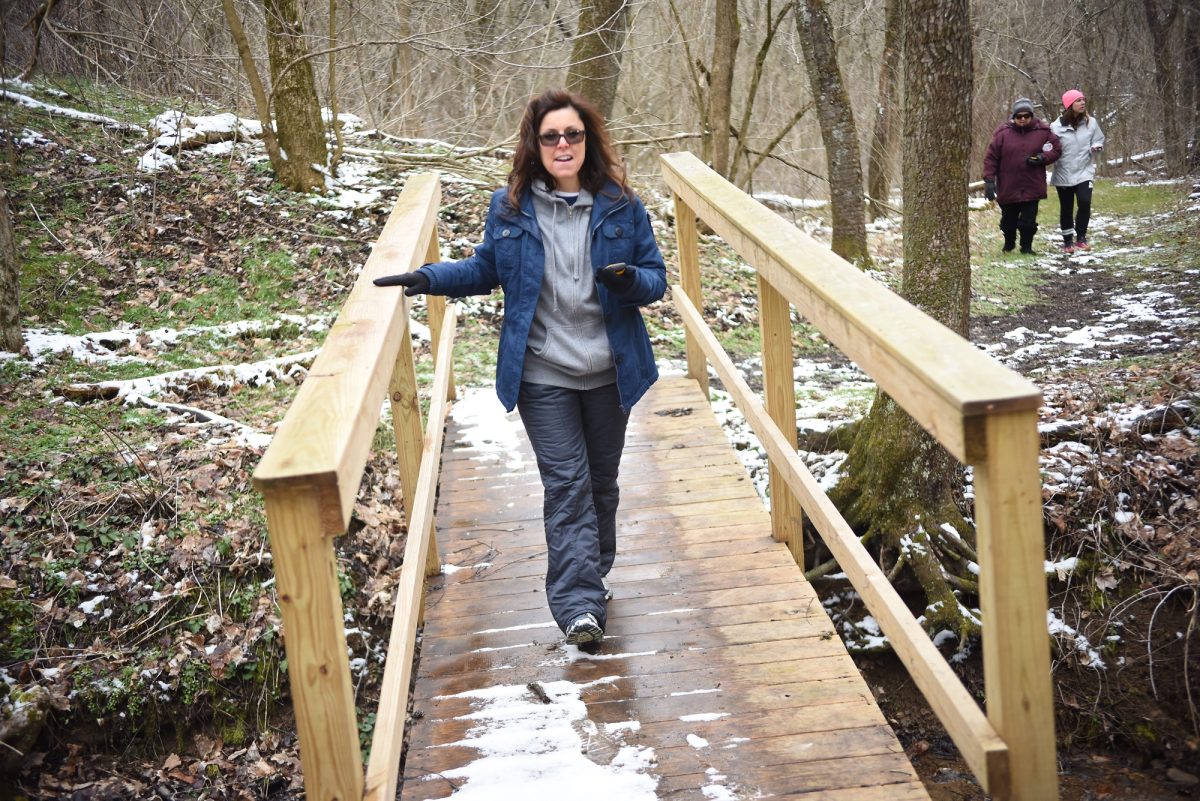
Tina Rubin of Rostraver leads the way for the group across a bridge on a trail in Mingo Creek County Park. There are many geocaches hidden throughout the park for visitors to find.
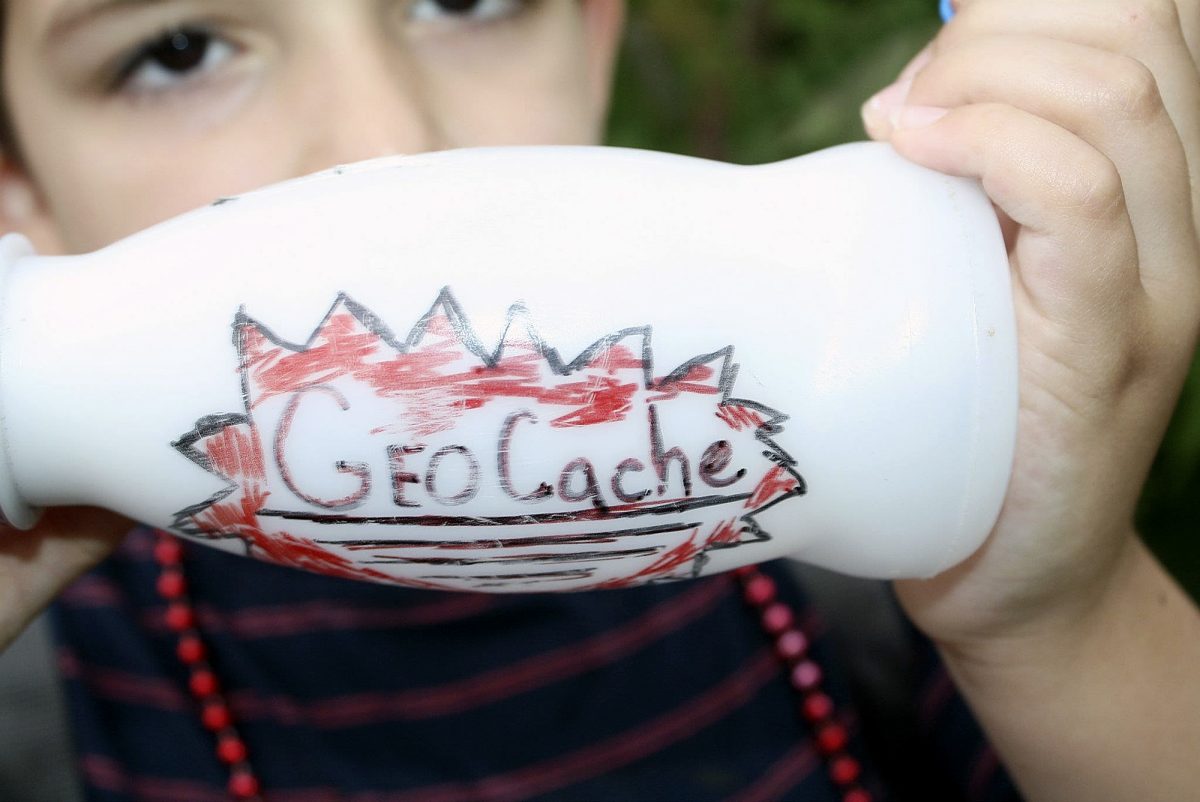
Jimmy Muhly found this geocache in a guard rail in Bentleyville with his aunt, Randi Ross Marodi, in 2012, when they began geocaching.
Consider geocaching a treasure hunt. A modern, high-tech treasure hunt.
Using global positioning system coordinates and clues, geocachers search for cache – hidden containers filled with items like Hotwheels toy cars, chemical hand warmers, seashells, compasses and coins – that have been strategically placed and are waiting to be found.
The Washington County Parks and Recreation Department recently “cached” in on the popular game when it hosted “Cache Me If You Can,” an introduction to geocaching at Mingo Creek County Park. The department holds the program in the spring and fall.
Sarah Sandin, recreation program coordinator at the parks department, set off on a 90-minute trek in early March with four first-time geocachers to find caches hidden in the park.
There are, Sandin said, more than a million geocaches around the world, including several at Washington County parks. Geocaching.com lists 157 geocaches within Washington’s 15301 zip code, with names like “Washington, a City With Some History,” “Wetlands Water Cache,” “The First Crematory in the United States,” “Tortilla Soup,” and “Ghost Town.”
“Geocaches rank from one to five in difficulty,” said Sandin. “I’m talking, these people will get a rock that opens and they’ll hide the rock in other rocks. Someone was telling me their uncle was very into it and they found one in a lake. You had to scuba dive for it.”
A typical cache usually is a small waterproof container that includes a logbook, where geocachers can sign their name, the date and any other information they want to share. Those who find a geocache typically take an item and replace it with another small item. Some of the caches also include clues to solve a puzzle or find the next geocache.
During their search, Sandin and the group – friends who met in a Zumba class – found five caches that included pencils, yo-yos, hair barrettes and foam flowers hidden inside Tupperware containers and ammunition boxes. The yo-yo was tucked in a fallen log, and the ammunition box was buried beneath leaves (there’s no spoiler alert necessary – those clues will not help you find the caches).
“This is Bear Grylls stuff,” said Tiffany Cernicky of Monongahela, as she and her teammates navigated along Old Spring Trail. “I like (geocaching) a lot. I got a little competitive today. It’s fun. It turns hiking into a game, kind of.”
Maggie May and her daughter, Katie May, of Elizabeth, said they enjoy being outdoors and being active – one of geocaching’s biggest draws.
“I’ve wanted to do this,” said Maggie May. “I looked in the park brochure and I actually wanted to come last year, but I wasn’t able to, so I went into the Zumba class and said, ‘Who wants to do this?’ I’d do it again.”
Randi Ross Marodi of Bentleyville caught the geocaching bug in 2012 when she looked for a cache with her nephews, Jimmy, Ollie and Ben Muhly, now ages 9, 8 and 5, and they have since found dozens of geocaches.
Marodi (who didn’t attend the Mingo hunt) downloaded a geocaching app on her phone to research caches, and she and her nephews have located them under a bridge at Emerald Isle, N.C., at the grave marker of a Civil War veteran, stuck on a guard rail and in the parking lot of the Best Western Hotel in Bentleyville, and in St. Clairsville, Ohio, parks. They carry toys, money or marbles to place in caches when they find them.
Last year during a tailgate party at PNC Park before a Pirates game, Marodi checked her geocaching app, which indicated a cache was hidden at a nearby veterans’ park.
“There was a railing along a walkway, and the geocache was a magnetic bottle cap with a tiny little log book tucked inside,” said Marodi. “People get so creative with this. It’s fun. Mostly I do it because the boys like it.”
Geocaching began in 2000, Sandin said during a brief introduction about the hobby.
On May 2 of that year, the U.S. government lifted restrictions on public GPS signals, which massively increased the accuracy of GPS technology.
The following day, Dave Ulmer, a computer consultant and GPS enthusiast from Oregon hid the first cache, a black plastic bucket filled with videos, books, software, a slingshot and a log book in the woods outside Portland, Ore. Whoever found the bucket was instructed to take one of the items, sign the log book, and replace the removed item with an item of their own. Ulmer posted the coordinates on the Internet, and within two days, the search for that geocache was underway. Excitement and enthusiasm for geocaching grew quickly.
Today, there are more than 1.3 million active geocaches in over 100 countries on all seven continents. It is believed the two most-found geocaches are both hidden in Prague, the capital city of the Czech Republic, and they’re found about five times a week.
The oldest geocache in Mingo Park was placed in 2000.
“My husband thinks I’m crazy sometimes, but I’ve dragged him along on different searches,” said Marodi. “I enjoy doing it.”