

Speakers talk about impact of heroin at rally
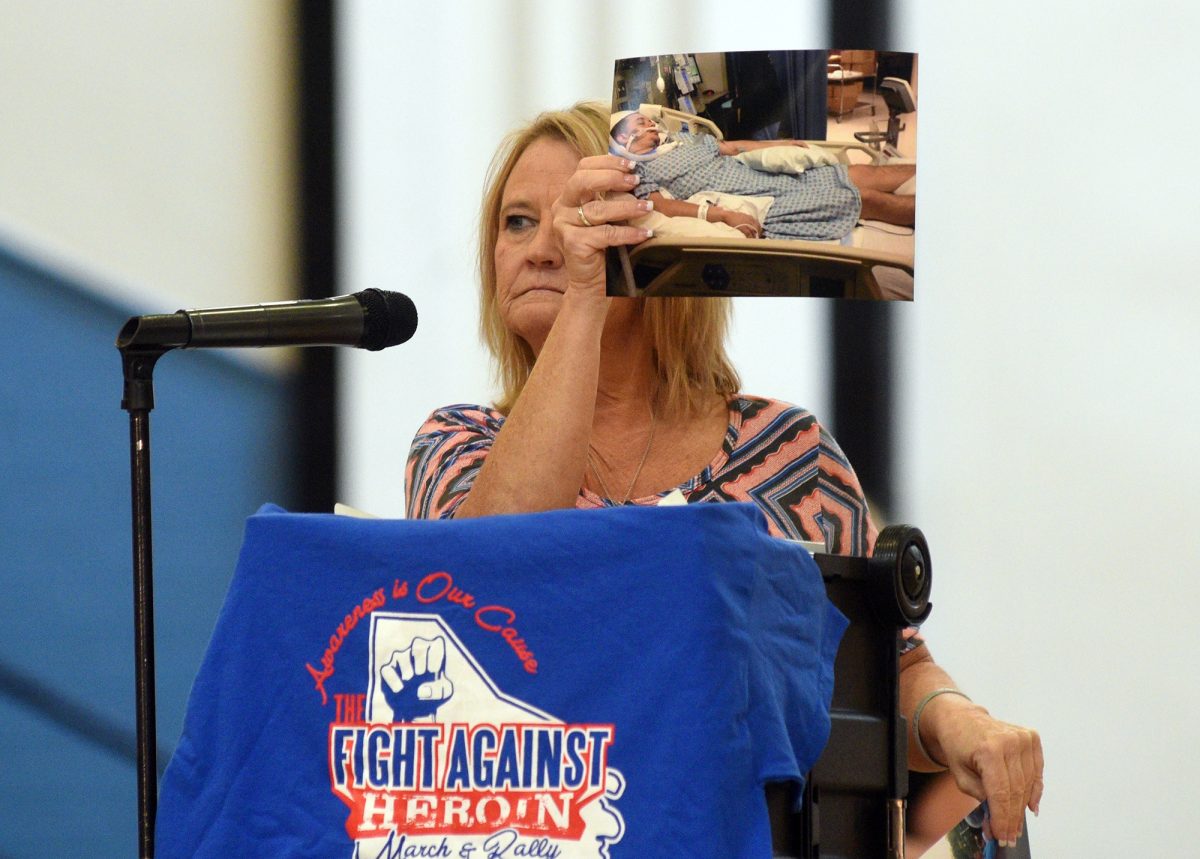
Beth Vernau of Houston holds a photo of her son, Andrew Vernau, who died at 19 of a drug overdose. Vernau shared her son’s story during the Fifth Fight Against Heroin March and Rally at Washington High School Saturday.
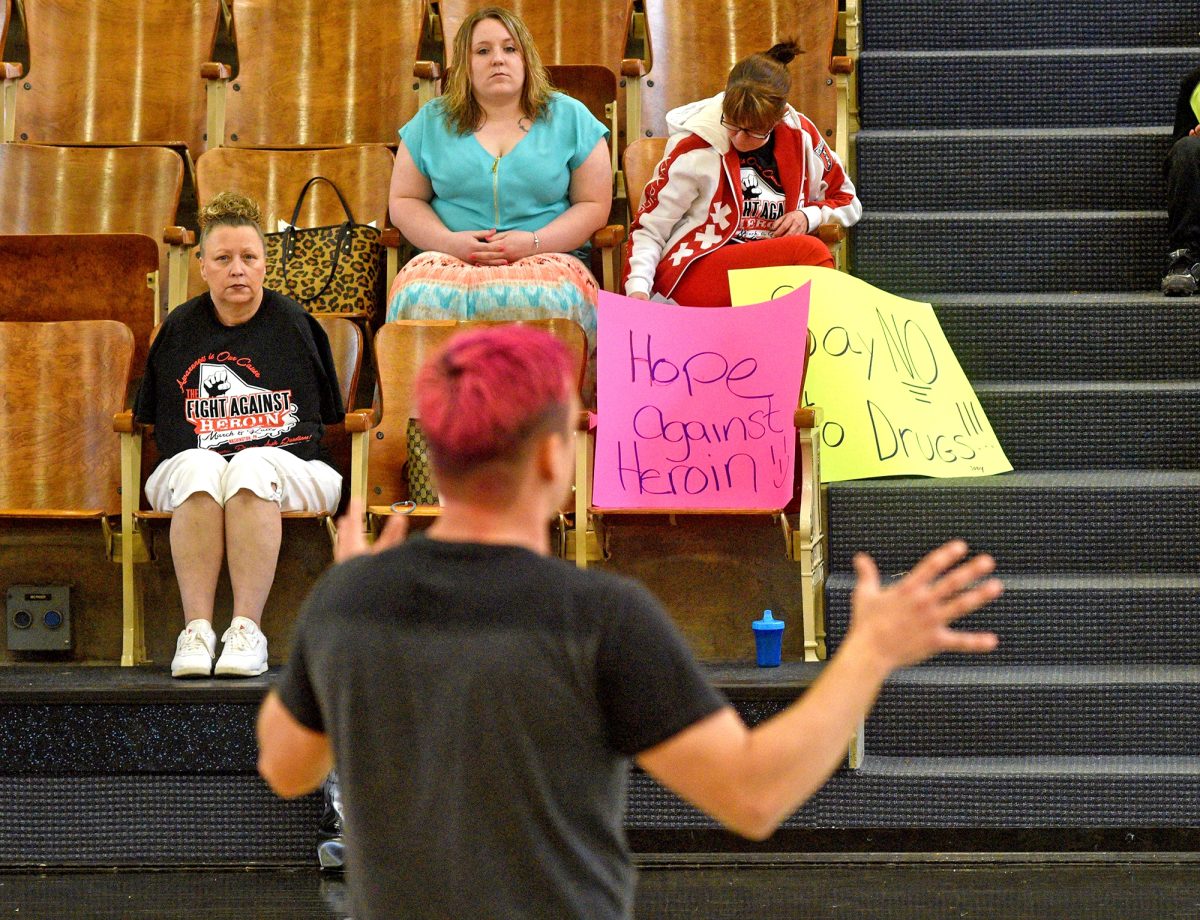
Randy Mort, a recovering addict, speaks during the Fifth Fight Against Heroin March and Rally at Washington High School Saturday.
“Here’s a life sentence,” Brandon Duplinsky said Saturday afternoon at Washington High School.
All he did was hold up a drawing of a syringe.
Duplinsky, a recovering heroin addict who now leads the West Virginia-based Lethal Affection Ministry organization, added “If you can’t quit (heroin), it’s a death sentence. If you quit, it’s a lifelong recovery process.”
Duplinksy was one of several speakers who offered stories on the devastating impact heroin made on themselves or family members at the Fifth Fight Against Heroin March and Rally at the school’s gymnasium. Launched last year by Washington resident Mike “MJ” Markley, it recently started operating under the umbrella of the national organization Not One More, a nonprofit organization dedicated to stemming the epidemic of heroin abuse.
About 100 people attended, and they heard from people like Beth Vernau, a nurse at Greenbrier Treatment Center who said she freed herself from alcohol and drugs in February 2008, but lost a son to an overdose in 2013. She explained the stigma around drug addiction needs to be pushed aside and it needs to be treated more like a disease or chronic condition.
“So many people’s perceptions of what an addict is are so wrong,” she said. “We need to let people know who we are and what we’ve achieved. I know no one who chooses this disease.”
Markley started the Fight Against Heroin March and Rally last year after losing a childhood friend and a college roommate to addiction. Another rally is planned for August, he said.
“I think there are enough people here to get the message out,” Markley said. “We’re going to fight this epidemic. It doesn’t discriminate against anyone. People need to realize it can happen to anybody.”
Scott Putnam, the mayor of Washington, said education about the devastation heroin can bring “is probably the leading thing that we need to concentrate on.”
He added “our most vulnerable citizens are our youth. We need to educate them about the dangers of drugs and their ability to live their lives without drugs.”