

Officials warn about lottery check scam
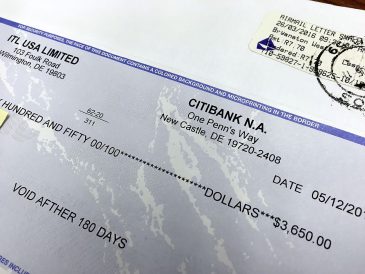
Ken Britten wasn’t thrilled to learn he was the second-prize winner in a $250,000 lottery alleged to have been conducted May 11.
Instead of heading to his bank Friday to deposit his $3,650 check that Rita Adams, promotion manager of a lottery firm, sent him, he went straight to the Chartiers Township Police Department.
The check looked real enough, and the letter listed offices in Los Angeles, London, Dublin and Capetown, South Africa.
“If I got this, how many other letters have been mailed here to the county?” Britten said Monday.
“Actually, I got this one myself,” Chartiers Township police Chief James Horvath said. “It must have been a year ago. Mr. Britten absolutely did what we want them to do if they’re suspicious. The world we live in today, you have to scrutinize just about everything.”
The Federal Trade Commission addresses this topic on its consumer information website under the heading, “Fake Checks: It’s your lucky day! You just won a foreign lottery! The letter says so. And the cashier’s check to cover the taxes and fees is included. All you have to do to get your winnings is deposit the check and wire the money to the sender to pay the taxes and fees. You’re guaranteed that when they get your payment, you’ll get your prize.
“There’s just one catch: This is a scam. The check is no good, even though it appears to be a legitimate cashier’s check. The lottery angle is a trick to get you to wire money to someone you don’t know. If you were to deposit the check and wire the money, your bank would soon learn that the check was a fake. And you’re out the money because the money you wired can’t be retrieved, and you’re responsible for the checks you deposit – even though you don’t know they’re fake. This is just one example of a counterfeit check scam that could leave you scratching your head.”
The website states some of the checks contain authentic-looking watermarks and are printed with the names and addresses of legitimate financial institutions. Bank account and routing numbers listed on a counterfeit check may be real, but the check still can be a fake.
Clumsy grammar and misspellings often riddle scam communications. The letter to Britten refers to “consumer sweepstake,” “departmental stores” and “banking detials.”
Horvath said a variation on the IRS-demands-payment phone call – which should always raise a red flag because the federal Internal Revenue Service communicates with taxpayers by letter – also occurred recently in the township. A man received a call that accused him of being in arrears in his property taxes. He could satisfy the “debt,” the caller said, by purchasing $500 worth of iTunes gift cards, activating them and passing along the serial numbers.
Horvath asked that anyone receiving communications from a potential scammer “tell them that you need to verify this with the police department” and follow through.
The taxes-owed scam is sometimes accompanied by what seems to be a call from a 911 emergency number, threatening immediate arrest.
Horvath has some advice for that situation, too:
“If we’re coming for you, we’re not going to call you first.”