

Down, but not out
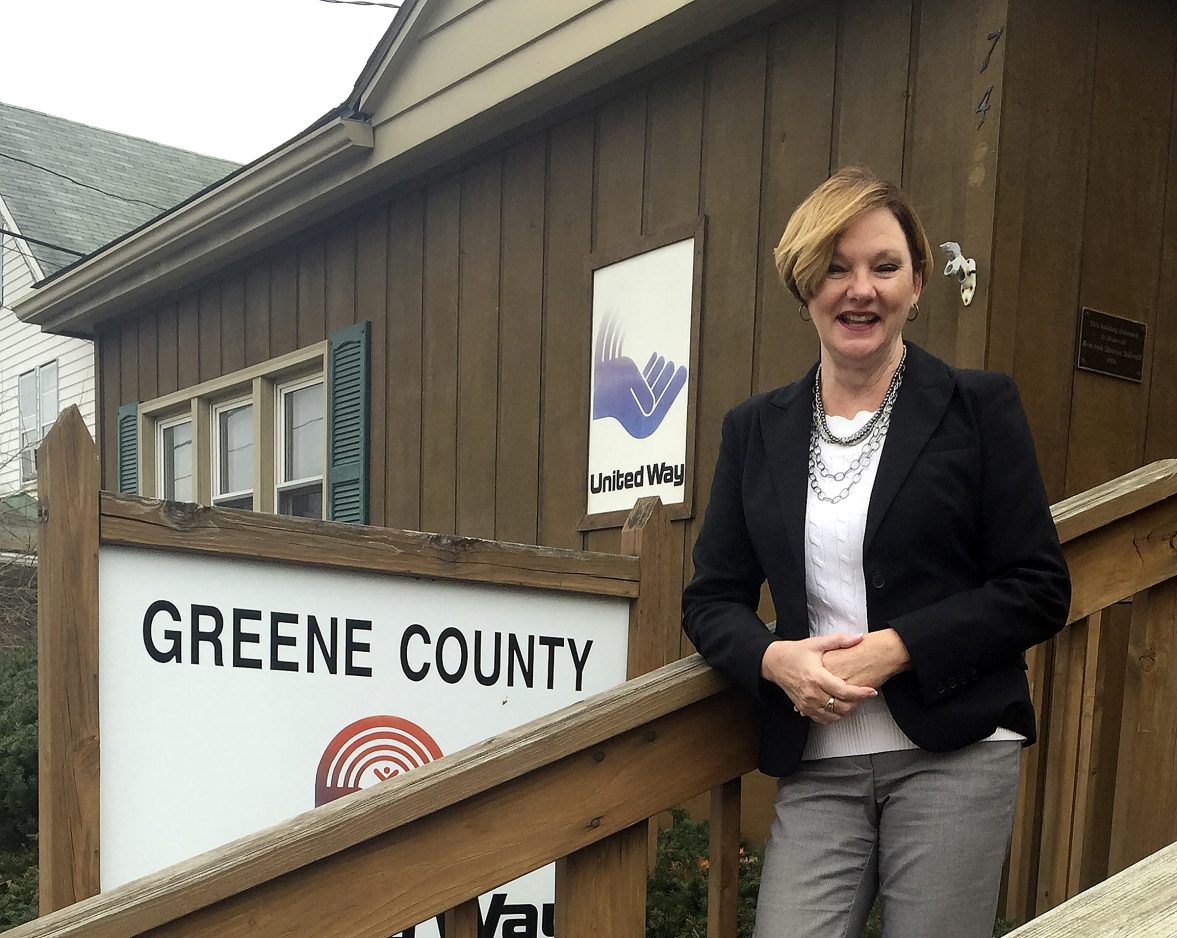
Barb Wise stands at the Greene County United Way office in Waynesburg in this file photo. The charity is experiencing fewer donations because of the downturn in natural gas and the disappearance of coal jobs.
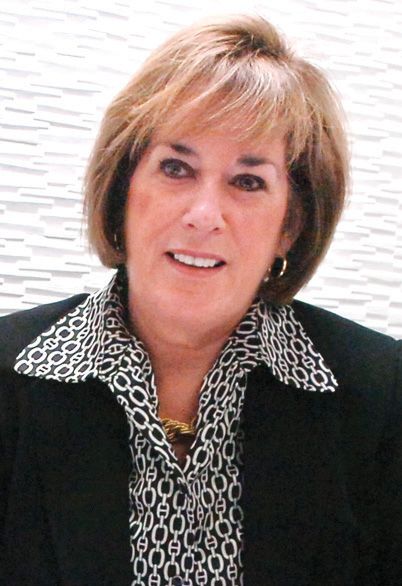
Barbara Murphy

Betsie Trew
When Washington County Community Foundation conducted its annual Day of Giving in September, the $600,000 it received in less than 24 hours was an impressive amount that any charity would be proud to claim.
Despite the generous figure, WCCF Executive Director Betsie Trew said the amount was about $100,000 less than last year’s total, which she acknowledged was the result of less giving by area energy companies, which were strong participants in the annual promotion over the past several years.
“You can’t blame them,” Trew said recently, acknowledging that energy companies don’t have the money to give that they did in past years due to the downturn in production.
But Trew and others involved with raising money for charities – specifically the United Way of Washington County and United Way of Greene County – say energy companies still want to give to their fundraising efforts, just not to the magnitude that it once was.
Industry executives have projected that natural gas’s prospects will brighten by the third quarter of next year, with the expectation that prices will continue to rebound, as they have this year.
Trew, whose organization manages $18 million in assets with the mission of improving the quality of life in Washington County by promoting and facilitating philanthropy, is hopeful that the turnaround might come a little sooner. Others, however, are not as optimistic.
Trew noted that for the most recent Day of Giving drive in September, WCCF lost Range Resources as a $10,000 sponsor of its promotion, but she added that the company remained an “in-kind” sponsor, letting the foundation use its Southpointe facilities at no charge. “They also covered the cost of the catering, which is over and above in-kind,” she said.
One benefit to having large exploration and production companies based in the area when gas was booming was they tended to bring along other companies they worked with in their supply chain, who also became charitable donors.
“Local companies that they did business with also increased their giving,” Trew said.
While energy companies, their employees and supply partners have been among some of the largest contributors to local charities, Trew said her organization saw something else occurring during the natural gas boom of the past decade.
“The greatest gifts from the Marcellus Shale came from landowners receiving record signing bonuses and royalties,” she said, noting that the largest gift WCCF received from the gas boom was $300,000 from a single landowner who wanted to share the newfound wealth.
Barbara Murphy started working at United Way of Washington County in 2007. Total donations, she said, have increased every year since. It’s no coincidence that oil and gas companies and their supply chain partners established a formidable footprint locally during this time.
“We’ve gotten hundreds of thousands of dollars from energy,” said Murphy, the chapter president. “Even last year, between Noble Energy and Range Resources, we got close to $300,000. Noble matched its employees’ gifts.”
But she isn’t sure the financial winning streak will continue with the 2016-17 campaign, partly because of the oil and gas slide.
“We’re kind of waiting for the first shoe to drop,” she said. “I’m sure it’s going to be felt, in sponsorships like a golf outing or dinner.
“I’m sure everyone is experiencing more tightening of the belt. You see a trickle down, that if (producers) are slowing down, suppliers are not seeing as much money.”
Belt tightening, literally and figuratively, is often uncomfortable. Some companies are forced to lay off employees and cut back, or suspend, charitable donations.
Murphy said two companies that “have been very generous” to her nonprofit – Noble and FTS International – are unable to participate in the United Way campaign this year.
Yet she doesn’t believe the industry is abandoning the county, in general, or her organization, in particular.
“When a business is slowing down, it’s not turning its back on the community,” she said. “It may not do what it did before, but it wants to do something.
“We’ve found that local people, who want very much to stay involved with United Way, are doing something that isn’t an official United Way” donation.
As examples, she pointed to Noble and Range Resources organizing clay shoots to benefit her organization, and FTS planning to do volunteer work at the Greater Washington County Food Bank.
Murphy’s perception that energy companies and others in the energy supply chain are still giving has been visible recently.
In September, Rice Energy handed out checks totaling $537,000 to first responders in the area, the money coming from donations the company receives from its suppliers at the annual “Marcellus Mania” picnic it sponsors. The amount this year was less than the $617,000 given in 2015, but is the second-highest total in the five years the event has been held.
Rice employees also organized a winter coat drive last month, the proceeds from which will be distributed to attendees of the company’s annual “Plate of Plenty” events later this month at Washington City Mission and the Waynesburg Readiness Center.
Murphy’s counterpart to the south, Barb Wise, said Greene County United Way hasn’t been as fortunate. While coal’s near-virtual disappearance from the region had already given her chills, a slumping oil and gas industry has her shivering.
“This is the second year we’re feeling a pinch,” said the executive director of Greene’s United Way. “Last year was really bad, and this year is probably worse because the economy in Greene County is so bad. There is no new industry coming here, no new businesses.”
Alpha Natural Resources shuttered Emerald Mine, on the outskirts of Waynesburg, a year ago. That left a county once teeming with mines with only two coal operations: Alpha’s Cumberland Mine, near Kirby, and Consol Energy’s Bailey Mine, which straddles Greene and Washington counties.
“Emerald Mine is a $50,000 campaign we lost. It’s huge,” Wise said.
The decline in oil and gas production has exacerbated the funding quandary facing her United Way chapter.
“It’s safe to say we’re experiencing a 25 percent dropoff (in donations) – at least – from oil and gas,” Wise said. “We do a campaign in the fall, but we’ll know better where that is after the first of the year.”
She pointed out that the industry has not abandoned her nonprofit. “They’re donating something, but it’s not what it was. Donations are coming down.”
Oil and gas firms also are continuing to support Greater Washington County Food Bank, donor relations coordinator Heidi Hoffman said in an email.
“Monetary donations have remained steady, and even if a company has not been able to donate cash, the company and its employees have stepped up.
“Range Resources continues with its 2000 Turkeys initiative, in addition to a recent cash donation from fundraising efforts. Columbia Gas, Dominion, First Energy and Noble Energy have also donated to our cause. Food drives and volunteerism have been on the rise, with help from FTS International and Rice Energy.
“Collectively, we have not seen a major downturn in donations.”
Matt Pitzarella doesn’t deny the energy slump has had debilitating effects nationwide. But he maintains that Washington County, where he grew up, has distinguished itself as a fighter.
“During the downturn, Washington has done better than any other county in Pennsylvania – and maybe the United States,” said Pitzarella, director of corporate communications for Range Resources. “The number of wells drilled here has remained consistent.”
His company is based in Fort Worth, Texas, but has had a long, strong presence in Pennsylvania. Range has operated in the state for 40 years, largely in the northwest quadrant.
It has a shorter, but stronger, presence in Washington County, where it drilled the first horizontal well in the Marcellus Shaler – Renz in Chartiers Township. “Oct. 28, 2004,” Pitzarella said from memory.
Range later established its Appalachian Basin headquarters in Southpointe. The company drills in Washington County, not Greene, and is devoted to the county.
He said the oil and gas producer has not cut back on philanthropy there, but is “doing some things differently. We’re spending less in philanthropy, but more in Washington County. We give less in, say, Fort Worth. Our headquarters are there, but this is where we drill.”
Range, according to Pitzarella, works with about 200 nonprofit agencies and groups in the county – some small, many youth-oriented. The company, he said, has “invested around $10 million” in them over the past decade-plus and is involved with about 225 community events a year.
Despite an overall reduction in energy production, Pitzarella said Range “has supported more organizations over the past two years than ever before.” The motivation was simple.
“In some ways, we felt it was important to go above and beyond during the downturn. We realized there was a perception, a fear, that (oil and gas production) might go away. We wanted to assure people this is not going away.”
Trew, who was among several hundred people who attended an industry-sponsored event in April in South Franklin Township where gas executives predicted the mid- to late-2017 turnaround for natural gas here, is hoping for an earlier return.
“I think it may come a little bit sooner,” she said. “I’m seeing a bit more activity.”