

Area residents, groups reach out to help feline friends
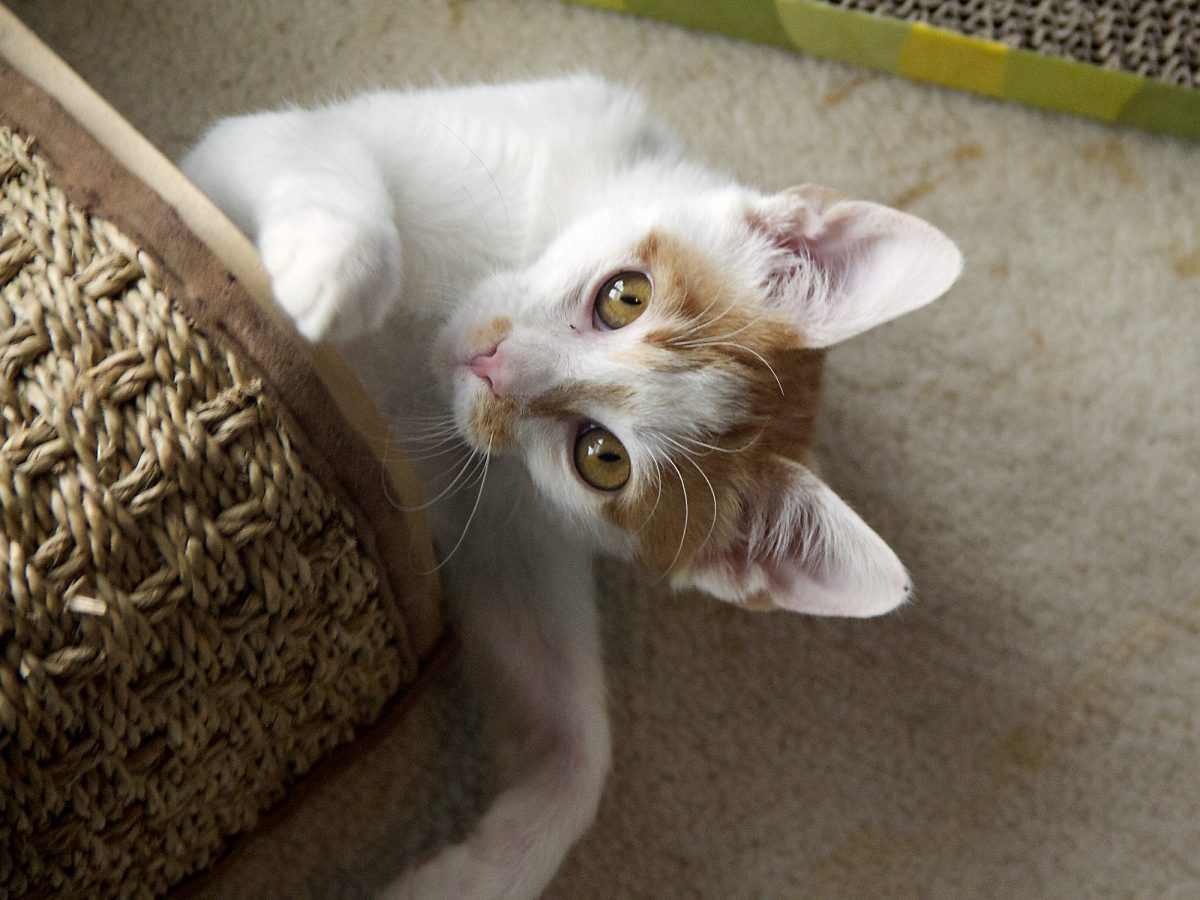
Buddy shows his playful side, despite his extensive injuries.
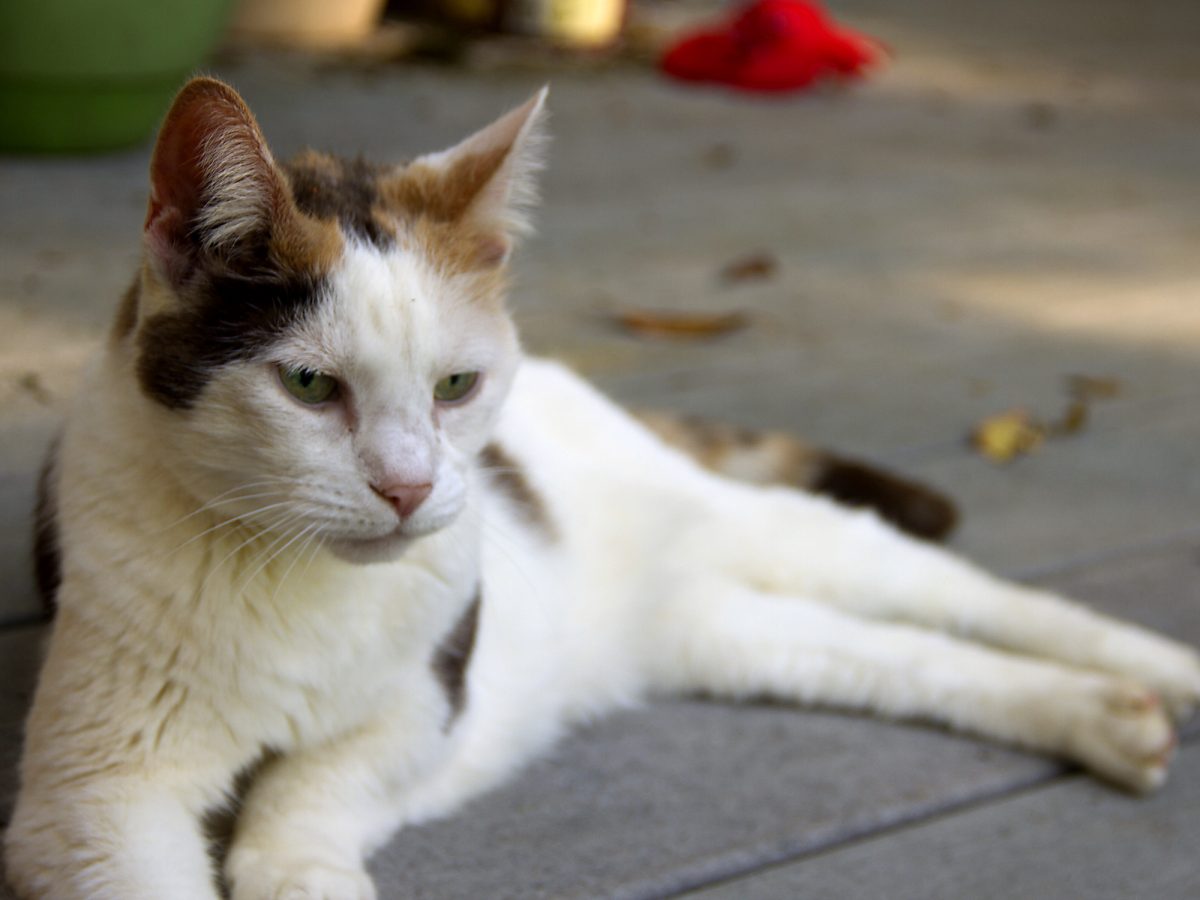
An Upper St. Clair family adopted Evie from Bette Morton of Monongahela 14 years ago.
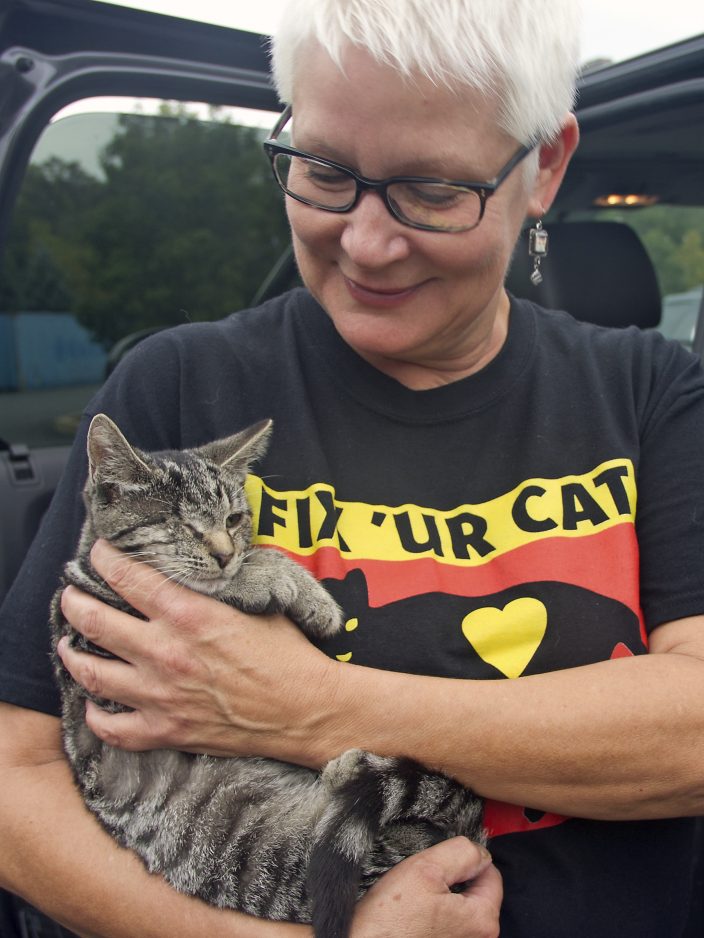
Michelle Bruce holds a cat named Sadie.
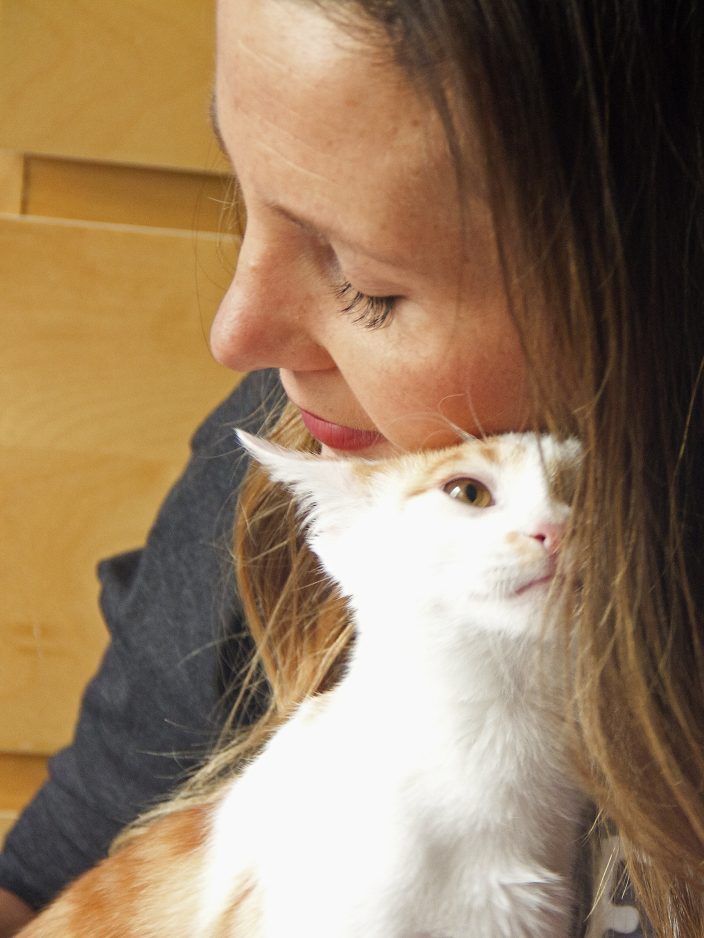
Margo Cicci Wisniewski has been caring for Buddy and is raising money for his surgery.
If a cat’s name is supposed to reflect its personality, Margo Cicci Wisniewski did a splendid job with Buddy.
Sit on the floor near the orange-and-white male, and he’ll crawl right onto your lap to snuggle. Then he’ll stand up to try to give your grinning face a cat-kiss, which is bound to tickle if you haven’t shaved for a while.
Buddy is probably six months old and underweight for his age, but all in all, he’s in great shape considering what happened to him in early August.
“His injuries indicate that he was hit by a car,” Wisniewski said. “He was found by the side of the road with clearly broken bones, and he had a big wound on him that was already filled with maggots. So he had been there at least 12 hours, probably.”
The South Fayette Township resident, who is on the board of directors for the regional Homeless Cat Management Team, offered to add Buddy to the long list of kitties that she has fostered as they recover their health.
For Buddy, that meant overcoming a broken femur, crushed pelvis and fractured sacrum, a lower-back bone. Even more critically, his injuries caused him to be unable to pass waste, a situation that led to the possibility of him being euthanized.
He eventually came around in that regard, but he still needs a procedure called a femoral head ostectomy on his back legs.
“Basically, the femur heads on both sides are fractured, and they’re not connected to his legs,” Wisniewski explained. “So they’ll take the femur head off and they’ll create what they call a false joint.”
That should make Buddy almost as good as new, at a cost of about $3,000. Fortunately for him, and thanks to his foster mom telling his story through social media, he has plenty of well-wishers who are willing to donate on his behalf.
Wisniewski and other volunteers with the Homeless Cat Management Team are among a growing number of Western Pennsylvania residents who take an increasingly active role in taking care of their less-fortunate feline friends.
“I just know that they need help,” Bette Morton said. “I want to stop the pain and suffering that they have to endure when no one is caring for them.”
As a co-founder of the Valley Pet Association, Morton has been helping animals for 30 years and continues to house cats in her Monongahela home until they are adopted.
“I generally find homes for all of them, unless they’re antisocial,” she said. And those less-than-friendly felines spend the rest of their days with her.
While adoption certainly is an objective for most cat-advocacy groups, probably their key point of emphasis is controlling the population, which in turn helps alleviate the need to find homes for so many animals.
Spaying or neutering also serves to limit the number of feral cats: those with limited or no contact with people, as opposed to strays, which have experienced human interaction or are young enough to be socialized. As such, ferals are not good candidates for adoption.
“According to the Humane Society of the United States, one unsprayed female cat can produce up to 50 kittens in a lifetime, and that can happen pretty damn fast,” Peters Township resident Michelle Bruce said.
She is co-founder of Fix ‘Ur Cat, a program that provides low-cost spay and neuter opportunities in Washington County.
”There’s nowhere for these animals to go,” she said. “So the only thing you really can do is control the population, be sure they’re vaccinated, and Mother Nature will slowly diminish the numbers.”
Another Peters Township resident, Faith Bjalobok, founded the Fluffyjean Fund for Felines, a trap-neuter-vaccinate-return program. Prior to being returned to their environment, the cats’ left ears are clipped so that they can be identified as having been treated.
Bjalobok, a Duquense University professor whose field of interest is applied ethics, also administers the Washington Area Humane Society Colony Cat Project. The focus is on taking care of cats in locales where large numbers of them live, with some 80 such spots identified in Washington County, she said, many on farms or in trailer parks.
Duquesne colleague Dr. Becky Morrow, a veterinarian who founded New Kensington-based Frankie’s Friends Cat Rescue, agrees about addressing concentrated feline populations.
“A critical component people sometimes miss is that you have to do it colony by colony,” she said. “It’s common sense, but it’s only recently that it’s been promoted.”
Another group that provides low-cost opportunities for spaying and neutering, Frankie’s Friends also provides veterinary forensic services and expert witness testimony for cruelty cases. In fact, Morrow named the organization for a survivor of a so-called cat sanctuary in northeastern Allegheny County against which she provided testimony that resulted in the facility being shuttered and the owner convicted of cruelty to animals.
In addition, Morrow’s group helps injured cats, such as one that recently was hit by a train, losing a leg and part of its tail.
“A lot of times, people don’t give them a chance to try to recuperate from some of those situations,” she explained.
Bruce certainly does.
“It is amazing how they can survive,” she said. “They may have the most horrendous wounds or live a horrible life, but they can survive. They’re tough and resilient and forgiving. Some of these cats that have been treated so poorly really make great house pets at the end of the day.”
Although Fix ‘Ur Cat pretty much has a mission defined by its name, the group also helps find opportunities for adoptions, especially those dealing with adversity.
“I recently re-homed a deaf kitten, Ollie,” Bruce said. “He was so cute. He went to a very nice couple who had an 11-year-old cat.”
She also was caring for another young cat, Sadie, who was found in Masontown, Fayette County, and is missing an eye but seems to be none the worse for the wear, otherwise.
And of course, Wisniewki’s buddy Buddy could be a poster cat for toughness, resilience and the ability to inspire human affection.
“You just don’t know what you’re going to find when you pick these cats up,” she said, “and the connection that you’re going to make with them.”
Coming next: Learn more about the importance of spaying and neutering cats.After a week of discomfort (read: PAIN!), I had to see a doctor about my shoulder. I went to the place my brother Brian lovingly refers to as “Doc in the Box.”
I was on my way home from work, and I had to wave at someone for letting me merge into the lane. Realizing it had been over a week and I couldn’t get my arm up to my ear made me detour to the doc. It was my first time in the fast food of medicine, and I didn’t know what to expect. It looked like any other medical facility. It just happened to be open after 5. It was brimming over with sick people. It was like Happy Hour, except no one was happy.
I looked around at people in various levels of distress. They played contemporary music over the PA. I think Queen’s “Another One Bites the Dust” was an odd choice in a medical office, but I guess they don’t pick and choose the music. I hoped no one was in the back room getting a fatal diagnosis while their spouse bopped to the music: “How do you think I’m going to get along, without you when you’re gone?”
Finally, they called my name. I never got to see the big renovation reveal on the HGTV show that was playing in the waiting room. I assume it went from shack to spectacular. It usually does.
I went back into the little room and went through the regular routine. The nurse asks a bunch of questions and then the doctor comes in and asks the same questions. Can we cut out the middlewoman next time? He decided he needed more information before he moved my arm around willy-nilly.
The nurse came back and took me to another room. It was time to pose for my X-rays. She said, “Turn slightly this way. That’s it,” and “Now I need a three-quarter turn. Perfect.” I said, “I used to model.” She believed me. Had she inquired further, I would have told her that I was J.C. Penney’s Husky Boy jeans model in the mid-to-late ’80s. It wouldn’t have been true, but I like to keep myself amused.
After the doctor examined the X-rays, he came back. I am assuming he put his hand to his chin and said, “Hmmm” several times before returning to me.
The doctor told me I probably sprained my AC joint. I didn’t even know my joints were alphabetized. Don’t ask me where the B went. He talked to me about my clavicle, and I told him I never played. It turns out the clavicle is a bone and not a woodwind instrument. I was pretty sure I heard someone play the clavicle at Heinz Hall, but I must have been mistaken. It’s a fancy word for collarbone, but you guys probably already knew that. You’re smart like that.
He said, “OK. Take two extra-strength Tylenol several times a day.”
Wait. What? No prescriptions? I thought I deserved medication and not just some over-the-counter crap. I bet I would have gotten meds if I went to the emergency room.