

Hundreds discuss heroin epidemic
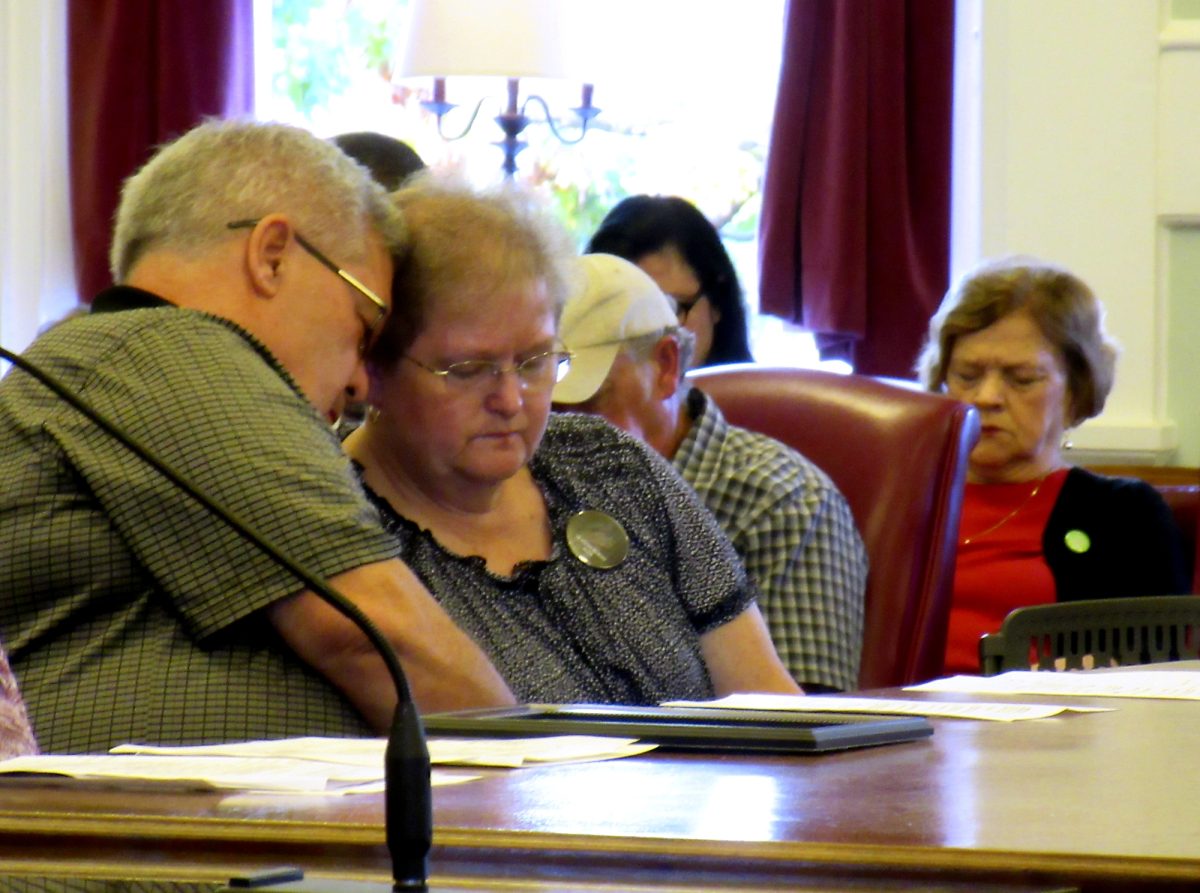
Don and Lynn Bird, of Morris Township, pray together during a community meeting on the heroin epidemic Thursday night at the Greene County Courthouse. The couple shared their story with the crowd about losing two daughters to heroin overdoses in 2014.
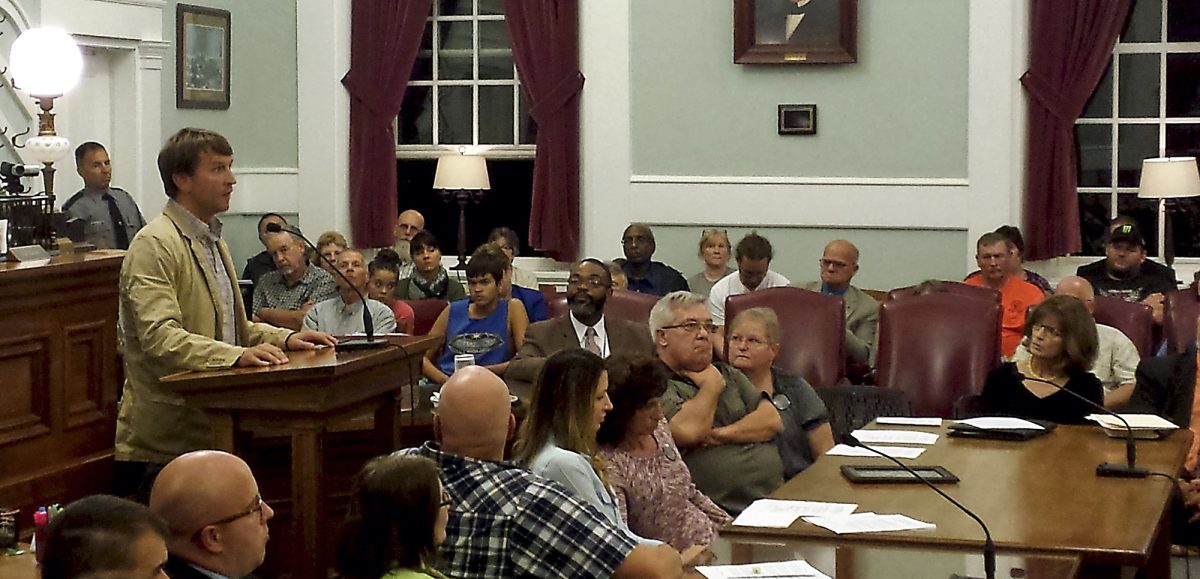
Jonathan Johnson, treasurer of the Coalition for a Brighter Greene, speaks to a crowd that packed the Greene County Courthouse Thursday night for a meeting about the heroin epidemic.

A group of singers with Heaven Bound Ministries sing a Christian hymn to open a community meeting about the heroin epidemic Thursday night at the Greene County Courthouse.
WAYNESBURG – Tears, passion and hope were the common denominators that brought hundreds to Greene County Courthouse Thursday night for a community meeting on the heroin and opiate epidemic.
The meeting, organized by Coalition for a Brighter Greene, began promptly at 6 p.m. with three taps of President Judge Farley Toothman’s gavel, each with a different meaning.
“The first tap is for those we’ve lost,” Toothman said. “The second tap is for those who are struggling presently, who are here and those who aren’t here. The third is for our future together.”
The three-hour meeting highlighted some of the events and programs the coalition worked on over the past year, like a countywide anti-drug curriculum in all of the schools and the group’s march against heroin at the county fairgrounds in May.
The meeting also had a heavy Christian theme with Heaven Bound Ministries leading the audience in singing a hymn. Richard Berkey, president of the coalition, also started the meeting with a prayer.
“If we are going to fight against the epidemic in our community and in our country, then we need to turn back to God,” he said.
The event included 15 special speakers, several of whom gave testimonials about loved ones they’ve lost or they’re own struggle with addiction. Don and Lynn Bird, of Morris Township, talked about their two daughters who died in 2014 of heroin overdoses.
Ashley Potts, with the crisis diversion unit of Southwestern Pennsylvania Human Services, shared her story from 10 years ago about being addicted to heroin, homeless and suicidal. She’s been sober for 10 years and made it her life mission to end the stigma surrounding drug addicts, especially ones with felony records.
“There are some of us that make it and become productive members of society,” she said. “I haven’t met a drug addict who isn’t intelligent – we’re pretty resourceful people. Treat us like we’re humans because we’re humans too.”
Meanwhile, Steven Kontaxes, a detective supervisor with Fayette County, condemned the use of suboxone as treatment for opioid addiction.
“There’s a pill for everything now,” he said. “I fear that we think in many cases, the answer to drug addiction is another pill. The community needs to be aware of the risks.”
Kontaxes talked about his involvement in an investigation team that shut down a Fayette County methadone clinic and charged the owner and the medical doctor with multiple counts of illegal distribution of drugs.
“I cannot think of a worse crime than taking advantage of people who are struggling with addiction,” he said.
Jonathan Johnson, treasurer of the coalition, said their organization isn’t against suboxone treatment, but they try to promote “best practices.” He said he would like to see more suboxone clinics forcing patients to take their prescriptions on scene instead of sending patients home with a month’s supply, resulting in less selling and trading of suboxone in the streets for heroin.
The meeting went past 9 p.m., but some community members were upset they weren’t given much time to ask questions or make comments.
A few people asked if the coalition would work on bringing a drug treatment facility to Greene County. Bob Terry, a member of the Steps Inside nonprofit, noted the county doesn’t have any designated detox locations for people who need immediate recovery.
Johnson agreed the meeting was more “agenda driven” and couldn’t address some of the issues brought up at the end because they were “pressed for time.”
“I would’ve liked to see more input from the people,” he said.