

Lieutenant governor tours natural gas emergency training site
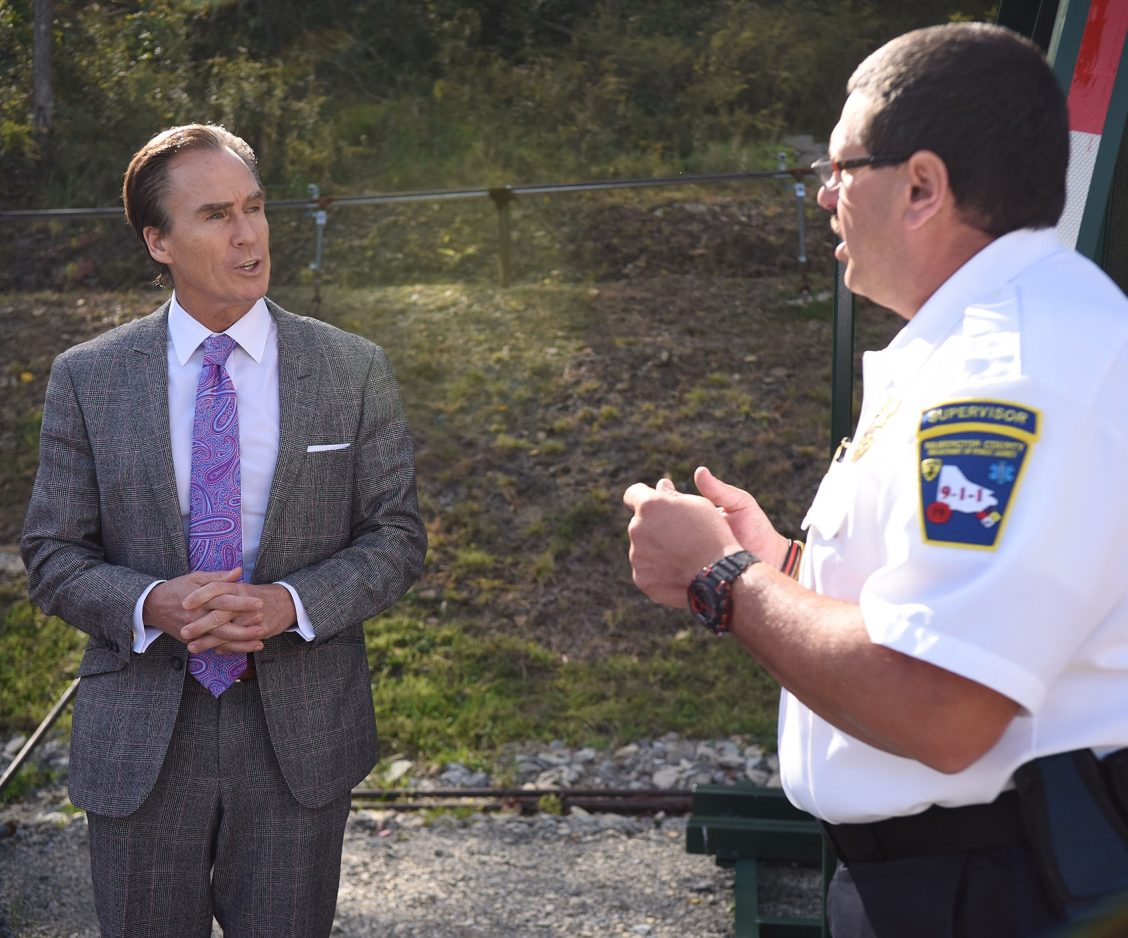
From left, Lt. Governor Mike Stack and Washington County Deputy Director for Public Safety Ron Sicchitano discuss how training works at Washington County Fire Academy in Chartiers Township.
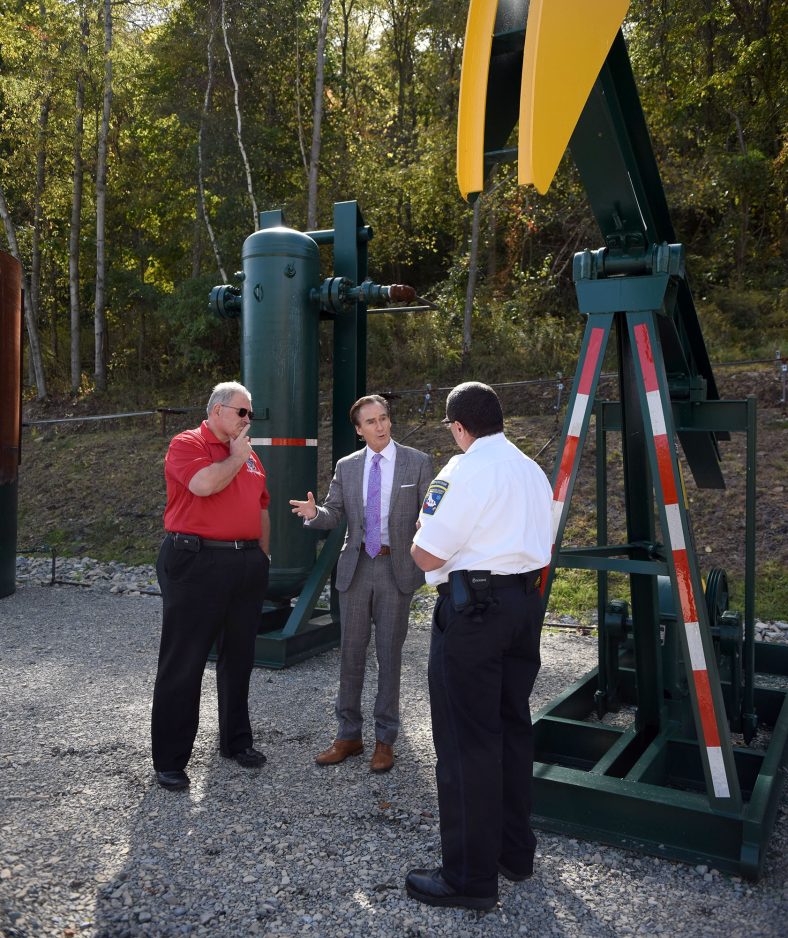
From left, state Fire Commissioner Tim Solobay, Lt. Governor Mike Stack and Washington County Deputy Director for Public Safety Ron Sicchitano discuss the importance of the Washington County Fire Academy in Chartiers Township. Stack visited the academy Friday.
Pennsylvania Lt. Gov. Mike Stack said Friday following a tour of the Firefighter Natural Gas Training Center in Chartiers Township that the project represents the cutting edge of preparing first responders for known and unforeseen emergency conditions at well sites.
Stack, who chairs the Emergency Management Council for Gov. Tom Wolf, said proper training is essential for firefighters and other emergency personnel to know how to respond to emergencies that could occur at a gas well site.
Speaking to reporters following his tour of the training center, which is part of the Washington County Fire Academy, Stack said, “There’s no substitute for training; you always need more, not less.”
The tour was provided by state Fire Commissioner Tim Solobay and Ron Sicchitano, Washington County’s deputy director for public safety.
The two men said the 1-acre natural gas training site that sits on the grounds of the 33-acre academy is unmatched by other facilities in the Keystone State, and is the best equipped outside of another in Texas.
“Governor Wolf and I take seriously emergency management training,” Stack said, adding that the Chartiers site “sets a model for what other parts of the state should be doing.”
While acknowledging the current downturn in natural gas production in Pennsylvania, Stack said, “When the market improves more, I think we’re going to be a little more active” in training at sites like the local one.
Sicchitano said since its opening a year ago, the site has trained about 150 first responders from the area, as well as about 50 personnel from the MarkWest natural gas fractionalization plant just across the road from the academy.
Stack said emergency response training is constantly evolving, noting that it wasn’t until long after firefighters heroically rushed inside the World Trade Center in the aftermath of its destruction by terrorists on 9/11 that experts realized it should have been handled differently.
As for the training being given to help firefighters at well sites in Washington County, Stack said they need to be prepared for both expected and unexpected scenarios.
“Every scenario is in play, especially in this post-9/11 world,” he said. “You have to be able to deal with (both the) expected and the unforeseen.”
Solobay and Sicchitano noted that the roughly $500,000 spent to date on the natural gas training center has come from the natural gas industry.
“We want the natural gas industry to grow and do well, so you have to have all these guys partnering up,” Stack said.
“These guys are on the cutting edge because they’re thinking of these things ahead of everybody else.”