

Classrooms dark at Cal U. on second day of faculty strike
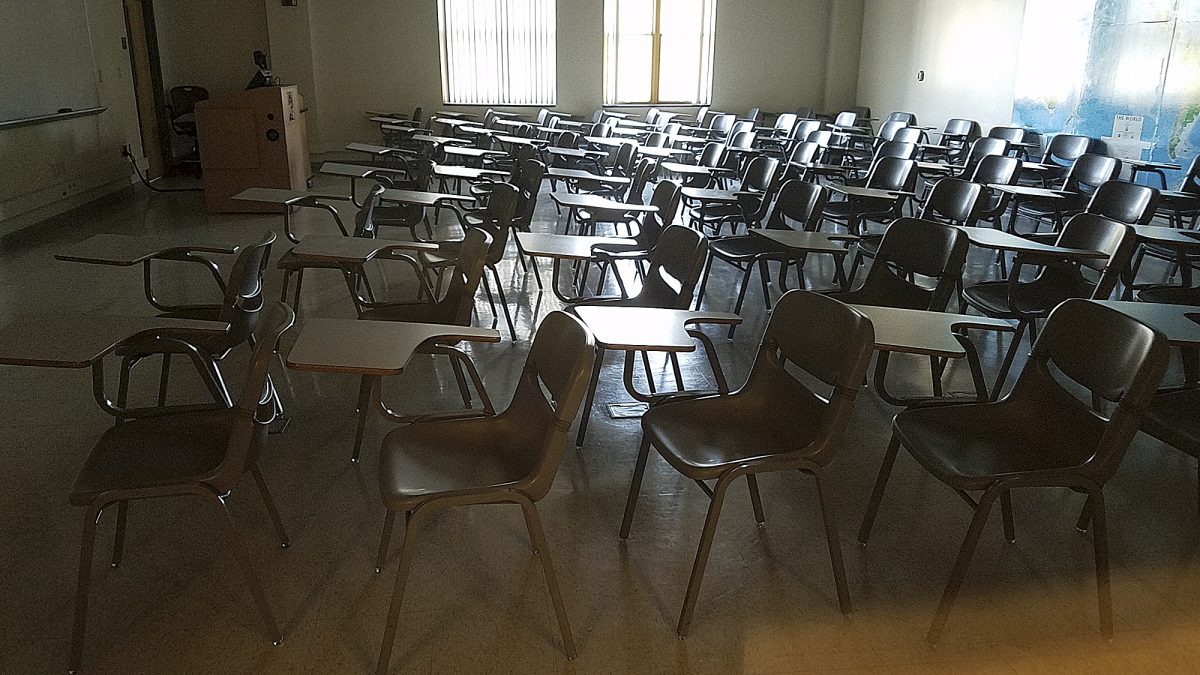
One of many classrooms that were locked and dark Thursday at Eberly Hall at California University of Pennsylvania on the second day of a strike by state faculty members
Cal U. student Zachary Filtz says communication has been lacking during a strike by faculty at state schools.
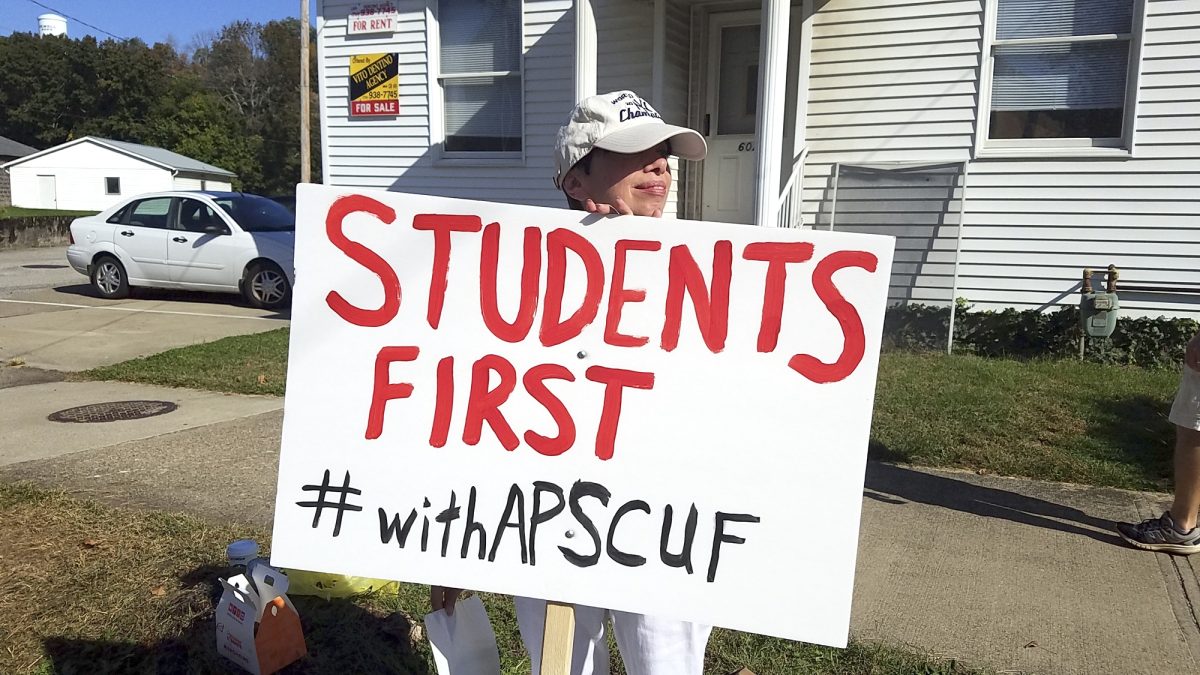
California University of Pennsylvania biology professor Paula Caffrey walks a picket line Thursday on the second day of a strike by state faculty members.
CALIFORNIA – Nearly every classroom in two buildings at California University of Pennsylvania was dark and locked Thursday even though the state urged students to still show up for classes on the second day of a faculty union strike.
That was the case at Eberly and Duda halls, buildings at separate main entrances to the campus where faculty members manned picket lines as they awaited word on when the state System of Higher Education would return to the bargaining table with their union.
”So far all of my classes are closed,” said Don Neil of Pittburgh, a Cal U. junior who joined the faculty on a picket line Thursday at Third Street.
“There’s no one there. There’s no place to sign in. The doors aren’t even open.”
Other Cal U. students had similar concerns, because they were told to show up for classes, and that the State System had a contingency plan for dealing with the strike.
The following message for students at the 14 state-owned universities remained Thursday on the State System’s website: “Regardless of the faculty union strike, students are required to report to scheduled classes unless the university indicates otherwise.”
Cal U. spokeswoman Christine Kindl said all 14 universities were given a contingency plan, and that Cal U. was implementing it Thursday.
“The university is absolutely open,” Kindl said.
She said the most current list of classes being held by professors who are crossing the picket lines at Cal U. will be posted Thursday on a website accessible only to students.
“We’re working very hard to communicate with students with lots of different ways,” Kindl said.
Cal U. senior Zachary Filtz of Finleyville said he hadn’t received an email from the university since about the time the strike was announced at 5 a.m. Wednesday by Association of Pennsylvania State College and University Faculties.
Filtz said the university initially informed students that someone, an administrator or teacher, would be at the classrooms during the strike.
“It’s not the case at all,” said Filtz, who is supposed to graduate in December.
Chase Keller, a junior from Connellsville, said he was unhappy about the locked classrooms.
“All of mine are closed except this one,” Keller said, referring to his mock trial class in Duda Hall.
Filtz said no one has contacted him about graduating, despite a posting at the State System website that it would be flexible with students about to graduate in December.
“December graduates are very much on the minds of our administrators, but it’s too soon to be specific,” Kindl said.
“Much will depend on the duration of the strike. If the strike is resolved quickly, the response will be different than if there is a longer-lasting work stoppage,” she said.
The State System had yet to return to the bargaining table by 2 p.m. Thursday, APSCUF spokeswoman Kathryn Morton said.
The union and State System are stalled on talks about issues such as how adjunct professors are used and health care.
The union representing about 5,500 professors and coaches had worked 478 days without contract before the strike began. Nearly 110,000 students are enrolled at the 14 universities.
State System spokesman Kenn Marshall said it remained committed to reaching a fair contract with APSCUF as soon as possible.
“Even though there are no formal negotiating sessions underway, the State System is working hard to find a path forward,” Marshall said.
He said students are being told they need to go to classes because there are still faculty teaching. Systemwide, according to Marshall, about 20 percent of faculty are not striking.