

Avella grad climbs the FBI ladder
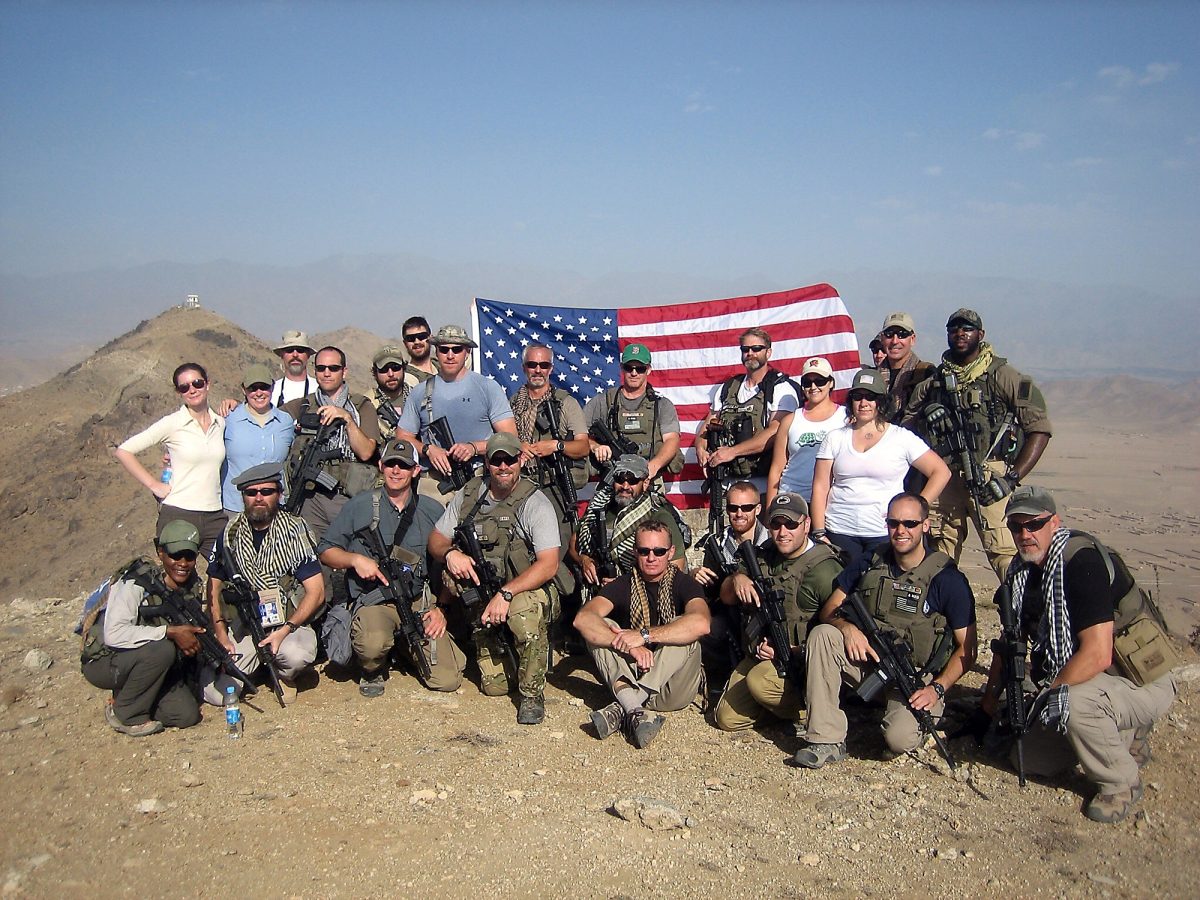
Robert Jones, front row with legs crossed, is shown with part of the FBI Kabul team in 2010 in the foothills of the Hindu Kush Mountains, a few miles north of Kabul, Afghanistan.
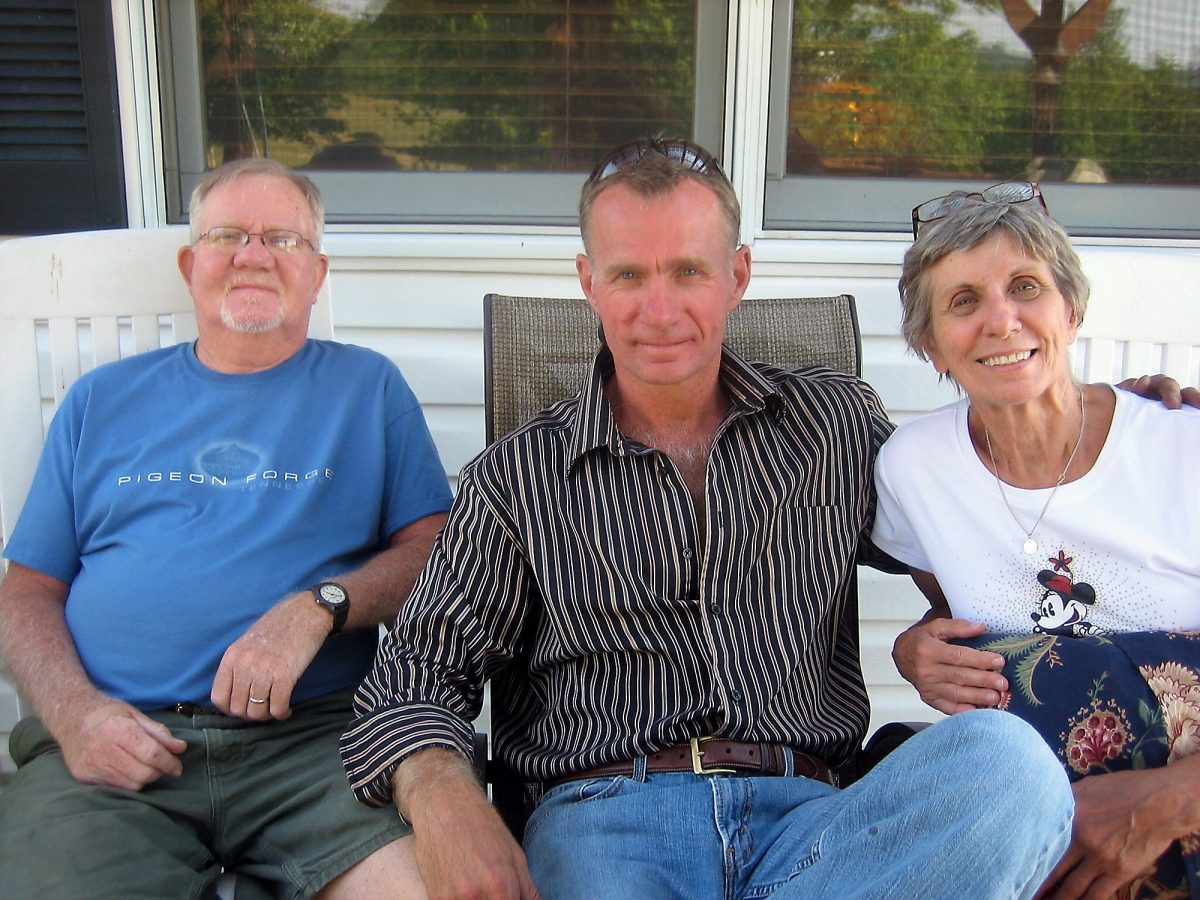
Robert Jones in 2014 with his parents, Bob and Bernadette, in West Middletown
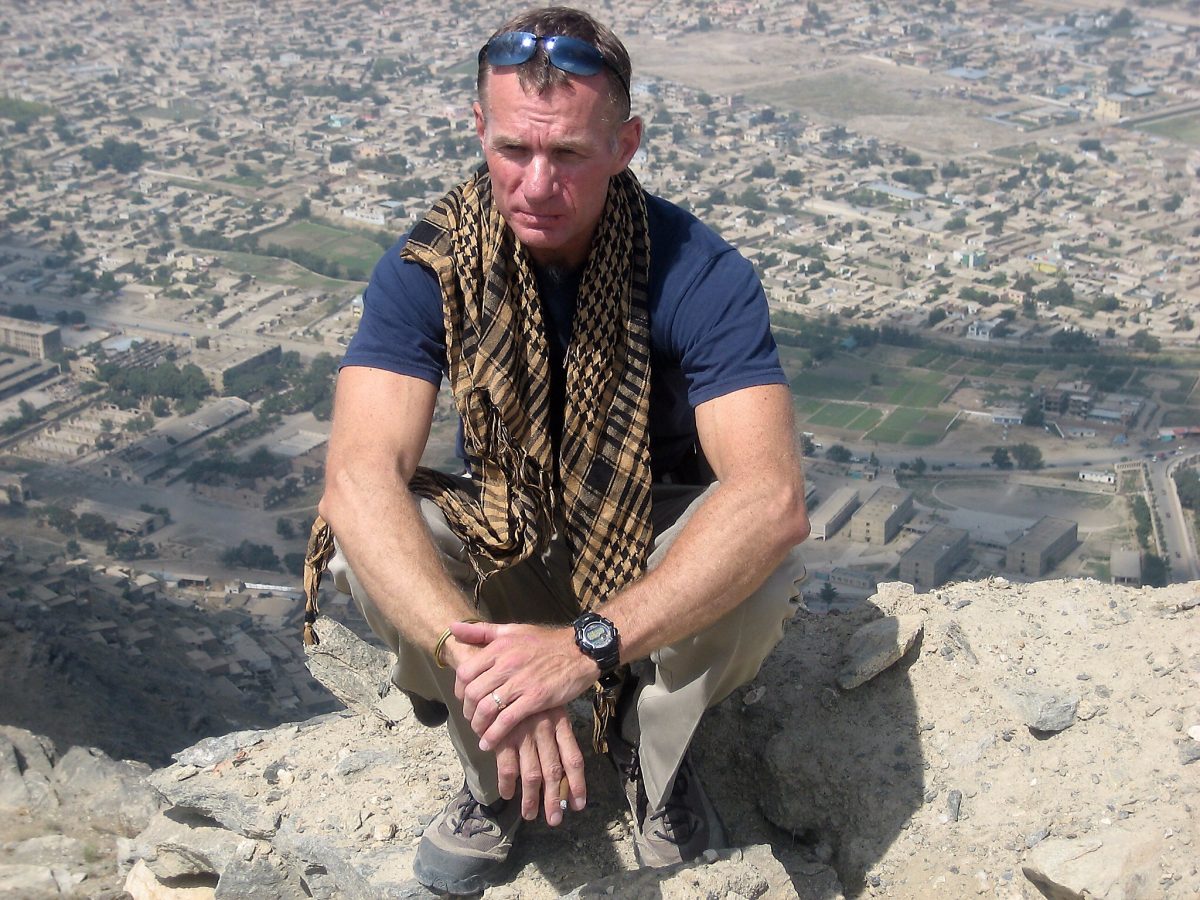
Robert Jones is shown in the hills above Kabul, Afghanistan, in 2009.
In December 1991, the Observer-Reporter profiled 27-year-old West Middletown native Robert Jones, a U.S. Marine Corps captain recently awarded a Bronze Star in Operation Desert Storm.
The 1982 Avella Area High School graduate spoke about the pull he felt to join the Marines, even as a child.
“I wanted to be one of the best,” he said. “I consider it almost like a calling to the priesthood that I joined.”
A natural – if unexpected – career move was to the Federal Bureau of Investigation.
“I had no idea I would ever end up in the FBI,” he said Aug. 25 from the bureau’s headquarters in Washington D.C. “We’re not a military organization, but there’s a very structured chain of command. Marines like that. They also like the challenge. It’s just kind of a neat fit.”
Jones took up the challenge and, for the past 20 years, worked his way through several divisions, most recently being named assistant director for the weapons of mass destruction directorate.
His military career began when he entered the Marine Corps as an infantry officer immediately after earning a degree in criminology from Pennsylvania State University. Jones was deployed all over the world, and in 1991, received the military’s fourth-highest award, credited with getting his platoon of 19 soldiers out of an attack in a Saudi Arabian village.
Five years later, with more than 10 years of service, he was ready for a change when a veteran FBI agent recruited him.
Jones joined the national security organization in 1996, assigned to the Kalamazoo Resident Agency, where he investigated drug, violent and white-collar crime, as well as terrorism cases. While there, he received a director’s award for breaking down a domestic terrorist group.
“It was really enjoyable,” he said of his first assignment. “The best place to learn is in a small office. … You really get your hands dirty.”
After 9/11, protecting the country from terrorist attacks became the bureau’s top priority, and staff was reconfigured to reflect that. Jones was promoted to the counterterrorism division charged with investigating Sunni extremism.
“Probably the biggest change (in the FBI after 9/11) was the counterterrorism footprint was much bigger,” he said.
Thus began a series of moves, from an office in the Buffalo, N.Y., division, to Iraq, and to Cleveland.
“But I still rooted for the Steelers,” said Jones.
His next move was to Kabul, the capital of Afghanistan, during the height of insurgency.
“I loved the Afghan people. They reminded me a lot of people in Western Pennsylvania – scrappy, nice and friendly,” Jones said. “If you were friends, they’d defend your honor forever. … And despite what you read in the newspaper, they were receptive to our help.”
In 2010, Jones became a headquarter section chief in the counterintelligence division, which he describes as “mostly spy-catching.” Next, he was a special agent in charge of the Indianapolis, Ind., office.
This August, Jones was promoted to assistant director of the weapons of mass destruction directorate, created in 2006 to prevent and tackle incidents involving radiological, biological, nuclear or chemical weapons. In his new role, he works closely with the White House and Department of Defense.
“I spend a lot of time with staff, finding out what’s going on in field divisions,” he said. “I spend a lot of time with people, making sure they have what they need.”
John Perren, recently retired assistant director of the weapons of mass destruction directorate, has known Jones from the beginning of his FBI career.
Lauding Jones as a “self-starter” and a “machine,” Perren recalled Jones’ service in Afghanistan.
“I had a policy back then of sitting with every agent that deployed to ensure their well-being, especially after a difficult deployment in a hostile environment (or) war zone. I would ask for their input on how we as an organization could do better with these types of deployments. Every agent deployed would talk about the great leadership that Bob demonstrated and how ‘he took care of his people.’ This exemplifies the person that Bob is – a great leader who takes care of his people,” Perren said in an email. “When I was looking for a successor … Bob made the short list. It was a no brainer.”
While many former Marines make up the bureau’s 36,000 employees, Jones is proud of the diverse backgrounds of agents and staff. He’s encountered tennis professionals, pharmacists and ship captains.
“We’re always looking for good people. It’s quite selective. … But if a former Marine country boy from West Middletown can do it, anyone can do it,” Jones said.
Jones, who lived in Washington until his family moved to West Middletown when he was in seventh grade, said he still makes it home to visit his parents, Robert and Bernadette.
“I’ve moved a lot. It’s difficult on my family,” he said of his wife, Erin, and children, Shane and Lauren. “As I’ve matured, I’m getting a feel to come back home. I’ve gone everywhere with the anticipation I’ll get back to Western Pennsylvania.”