

Toddlers learning the meaning of sign language
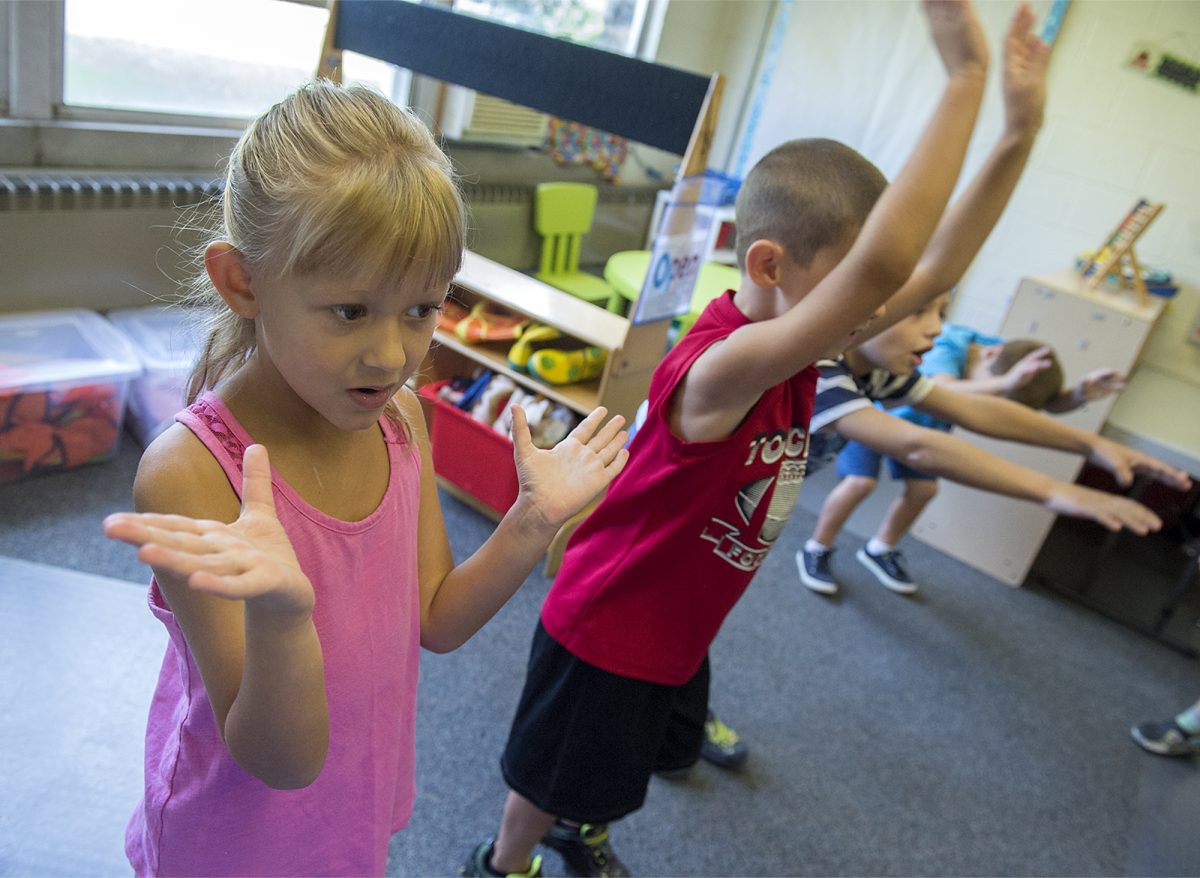
Madelyn Knittle, 5, and Chase Mortland, 6, dance during a song using sign language at Sing N Say Learning Center in Falls Township.
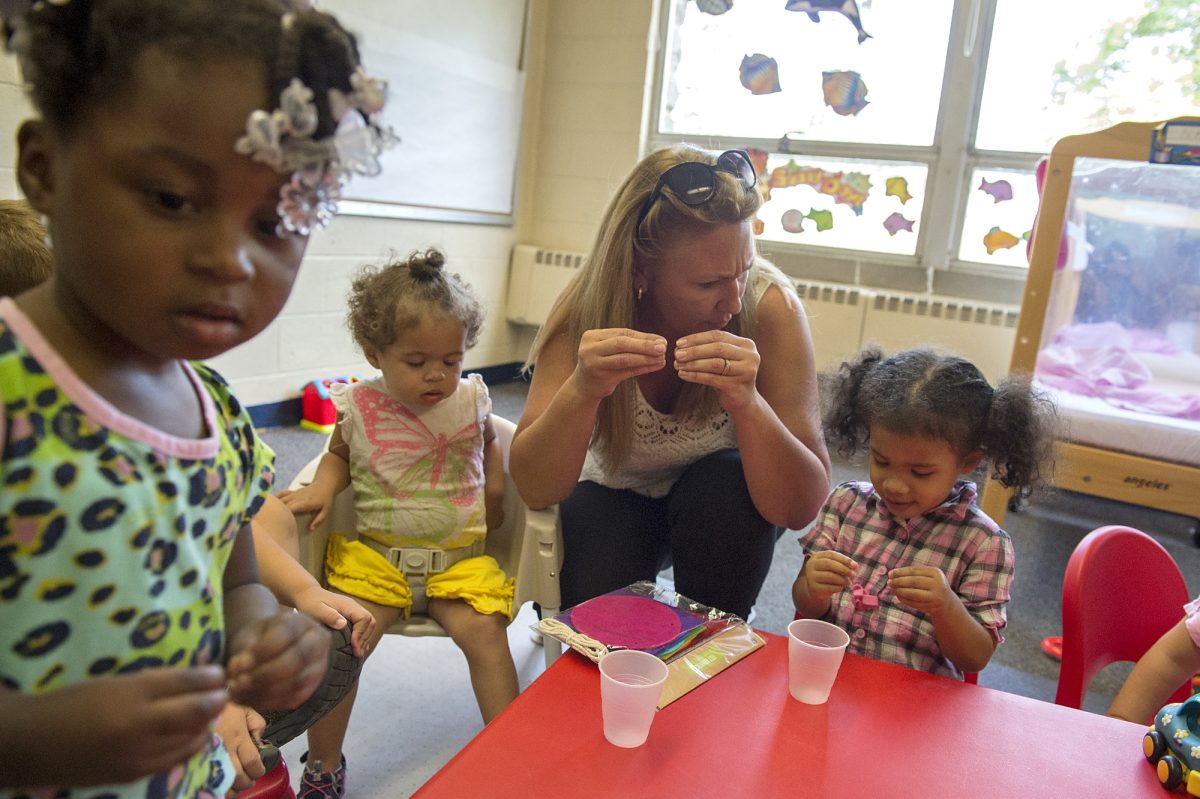
Assistant director Kathy Toth works with toddlers during sign language learning at Sing N Say Learning Center in Falls Township.
FAIRLESS HILLS – When they want more Fruit Loops, the toddlers at Sing N Say Learning Center let their little fingers do the talking. They sign.
They’ve learned to pinch their fingers together by their mouths as a sign for eating, to say they’d like more cereal in their snack cups. Older preschoolers showed the sign for a cat by spreading their fingers apart as whiskers.
The young children at the school are using their hands to communicate, even when they don’t know what the words are. Sign language is a tool that speech therapists say can help little kids communicate their needs before they can talk.
“It’s fun to learn to sign. ‘Sesame Street’ has been doing it for years,” said Jennifer Burstein, manager of the speech-language pathology program at The Children’s Hospital of Philadelphia. Burstein’s department diagnoses and treats thousands of children each year with communication issues.
Limited research “suggests that baby sign language might give a typically developing child a way to communicate several months earlier than those who only use vocal communication,” according to a Mayo Clinic report by Dr. Jay Hoecker.
It’s is especially true for children between 8 months and 2 years of age who are beginning to know what they want or need but don’t have the verbal skills to express themselves, according to Hoecker. Children with developmental delays might also benefit, he said, but more research is needed to show if it promotes advanced learning.
Children learn to speak as they mimic their parents and other people in making sounds. Some children are earlier talkers than others, Burstein said, so parents shouldn’t be too anxious about a child’s delayed speaking unless the child hasn’t started babbling by 12 months or said his or her first word by 12 to 18 months. At 2, a child should have a vocabulary of about 50 words and start to put them together to form phrases and sentences, Burstein said. “More cookie,” as an example.
Parents should “always stick with their gut” reaction, if they’re concerned about their child’s communication skills being delayed, Burstein said. The first thing to do is get a hearing test. Some young children can have issues with speech while others have trouble with language, using words correctly. If an evaluation determines a child needs speech or language therapy, sessions can last from a couple of months or longer, depending on the severity of the condition. When a child gets to kindergarten, therapy can continue in school, depending on the diagnosis.
Signing can be part of therapy because children sign as they learn to speak, she said. A baby who holds his or her hands up to be picked up is letting the parents know what he or she wants, she explained.
Kathleen Aviles, the owner and operator of Sign N Say center on Trenton Road in Falls, said the school is teaching its toddlers and preschoolers to sign because she knows it helps them avoid the frustration of not being able to make their wishes known.
“Sign language increases fine motor development in children. Sign language is a big, helpful communicator for them, to help them develop English language as well as any other language,” Aviles said.
For children at the school preparing for kindergarten, it’s an added skill. “It helps me know my colors,” said Madalynn Knittle, 5.
The learning center started teaching sign language as word got out in the area’s deaf community that the school was a good one for children with hearing loss.
Aviles doesn’t know quite how it happened, but the school attracted one family with a child with hearing impairment and soon two other families were sending their children. Now Nancy Fittro of New Jersey, who has a hearing impairment and works at the New Jersey School for the Deaf in Ewing, helps out, showing teachers how to teach sign language while her little girl, Duvina, 4, attends the class with her.
Aviles decided American Sign Language would be a good skill to learn, so she has taken courses over the past four years, first at Bucks County Community College then with a private instructor and at NJSD to keep up her skills.
“I am so happy. It can be a stress reliever,” she said. “You use your hands. It gives you room to breathe, to think – to think more clearly.”