

Groups call for buildout of pipeline projects
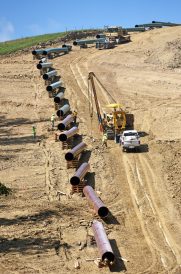
Leaders of two of Pennsylvania’s natural gas production trade groups and another representing the state’s manufacturers said Wednesday the state needs to move forward with constructing numerous pipeline infrastructure projects to enhance manufacturing, create jobs and contribute to America’s energy independence, as well as its clean power initiatives.
The trio also spent much of the hourlong discussion fielding questions regarding the resistance to the various pipeline projects that are either proposed or underway across the commonwealth.
During a telephone conference with reporters, Stephanie Catarino Wissman, executive director of Pennsylvania Chapter of the American Petroleum Institute, noted 25 to 30 percent of natural gas wells drilled to date do not have access to pipelines that could carry the product to markets.
She noted the proposed Mariner East 2 pipeline project is necessary for carrying salable gas by-products such as ethane and butane from the Marcellus and Utica shale regions in Ohio and Southwestern Pennsylvania across the state to processing and shipping facilities at Marcus Hook, near Philadelphia.
According to Wissman, API considers the continued development of the Marcellus and Utica shale gas strata of the tri-state area critical “to help power America for years to come” and to cement the country’s strategic position as a world energy power. She stated later the additional pipelines are necessary to help the state achieve its goals of reaching the benchmarks of President Obama’s Clean Energy Plan.
Dan Weaver, president of Pennsylvania Independent Oil and Gas Association, noted gas pipelines have been in use in Pennsylvania since 1865, noting there are currently about 16,000 miles of lines across the state.
The demand for additional pipeline capacity arose with the natural gas boom of the last decade. Weaver noted in 2010, the state was producing about 1 billion cubic feet of natural gas per day. The rate is now about 13 bcf, he said, despite the fact gas prices are currently low.
The production output has been bottlenecked because of the lack of infrastructure to take it away to markets.
David Taylor, president of Pennsylvania Manufacturers Association, noted the abundance of natural gas in the state has the potential to attract other manufacturers to the commonwealth because of its low cost.
“For some manufacturers, energy is the largest cost input in their product,” Taylor said, adding t the decision by Shell to build its ethane cracker in Beaver County can attract other manufacturers and new jobs to Western Pennsylvania.
“Pennsylvania will help make the United States an energy superpower, but all of this depends of increasing the energy infrastructure,” he said.
Almost all of the pending pipeline projects have been subject to various landowner lawsuits.
When asked by a reporter why there was so much resistance to the new pipeline projects, Taylor said much of it was because of “disinformation” from the “radical Greens who oppose energy development altogether. There are many thousands of miles of pipeline already in use in Pennsylvania.”
According to Wissman, in a recent poll conducted by API, 82 percent of registered voters said they support increased energy development.
She added the U.S. Department of Transportation has found pipelines to be the safest way to transport oil and gas.
While the trio acknowledged that safe development and operation of pipelines was the top goal, Wissman said “the industry will continue toward zero incidents.”