

‘More than meets the eye’
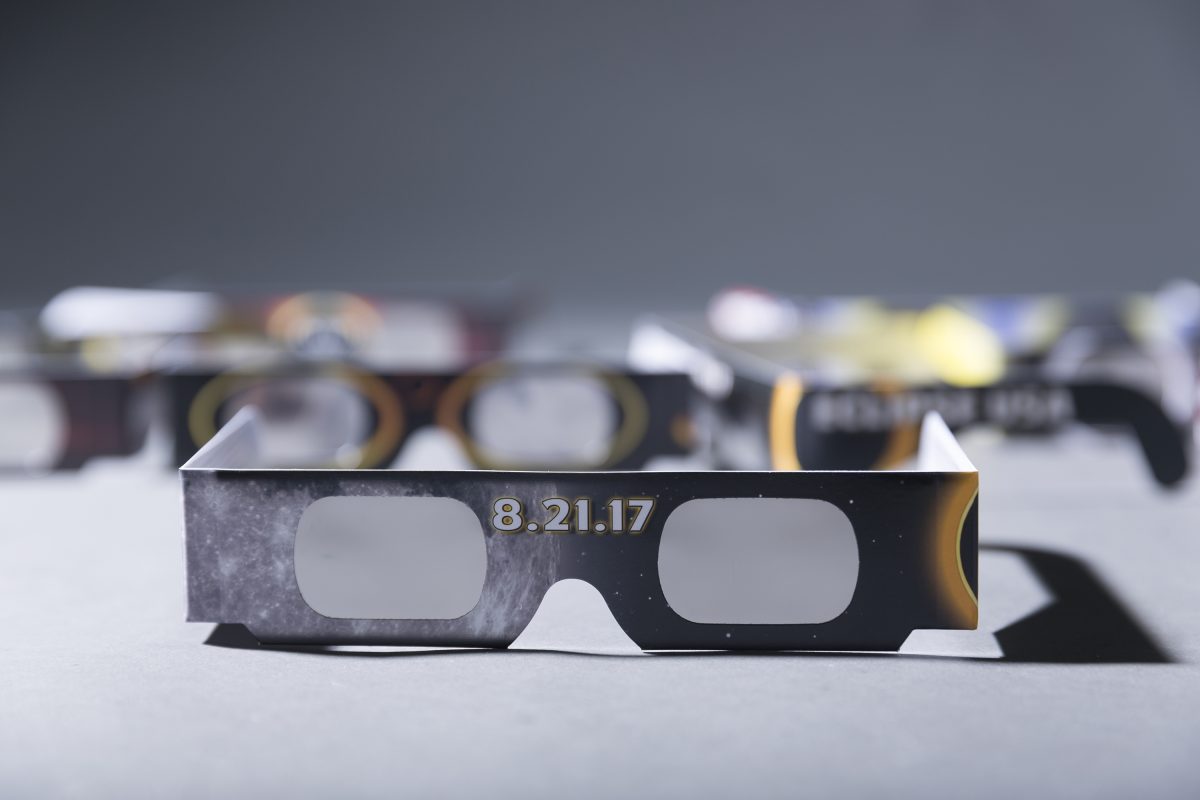
Special glasses can protect your eyes while viewing the solar eclipse.
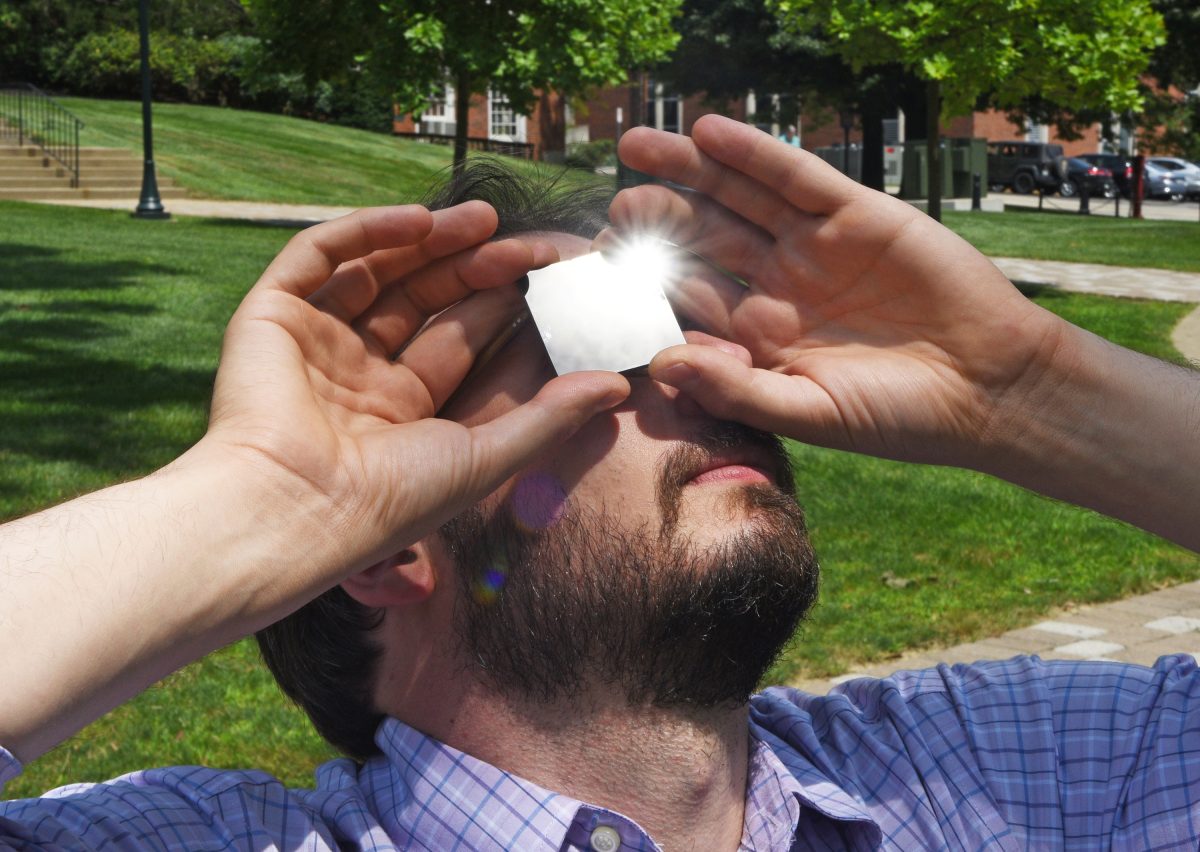
Washington & Jefferson College physics professor Cory Christenson looks through a dark piece of glass to see the sun as he prepares for a trip to Knoxville, Tenn., to see the solar eclipse.
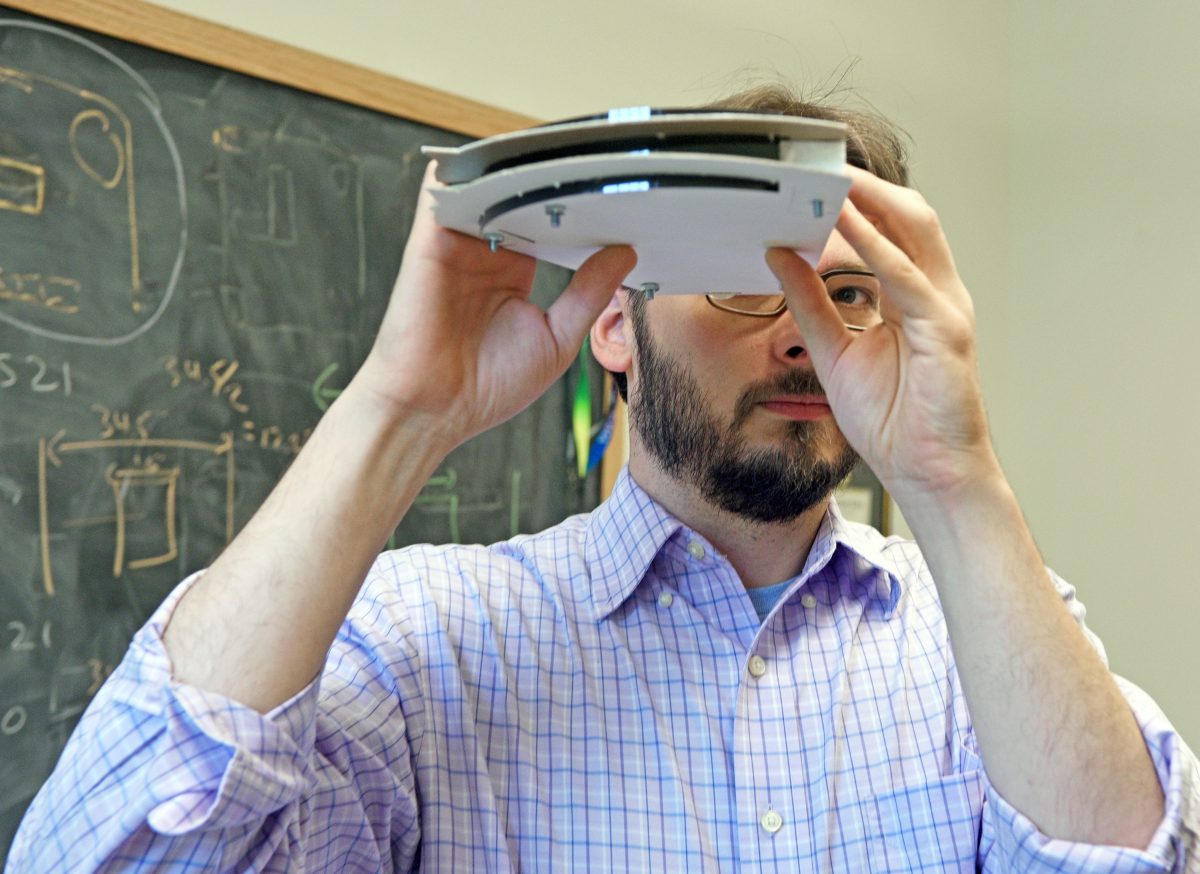
Washington & Jefferson College physics professor Cory Christenson looks through a spectrometer he and his students will use to view the solar eclipse.
On his 77th birthday today, David Wallach will receive a gift unlike any other – an eclipse.
“The kids are taking me to see it,” said Wallach, a retired college physics professor from Peters Township who is in Kentucky to view the total solar eclipse. In a role reversal, he will be an observer instead of lector, in a classroom unlike any other – Mother Nature.
“I’ve never seen a total eclipse,” Wallach said. “From what I’ve heard, don’t bring a camera. Just sit back and watch nature in a peculiar situation.”
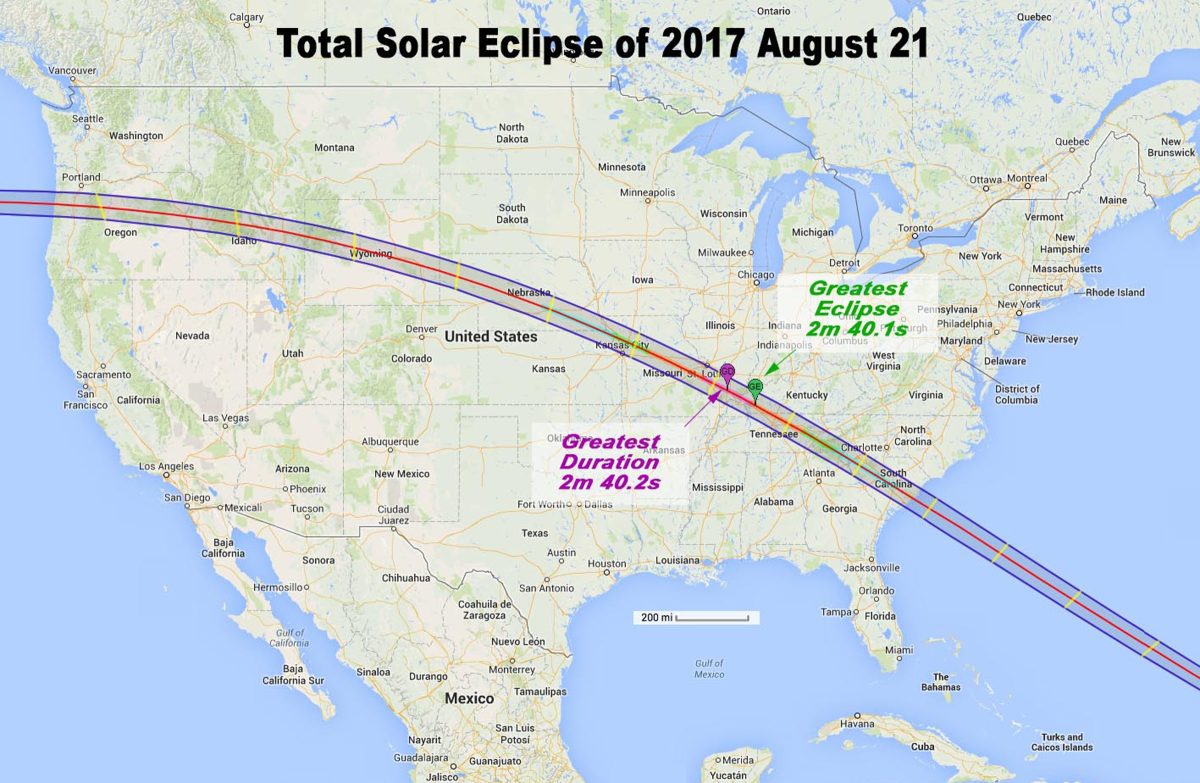
David, his wife, Carole, and other members of the Wallach clan have joined thousands nationwide who have traveled, and are still traveling, to experience this astronomical phenomenon. They are in the “path of totality,” a 70-mile-wide strip stretching southeastward from the Oregon coast to the South Carolina shore, where they can witness the full effect of the moon blocking out the sun. Other Americans will see a partial eclipse, an awe-inspiring occurrence as well.
It is called the Great American Total Solar Eclipse, a moniker that cannot be disputed. Never before has a total eclipse fallen entirely on the continental U.S., and never before has it inspired so many parties and festivals and attracted this many observers.
The Wallachs are among a multitude of starry-eyed residents from the region who are among these road warriors, who have endured heavy traffic, paid outrageously inflated hotel rates, suffered long restaurant and restroom lines, and worry that – after all of their efforts – cloud cover may compromise their view and overall experience.
Yet they won’t be the only Western Pennsylvanians watching. Some will gaze upward without leaving town.
“You don’t have to go anyplace special to witness it. You will get 80 percent around here,” said Becky Nichols, director of the observatory at Mingo Creek County Park.
For the majority of participants inside the path, and the less adventuresome who are essentially staying put, the eclipse should eclipse anything they have glimpsed from the heavens … through those recommended brands of eclipse glasses and hand-held solar viewers that are vital to one’s optical well-being.
A total solar eclipse occurs about every 18 months, according to SPACE.com. But few are visible in the United States. The next one will be in seven years – April 8, 2024.
Unlike the course of the sun, the moon’s shadow will move from west to east. The eclipse will “begin” at 9 a.m. Pacific Daylight Time on the West Coast and end around 4 p.m. EDT on the East.
This eclipse will last 2 1/2 to three hours, depending on the location. Totality – when the disk of the moon appears to cover the disk of the sun, exposing the sun’s outer atmosphere (the corona) – lasts no more than two minutes, 40 seconds. During that brief time, the temperature may drop 15 degrees Fahrenheit. In this area, the greatest degree of coverage will occur at 2:35 p.m.
This “cover-up” of the sun actually is an optical illusion.
“The sun is 400 times larger than the moon, but the moon is 400 times closer to us. That’s why the moon covers the sun,” said Pete Zapadka, a member of the Amateur Astronomers Association of Pittsburgh and a part-time resident of Wind Ridge, Greene County.
Totality is when an individual can safely view the eclipse. No glancing at the sun any other time during the eclipse without proper eye protection, or one could lose his or her vision permanently.
“That is a very important piece of this,” Nichols said. “Just because the moon is covering the sun doesn’t make it safe to look at.”
Cory Christenson and Mike McCracken, physics professors at Washington & Jefferson College, planned to head there in a van accompanied by six students.
“We emailed students a few weeks ago and got a pretty good response,” Christenson said.
McCracken said their plan a week ago was to end up in western Kentucky, where it is sparsely populated and “where we should get an open view of both horizons. We’ll check the weather. We may have to modify our plans.”
Doug and Lucy Northrop Corwin of East Washington have selected the Gateway to the West as the gateway to their celestial viewing. They planned to fly to St. Louis and drive to nearby Ste. Genevieve, Mo., where they will meet Lucy’s sister, Peggy Northrop, and her husband, Sean Elder, of Mill Valley, Calif. Some of Peggy’s friends will be there, as well.
“I’ve always been interested in science and natural phenomena,” said Doug, who witnessed a partial eclipse in the 1970s, but is a total solar eclipse rookie.
He and Lucy, director of news at the Observer-Reporter, are concerned about the Missouri weather. “You want it to be clear. You worry that it may be cloudy with a thunderstorm,” Doug said.
Zapadka and his wife, Amy Johns, who live outside Morgantown, W.Va., are renting a cabin along the Cumberland River outside Nashville, Tenn. – near the middle of the arc of totality. He witnessed a total solar eclipse in 1998 while on a Caribbean cruise off Guadalupe.
“This is not just a visual thing,” Zapadka said. “When the moon covers the sun, the wind stops blowing, the temperature drops, dolphins come to the surface. It’s more than meets the eye.”
Katherine Mansfield also is in Nashville, eagerly anticipating her first eclipse. She is there with her mother, Karen, an Observer-Reporter staff writer, and her brother Michael. Unlike Zapadka and Johns, the Mansfields did not painstakingly plot their excursion.
“I was driving to work and listening to NPR,” said Katherine, 25, of North Strabane Township. “A man who had written a book about solar eclipses was being interviewed. When I got home, I told my mom, ‘I think I’ll drive to Nashville for this. Do you want to come?’
“Within 10 minutes, she called and booked a room. There were about two left.”
Katherine enjoys photography and considered buying a telephoto lens for the event, but Karen dissuaded her. “She said to ‘just enjoy the moment.’
“I’m excited about it. I’ve read different accounts that people have been moved to tears by an eclipse.”
Bob Liberatore took a different route to totality, south to Greenville, S.C. “We are right in the middle of the path of totality,” said the Canonsburg resident.
He is there at the urging of his 16-year-old son, Matt, who has wanted to go for more than a year. They are accompanied by Bob’s daughters, Lauren, 11, and Lindsey, 7, and Matt’s friend Max Szalla, 16.
All are viewing their first total eclipse. “We’re just hoping for clear skies,” Bob said.
Nichols knows a number of Western Pennsylvanians heading toward the arc, but declined to provide names.
The Wallach family decided to stay in Bowling Green, Ky., on the edge of totality, and drive to Hopkinsville, in the center, to watch. “That town bills itself as ‘Eclipseville,'” said David, who is traveling with Carole and their daughter, Beth. Another daughter, Debbie Busche, and her family from Peters took a separate car.
“This will provide plenty of opportunities to learn about science,” said David Wallach, who also has taught astronomy and math, and remains a physics tutor.
The next total solar eclipse in the U.S., in 2024, will bring totality much closer to Southwestern Pennsylvania. Zapadka said the path will be more south to north then, starting in Mexico and passing through Cleveland, Erie and Buffalo. “But the weather in April is more volatile, and we’re more likely to get clouds then,” he said.
And for the very young who may continue to reside around here: The path of totality of the Sept. 14, 2099, total solar eclipse is expected to course through this area, but mostly on the fringe. Zapadka said Morgantown, part of Greene County, the city of Washington, Meadow Lands and Eighty Four are expected to get totality; Houston, Venetia and Pittsburgh won’t.
It’s only 82 years away.