

Mayor: Pittsburgh’s boil-water advisory lifted; water safe
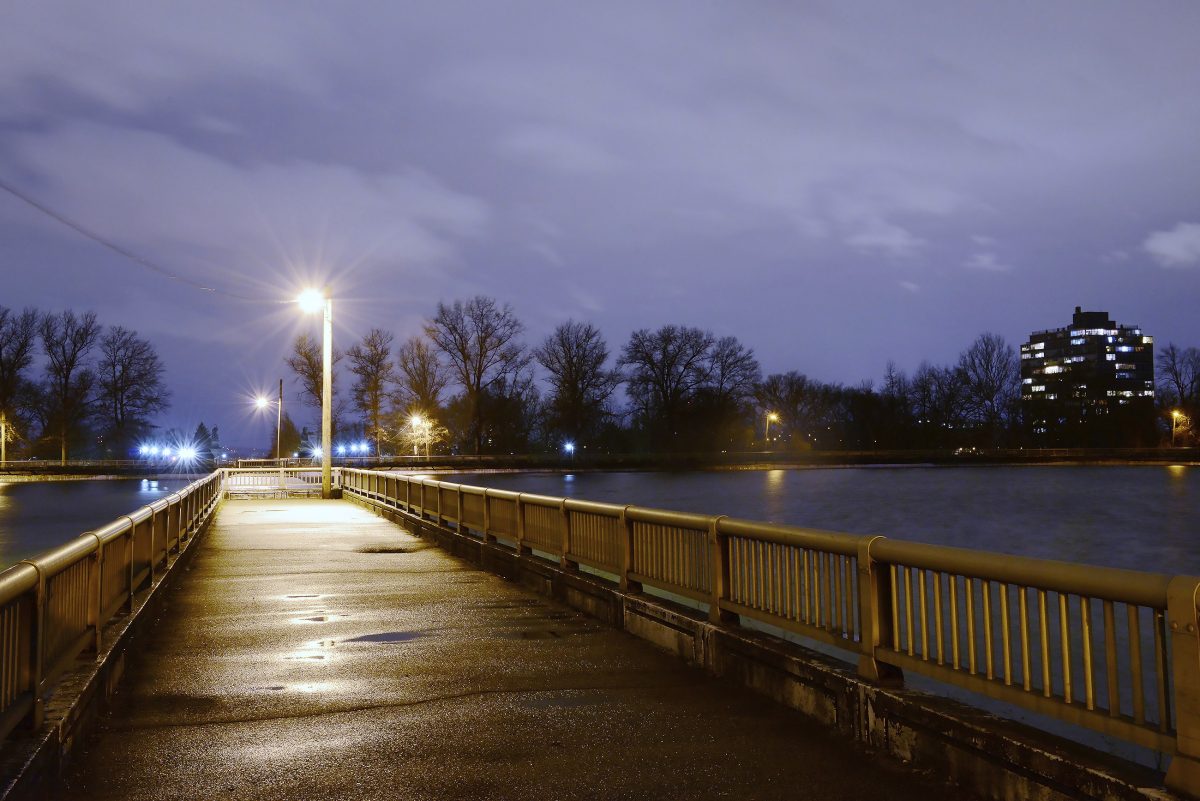
This Tuesday photo shows a Highland Park Reservoir where low chlorine levels have caused the Pittsburgh Water and Sewer Authority to issue a precautionary boil order in the Highland Park neighborhood of Pittsburgh.
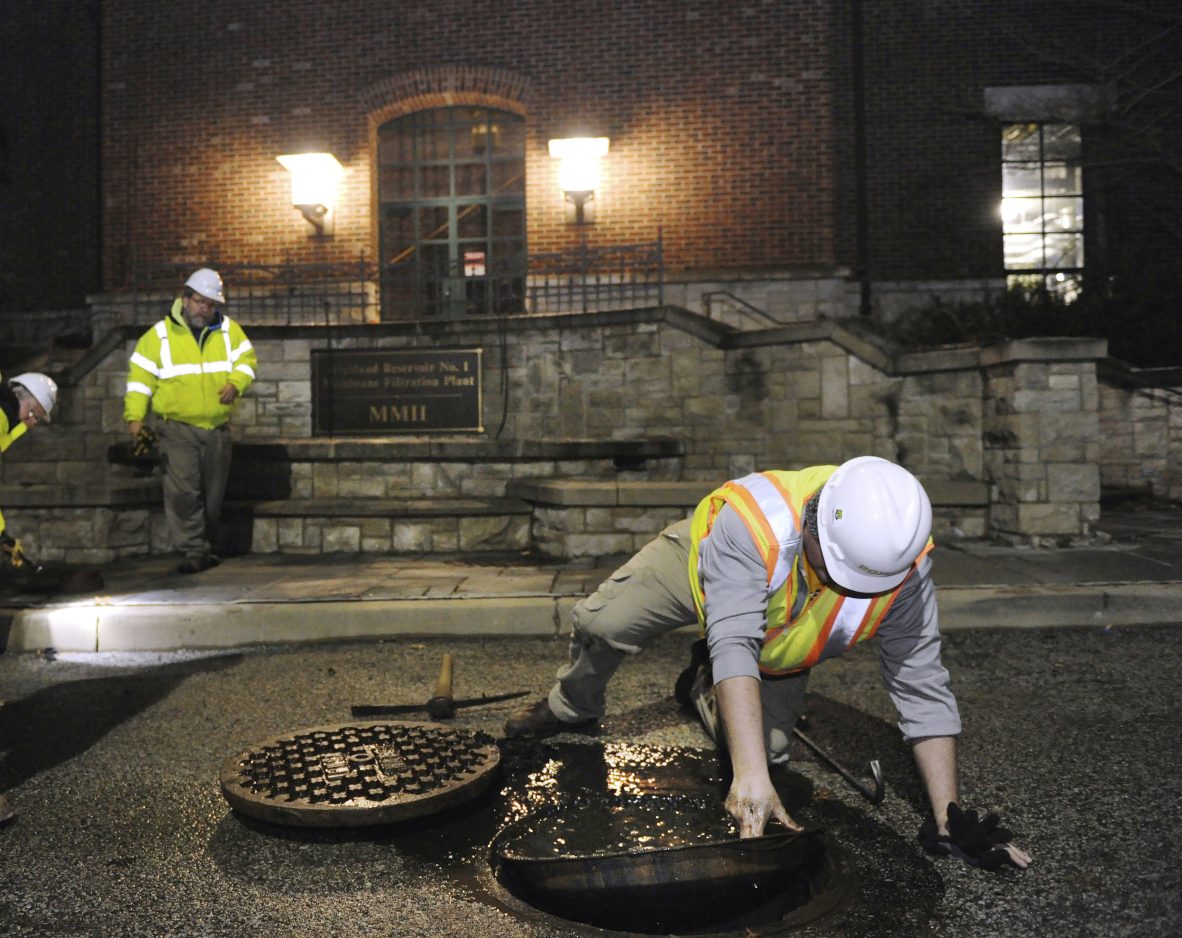
Pittsburgh Water and Sewer Authority workers try to reach valves that control the flow of water in and out of Highland Park Reservoir No. 1 outside the membrane filtration plant in Highland Park neighborhood of Pittsburgh on Tuesday.
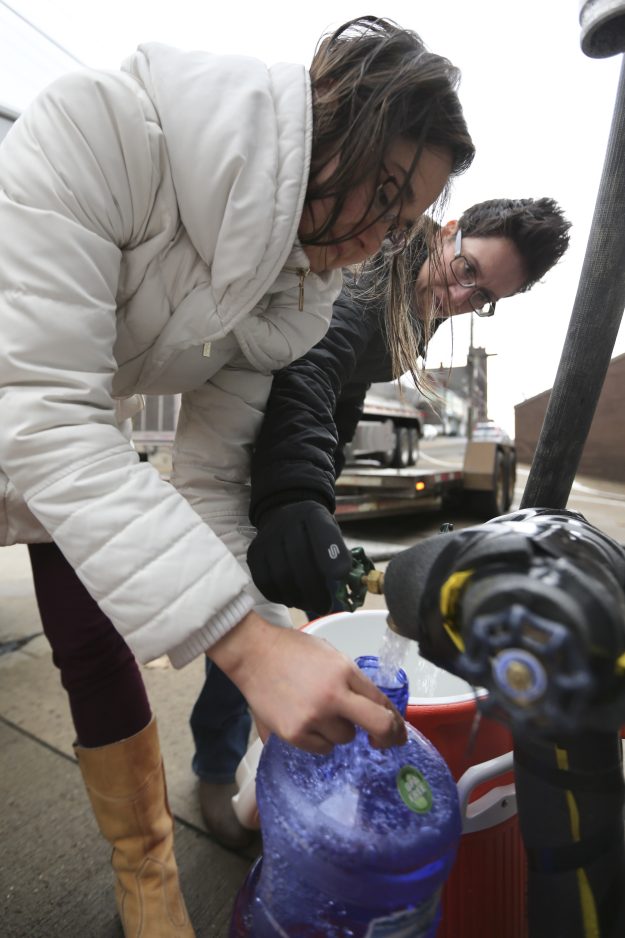
Ronette Cooley, right, helps Courtney Patterson fill jugs with water at a city fire station in the Lawrenceville section of Pittsburgh, where water buffaloes were available for the public Wednesday.
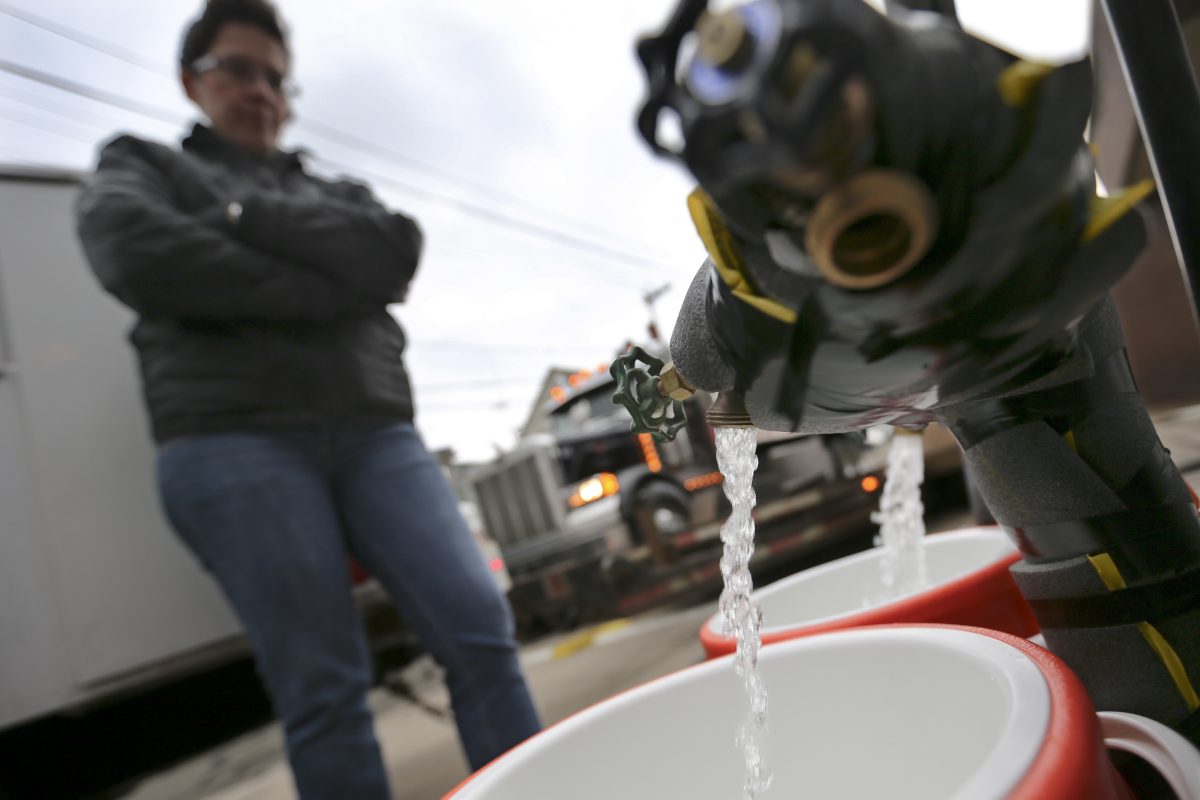
Ronette Cooley watches as she fills containers with water at a city fire station in the Lawrenceville section of Pittsburgh where water buffaloes were available for the public on Wednesday.
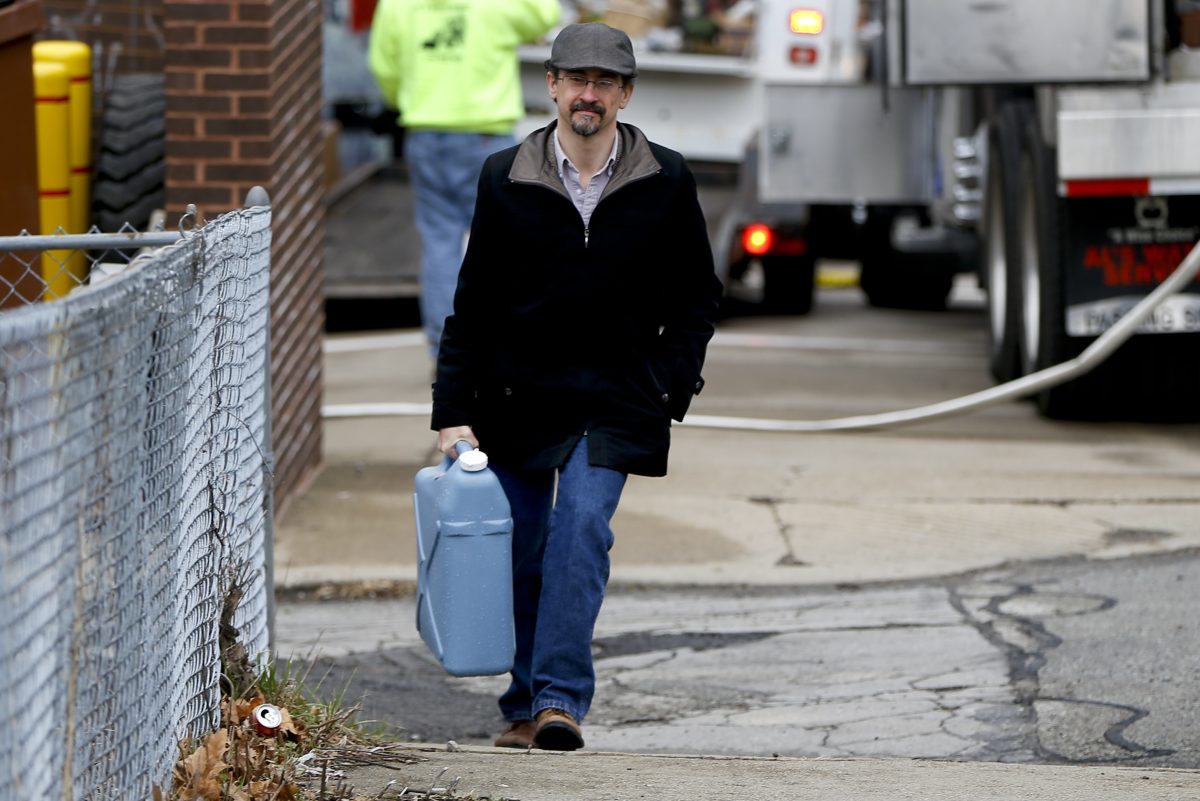
Tim Stuhldeher carries a container of water to his stepmother’s house after filling it at a city fire station in the Lawrenceville section of Pittsburgh where the city made water available for the public on Wednesday.
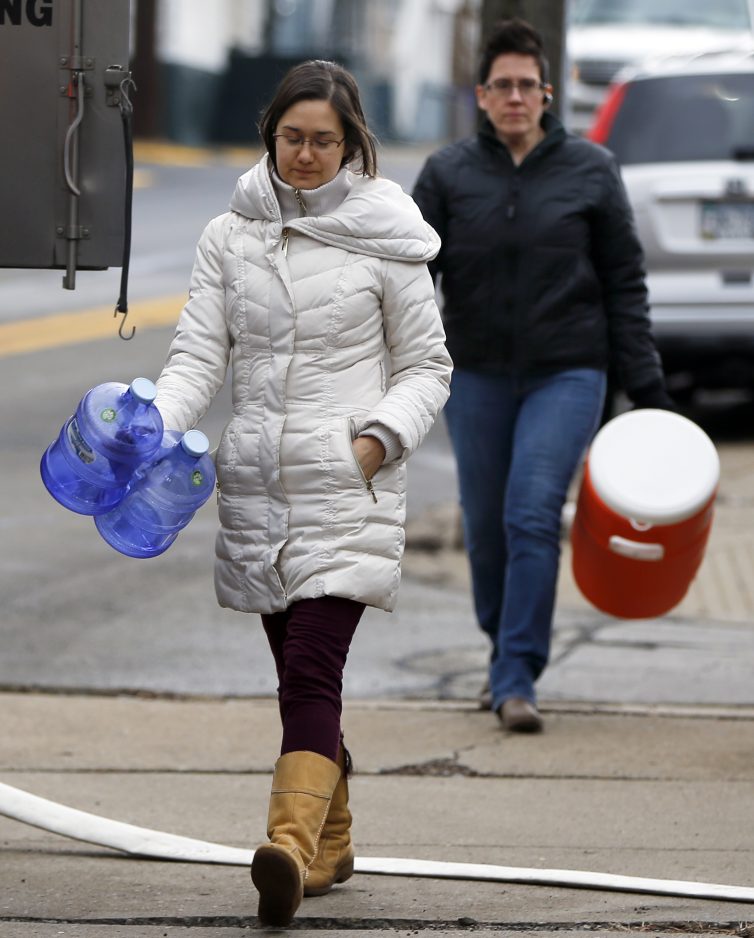
Courtney Patterson, left, and Ronette Cooley, carry containers for water to a city fire station in the Lawrenceville section of Pittsburgh where water buffaloes were available for the public Wednesday.
PITTSBURGH (AP) – Pittsburgh Mayor Bill Peduto says a boil-water advisory affecting 100,000 customers – including hospitals, schools, and restaurants – has been lifted.
Peduto on Thursday says there’s no trace of bacteria that can cause diarrhea in the city’s water, even though some tests late Tuesday showed there wasn’t enough chlorine in water treated at one plant.
The state Department of Environmental Protect insisted on the boil-water advisory based on samples from the city’s Highland Park reservoirs.
Peduto says Pennsylvania’s chlorination standards are higher than federal standards and in “another state our water would have been safe and we wouldn’t have had to take these precautionary measures.”
The city added chlorine and drained reservoir water out of its system to satisfy the DEP, and is now investigating the cause of the failed tests.
Pittsburgh Water and Sewer Authority director Bernard Lindstrom apologized for the “massive inconvenience.”