

Local man plans to plant tree in remembrance of AME church
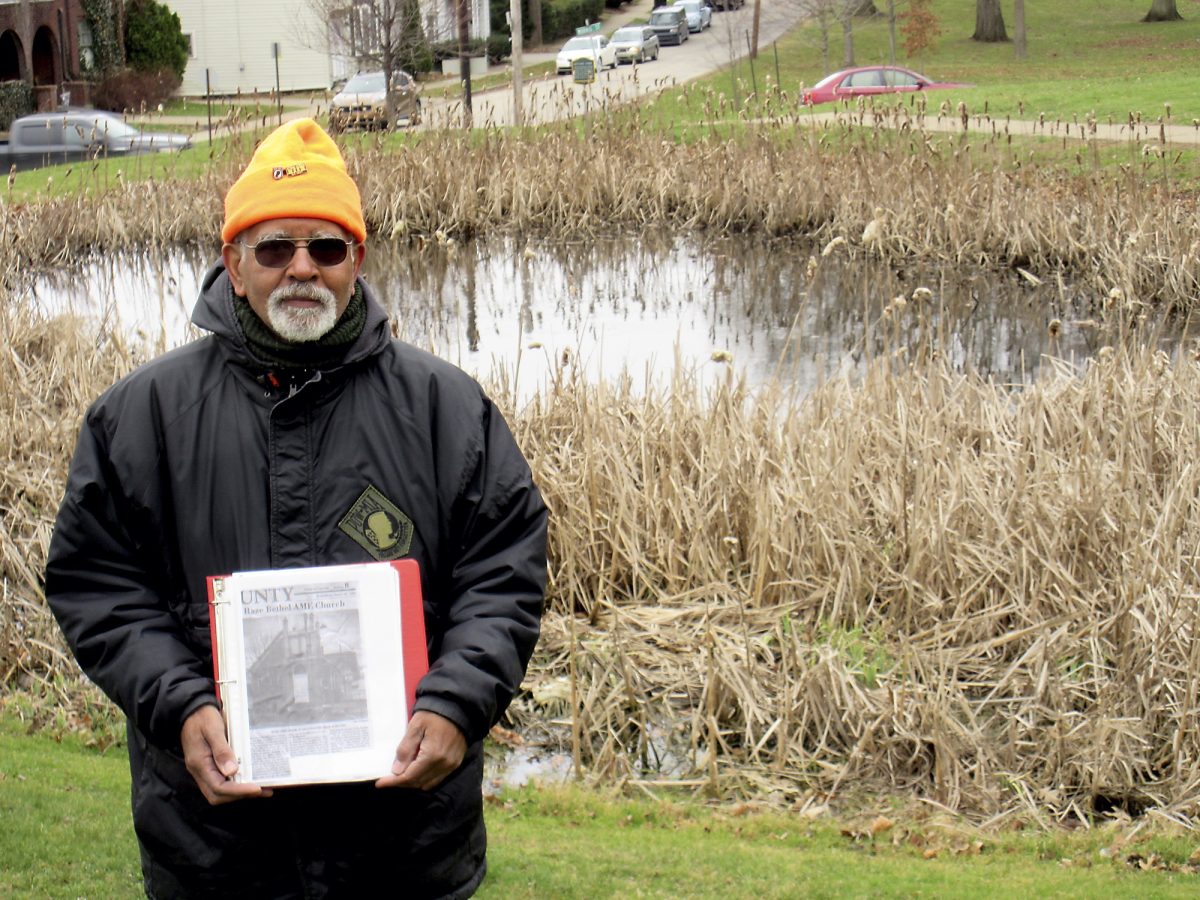
William Davison of Franklin Township stands in Waynesburg’s College Park, holding an old newspaper clipping about the Bethel AME Church in Waynesburg that was razed in 1984. He wants to plant a tree in the park in remembrance of the church.
Observer-Reporter
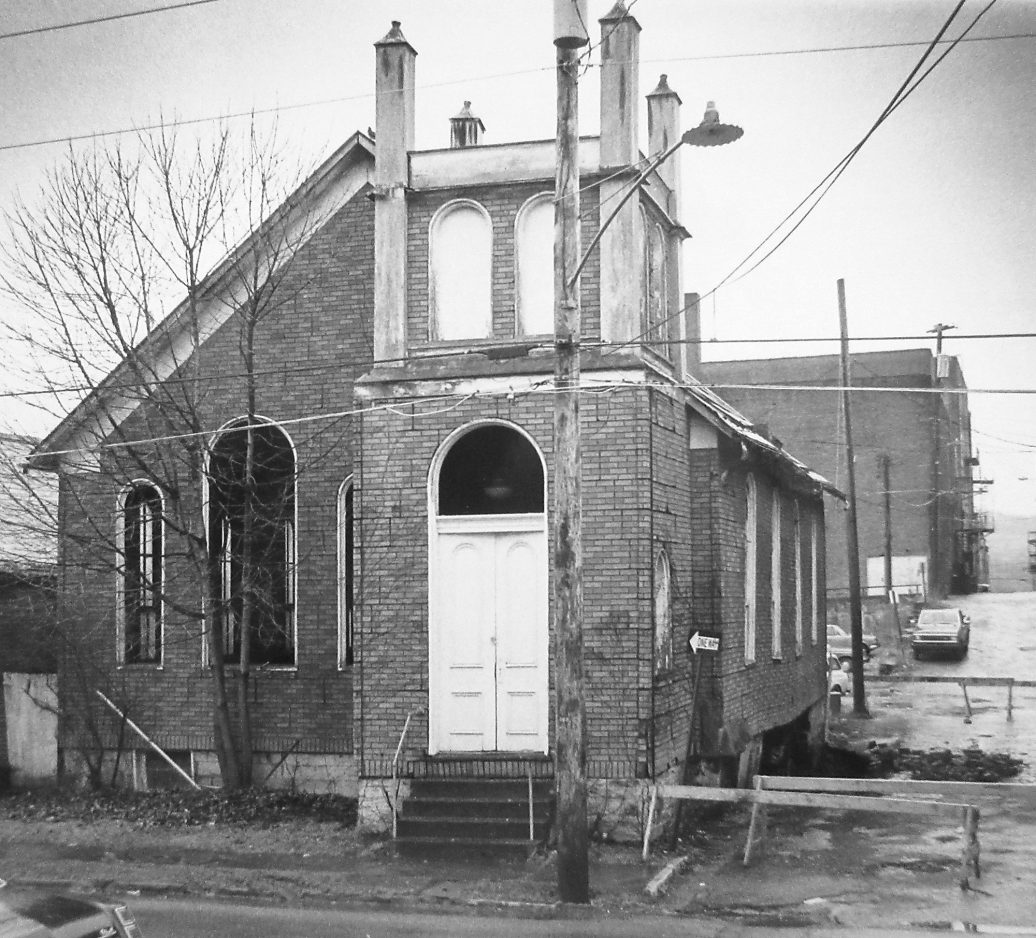
A photo of the former Bethel AME Church in Waynesburg, which appeared in the Observer-Reporter March 28, 1984, shows the building’s collapsed foundation.
Local man plans to plant tree in remembrance of AME church
{child_byline}Katie Anderson{/child_byline}
WAYNESBURG – William Davison remembers going to Sunday school as a child at one of Waynesburg’s only black churches – Bethel African Methodist Episcopal Church.
“Sunday school was first and church service lasted all day because there was always something going on,” he said. “The church was the center of the black community.”
That is why he wants to celebrate the memory of the church by planting a tree and a plaque in Waynesburg’s College Park near the pond and fountain.
Davison, 69, of Franklin Township, wrote a letter earlier this month to Waynesburg council, requesting permission for the dedication to the AME church, which was razed in 1984 after being vacant for several years. At its February meeting, council discussed the request and was on board with Davison’s plan.
“I think it’s wonderful – anything that enhances our town and our parks,” Councilwoman Lynne Snyder said. “Historically, there have not been very many black families in Waynesburg … so, anything to help keep their history alive.”
Davison said the plaque will read something like “In celebration of the Bethel AME Church” and will be from him and his 11-year-old daughter, Amanda.
“I walk my dog in the park almost every morning, and I thought this would be a good way to not let it be forgotten,” he said.
Waynesburg forester William Wentzel will pick out a tree, and Davison hopes to have the plaque and the tree in place this spring in celebration of Greene County’s black history and his own family history.
“Black history month is every day for us,” he said.
Davison said his father, George Davison, was the last person to make repairs to the church building, which was in disrepair for years before it was razed. According to an Observer-Reporter article published in 1984, AME Conference officials decided to raze the building because its foundation had collapsed and caused damage to sewer and water lines. That decision was made one year before its 100th anniversary.
The church was built on the corner of West Franklin Street and an alley known as Fruit Street in 1885, after “someone tried to burn down” Waynesburg’s first AME Church on North Morris Street in Waynesburg, which was started in 1879, Davison said.
Bethel had a “fairly large” congregation, and the leaders of the church then were leaders in Waynesburg’s black community, which once numbered about 500 but has since declined due to a lack of jobs, Davison said.
“I doubt if there’s 200 now,” Davison said. “Everybody just moved on.”
Davison, who’s retired after 29 years of working for EQT, has studied local black history and his own genealogy for years. He said his lineage dates to 1779. His great-great-great-grandfather was the son of a slave named Jane, who was purchased by Thomas Hughes of Greene County.
“Slavery was not as large in Greene County as it was in other counties and other states,” he said. “The last slave in Greene County was freed in 1841.”
The memory of slavery was one reason why the establishment of the AME churches was worthy of celebration, Davison said.
“During slavery, black church was not allowed,” he said. “Black slaves that were allowed could attend white church.”
He said before the black community had buildings to worship in, they gathered in their houses on Sundays.
“These churches gave the blacks a meeting place of worship,” he said. “I don’t want to see the church forgotten.”