

Region caught spirit of making spirits long ago
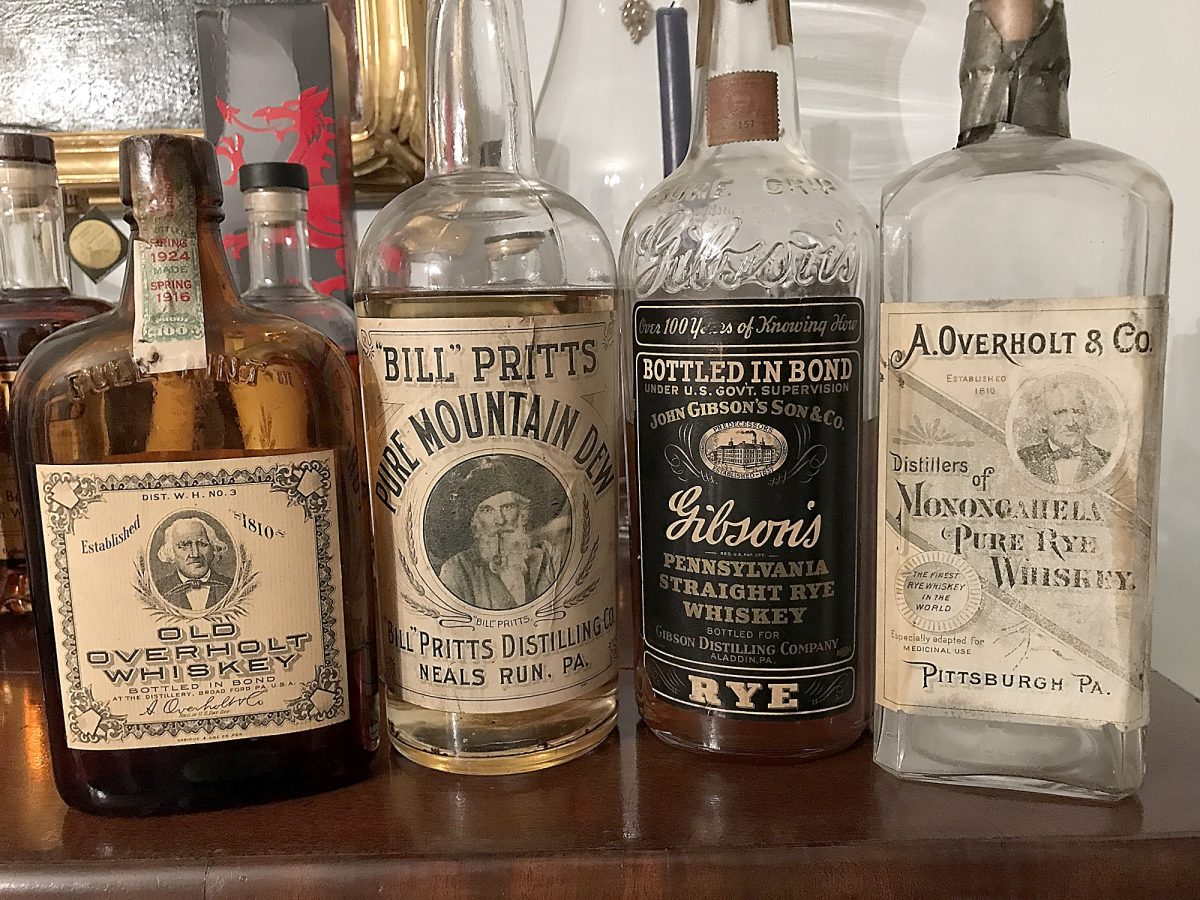
These spirits were produced years ago at Western Pennsylvania distilleries.
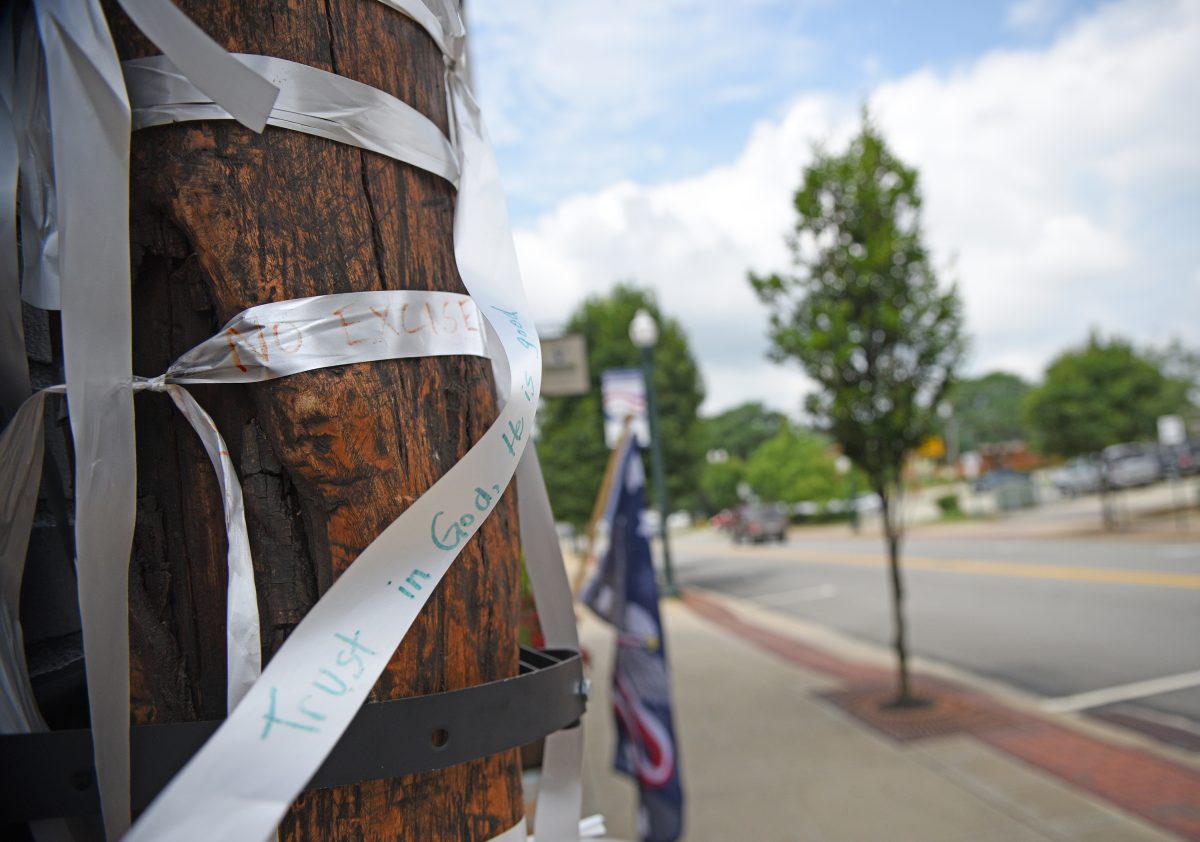
The liberty pole at Liberty Pole Spirits on West Maiden Street in Washington Thursday
It is Whiskey Rebellion Festival weekend in Whiskey Rebellion country, celebrated mostly within an easy walk of two year-old whiskey distilleries.
Red Pump Spirits and Liberty Pole Spirits are among focal points of the seventh annual festival, conducted mainly in downtown Washington. They are, respectively, the first and second legal distilleries to operate in Washington County since Prohibition (1920-1933), a constitutional ban on production, importation, transportation and sale of liquor in the United States.
The spirit of the law was well-intentioned: Alcohol was blamed for a number of social ills, especially during the 19th century.
In addition to distilleries, there were illegal operations called stills, often run by private individuals, some of whose customers became ill – or worse – after imbibing.
Yet, distilleries dotted the national landscape long before Prohibition began, and returned and gained momentum afterward.
Western Pennsylvania, by nature, developed into a distiller’s dream, starting even before the rebellion (1791-1794). Rye and grain were commonplace throughout the region, along with people experienced with the distilling practice. Westmoreland County, in particular, was once a distillery hotbed, along with Fayette County and part of Armstrong.
Washington County, not so much. But there is a history.
“There used to be a number of them in the Mon Valley,” said Tripp Kline, entrepreneur and co-founder of the Whiskey Rebellion Festival. He and city Councilman Joe Manning are co-chairs of the event.
Whiskey made in the Valley, and known as Monongahela, was typical of whiskeys in the 1800s, according to ellenjaye.com. It was made primarily from rye, although according the website, Monongahela “didn’t taste exactly like the rye whiskey we know today.”
Monongahela was made in prolific quantities. The website reported that in 1810, when Kentucky produced 2.2 million gallons of distilled spirits, Pennsylvania put out three times that amount – much of it “prime Monongahela rye.” The brand, ellenjaye.com added, was so popular, it was copied in eastern Pennsylvania, Delaware, Virginia and Maryland.
Samuel Thompson Distillery probably has been the most successful distillery in Washington County. Thompson, according to a newspaper account forwarded by Kline, started his business in 1844 at a grist mill south of Beallsville. The distillery was relocated to West Brownsville, along the banks of the Mon, where it functioned until the onset of Prohibition, when it moved again to Canada.
Sam Thompson rye whiskey was produced as late as 1979. An unopened bottle of that spirit is displayed at Twelve Oaks Restaurant & Tavern in Brownsville, where owners Dave Yurkovich and his wife, Susan, have converted the former home of Thomas H. Thompson, Sam’s son.
Gibson Distillery prospered for decades in the village of Gibsonton, near Belle Vernon. A Philadelphian, John Gibson, built a distillery in 1856 and 1857 that, at the time, was the largest in Southwestern Pennsylvania. The facility had two other sets of owners and experienced a name change before the 20th century began, and by 1899 was believed to be the world’s largest pure rye whiskey distillery. Gibson shuttered in 1920.
Kline said other prominent distilleries in the region included Overholt (near Scottdale), Large (near Clairton), Greensburg Distilling, Pritts Distillery (Champion) and Dillinger (East Hungtingdon Township).
Moonshine, according to a report from Kline, was big in the Champion area, where Seven Springs Mountain Resort now exists. That is essentially where Fayette, Westmoreland and Somerset counties converge.
Two hundred and twenty-six years have passed since the Whiskey Rebellion began, following Treasury Secretary Alexander Hamilton’s imposition of an excise tax on distilled spirits in a new nation. That irked farmers who grew rye and other grains that went into making spirits, and many were from Washington County. About 400 destroyed the home of a tax collector south of Pittsburgh,
Violence was on the verge of escalating after President George Washington led a force of 13,000 troops to this part of the state, but the rebellion broke down and many rebels ran.
You can see why this was an angry lot, though. Distilled spirits were a big deal in a burgeoning nation, and have continued to be.