

Deadly drugs have first responders taking more precautions
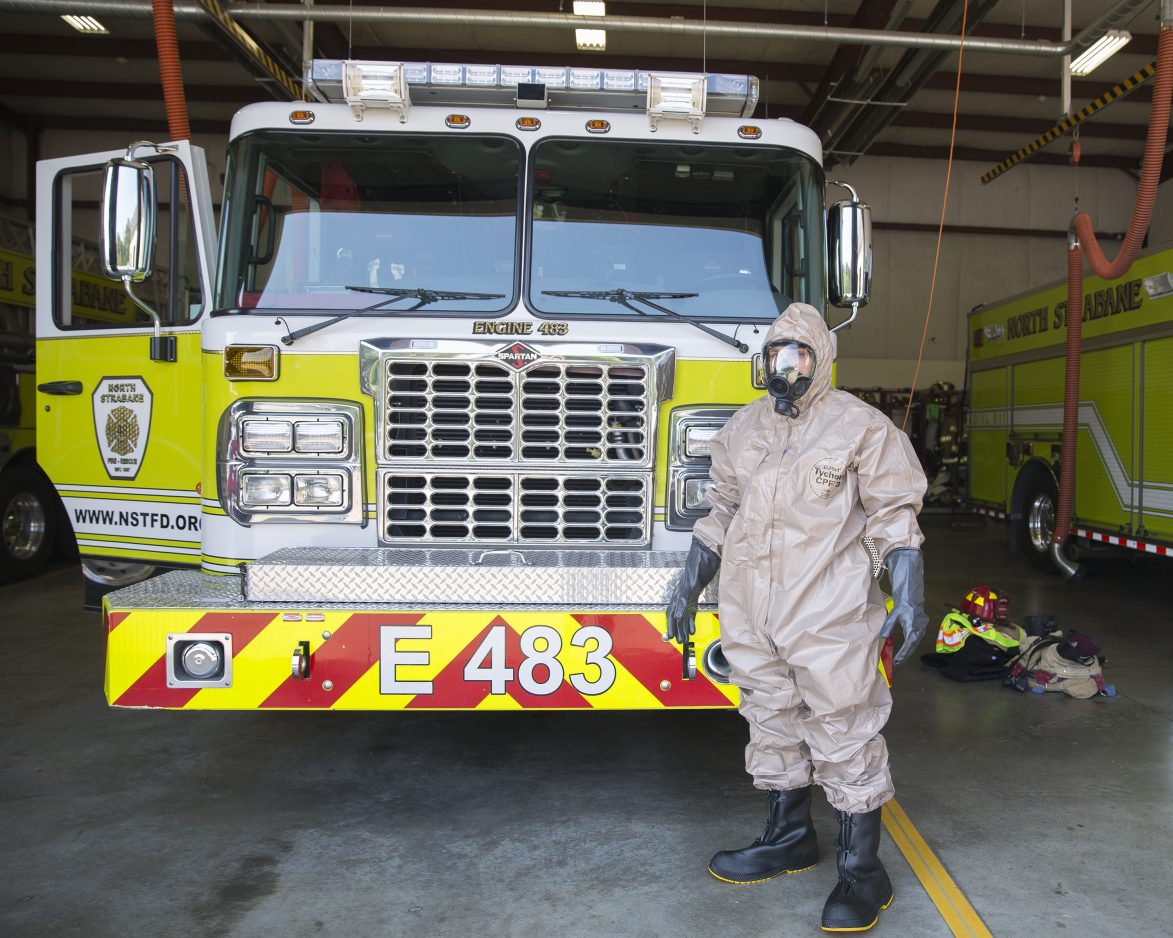
North Strabane Township firefighter/paramedic Brad Catto is wearing heavy-duty precautionary equipment now available as an option for first responders, which includes a full body suit, boots, gloves and a mask. This bulky equipment is what they wear when there is concern about coming into direct contact with fentanyl.
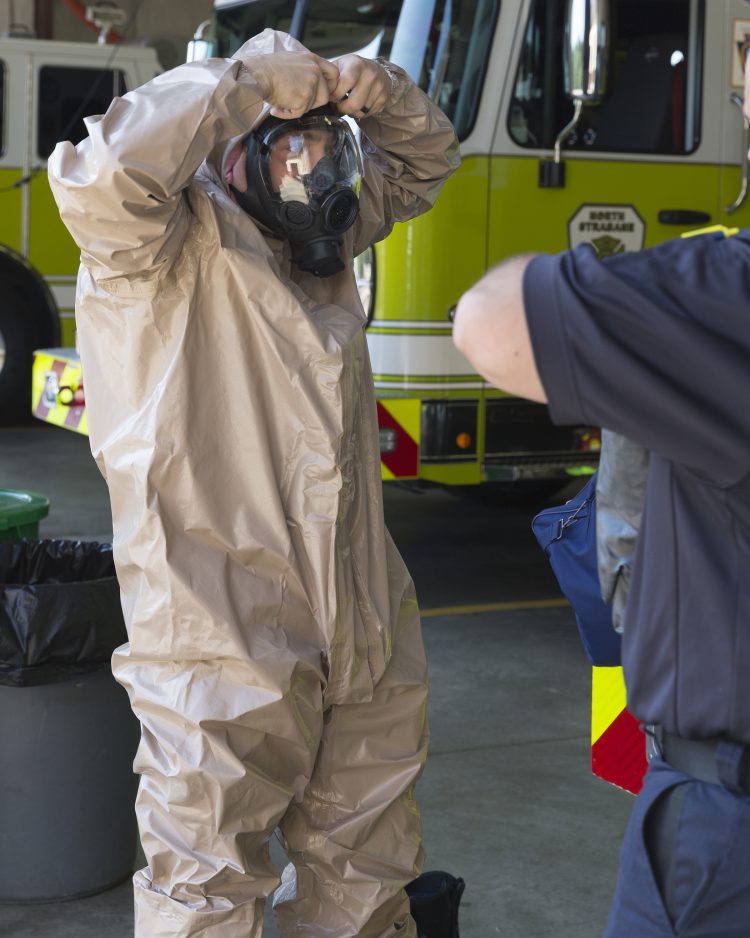
North Strabane Township firefighter/paramedic Brad Catto puts on a full face mask, part of the heavy-duty precautionary equipment now available as an option for first responders. This bulky equipment is what they wear when they are concerned they might come in direct contact with fentanyl.
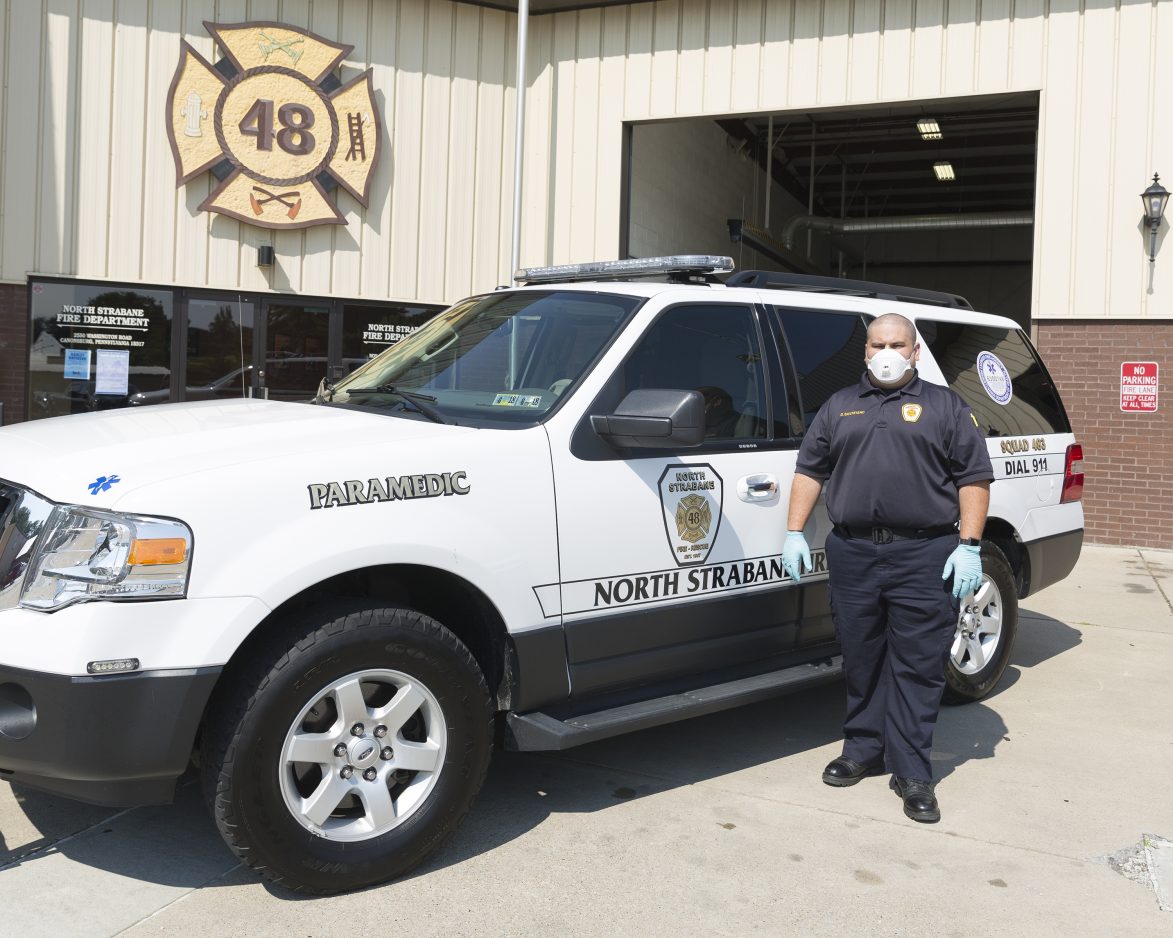
North Strabane Township firefighter/EMT Dominic Sicchitano demonstrates the precautionary equipment first responders typically wear when responding to suspected overdose calls.
The burgeoning opioid epidemic is proving dangerous not only to those who choose to use the drugs, but to first responders such as police officers, firefighters and emergency medical personnel responding to suspected drug overdoses.
An East Liverpool, Ohio, police officer accidentally overdosed in May after brushing off a powdery white substance that was later determined to be fentanyl from his uniform. He had to be administered Narcan before being hospitalized. The officer, Chris Green, returned to duty a few days later.
Last October, Canonsburg police Chief Al Coghill drafted a directive his officers are to follow to reduce the risk of exposure while handling and collecting fentanyl and carfentanil evidence.
“One of the benefits for our department is that we have an officer assigned to work with the federal Drug Enforcement Agency,” Coghill said. “We are privy to intelligence pretty quickly and were learning that officers were overdosing because of contamination.”
Coghill said officers need to keep in mind stamp bags, once assumed to be heroin, should be treated as if they contain 50 to 100 percent fentanyl. He also noted carfentanil, which is 100 times stronger than fentanyl, has been confirmed in Washington County. Both, he noted in the policy, are easily absorbed through the skin and, if airborne, can be absorbed through the respiratory system.
“This has developed so much, you never know exactly what you are handling,” Coghill said of the opioids. “We treat everything as if it has fentanyl.”
Coghill said every overdose death is treated as a possible homicide, and the area treated like a crime scene.
“There must be two officers present when processing a crime scene, especially where a suspected opioid overdose has taken place involving a stamp bag or stamp bags,” Coghill said. The directive also alerts officers to assume the outside of the bags and immediate area are contaminated with fentanyl or carfentanil residue.
Officers are required to wear safety gloves to create a barrier before collecting any stamp bags. Only one officer is to collect and handle the stamp bags.
“The second officer, who also is wearing protective gloves, is there to be ready with the Narcan kit to render first aid if the officer collecting the evidence is exposed,” Coghill said. “The officer should minimize the movement of stamp bags to minimize airborne exposure.”
The officers collecting evidence also are to remove their original gloves and dispose of them in a separate bag, dubbed the “glove bag.”
Coghill said it is mandatory officers remove the gloves prior to driving a cruiser or coming into contact with the public.
“We don’t want any cross-contamination, like on the steering wheel in the police car,” he said.
Officers are responsible to equip themselves with the “glove bags,” and barrier gloves are available at the police department.
Narcan kits are in every room in the police station where evidence could be handled, the chief added.
Coghill expects the directive to evolve as more health risks become known and laboratory policies change.
Carroll Township police Chief Paul Brand said his department has no specific procedures in place for handling overdose calls that could involve fentanyl or carfentanil, but admits it is a good idea.
“We’ll start putting procedures in place based on state Department of Health guidelines,” Brand said. “I do keep the officers updated on the new trends and recommendations out there to stay safe.”
Protective gloves and masks are available to the officers.
“This drug issue has become dangerous,” Brand added.
Chief Michael Natale of the Greene County Regional police force said his department has a policy in place whether dealing with a drug overdose or intoxicated person to protect themselves from any airborne pathogens or illnesses that could potentially harm an officer.
“But based on the recent stories, out policy may be a little out of date and needs to be updated,” Natale said. “We need to take into account what is going on when we are searching a car. A little fentanyl on a fingertip can be deadly.”
Natale said his officers are aware of the potential for problems, and he continues to caution officers.
“It is such a brand-new situation, there really aren’t any policies out there,” Natale said. “Being a small department, we tend to adopt policies recommended by the district attorney or chief of police associations.”
Firefighters with departments who respond to many medical calls, including overdoses, also are taking special care.
North Strabane Township firefighters have an exposure-control plan that covers exposure not only to drugs but for other incidents, including those that could involve handling a bleeding wound, said fire Capt. Chris Chiprich. North Strabane firefighters respond to all priority dispatch medical calls.
“There is a procedure in place should a firefighter be exposed, whether it is to blood or drugs,” said Chiprich, adding it includes who should be contacted, what cleaning is required – including possible decontamination – and whether medical care is necessary.
“This whole thing is so new, we continue to talk about it and what to do,” Chiprich said of the possible exposure to fentanyl. “The drug is very powerful, and the person affected can have a very fast reaction.”
Fire vehicles that respond to medical calls have been certified as advanced life-support units and contain personal protective equipment for the firefighters, such as gloves and masks. There also are protective body suits available, and full face masks.
Washington fire Chief Linn Brookman said city firefighters respond to all overdoses. The number of those calls is increasing. Brookman noted there were a dozen calls over Father’s Day weekend last month.
Fire Capt. Nick Blumer oversees the handling of medical calls within the department and said they follow the state Department of Health guidelines.
“We wear nitrile gloves as opposed to latex gloves on calls,” Blumer said. “It provides better protection because the drug could be absorbed through the latex. Plus, we always use them, because you never know when you are working with someone with an allergy to latex.
“We also have available a respiratory face mask,” he said.
Blumer said when fire crews are working at a scene of a possible overdose, they take care not to disturb anything around the patient.
“But if one of the firefighters is exposed, they are to report it, and if necessary get taken care of medically,” the fire captain added. “Knock on wood, no one has been exposed yet, so it is so far, so good.”
The firefighters are looking not only to protect themselves, but the public, including children who use playgrounds in the city. Blumer said firefighters go to the city’s playgrounds a few times every week to collect any needles and similar drug paraphernalia that might be left behind by drug users.