

Washington County set the scene for Romero’s ‘Dark Half’
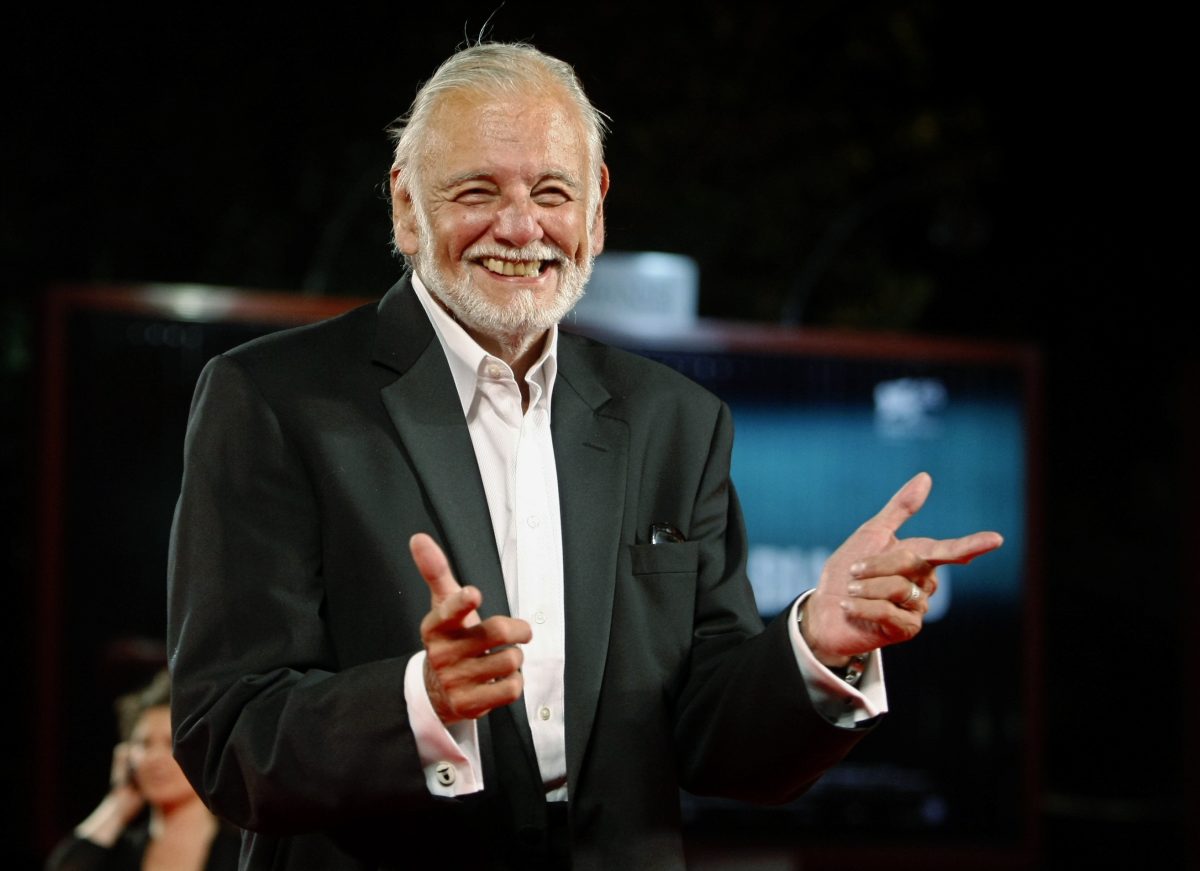
In this Sept. 9, 2009, photo, director George Romero arrives for the screening of the film “Survival Of The Dead” at the 66th edition of the Venice Film Festival in Venice, Italy. Romero, whose classic “Night of the Living Dead” and other horror films turned zombie movies into social commentaries.
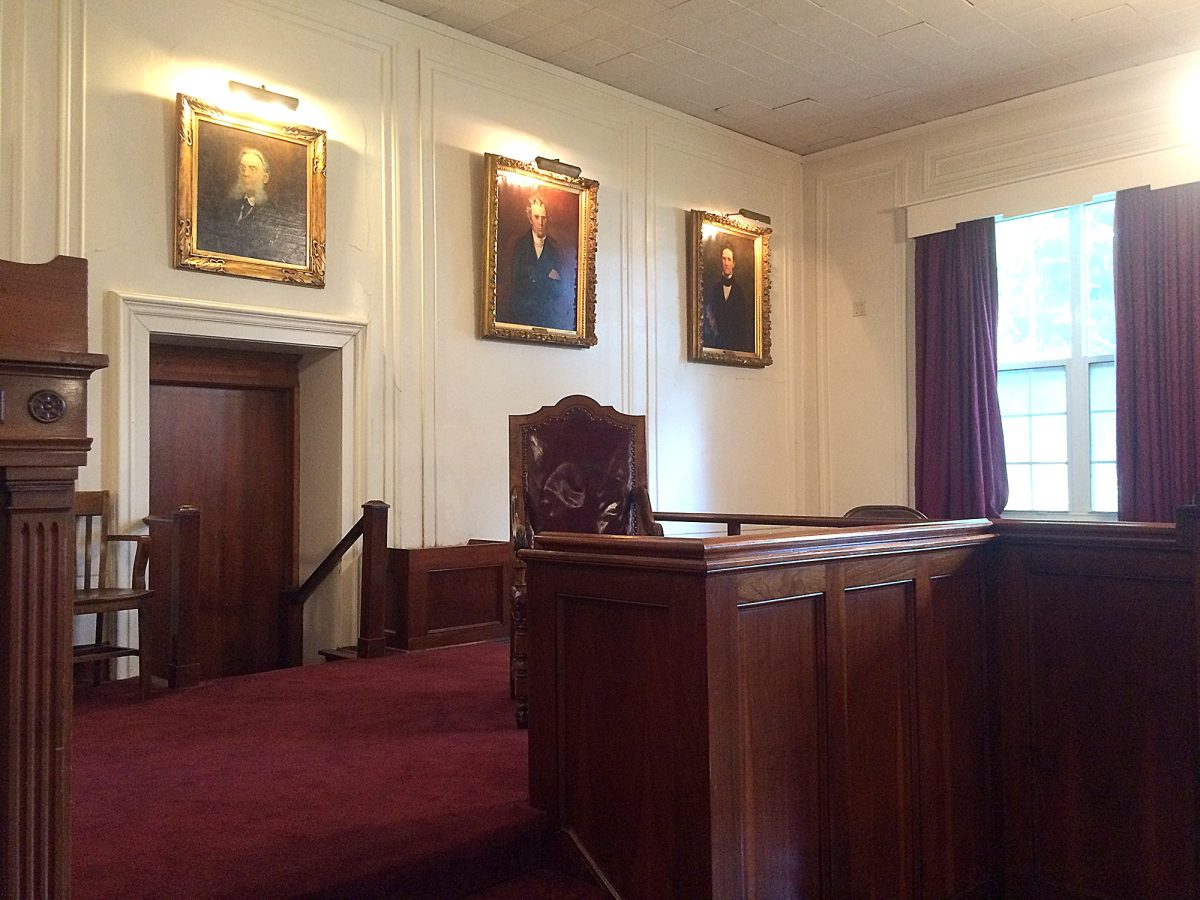
The chapel in Old Main at Washington & Jefferson College in Washington is shown in this Tuesday photo. The chapel doubled as a college classroom in George A. Romero’s 1993 film “The Dark Half” with actor Timothy Hutton.
Observer-Reporter
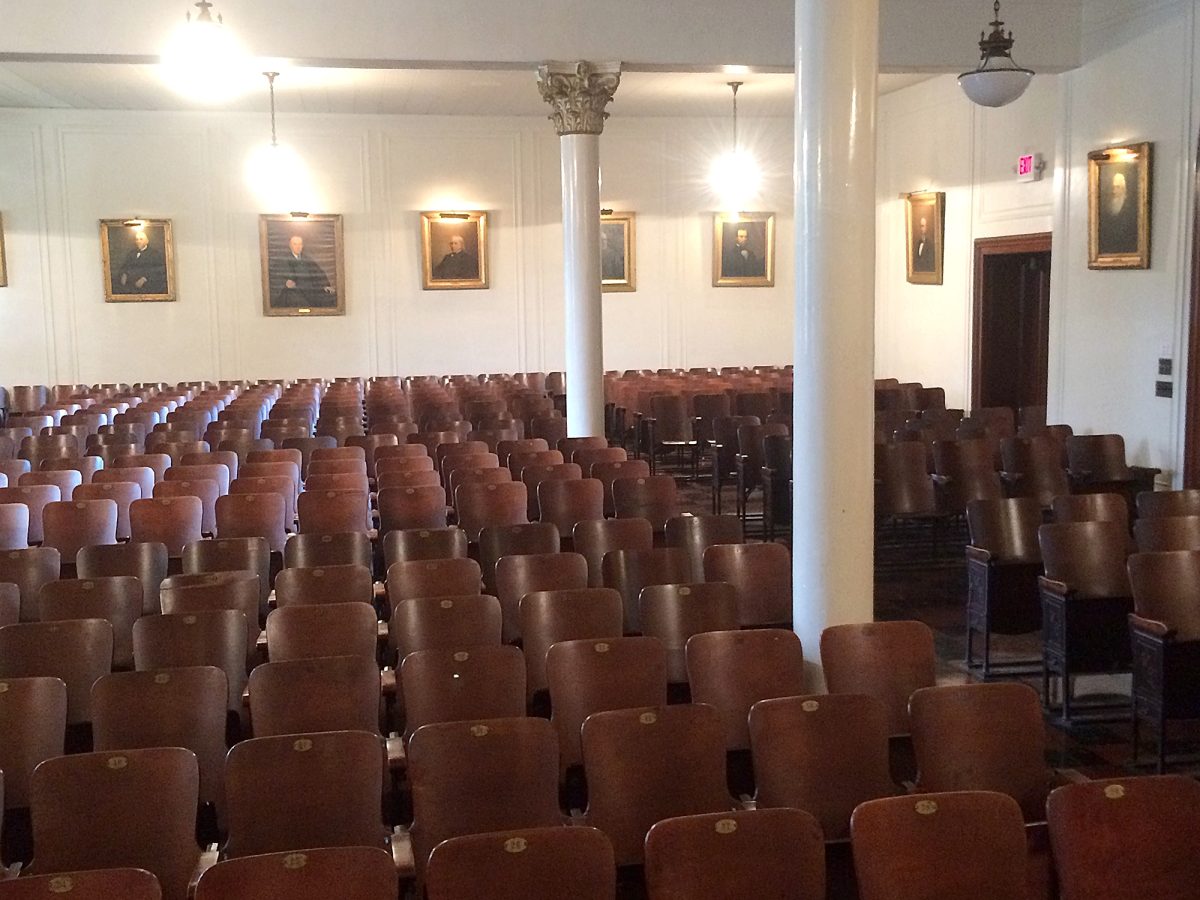
The chapel in Old Main at Washington & Jefferson College in Washington is shown in this photo.
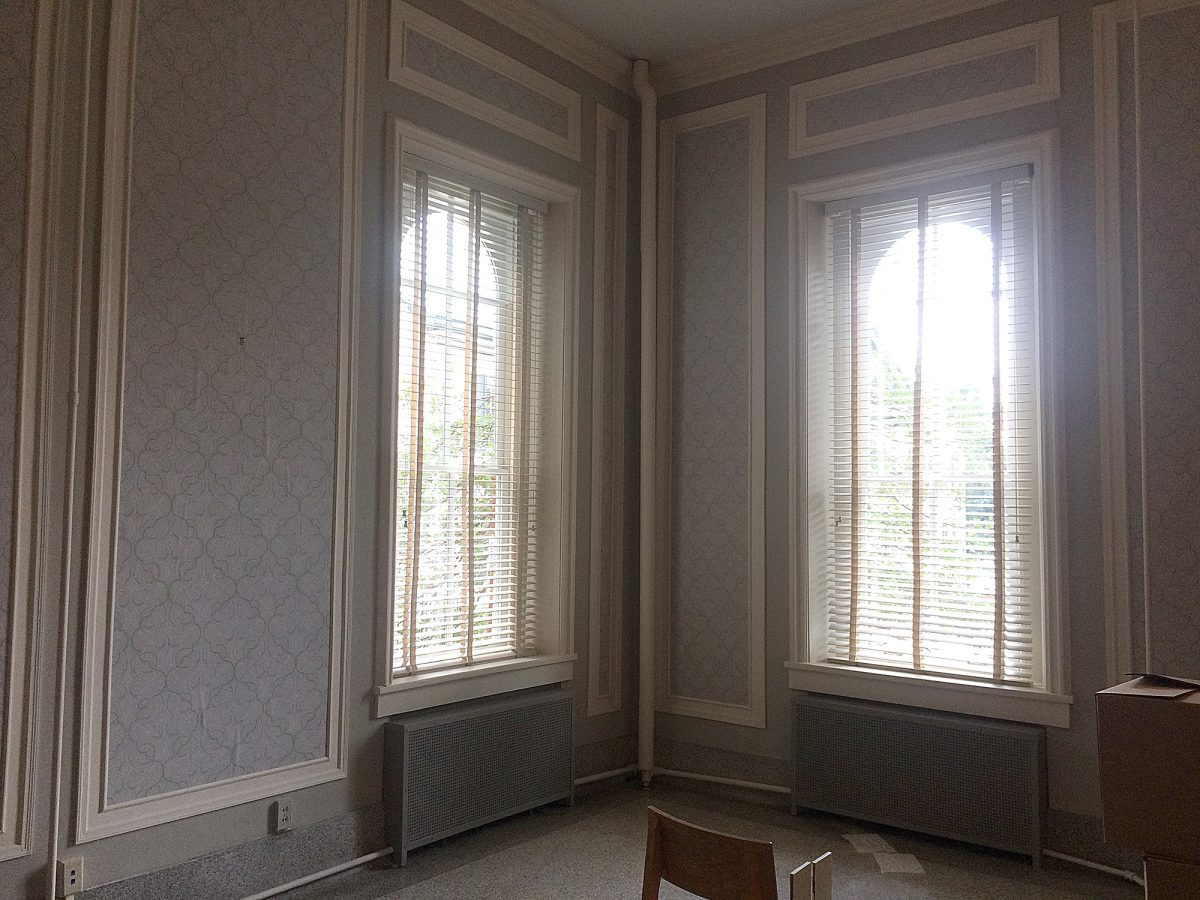
The former office of religion professor Robert Vande Kappelle in Old Main at Washington & Jefferson College in Washington is shown in this Tuesday photo. The office was used as a set in George A. Romero’s 1993 film “The Dark Half” with actors Timothy Hutton and Robert Joy. The office is currently unoccupied and was used in the Netflix series “Mindhunter.”
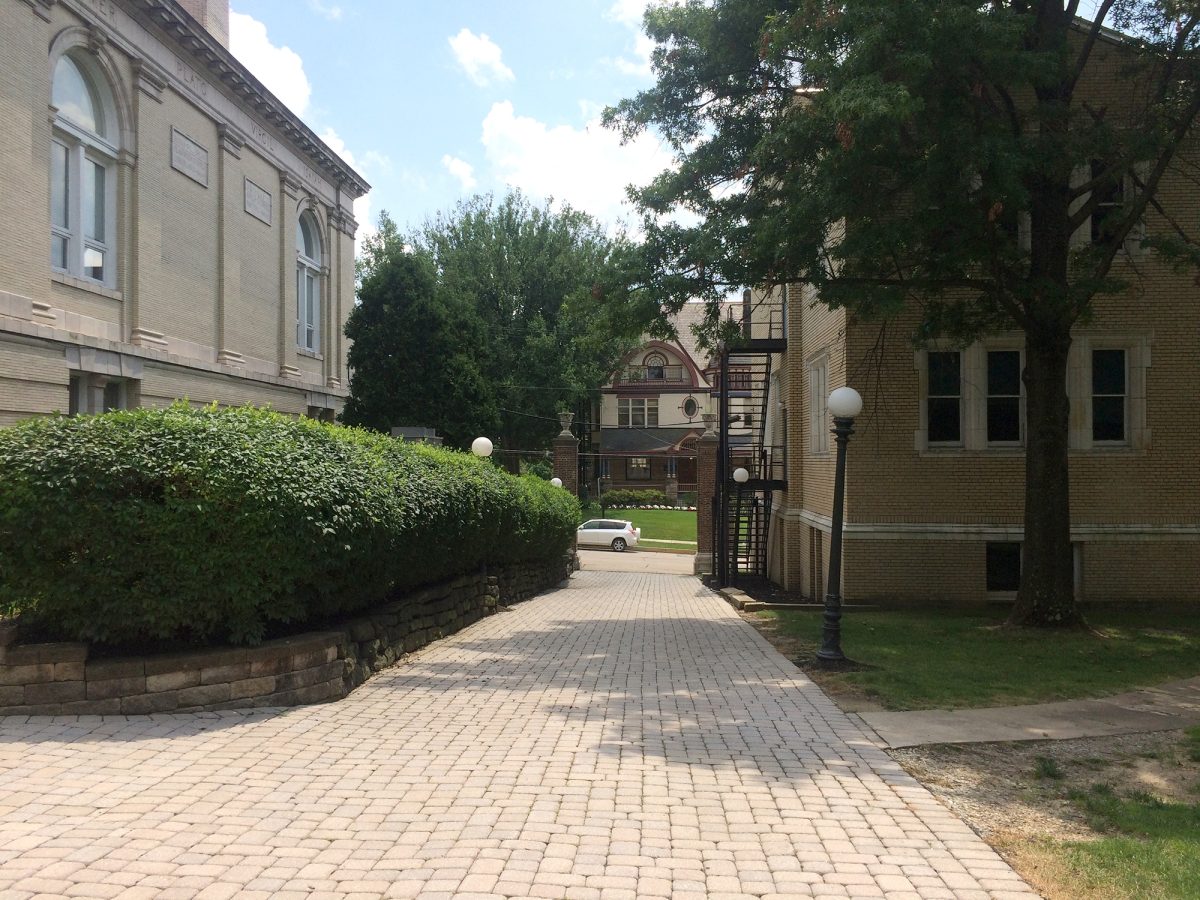
A walkway near the former physics building at Washington & Jefferson College in Washington is shown in this Tuesday photo. The walkway was featured in a scene from George A. Romero’s 1993 film “The Dark Half” with actors Timothy Hutton and Julie Harris.
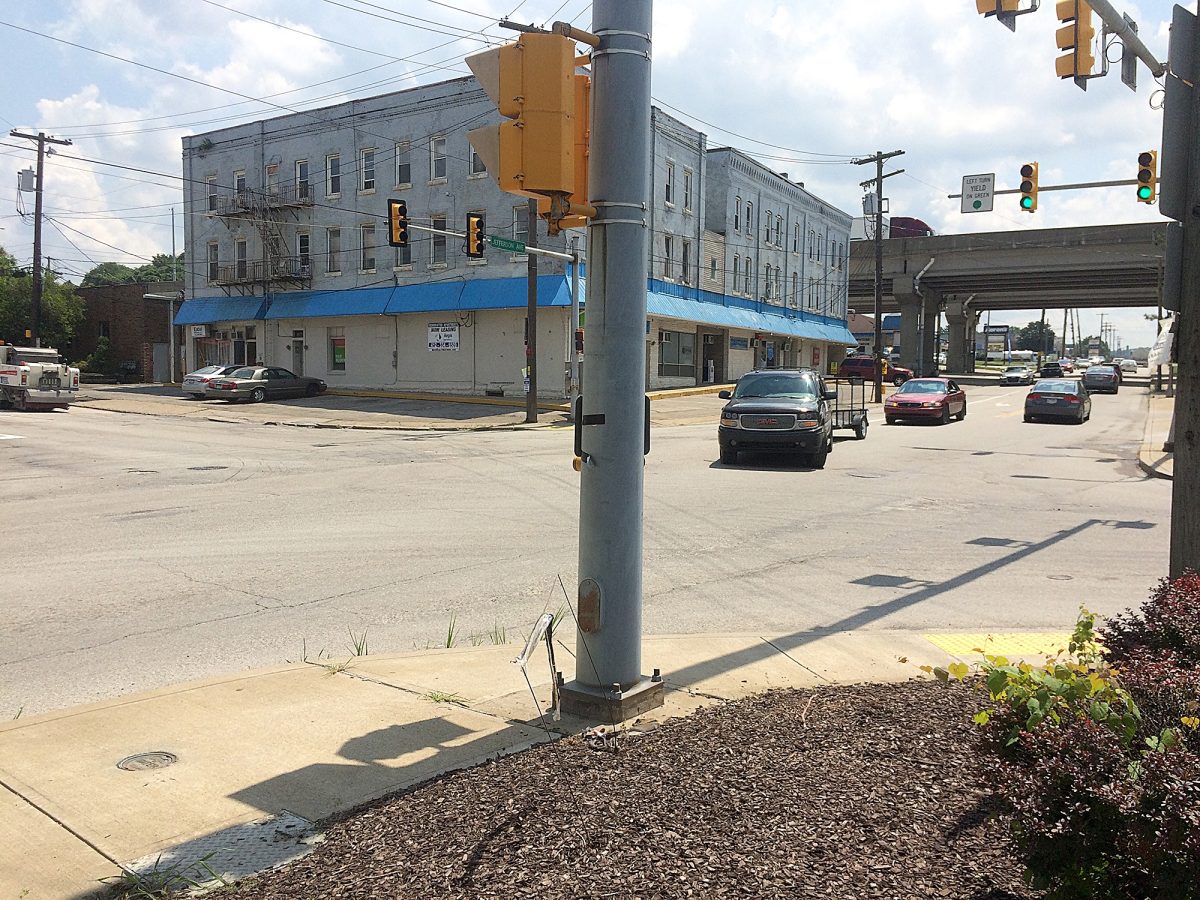
West Chestnut Street in Washington is shown in this Tuesday photo. A CoGo’s convenience store was previously at this location and was featured in a scene in George A. Romero’s 1993 film “The Dark Half” with actor Timothy Hutton. The CoGo’s has since been demolished and a Rite Aid pharmacy stands at the site.
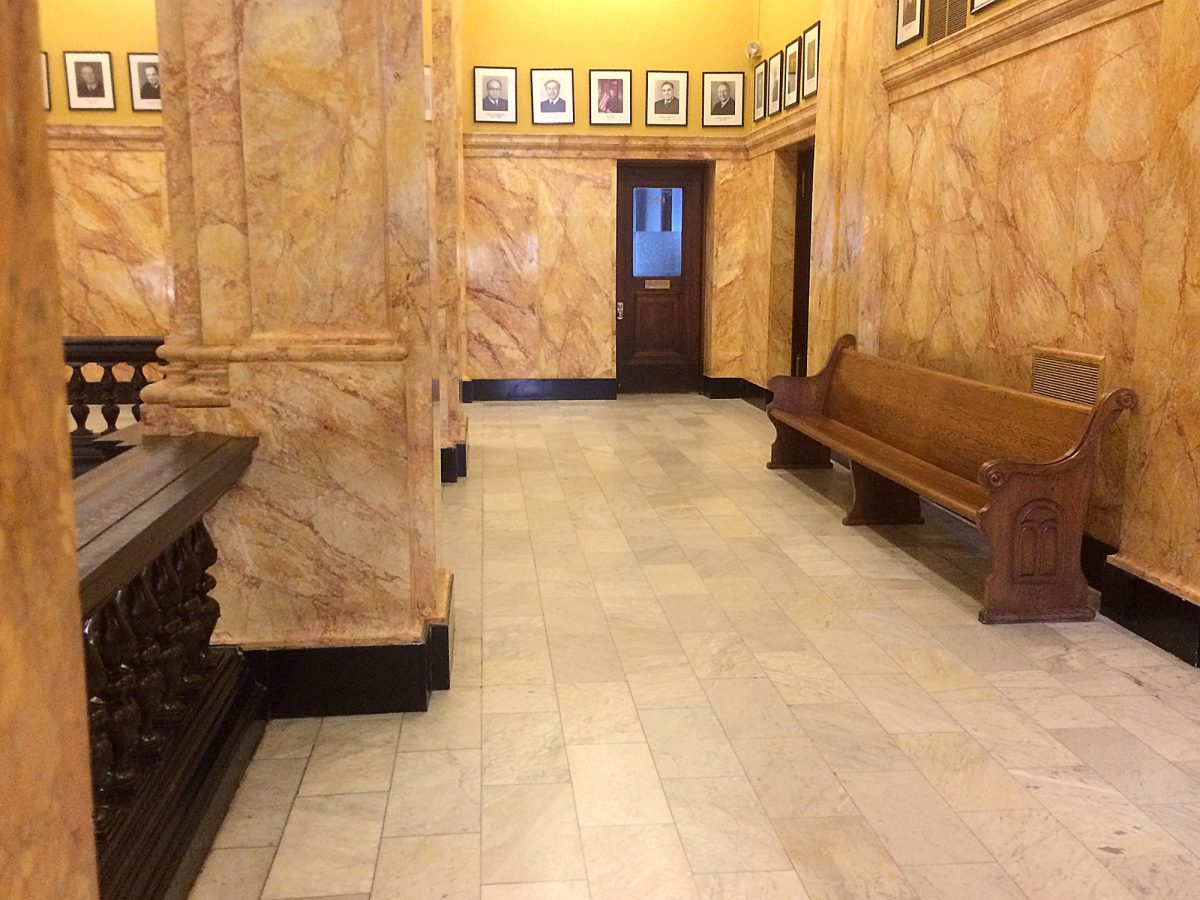
The second-floor hallway of the Washington County Courthouse is shown Tuesday. The hallway was used in a scene featuring Hutton, Amy Madigan and Michael Rooker, who was most recently seen as Yondu in Marvel’s “Guardians of the Galaxy” movies. The county was paid $750 for use of the courthouse and reimbursed for county employees’ time, according to a Tuesday, Oct. 30, 1990, story from O-R writer Linda Ritzer.
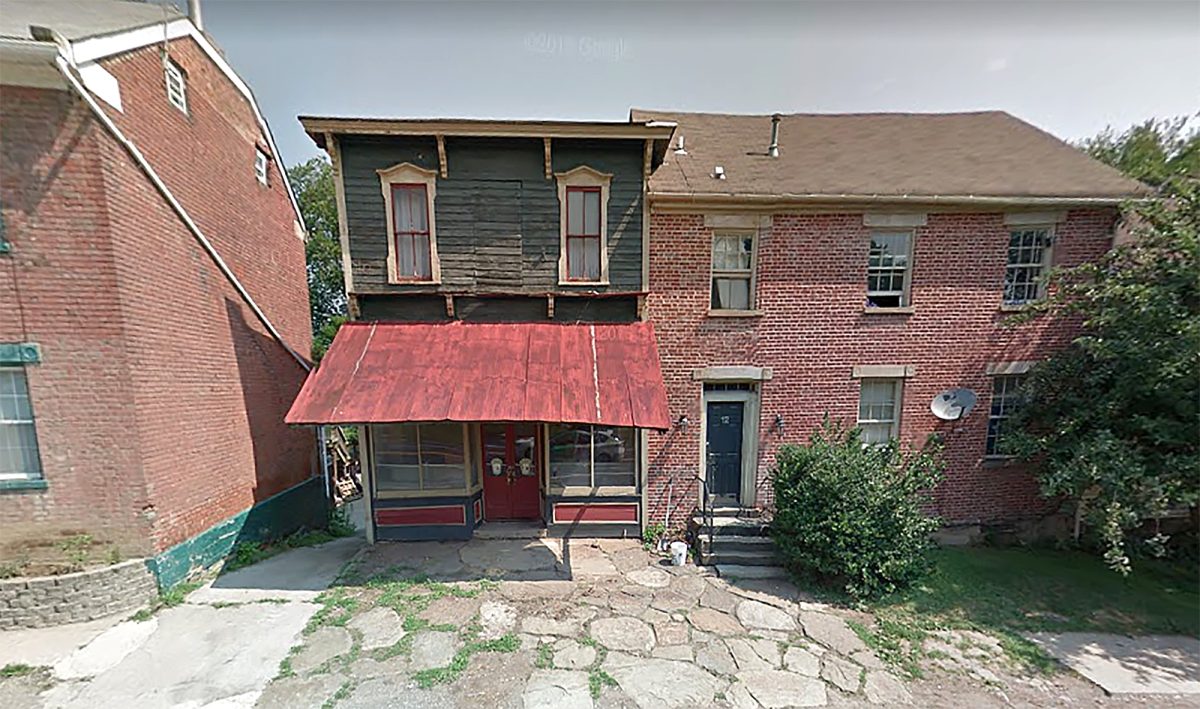
In this image from Google Maps, a former general store at 10 E. Main St. in West Middletown is shown. The location doubled as a police station in George A. Romero’s 1993 film “The Dark Half.”
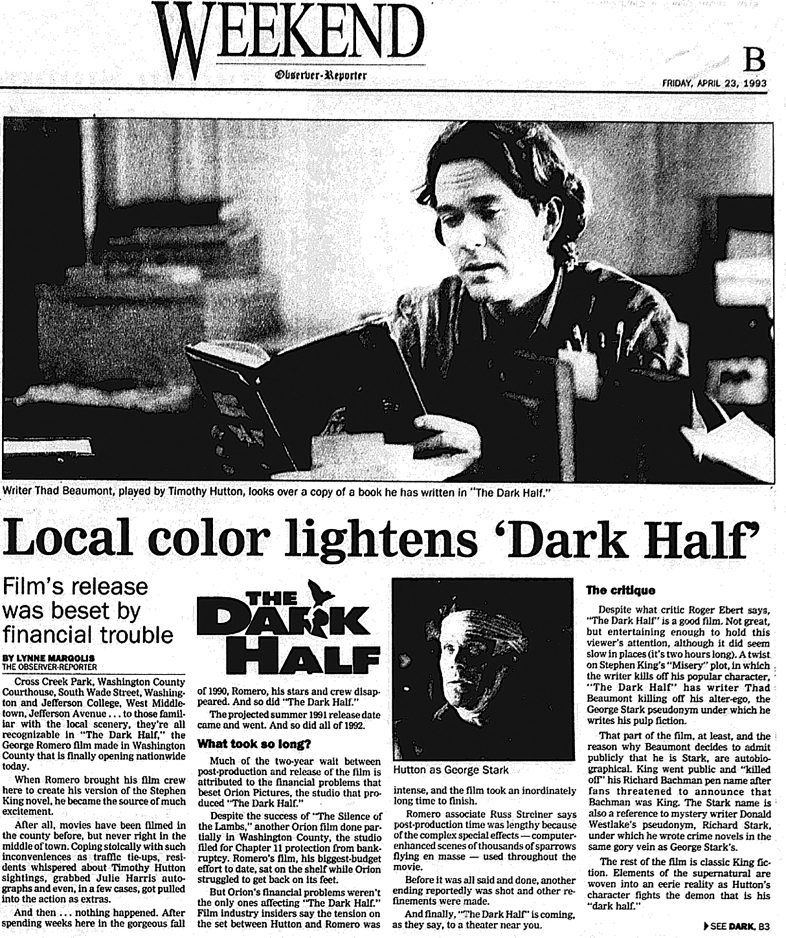
The weekend section of the April 23, 1993, Observer-Reporter focused on the release of George A. Romero’s film “The Dark Half,” which was partially shot in Washington County in 1990.
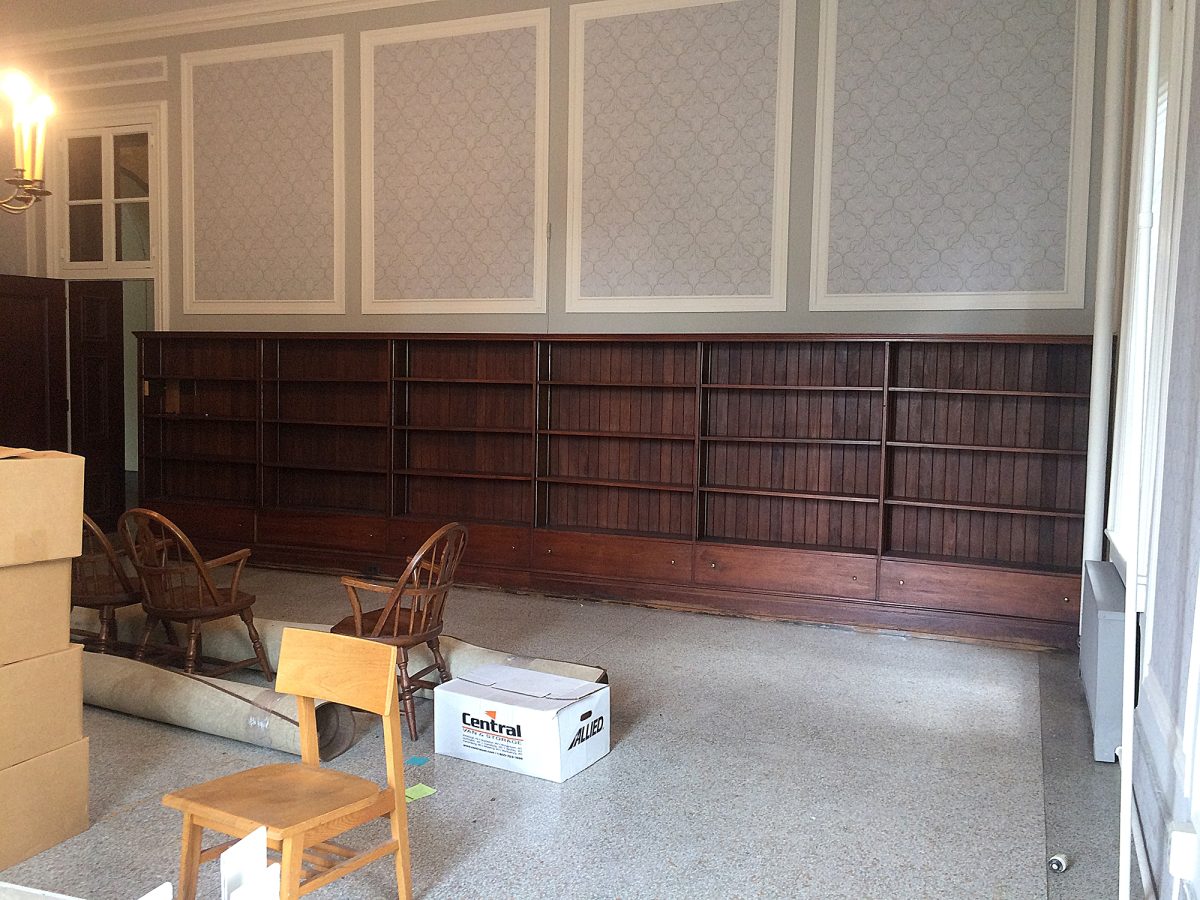
The former office of religion professor Robert Vande Kappelle in Old Main at Washington & Jefferson College in Washington is shown in this Tuesday photo. The office was used as a set in George A. Romero’s 1993 film “The Dark Half” with actors Timothy Hutton and Robert Joy. The office is currently unoccupied and was used in the Netflix series “Mindhunter.”
Film director George A. Romero, who died Sunday after a brief battle with lung cancer, is known for his connection to Pittsburgh.
Most of his films were shot in and around Pittsburgh until he began producing films in Canada to take advantage of tax credits.
However, for Romero’s final Pennsylvania-based production, he set his sights on Washington County, an area he became familiar with while producing a remake of his landmark film, “Night of the Living Dead,” in Hopewell Township.
The same week in October 1990 that the remake was set to premiere at the Galleria Cinemas on Route 19, Romero was beginning to direct an adaptation of the Stephen King book “The Dark Half.”
Much like King’s other stories, “The Dark Half” is set in Maine. But Romero’s film version was shot entirely in Pennsylvania and much of the film was shot in Washington County, including a CoGo’s convenience store on Jefferson Avenue in Washington, the county courthouse, a general store in West Middletown and many scenes at Washington & Jefferson College.
In an Oct. 26, 1990, interview with Observer-Reporter staff writer Don Herschell, Romero said the area had “a big advantage … with a lot of looks. It looks very much like Maine.”
Romero also praised the area, telling Herschell he was “having a good time and it’s turning out wonderfully well.”
“There are good people here, and it’s a friendly place to work,” he said.
“The Dark Half” is about writer and college professor Thad Beaumont, who has found success by publishing gruesome crime novels under the pen name George Stark.
Beaumont decides to publicly retire the pseudonym with a staged funeral. However, his Stark alter ego comes to life and goes on a murder spree, leaving Beaumont as the chief suspect.
Romero’s crew shot scenes featuring Beaumont – played by Academy Award-winning actor Timothy Hutton – teaching classes at a lecture hall at the chapel at Washington & Jefferson College’s Old Main. An office in Old Main also served as the set of Beaumont’s office.
According to the Winter 2003-04 edition of W&J’s campus magazine, the office was occupied by professor of religion Robert Vande Kappelle and he kept props from the production in the room. Vande Kappelle retired from the college in 2014.
The office is currently vacant and is being used as a set in the upcoming Netflix series “Mindhunter.”
Several W&J students and faculty members also appeared in the film, including theater professor William Cameron, who played a police officer that discovers a bloody pickup truck at a car lot.
Cameron said he had been on two previous Romero sets, as a “featured zombie” in 1985’s “Day of the Dead” and a news anchor in the remake of “Night of the Living Dead,” which Romero produced for director Tom Savini.
The scene was shot at a car lot located off the Eighty Four exit on Interstate 70, according to Cameron. The shoot took all night and Cameron said he was on set from 6 p.m. until 6 a.m.
“(Romero) was very relaxed on set and a very friendly and nice guy,” Cameron said. “Clearly, this was a guy who knew what he was doing and what he wanted.”
Cameron also ran into Romero while the crew was shooting on W&J’s campus, where he was teaching an “introduction to theater” class at the time.
Washington County Courthouse also made its big screen debut in “The Dark Half,” according to a Tuesday, Oct. 30, 1990, story from O-R writer Linda Ritzer. The county was paid $750 for use of the courthouse and reimbursed for county employees’ time, according to the report.
The second-floor hallway of the historic structure was used in a scene featuring Hutton, Amy Madigan and Michael Rooker, who was most recently seen as Yondu in Marvel’s “Guardians of the Galaxy” movies.
According to the report, the courthouse’s jury lounge was used for extras holding and to serve food during the weekend shoot, but it needed to be cleaned up Monday morning when jurors were scheduled to arrive.
However, the county director of property and supplies at the time, Francis King, said the crew left the building in surprisingly good shape when he and two workers arrived to clean.
King said he was “expecting a disaster,” but was surprised when the workers just needed to “straighten up” and “put some signs back up.”
However, an American flag that stood in the courthouse rotunda was reportedly misplaced after shooting. It is unclear whether it was found.
The city of Washington also benefited from the production company, Dark Half Productions, reimbursing the parking authority for its use of 19 meters, according to a report from O-R writer Kathie Warco.
Ralph Ruscello, then-executive director of Washington Parking Authority, said the company was charged $2.50 per day per meter Monday through Friday.
“The people from the production have been very nice and very good about paying us,” Ruscello said.
Boaters at Cross Creek County Park were likely inconvenienced by production of “The Dark Half.”
An Oct. 23, 1990, report warned of “delays in access” to the park until Nov. 5 and Washington County Department of Parks and Recreation announced the use of gas-powered boats was being restricted after noise from the motors was creating a problem for the film crew.
A scene where Rooker’s sheriff character is shown leaving the police station was filmed in West Middletown at 10 E. Main St.
Avella fire Chief Eric Temple said the location that stood in for the police station was formerly a general store that closed in the late 1960s.
When the production left Washington County in November 1990, reports about “The Dark Half” stopped. The film was not released until April 23, 1993, despite an initial expected summer 1991 release date.
A story from writer Lynne Margolis that appeared in the O-R April 23, 1993, noted the film studio, Orion Pictures, filed for Chapter 11 protection for bankruptcy and noted “film industry insiders” said on-set tension between Hutton and Romero also contributed to the delay.
However, in Michael Felsher’s 2014 documentary, “The Sparrows Are Flying Again: The Making of ‘The Dark Half,'” the true reasons for the film’s delay are explained and Romero does not mention his relationship with Hutton as a factor.
While Romero was initially thrilled to work with Hutton, he said “he turned out to be a bit of a problem” during shooting.
“I mean, he’s really method,” Romero said in the documentary. “When he was playing George Stark, everyone on the crew had to call him George … or he would snarl at you.”
“Once we both realized we were each trying to do the best we could, we wound up really getting along and I think really doing good work,” Romero said.
The real production hurdles actually occurred because of scenes featuring swarms of sparrows, a recurring motif of “The Dark Half.”
In the documentary, Romero explains the crew went “way over schedule because of the birds” despite having thousands of sparrows and a “top Hollywood bird wrangler” on the crew. Many shots of the birds had to be created using special effects both on set and during post-production.
“Despite all of this preparation and everything else, I tell you, there are very few real birds in the movie,” Romero said in the documentary.
While working on the film’s climax, which included the bulk of the post-production bird effects, Orion filed for Chapter 11 bankruptcy protection and “The Dark Half” was put into a vault until the company could find finances for its completion.
“The Dark Half” was not a success on its initial release, grossing only $10 million at the box office against a $15 million budget. The film’s failure also stalled Romero’s career, as he did not direct another film until 2000’s “Bruiser.”
But Washington Countians who want a peek at the area’s past might want to seek out the film.