

Greene County to get medical marijuana growing operation
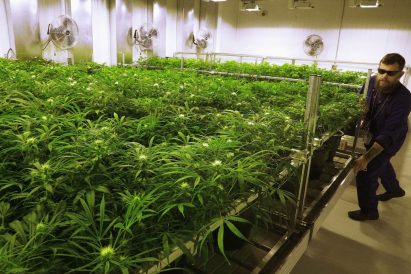
A Philadelphia company was approved by the state for a permit to grow and process medical marijuana in Greene County, according to a list provided Tuesday by the Department of Health.
AGRiMED Industries of PA LLC was one of two growers/producers approved for the 11-county Southwestern Pennsylvania region.
The other was Pittsburgh-based PurePenn LLC, which plans to operate a facility in McKeesport.
The two companies were among 12 approved for operations, with two in each of six regions established by legislation approved in 2016.
AGRiMED, which has grown medical marijuana in other states where it is legal, said in March it would file an application with the Health Department for a license to grow and cultivate medical cannabis near Nemacolin in Greene County.
The operation will be developed off Thomas Road in Cumberland Township on what is known as the Wellington Development property, on 61 acres near the site where another company has proposed building a natural gas-fired power plant.
AGRiMED officials previously said they will invest $25 million to develop the growing operation in Cumberland Township. The operation initially is expected to employ about 40 people, according to the company, but that could ramp up to more than 100 in the first five years.
Attempts to reach AGRiMed for comment Tuesday were unsuccessful.
The approved growers list was released following a DOH teleconference in Harrisburg.
“With today’s announcement, we remain on track to fulfill the Wolf administration’s commitment to deliver medical marijuana to patients in 2018,” said John Collins, director of the Office of Medical Marijuana.
The medical marijuana program, which was signed into law by Gov. Tom Wolf in April 2016, is expected to be implemented by early 2018. When completed, it will offer medical marijuana to patients who are residents of Pennsylvania and under a physician’s care for the treatment of a serious medical condition as defined by Act 16.
Pennsylvania’s law permits medical marijuana use for treating 17 different medical conditions, including HIV/AIDS, cancer, autism, glaucoma, Parkinson’s disease, Huntington’s disease, Crohn’s, sickle cell anemia, multiple sclerosis, severe seizure disorders and chronic neuropathic pain.
Collins noted that those approved for growing and processing will raise the plants in an indoor, enclosed, secure facility.
“This is not done in an open field,” he said.
The department received a total of 177 grower/processor applications, as well as another 280 applications for dispensaries.
Collins said the department expects to name the first dispensary operators by the end of the month.
The approval process was thorough, and involved experts from the Health Department using a set of criteria established by the department to score each application.
He said companies that submitted applications that were denied can appeal the decision.
According to Collins, another round of as many as 25 growers and processors will be announced later.
For those that were approved Tuesday, the clock begins ticking immediately.
“The 12 that were permitted have six months to become operational,” Collins said. “They can’t begin to grow until the department has deemed they are operational.”