

Will tragedy spark change?
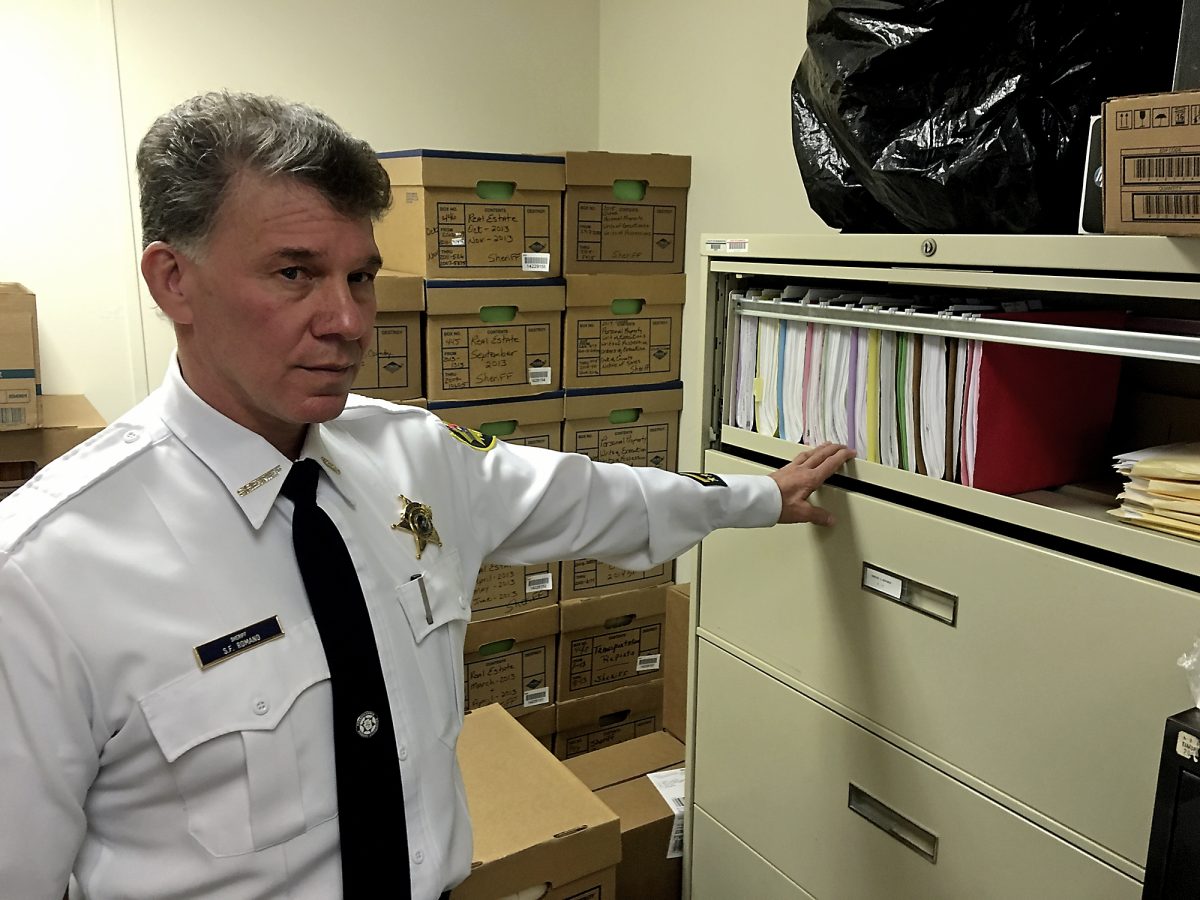
Washington County Sheriff Samuel Romano stands next to a color-coded shelf of documentation related to third parties holding firearms in protection-from-abuse cases.
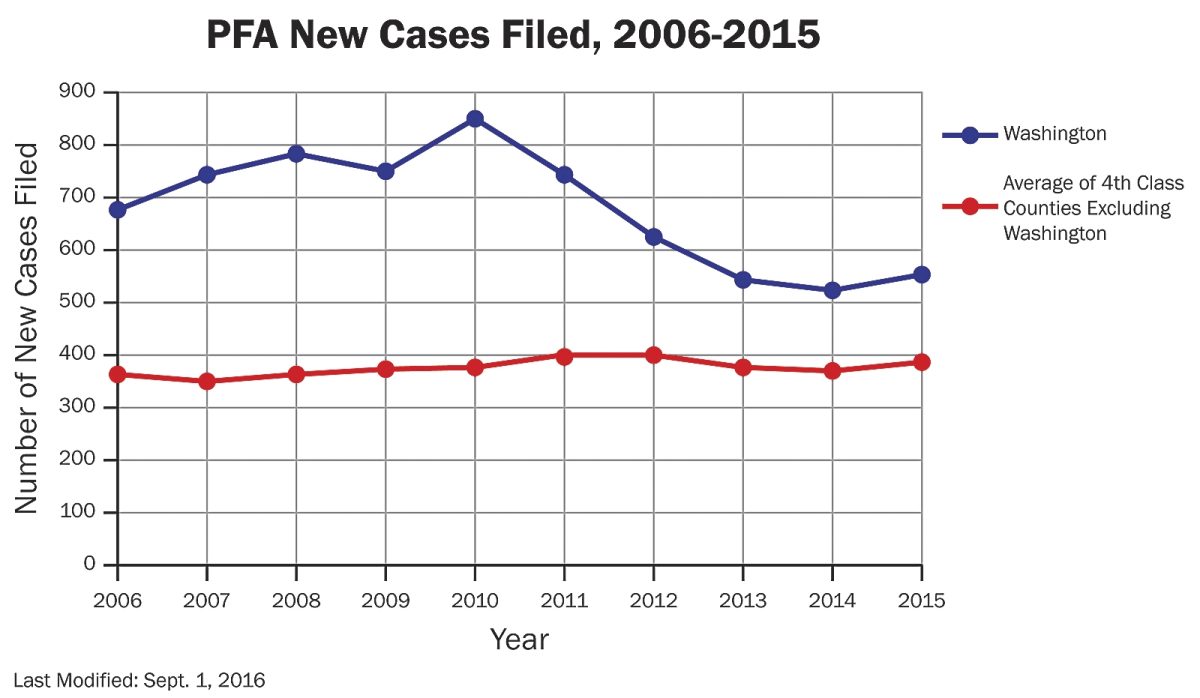
Source: Administrative Office of Pennsylvania Courts

Tierne Ewing

Dalia Sabae
Six months ago, residents of the region were reeling because of news that Kevin Ewing, while facing charges of brutalizing his wife, Tierne, had abducted and murdered her before turning a gun on himself.
Then, in November, Michael Cwiklinski rigged a vehicle and his home to explode during a SWAT situation in which two Canonsburg police officers were shot. Scott L. Bashioum died a short time later at Canonsburg Hospital, and Jimmy Saieva survived. Cwiklinski committed suicide after murdering his wife, Dalia Sabae, who was three months pregnant with their child.
Both wives in these high-profile cases had gone to court seeking protection-from-abuse orders.
“It’s a shame, because we’re losing too many good people out there,” said Washington County Sheriff Samuel Romano, whose department, along with police departments, often serves PFA documents to those against whom restraints are being sought. Police departments and any private citizen who is deemed a competent adult – even the plaintiff – can carry out the same mission.
Romano sends two deputies on PFA-related tasks because the circumstances are potentially fraught with danger. But, in an interview, he pointed out the shortcomings of the law governing the temporary restraining orders, especially the part that allows alleged abusers to turn over their weapons to a third party.
“When you serve the PFA, they have 24 hours to find a friend, a family member or they can even go to a federal firearms dealer, and they can hold onto their weapons for them during the temporary period of this PFA,” said Donald Jones, who has worked for the county for 26 years.
“Basically, the law only allows us to serve the paper,” said James Dalessandro, chief deputy. “And read instructions telling people they’re not allowed to have any weapons,” Romano added.
“It should be more like a search warrant,” the sheriff continued. “We’re not really permitted to go in that house and search it. You’re basically taking their word.”
Jones has found that the PFA petition filed with the court may not enumerate or specify weapons.
Romano, as a member of the PA Sheriff’s Association, intends to bring up the shortcomings of the law at the group’s 95th annual conference in July in Cranberry Township, Butler County.
“I think the system is a little bit broken,” he said.
Some relief may be on the way through a bill sponsored by an eastern Pennsylvania legislator. However, a final version “hasn’t been solidified,” said Michael Stoll, chief of staff for state Sen. Thomas H. Killion, who represents Chester and Delaware counties. The lawmaker is seeking co-sponsors for an amendment designed to, according to a memorandum, remove “third-party safekeeping as an option for a defendant ordered by the court to relinquish firearms, weapons and ammunition. Moving forward, firearms shall only be relinquished to the county sheriff or other law enforcement agency or to a federal firearms licensed dealer. No longer would a person be able to transfer the firearms to a relative, friend, neighbor.”
A similar measure was introduced in the 2015-16 legislative session by then-state Sen. Pat Vance, according to the memorandum.
There are many cases when the sheriff’s office takes custody of weapons, and Romano has dozens of long guns, crossbows, knives, pistols and swords.
As the half-year mark arrived since Tierne Ewing’s death, state Sen. Camera Bartolotta, who represents Washington and Greene counties, has introduced what she is calling “Tierne’s Law.”
Bartolotta wants to give magisterial district judges additional tools to protect victims of domestic violence by clarifying that they would be able to use a risk-assessment tool to determine whether a defendant poses a danger to a victim when setting bail.
Public records at the Washington County Courthouse show that Kevin Lee Ewing had an extensive criminal record – albeit, petty – before petitions resulting from abuse and domestic violence-related charges were filed against him in 2001. A 15-year lull occurred, and then blew up this past summer when Tierne Ewing was held against her will, beaten and branded. Judge Gary Gilman, over the objections of Assistant District Attorney Kristin Clingerman, allowed Kevin Ewing to remain out of jail on bond and electronic home monitoring. Kevin Ewing removed his monitor, and he abducted his wife in what turned out to be the last day of her life. She was murdered in a barn in West Finley Township.
In a strange twist of fate, court records show that 26 years ago, Judge John F. Bell noted that Kevin Ewing could serve a sentence on a charge of receiving a stolen license plate on “a new program known as electronic home monitoring.”
Bartolotta, in an interview in late February, said there is other legislation pending on ankle monitors and active alerts.
She said Pennsylvania last year assisted more than 89,000 victims of domestic violence. Ewing was one of 102 domestic violence homicide victims in 2016. Eight of those victims lived in the counties Bartolotta represents.
“The tragedy that unfolded in Tierne’s case exposed numerous flaws in the way state and local authorities treat instances of domestic violence, and my heart goes out to all those who loved her and the other families who have suffered through similar circumstances,” said in a news release. “We need to explore every avenue to ensure no family has to endure the same sort of pain and loss.”
The Administrative Office of Pennsylvania Courts tracks statistics on PFAs, through 2015, the last year for which numbers are available. According to the AOPC website, Washington County Court handled 574 PFA petitions that year, down from more than 800 in 2010.
Obtaining a PFA is typically a two-part process, beginning as a temporary restraining order and then proceeding to a final order.
Washington County judges granted temporary protection-from-abuse petitions more than 88 percent of the time. In the final stage, the plaintiff withdrew a petition in 168 cases in 2015, accounting for 29.8 percent of the total.
Counties of population size similar to that of Washington’s have averaged just 400 or fewer new protection-from-abuse cases from 2006 through 2015. The 800-plus Washington County PFAs filed in Washington County were more than double the fourth-class county average.