

Maple syrup tours a sweet time
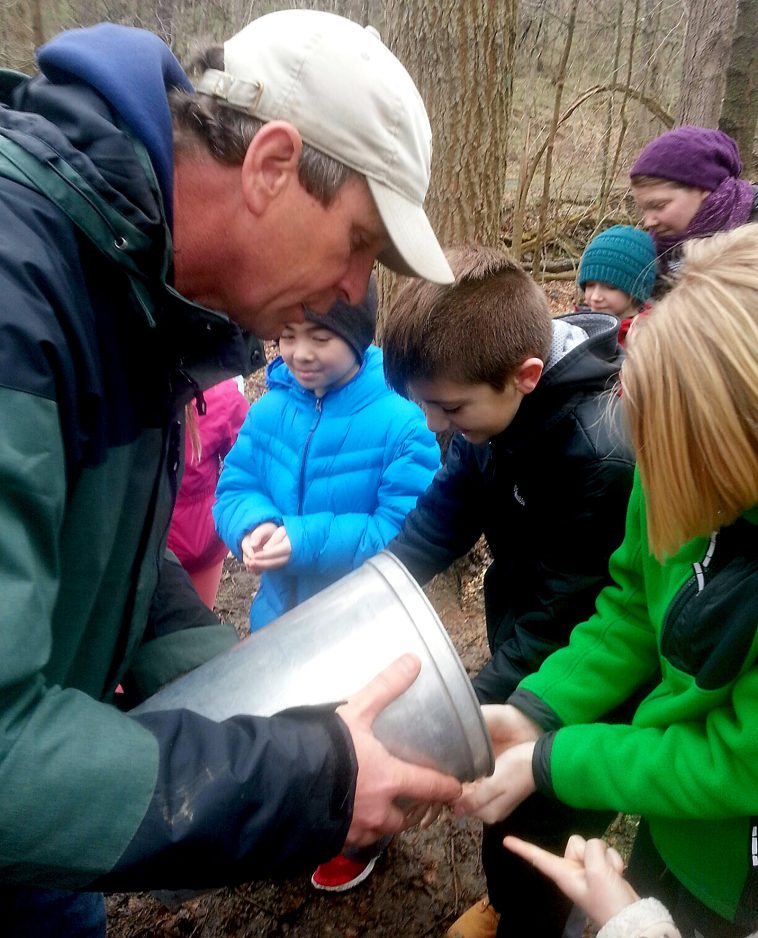
Jeff Donahue offers samples of freshly tapped sap Saturday at Mingo Creek County Park, Nottingham Township.
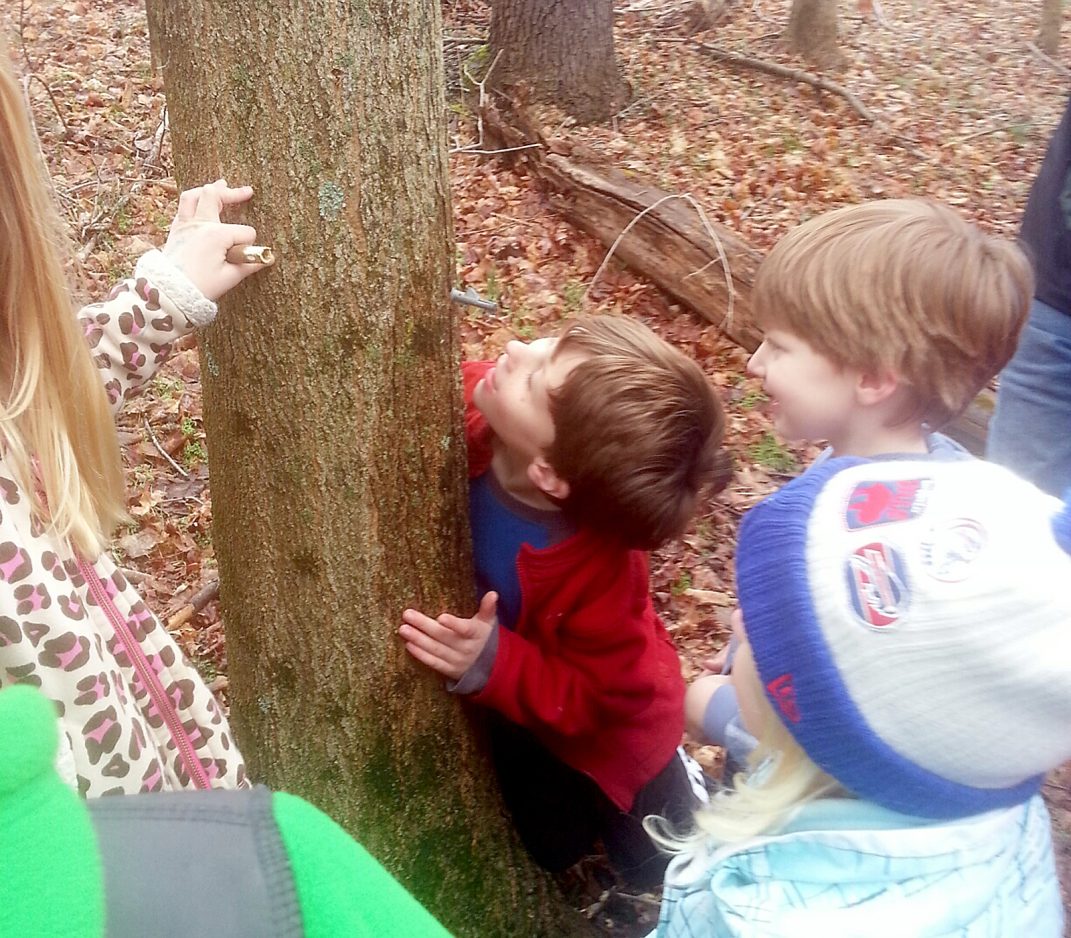
C.J. Peters, 8, of McMurray, tries sap from the tap.
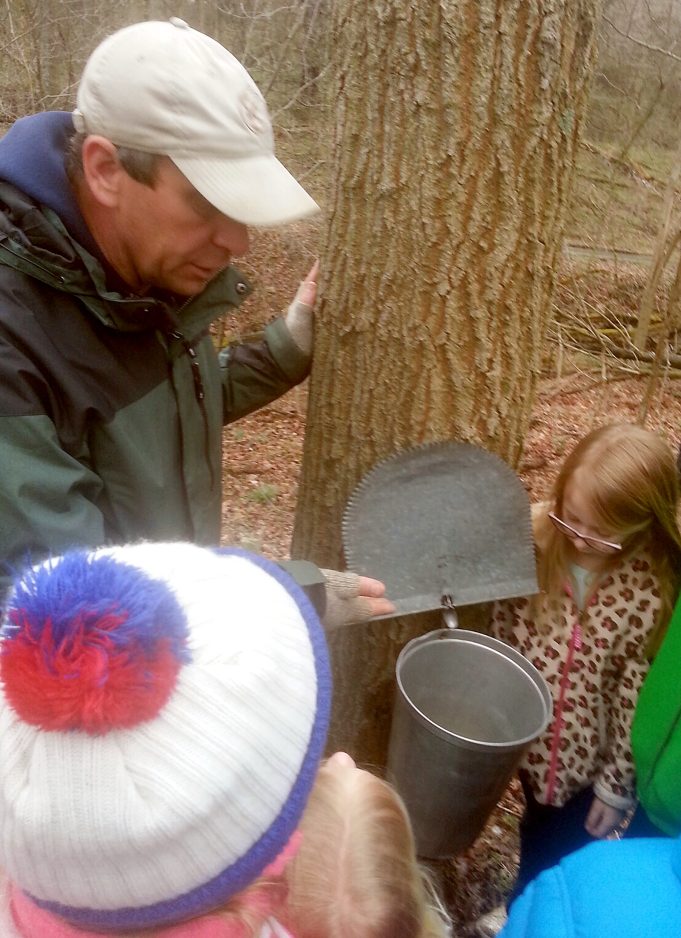
Jeff Donahue explains the maple sugaring process at Mingo Creek County Park in Nottingham Township Saturday.
FINLEYVILLE – Jeff Donahue started by making an important point clear.
“The sap that comes out of a tree looks nothing like maple syrup,” he said. “It doesn’t look like Mrs. Butterworth, it doesn’t look like Log Cabin. Nothing like it. The sap that comes out is like water – maybe with a bug or two. It’s not pure.
“It takes 40 gallons of sap from a maple tree to make a gallon of syrup.”
Kids, comprising about half of a group of 26, stood wide-eyed. So did a few adults.
Donahue was one of two guides who led maple sugaring tours of muddy Mingo Creek County Park Saturday. Walking through the mucky woods near Pavilion 6, they explained and showed their mobile audiences how maple sugar was painstakingly gathered in the old days, and how it is drawn from trees and processed today. They had placed taps – called spiles – in several maples, which, when opened, dripped sap into buckets.
Smiling, and saying it was safe, Donahue asked whether anyone wanted to take a taste. Kids are naturally curious, and most said yes, cupping their hands together as the guide gently poured a little sap to sample. Minutes later, several did so at a tree, craning their necks and allowing the liquid to drip down into their mouths. They found it to be sweet.
A bug or two? The adults, who are more cautious than curious, mostly declined.
Donahue, a South Franklin Township resident, said a healthy maple tree will yield about 15 gallons of sap during a season. The season generally runs 10 weeks, from February to April, but syrup collection began earlier this year because of the warm winter.
“The problem with Washington County is it’s very unpredictable. And it’s short,” Donahue said. “A better area would be Somerset.”
Guides led the half-hour tours in the Nottingham Township park from 9 a.m. to 1 p.m. Saturday, drawing more than 100 visitors over the eight sessions. The county Department of Parks and Recreation organized the event, which included a pancake-and-sausage breakfast afterward.
Near the beginning of his 11:30 tour, Donahue directed his audience to a small pile of wood with several rocks nearby. He also had a hollowed-out tree section containing sap. They were props for a demonstration of how maple sugar was gathered and processed about a century or so ago.
Quite simply – actually, not so simply – the process entailed building a small fire, putting the rocks in the fire, removing them carefully with a slingshot-like device made of wood and animal cartilage, and dropping them into the sap. The water would evaporate, eventually leaving “hard crystallized sugar,” Donahue said.
Today?
“You need sap, a boiler and time,” Donahue said.
He said the sap has to reach a certain density level before it can become maple syrup. A hydrometer is used to determine that.
Not all maple trees are maple syrup-ready. Donahue said they must be at least 10 inches in diameter before anyone should stick a spile in it.
The parks department, he assured, is not about to branch out into the maple syrup business.
“We’re not here to make commercial syrup.”