

Statewide group to hold gerrymandering presentation in Carmichaels
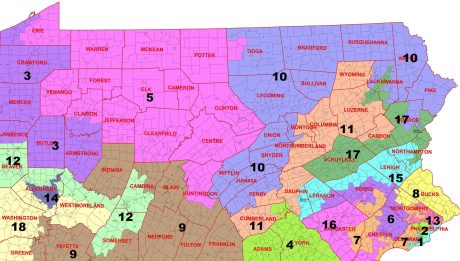
Gerrymandering is a popular phrase thrown around in the political arena, but not everyone knows what it means or how it impacts them.
Now, a statewide nonpartisan organization is hoping to educate voters on gerrymandering at an upcoming meeting in Carmichaels.
The Nov. 1 meeting at Flenniken Library aims to give attendees an overview of the history of the practice, how it’s morphed over time and how voters can help make a change.
Congressional and state legislative districts are redrawn after each census every 10 years. Gerrymandering is used to segment out voters in a way that benefits one political party over another. Members of Fair Districts PA would rather see districts drawn by people not connected to politics.
Alina Keebler, the southwest regional coordinator for Fair Districts PA, and Janice Hatfield, the organization’s Greene County chair, said these presentations aim to inform voters in the event of a statewide referendum. The hope is to reform redistricting ahead of the next census.
“(The current process) is just so obviously unfair to me,” Keebler said. “We’re the only country in the world where the legislators pick who their voters are.”
Keebler added she wasn’t interested in politics before learning about gerrymandering. But as she looked closer at the last delayed congressional district map, the details showed her how insane the drawings appeared.
The local Greene County group has held two presentations so far, one at Mt. Morris Lions Club and the other at Bowlby Library. Hatfield said that few people are even aware of gerrymandering.
“We just want every vote to count,” she said.
The group comes together from the efforts of members of the League of Women Voters of Pennsylvania, Common Cause PA and other organizations concerned about the issue. It’s made up of volunteers, and any funding goes to outreach and promotion.
“We can’t change anything until the state legislature changes the (state) Constitution,” Hatfield said.
In order to help combat gerrymandering, Senate Bill 22 and House Bill 722 are currently being debated. These bills need to pass twice before a statewide referendum. The proposed plan would have 11 people selected randomly to draw the districts: four Republicans, four Democrats and three others unaffiliated or with a minority party. They would not be politicians or lobbyists. It’s a model that emulates California’s current system.
Current law only stipulates that districts be equal in population when drawn. Everything else is fair game. Pennsylvania is known for some outlandish gerrymandered districts. The most egregious example from the Keystone State, according to a recent Washington Post article, is the 7th Congressional District. It’s one of the least compact in terms of the geographic space it spans. Other districts nationwide snake up and down states, connecting groups of people nowhere near each other.
The state Supreme Court in 2012 ordered state legislators to redraw the state House and Senate districts after determining they were unfairly drawn following the previous census. Those new districts went into effect in 2014.
The current process is far too secretive, Keebler said. It creates extreme partisan divides and as gerrymandering increases, politicians do less and less. Legislators are at the mercy of party leaders lest they get drawn out of their own districts.
“They draw it to their benefit,” she added.
To learn more about the Fair Districts PA movement, visit their website at www.fairdistrictspa.com or attend the 6 p.m. informational meeting at the library located at 102 E. George St. in Carmichaels.