

Pa. Supreme Court, Washington County case set precedent in insurance law
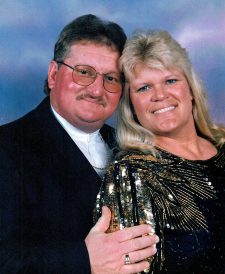
Three-and-a-half years before she died, LeAnn Rancosky wrote, “I am battling cancer. I shouldn’t have to battle an insurance company who doesn’t honor their contracts. I have filled out every form you sent me, some twice. I feel my cancer insurance coverage has been canceled in error and believe my policy should be reinstated.”
Rancosky, a letter carrier who lived in Monongahela, wrote not about typical health insurance for medical bills, but about a different type of policy.
Her sister had died of ovarian cancer and Rancosky purchased what is known as a “dread disease” supplemental policy in 1992, paying premiums for 11 years through payroll deductions that would cover expenses related to disability due to cancer, such as mileage to and from a specialist’s office or child care or housekeeping.
If she remained cancer-free until age 70, she was to receive a full refund of her years’ worth of premium payments.
Rancosky, however, contracted fatal cancer, and her case, which originated in Washington County Court, was recently decided by the state Supreme Court.
“We consider, for the first time, the elements of a bad faith insurance claim brought pursuant to Pennsylvania’s bad faith statute,” adopted in 1990, wrote Justice Max Baer.
Rancosky was diagnosed with disabling ovarian cancer at Frick Hospital in Mt. Pleasant, Westmoreland County, in February 2003, after which she was never able to return to her postal job in Grindstone, Fayette County. She did, however, remain on the payroll as she used up accumulated vacation and sick days. She took disability retirement on June 24, 2003.
Among voluminous paperwork that her attorney described as “thick as a phone book,” an oncologist submitted to her insurance carrier, Conseco, the April 2003 date that he began treating her.
Her policy with Conseco Insurance said if she became completely disabled due to cancer for at least 90 days, she no longer had to pay premiums while she remained totally disabled.
“She was to make a claim on the 91st day and that’s what she did,” said her Pittsburgh attorney, Ken Behrend. “If she lied, she knew she could face imprisonment. When she signed her verification, she was swearing to its truth and accuracy.”
Rancosky’s calculations of Day 91 were based on her Feb. 4, 2003, diagnosis, not her April 21, 2003, visit with an oncologist. Conseco, which after June 24, 2003, no longer received $44 premium payments through Rancosky’s payroll deductions, eventually saw the cessation of premium payments as a lapse that jeopardized her coverage.
Conseco, which later became part of Washington National Insurance Co. due to a merger, paid for her cancer treatments in 2004 and 2005.
But when her cancer recurred in 2006, Conseco denied her claim for further benefits.
“She thinks it’s a computer glitch,” Behrend said.
Eight times, she authorized Conseco to contact her employer or anyone else about the actual start date of her disability, but the insurance company did not investigate the discrepancy so LeAnn Rancosky chose to file suit, claiming Conseco acted in bad faith. She died in 2010 at age 51.
By the time a trial was convened in 2013, LeAnn’s husband, Martin Rancosky, was in frail health due to pancreatic cancer. “He was struggling to make it through the trial as far as he could,” Behrend recalled. Jurors wondered about his absence when, after a mere 15 minutes, they rendered their unanimous verdict of $31,144.
The jurors gathered around Behrend under the courthouse portico as he phoned Martin Rancosky to inform him of the outcome. “He starts cheering and everyone starts laughing and crying,” Behrend said. “I have never seen anything like this before. If Marty had been there, he would have gotten a group hug.”
Martin Rancosky died a few weeks after the trial.
“He lived with that pancreatic cancer until his wife was vindicated under that contract,” Behrend said.
After winning a jury trial in Washington County Court but losing a related case in a nonjury trial, both before then-Washington County President Judge Debbie O’Dell Seneca, the case wended its way to the state Supreme Court.
“The insurance company wanted the individual to prove there was actual malice for a finding of bad faith,” Behrend said of the Supreme Court ruling. “It was essentially an impossible standard of proof.”
The Supreme Court found that Conseco’s interpretation of the law “would create an unduly high threshold for bad faith claims,” such as a plaintiff uncovering some sort of “smoking gun” pointing to personal hostility toward an insured person.
“We do not believe the General Assembly intended to create a standard so stringent that it would be highly unlikely that any plaintiff could prevail,” Baer wrote.
Barbara Ciesemier, senior director of corporate communications for the CNO Financial Group Inc. in Chicago, when contacted via email, replied that the corporation would not comment on ongoing litigation matters.
In a 24-page opinion, the Supreme Court upheld an intermediate appellate decision that the Superior Court made to send the bad-faith claim back to Washington County Court. Although O’Dell Seneca is no longer a member of the Washington County bench, Behrend said it will go back to another Washington County judge who will not have to convene a trial or even a hearing.
“Only a rereading will be required,” Behrend said. “Why present all the evidence again? Technically, we’re not getting a new trial, we’re getting a retrial. You don’t see that very often.”
A different judge will “look at it again in the light of the correct standard,” he explained.