

Seminar explores apprenticeships as a regional workforce model
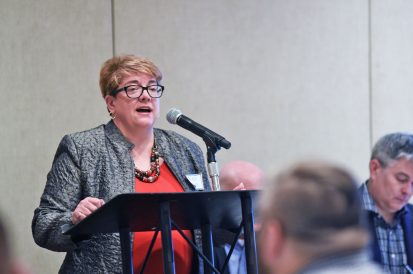
When several metalworking companies in Hanover were faced with a shortage of welders and machinists, they worked with their chamber of commerce to design an apprenticeship program with two local high schools.
While it’s less than a year old, the strategy appears to be successful enough to act as a possible template for other areas of Pennsylvania that are experiencing workforce shortages.
Holly Tonini/Observer-Reporter
Holly Tonini/Observer-Reporter
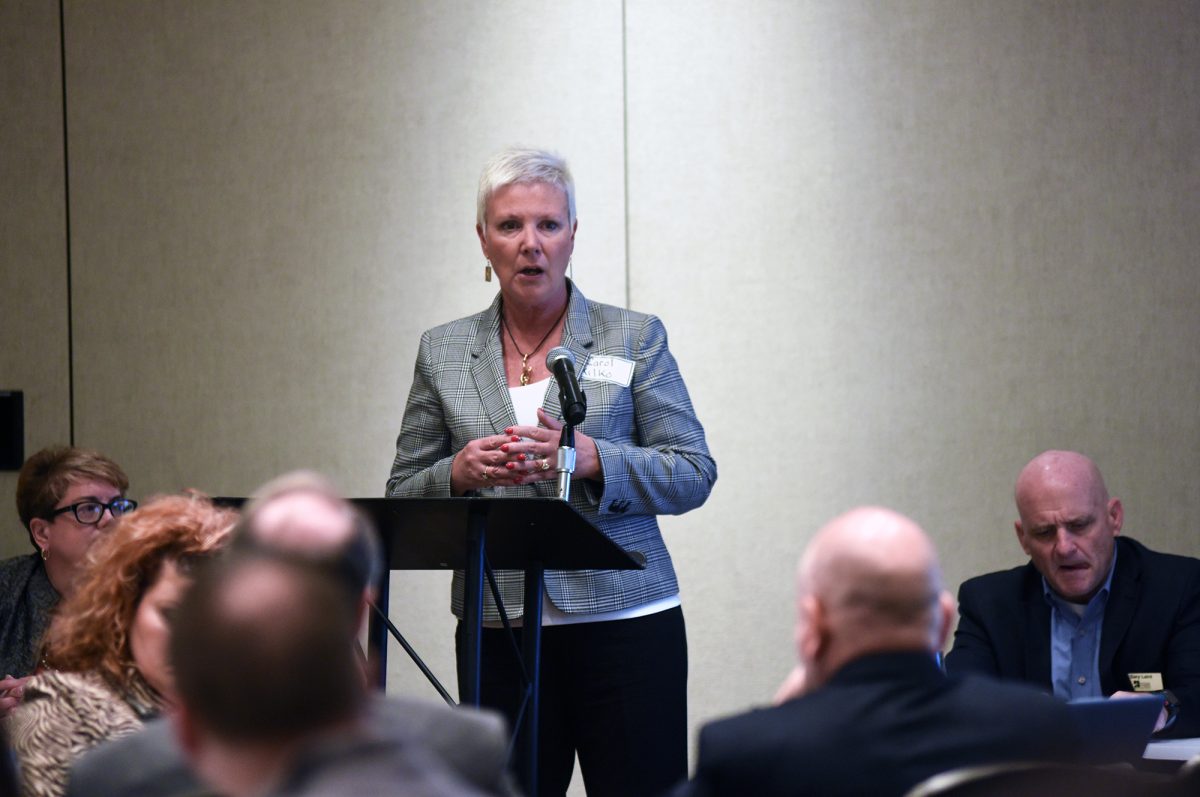
Carol Kilko, special assistant for agency development initiatives at the state Department of Community and Economic Development, introduces herself Thursday at an apprenticeship accelerator meeting at the Hilton Garden Inn at Southpointe.
On Thursday, about 60 representatives of Western Pennsylvania chambers of commerce, high schools and workforce executives gathered at the Hilton Garden Inn at Southpointe and spent the morning learning the details from the architects of Hanover’s registered apprenticeship program, presented as a workforce model that could be used here.
Ami Gatts, director of the Southwest Corner Workforce Development Board and president of the Washington Greene County Job Training Agency, which sponsored the event, said it was held to address problems expressed by manufacturers in the region who have difficulty finding skilled workers.
“It’s a hot topic,” Gatts said, noting that Gov. Tom Wolf has initiatives to make young adults aware of family-sustaining jobs that exist that don’t require a college degree.
“Pennsylvania has a robust manufacturing sector, but its workforce is aging” added Eric Ramsay, director of the apprenticeship and training office of the state Department of Labor & Industry.
Ramsay worked with Hanover Chamber of Commerce President Gary Laird, Gordon Laabs, business development manager for Elsner Engineering, and two other Hanover metals manufacturers to create a registered apprenticeship program that is creating a career pathway for high school students who want to work in the local metalworking industry.
Manufacturing legacy
Laird said Hanover is a small community that has experienced significant economic growth in the last 20 years, with a business community that has many small to mid-sized companies that do business on an international level. In addition to metalworking, it has a major presence in food production, with Utz potato chips and Snyders-Lance headquartered there.
Laird acknowledged that until a year or two ago, he knew nothing about apprenticeships. But the chamber began working with Hanover’s two high schools about 15 years ago to create an elective program and an awareness about career pathways in manufacturing.
The course, offered each fall to high school seniors, provides a history of manufacturing and its impact on the global economy. It also includes visits to local companies.
Holly Tonini/Observer-Reporter
Holly Tonini/Observer-Reporter
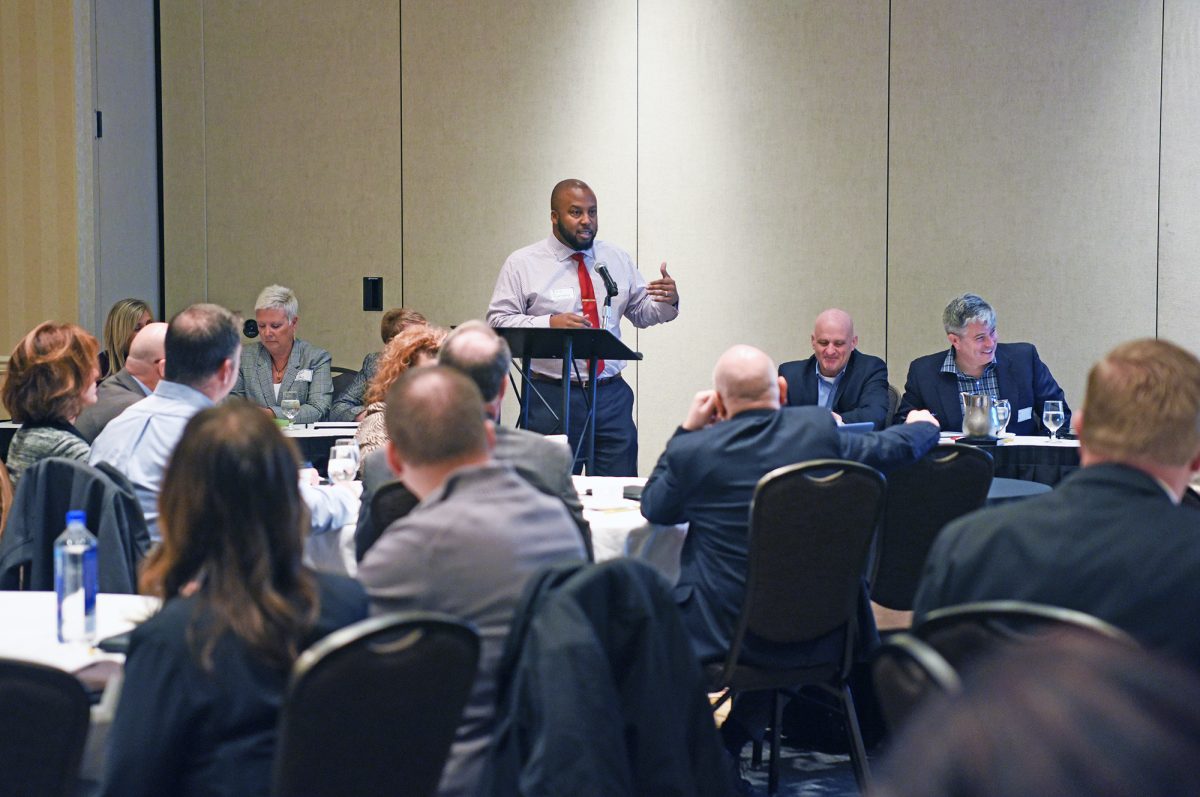
Eric Ramsay, director of the Apprenticeship and Training Council at the state Department of Labor and Industry, talks about the registered apprenticeship training program in Pennsylvania.
Laird said about a year ago, he was approached by Laabs and representativesof three other companies in metalworking that expressed interest in taking the manufacturing course to a higher level.
“All of the partners were looking to the next four to five years and recognizing there would be a turnover” as a result of the aging workforce, he said.
The group worked with Ramsay to create a pre-apprenticeship program in metalworking and welding at the two high schools. The chamber received a $134,000 grant to manage start-up costs of the program. It was also registered by the state to administer the apprenticeships at the companies.
When launched at the two high schools this fall, the pre-apprenticeship programs drew 10 students. Laird said the program will add a third pre-apprenticeship program in mechatronics.
Self-funding goal
Laabs stressed that while the grant has been helpful in launching the program, the three companies are putting up money of their own. He and Laird said they want the program to become self-funded. When asked by an attendee how much it would cost to fund a registered apprenticeship program start-up, Laabs estimated $150,000.
“If you want something that serves you in a profit motive, you may have to financially support it,” he said. He added that in the case of the Hanover schools, both had teachers in place, so the grant money did not have to be used to hire instructors, but was used instead to prepare classroom space for the training areas.
Laird said Hanover’s model uses the chamber as the administrator for the apprenticeship program, handling the paperwork from participating employers that is submitted to the state. He said other entities like community colleges could be used in that capacity, but suggested other regions could take different approaches to establishing a program.
“There’s no cookie-cutter mold,” he said.
Laabs said companies that are part of the same industry make the best partners for creating a registered apprenticeship.
“You want to find companies that share a common skill set,” he said.
He said those who complete a pre-apprenticeship in either high school are guaranteed an interview at the participating companies. Those hired will enter the registered apprenticeship program provided by their employer.
Ramsay said apprenticeship-trained workers in Pennsylvania average about $60,000 per year and over their career can expect to earn about $300,000 more than those without an apprenticeship.
Ramsay said his office is working to refine curriculum alignment between the pre-apprentice and company apprenticeships programs.
Thursday’s presentation was attended by Carol Kilko, special assistant for agency development initiatives at the state Department of Community and Economic Development, and Eileen Cipriani, deputy secretary for workforce development with the state Department of Labor and Industry.
Kilko said the Hanover program represents an important step in getting not just students but their parents to see that there is a clear career pathway from high school to the workforce.
It was unknown how many of those who attended would pursue a plan similar to the one presented by the Hanover group, but when one of the panelists asked for a show of hands, more than half responded.