

Washington real estate taxes rising again
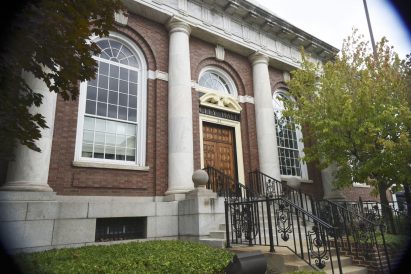
Deviating significantly from their initial budget proposal, Washington council members raised taxes on land and buildings to generate an additional $800,000 in new revenue for the city next year.
Council members Matthew Staniszewski, Joe Manning, Monda Williams and Ken Westcott, plus Mayor Scott Putnam, approved that measure and the passage of the $14.8 million budget in two votes Thursday on two related ordinances that will control city finances in 2019.
Manning, oversees who the finance department, said the hundreds of thousands of dollars the city has lost because of appeals of property valuations since the countywide reassessment took effect in 2017 formed the “primary driver” of the increase in taxes.
“It has been an ongoing thing, where (property owners) may not have gotten the judgment that they wanted that year, but they got it the following year, so that ended up as a refund,” Manning said.
He said the appeals cut into the city’s revenue from property taxes by about $300,000. Property owners who get their valuations lowered can also be entitled to refunds on bills for previous years. Manning was unsure how much those reimbursements cost the city, but estimated it’s been “a couple hundred thousand.”
Washington is currently part of a program administered by the state Department of Economic Development for financially struggling municipalities.
Unlike most Pennsylvania municipalities, the city taxes property through a two-tier system, with separate rates for land and buildings. The increases bring the new rates to 38.71 mills for land and 4.03 mills for buildings. Current rates are 34.21 and 3.58 mills, respectively.
Council raised taxes on land and buildings by 1.5 mills for this year’s budget.
A mill equals $100 for every $10,000 in assessed property value. Manning said that based on the taxable value of land and buildings, the increase would equate to an increase of 1.5 mills in a one-tiered system. It will mean the median property owner will pay roughly $20 more per month on their tax bill.
The $14.2 million tentative budget that officials released a month ago didn’t include any changes to real estate millage. At that point, Manning conceded a “minor” increase was still possible.
“We were trying not to have a tax increase,” Manning said Friday.
But, he said, city officials decided to refinance a 2012 bond issue to push back the payment schedule by a year. The move will allow the city to delay the bond payment that would have been due in 2019 and make it in 2020, freeing $1.6 million to use to balance the city budget.
He said the city risked a downgrade in its credit – on the heels of one just announced by rating agency Standard & Poor’s in May – if officials did not “at least consider” raising taxes to show commitment to their debt obligations.
A lower rating means borrowing and refinancing debt becomes more difficult for future administrations.
Various legal problems are another millstone on city finances. For example, Manning said officials budgeted to pay nearly $145,000 next year that Piccolomini Contractors Inc. won in arbitration in 2017. Piccolomini had gone to court over the city’s termination of a contract in 2014.
The city is still involved in litigation that stems from the collapse of a three-story apartment building on North Main Street in July 2017. It also faces a federal civil-rights lawsuit by a Washington County jail captain who alleges her rights were violated when a police officer who was with the city at the time tried to arrest her for not admitting a man who had a visible head wound before he was examined at the hospital.