

Local mental health professional warns against too much device screen time
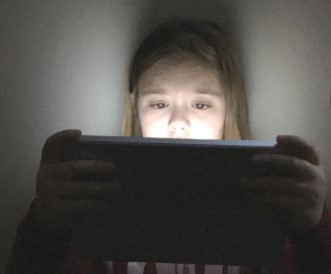
Children have been told for years to not sit too close to the television set or they’ll go blind, but with technology providing additional computer and phone screens, now there are other consequences to consider.
“It’s a sedentary activity, so either sitting and watching TV or playing video games increases the risk factor of becoming overweight,” said Dr. Krista Boyer, a psychologist with Connellsville Counseling Services. “And the lights emitting from the screen interfere with the sleep and wake cycle, so that can lead to insomnia and sleep difficulties.”
Boyer said such sleep difficulties can lead to other negative mental-health concerns and academic problem for children.
Youngsters and teens who watch too much TV or spend too much time behind a computer, cellphone or tablet are more likely to have emotional, social and attention problems, Boyer said.
A survey of 13- to 17-year-olds released this fall by the nonprofit Common Sense Media found that 95 percent of U.S. teens have their own mobile device. Seventy percent of them check social media several times a day, up from 34 percent in 2012. More than half say that their devices distract them from homework or the people they’re with.
Some tech companies now at least acknowledge concerns about over-use and outright abuse of digital media. Apple instituted a “Screen Time” function in its latest iPhone software. It monitors app use and allows users – or their parents – to establish limits. Google For Families and Google Play, found on Android phones, and various independent apps also allow parents to monitor and set some restrictions.
But those features aren’t enabled by default, so new limits can come as a shock to those on the receiving end.
Researchers who study screen-use trends generally refrain from using the word “addiction” when it comes to screens, as it’s not an official diagnosis in the mental health world. But this summer, the World Health Organization added “gaming disorder” to its list of afflictions. That is gaming that severely interferes with relationships, school and work. The diagnosis is still under review by U.S. health authorities.
Still, some who spend a lot of time with their nose buried in a screen can begin to show aggressive behavior, Boyer said.
“Kids who watch a lot of unsupervised TV or video games are exposed to a lot of violence that can desensitize them to violence and leave them to carry out violence with daily interaction with others and can also cause bullying,” Boyer said.
Parents can watch their children for sleep difficulties and behaviors including if the child would rather play a video game rather than spend time with their friends.
Boyer said another concern she has with children being on devices, especially younger children, is being on the screen so much, they’re not using their minds for make-believe play.
“Make-believe play is important for brain development so they can learn about the world, problem solve and sort information,” Boyer said, adding that research shows that elementary-school-aged children tend to do worse on academic testing if they’re using the screen too much.
The American Academy of Pediatrics’ most recent recommendations include limiting screen time for children 2 to 5 years old to no more than 1 hour per day. Those older should have “consistent limits” placed on media use, with assurances that it doesn’t take over sleep and physical activity, the AAP recommended.
But it’s not just children who need to take a break.
Boyer said not parents who engage in too much screen time can also lead to problems.
“It disrupts the interaction they have with their children,” Boyer said, adding that leads to attachment issues with children having lower self esteem and more incidents of acting out. “It’s just as bad when the parents are doing it. When they validate and demonstrate to their children they’re paying attention to kids, the outcome is so much better.”
Boyer said adults can see the signs when they find themselves wanting to be on electronics more and more, if they’re constantly checking their phones, if they feel any distress when they’re separated from their device or would rather be on the device than doing other things.
Also, adults can find that their memory or mental processing speeds aren’t as quick as more and more people have been using their phones as something as an external hard drive for their minds.
“We’re losing some of our cognitive functions because we’re relying so much on our iPhones,” Boyer said.
The Associated Press contributed to this report.