

Township named for the home where the buffalo once roamed
Barbara Miller/Observer-Reporter
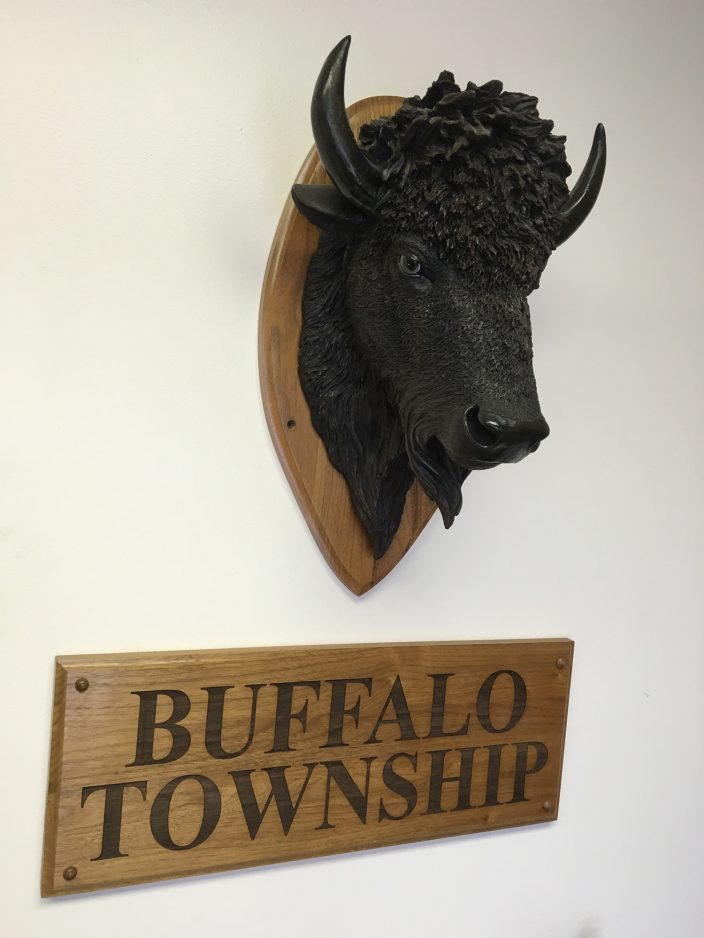
A likeness of an American bison, more commonly known as a buffalo, greets visitors arriving at the municipal building near the Taylorstown interchange of Interstate 70.
Shuffle off to the Buffalo Township building and sashay back in time.
Many a town hall functions as a place to obtain a peddler’s permit or to check on the finer points of the zoning ordinance, but this Buffalo has more than a nickel’s worth of history.
“Five-thousand dollars and 23 cents,” said township administrative assistant Karen Bedillion.
“It was a state grant,” said Bedillion. “You had to keep track of every dime, and I accounted for every dime of it.”
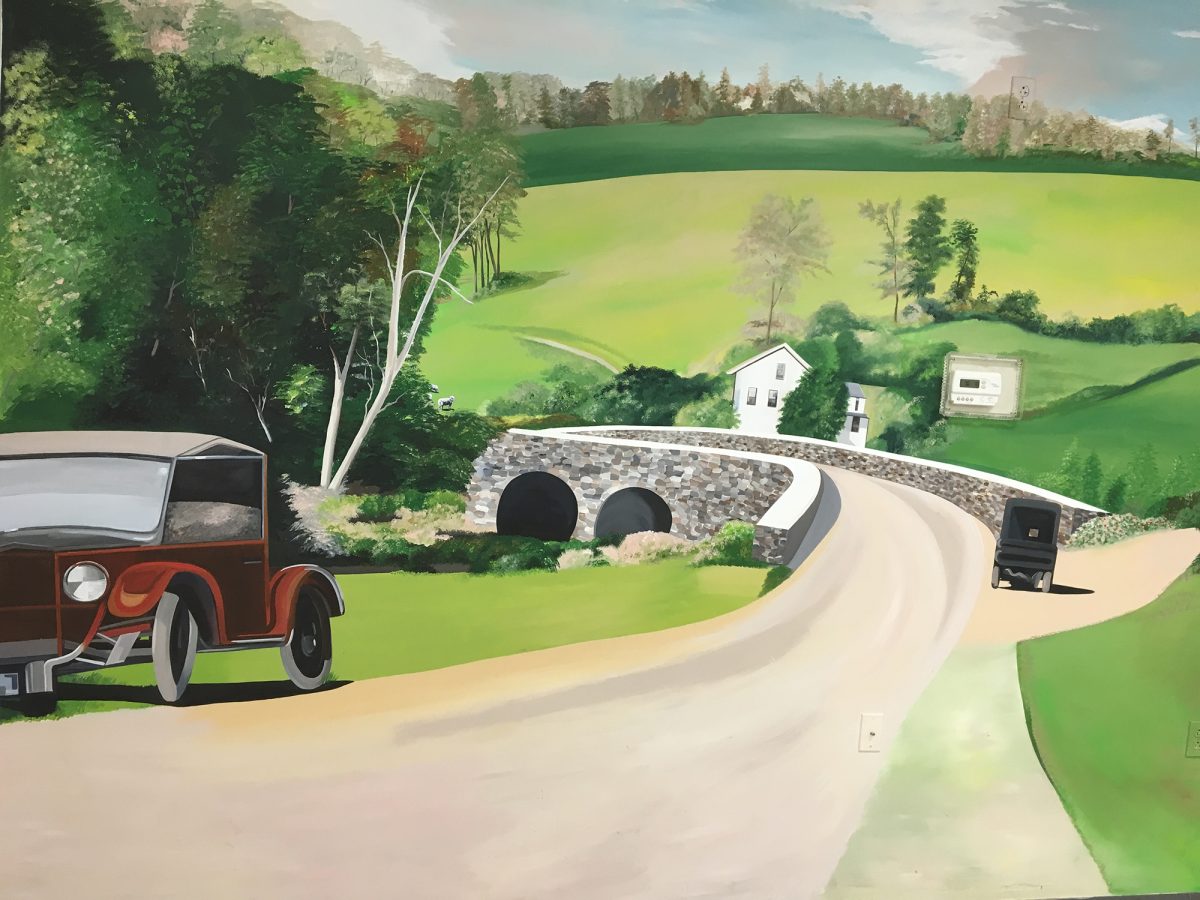
Rimming the public meeting room of the township building is a gallery of historic photos, family trees and a mural painted by local artist Diane Adams of the “S” Bridge, once part of ye Old National Pike and just north of the municipal building at Route 221.
Barbara Miller/Observer-Reporter
Barbara Miller/Observer-Reporter
Local artist Diane Adams painted this mural of the National Pike’s sinuous “S” Bridge, depicting a time before Route 40 bypassed the stone structure near Route 221 between Washington and Wheeling, W.Va.
Barbara Miller/Observer-Reporter
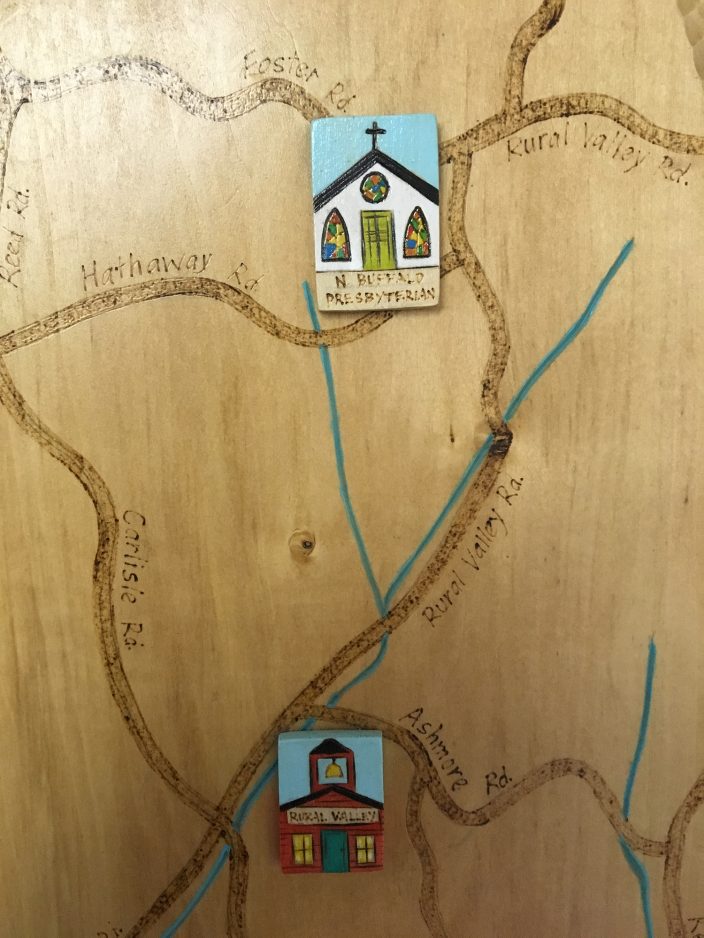
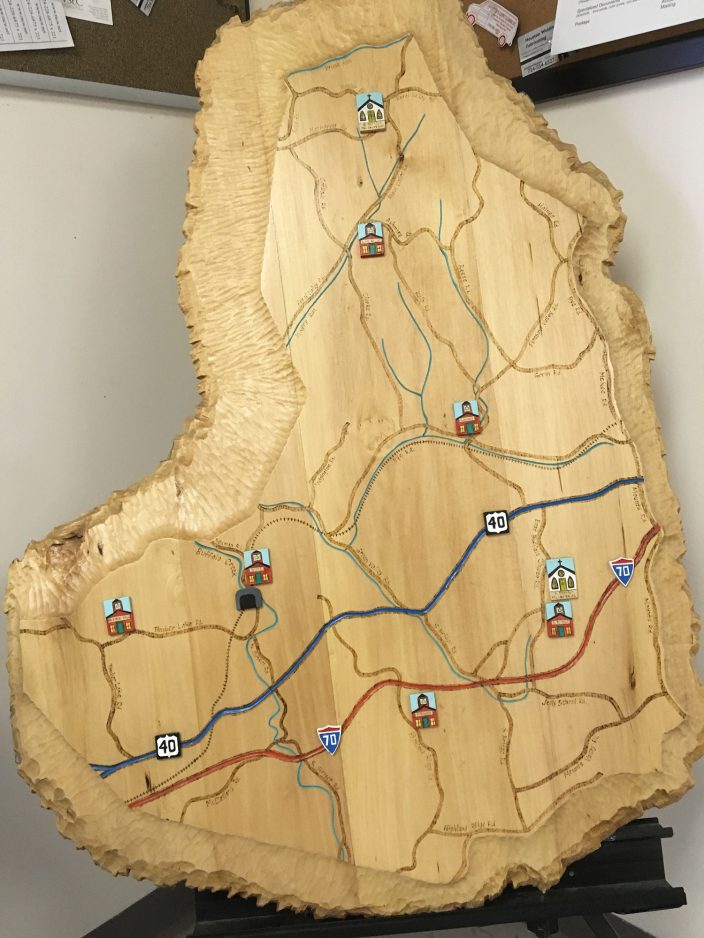
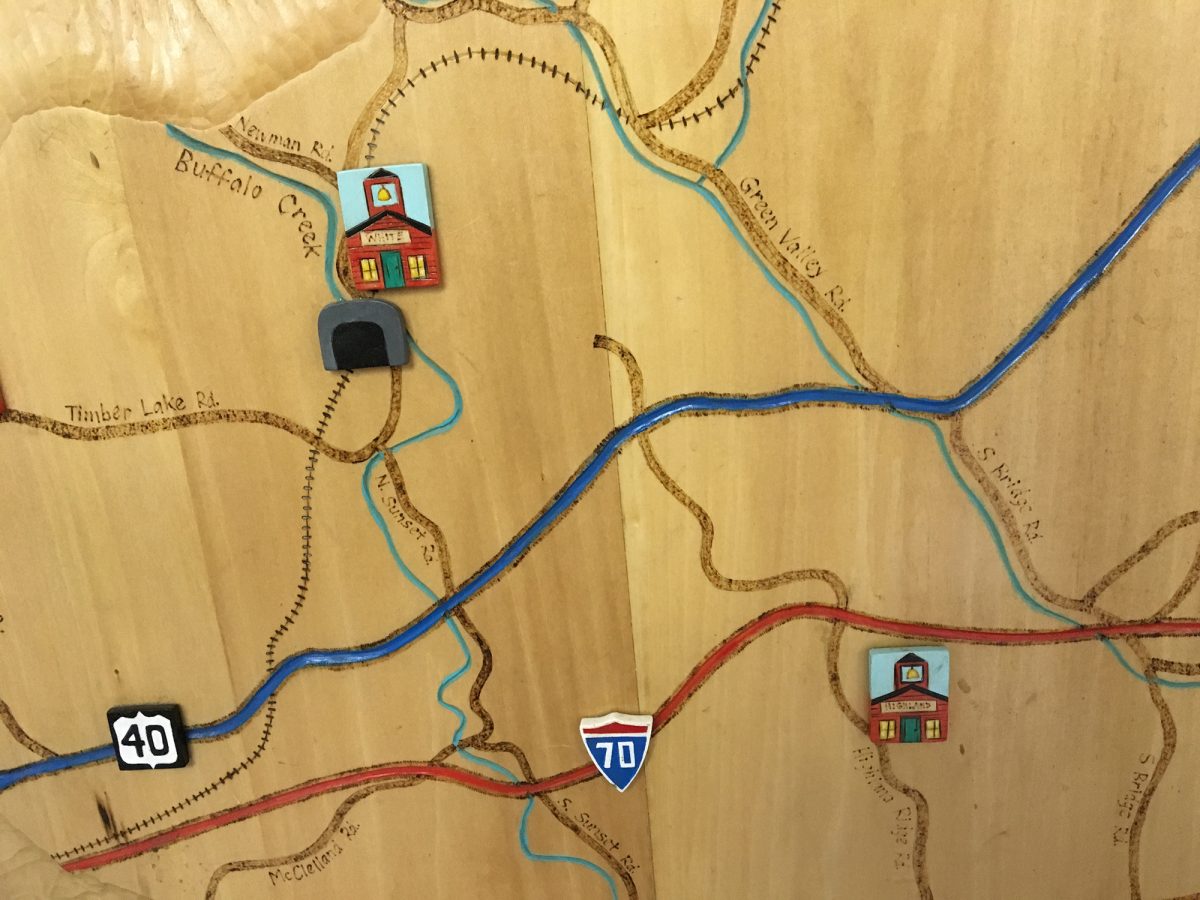
A detail of the wooden map depicts North Buffalo Presbyterian Church and Rural Valley School.
“It was a great honor to me,” Adams said of her participation. “A lot of people admire it. It brings back the history of the ‘S’ Bridge.
“I usually do my research by old photos. That’s how I tie things together.”
A visitor can also see pictures of farmers threshing, a log home, and the McDowell family daughters playing tennis in ankle-length dresses on the family’s court, to name just a few.
Barbara Miller/Observer-Reporter
Barbara Miller/Observer-Reporter
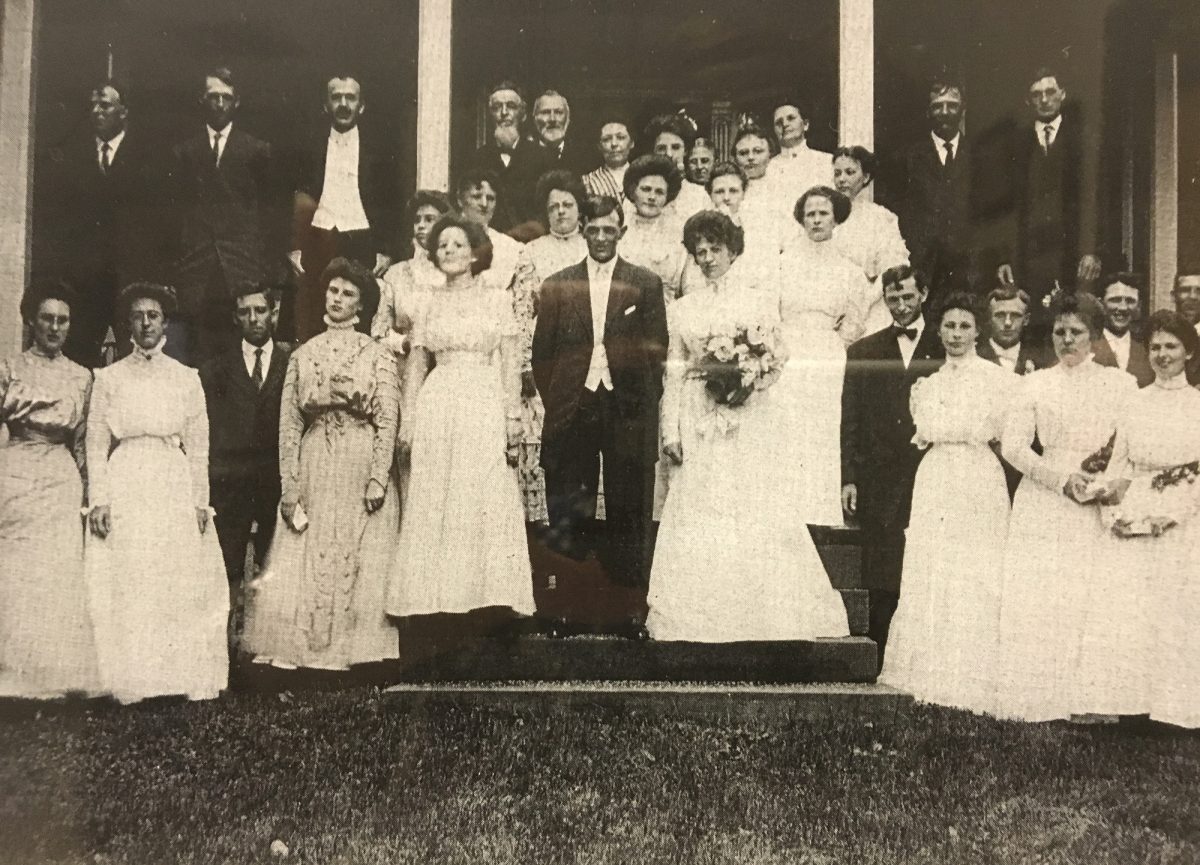
Among the historic photos on display is this image of a wedding gathering of yesteryear. A plate adjoining the photo reads, “Wedding June 10, 1909, W.M. Bloomingstock, Mary Caine, Rosefield Farm.”
“It’s nice,” Bedillion said of the project that began taking shape about five years ago. Visitors “walk around and look at it quite a bit. People were kind enough to come down and bring things.”
Barbara Miller/Observer-Reporter
A hefty piece of timber was crafted into a map showing Buffalo Township’s landmark schoolhouses, churches, highways and creeks.
Bedillion and Adams collected the photos, framed them and made nameplates to identify the residents.
“Some of those are copies, but a lot of those are originals,” Bedillion said. “That’s kind of what the township’s about – the people – and they got some pretty nice shots.”
Others were sought by knocking on doors.
Former state representative Jesse White, who had Buffalo Township as part of his district, called the history project “one of the old Legislative Initiative Grants legislators could submit” to the Department of Community and Economic Development on behalf of nonprofits and municipalities.
Local authors have shed light on other aspects of Buffalo Township’s past, which goes all the way back to this area being claimed by the Virginia colony.
The first settler is believed to have been James Allison of Ireland. In the spring of 1776, Allison and his wife, Sarah Rae, brought their family to 369 acres on the waters of Buffalo Creek called “Complaint,” according to Boyd Crumrine’s “History of Washington County, Pa.”
The Virginia commissioners in session at Redstone Old Fort on Dec. 21, 1779, issued Allison a certificate of ownership.
Barbara Miller/Observer-Reporter
A railway tunnel, tracks and roads lead to Buffalo Township’s White and Highland schoolhouses of yore.
A man named Taylor previously had a claim on part of it on which there was a clearing, saying he had purchased it for a gallon of whiskey and a few yards of linen cloth.
Nathaniel McDowell emigrated from Scotland and Ireland to America about 1758, later moved to west of the Monongahela River and settled in the wilderness of Buffalo Township in 1793, which they warranted as “Wolf Ridge.”
Buffalo Township was once part of neighboring Donegal Township, one of Washington County’s original municipalities.
In 1798, residents requested division, which was confirmed by the court the following year.
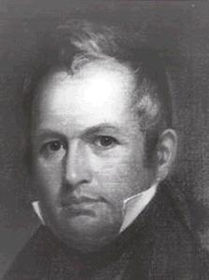
Although he wasn’t a native, a Buffalo Township resident was elected governor of Pennsylvania. Joseph Ritner owned a farm there “upon which he built a handsome stone dwelling house.”
He served a six-month stint as a private during the War of 1812, represented the district in the state Legislature and was afterward elected governor as a candidate nominated by the Anti-Masonic Party, serving from 1835 to 1839.
Joseph Ritner
“He was an honest and straightforward old German,” observed one pundit.
After his single term as governor, Ritner retired to a farm in Cumberland County near Harrisburg.
Buffalo Township, by the way, is not to be confused with Buffalo village in Hopewell Township to the north.
Historian Joseph F. McFarland extolled the place and noted its prominence in the first energy boom.
“Buffalo Township, in addition to being one of the best agricultural townships in the county, is rich in oil and gas production.
“The entire township is underlaid with bituminous coal, but there has been little attention given to its development. … Nearly every farm is dotted with derricks. Splendid homes, commodious barns and well-cultivated farms are the rule rather than the exception. There is some attention paid to the raising of livestock, especially sheep. The first gas well was on the Samuel Carson farm, about 1886. It was drilled during the summer of 1885, and first production was in July of that year.”
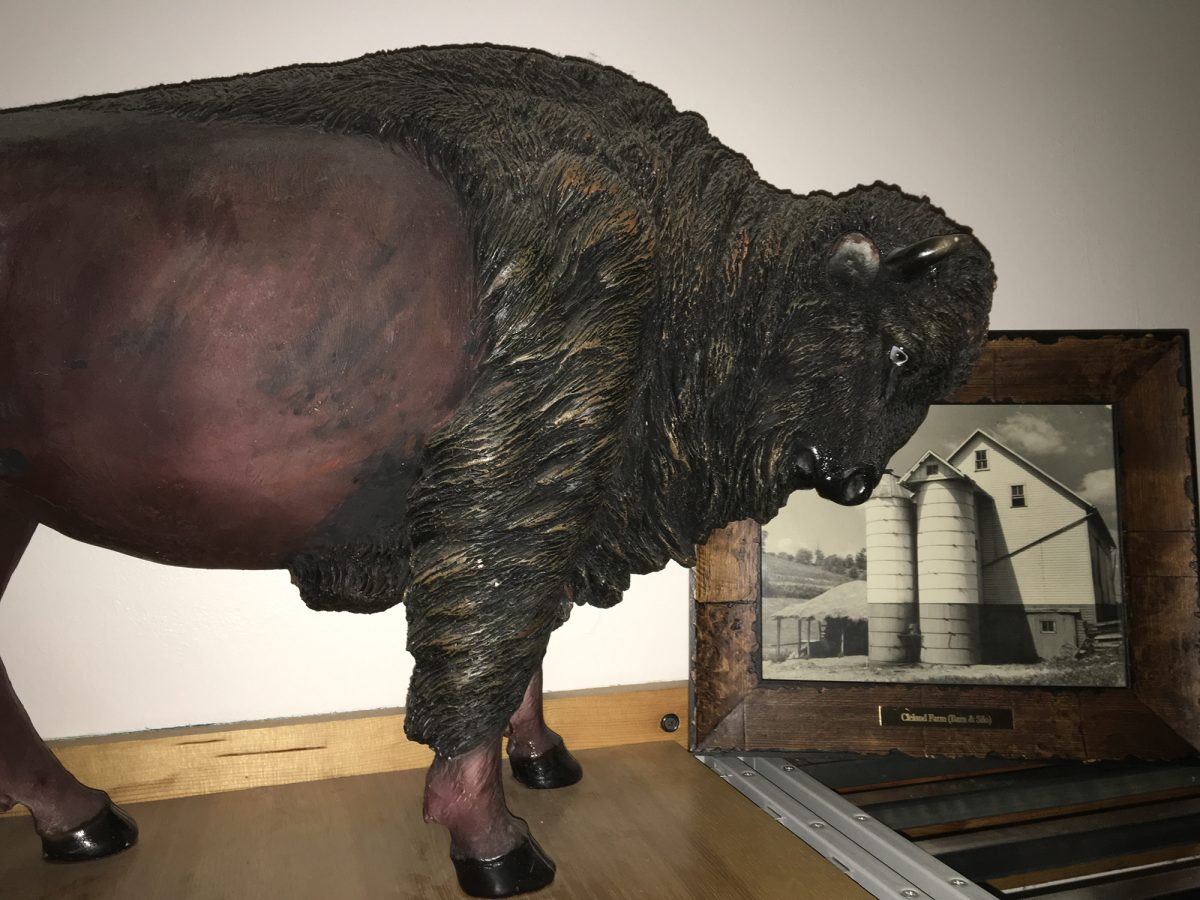
Bedillion said she and former supervisor Stephanie Gallagher donated the head and full-body buffaloes in the township building.
A 51-year resident of the township, Bedillion lamented landmarks like one-room schoolhouses and businesses that have been torn down.
“It’s sad, because you can’t bring it back,” she said. “It’s a lot of history.”
Barbara Miller/Observer-Reporter
A sculpted buffalo and an image of bucolic Buffalo Township stand side by side in the municipality’s meeting room.