

Low temps taking toll on infrastructure, homeowners
Holly Tonini/Observer-Reporter
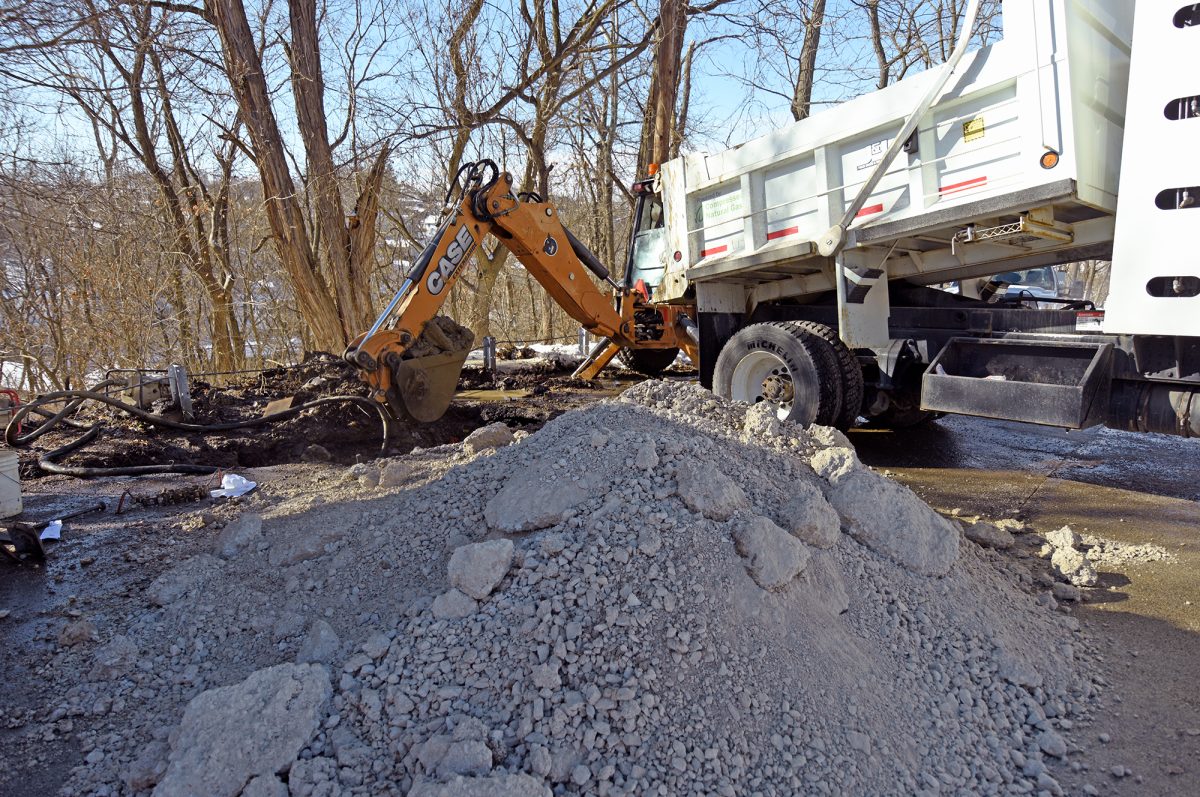
A hole is dug to get to a broken water line on First Street near Chartiers Avenue in Canonsburg.
Holly Tonini/Observer-Reporter
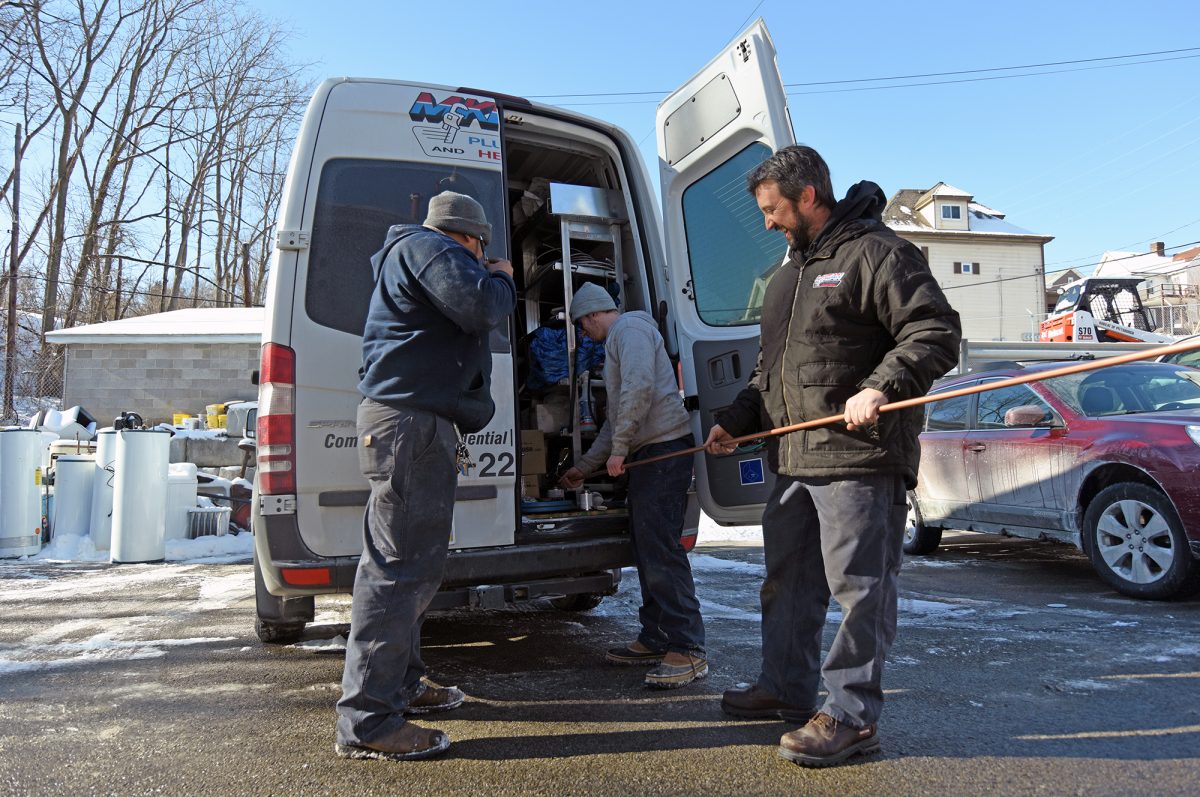
From left, heat technician Nathan Norman, plumber George Demnyan and heat technician Jim Best ready a truck for cold-weather repairs at McKean Plumbing and Heating on West Chestnut Street in Washington.
Joe Webster knew the kind of winters to expect when he moved to Southwestern Pennsylvania from Baltimore.
“I was shocked the first year I worked here how many people do not prepare for winter,” said Webster, manager of Bottled Gas Service in Carmichaels.
Temperatures in the Pittsburgh area have been sub-freezing since Dec. 26. Following a sultry high of 28 degrees Wednesday, meteorologists predict another wave of record-low temperatures through this weekend.
The raw cold spell is taking its toll throughout the region.
Melissa Walters, a spokeswoman for Pennsylvania American Water Co., said the water provider is experiencing “main-line breaks all over the system,” with more problems expected as the frigid temperatures continue into the weekend. She asked for customers to be patient if they are temporarily without water.
“We appreciate their patience,” Walters said. “This weather is hard on everyone, but especially on our people who are out there working in it. We understand the inconvenience it causes, but ask for their patience as we fix the issues.”
Henry Klinar, general manager of McKean Plumbing and Heating in Washington, said the weather is prompting calls from homeowners for burst and frozen pipes.
“We had zero pre-Christmas, and we’ve had quite a few since Christmas,” he said.
Greene County Department of Human Services assists qualifying low-income households with heat-related utility bills. Amy Switalski, director of housing and family resources for the agency, said it has seen more people asking for help with fuel, electric and gas bills in the last couple weeks.
She said some companies that provide propane recently told the agency some households could have to wait as long as five or six weeks for more of the fuel.
“I can tell you right now, it’s really, really bad,” Webster said. Some customers are waiting as long as three to five weeks for refills of their tanks, though he said others, like those whose homes are on the route for another delivery, may get refills faster.
Webster cited several factors for the longer-than-usual wait times. For one thing, the freezing weather is taking a toll on delivery trucks.
Two trucks belonging to Matheson Valley, which provides propane to Bottled Gas customers, broke down this week, Webster said.
A Matheson employee who answered the phone Wednesday at the company’s Uniontown office referred questions to its corporate public relations department, which didn’t return a message.
Webster also said customers who wait until their tanks are almost empty before they seek a refill aren’t doing themselves any favors.
“I’m not saying it’s all their fault, but it adds to the issue,” he said.
Webster said he’s been recommending customers have their propane tanks refilled when they are half-empty.
Other professionals emphasized pre-emptive measures to avoid or offset the effects of cold weather.
If the water goes out, Walters asked customers first check with neighbors to see if they have water to ensure it’s the main line and not frozen pipes inside the home. If the pipes are frozen, she said it’s best to thaw them with a gentle heat source, such as a hair dryer.
Walters also suggested keeping the temperature inside the house higher overnight and while at work to keep the pipes from freezing, leaving a faucet dripping, leaving cabinet doors open or using specialized “heating tape” that can be purchased at home improvement stores.
“Overall, there’s a lot of calls over the last week that could have been prevented with routine maintenance, a little vigilance,” said Mark Pacilla, president of McVehil Plumbing and Heating in Washington.
He and Klinar recommended having a technician check heating equipment to identify possible problems before the onset of winter.
“The best way that you can stay ahead of it … the best thing that I can say, is maintain,” Klinar said.