

Looking Back at the ‘Blizzard from Manitoba’
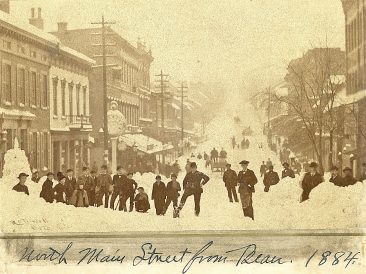
Over the last few weeks, our region has experienced weather that can only be described as severe. We have seen single-digit high and arctic-level low temperatures, freezing rain, snow accumulations and winds that chill you to the bone. To the north, Erie had record snowfalls, and to the east, record high tides and frozen streets were common up and down the coast. Terms such as polar vortex and bomb cyclone have become common buzz words on newscasts.
Despite all this, for the most part, people made the daily commute to work, children went to school, buses and trains remained on schedule, and we continued our lives with an amazing degree of normalcy. We have the benefit of modern equipment and technologies to keep things moving and functioning. There are plows to remove snow and salt to melt the ice. That was not the case in 1884, when the “severest winter weather in decades” hit Western Pennsylvania.
When it began falling on the morning of Tuesday, Jan. 8, 1884, little attention was given to the snow. People were more concerned with the rapidly falling temperatures. From the weekend until the morning of Jan. 8, the temperatures had gone from right around freezing to 12 below. In some low-lying areas, it was reported that temperatures had gone as low as 30 below and even the mercury in the thermometers was freezing. Understandably, when people awoke that Tuesday morning, the two inches of snow that had fallen seemed of little concern.
However, as the day wore on, the snow began accumulating at an alarming pace, and by mid-afternoon, 11 inches had fallen. The local town street departments, at least in towns that had such, struggled to keep up with snow removal.
In Pittsburgh, only a few of the major roads had been shoveled. In Washington, it was said that only sleighs and tall wagons could travel on the streets, and on one condition – if the team of horses used was doubled.
As night fell, all travel on the roads had ceased, as the driving snow had not. People went to sleep that night wondering what they would awaken to the next morning. By noon on Wednesday, the snow had relented, but not before a total of 25 inches had fallen. A Jan. 10, 1884, article in the Harrisburg Daily Independent said of the snowfall:
“The snow ceased falling at noon today, having attained a depth of twenty-five inches, much greater than any previous fall for a quarter of a century. The snow is of a light, sandy description, and has been drifting until most streets in the city (Pittsburgh) are impassable. Travel in the country is entirely suspended. Streetcars are running at long intervals, and the steam railways are in not much better condition.”
The Washington Observer reported the trains were blockaded with snow and the mail was delayed. Schools were even dismissed, “as attendance was so small.” Most of the local businesses shut down as everyone’s main focus became snow removal.
Citizens of Washington grabbed their shovels and began the work of clearing the streets. By 4 in the afternoon on Jan. 9, the main road had been cleared in Claysville, and sparse travel resumed.
In Waynesburg, an attempt was made to remove snow from the roofs of buildings, as it was feared the weight would cause collapses. Their concerns were warranted.
The Jan. 17 edition of the Observer reported, “The roof of the new planning mill in course of construction at Waynesburg by Luse and Ross was crushed in by the snow.”
The removal of the snow from the roofs in Pittsburgh caused streets that had once been cleared to fill yet again. It was almost a week before streetcars were running on schedule again.
As the days went by, life began to return to normal. Schools resumed classes, businesses reopened, people traveled to work, railroad tracks were cleared and trains were on time, and the snow melted. The Observer would call this “The Blizzard from Manitoba” and said it “showed no partiality in its visits but gave every section of the country a call.”