

W&J students learn firsthand about life near the Arizona-Mexico border
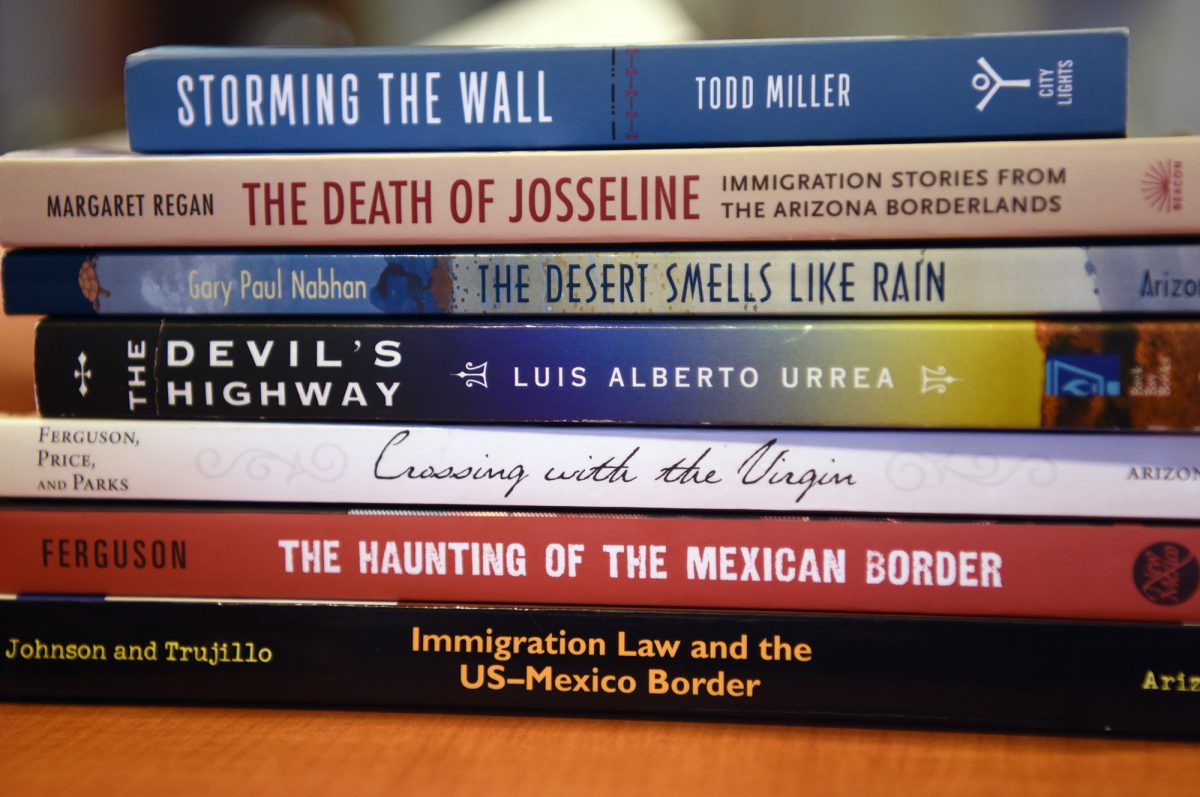
A few of the books that students could choose to read and present to their class
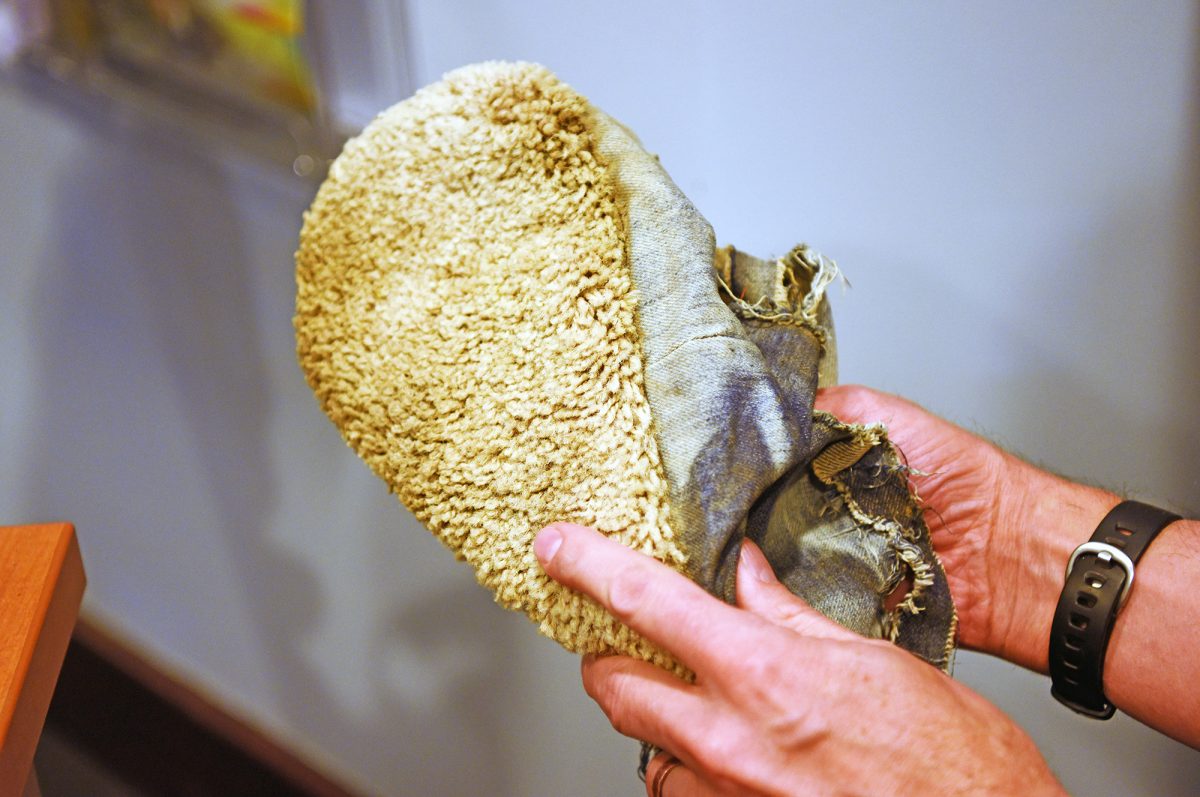
A carpet shoe that Dr. Jason Kilgore brought home from the trip to the US/Mexico border. Those crossing the border from Mexico wear these on their feet in hopes that they conceal their tracks in the desert.
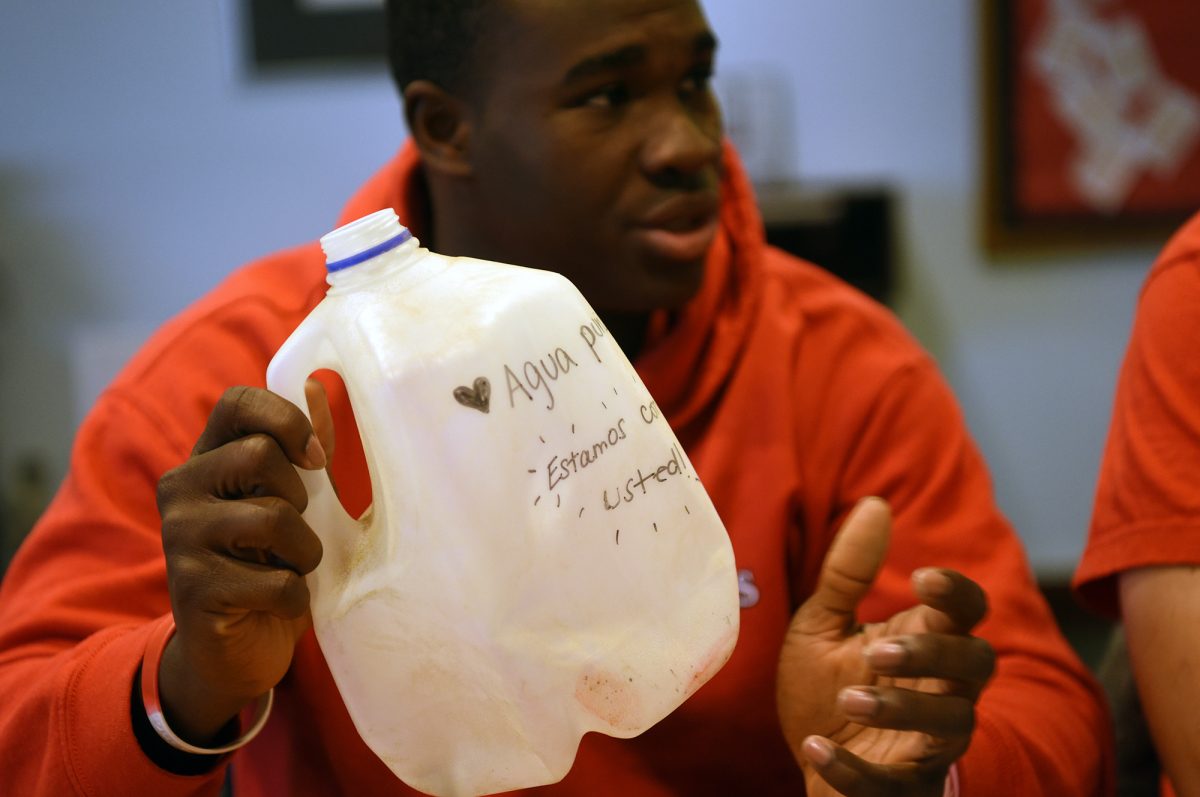
Emmanuel Mensa of Chantilly, Va., holds one of the water jugs that the group placed in certain locations in the Sonoran Desert.
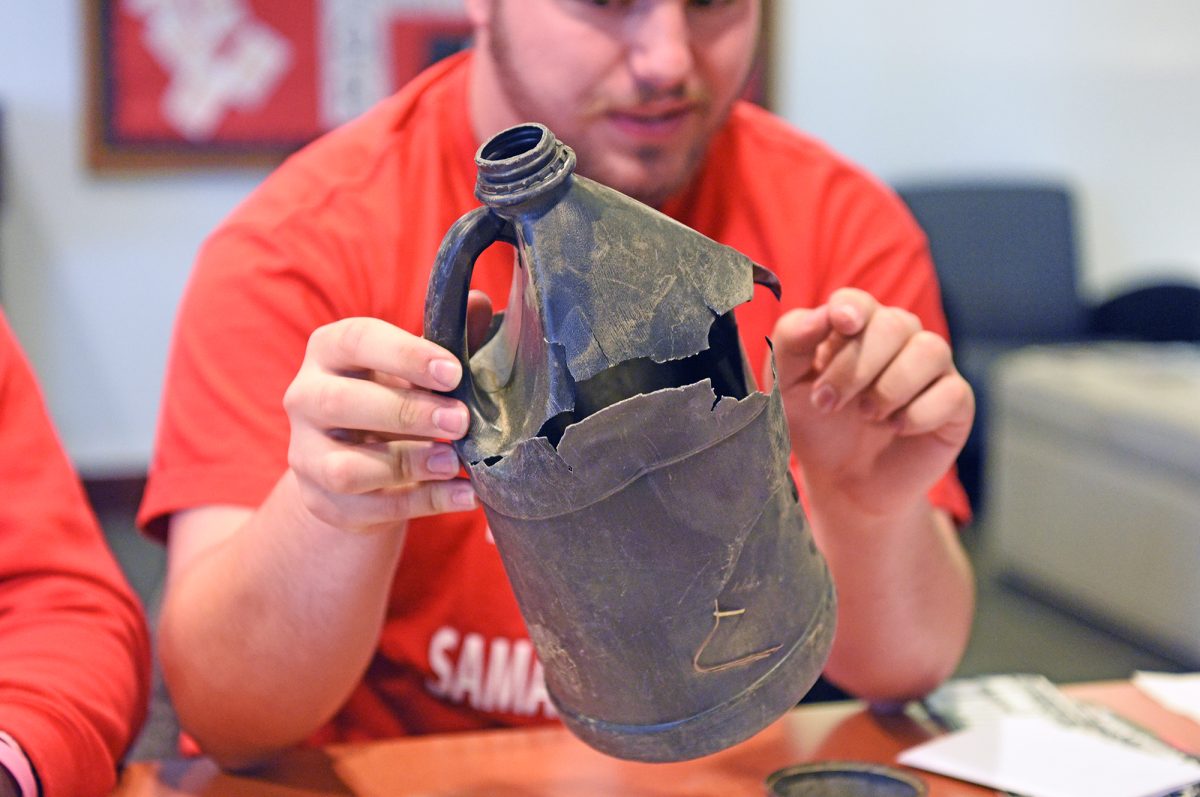
Dawlton Nelson of Huntingdon holds a broken water jug that was carried by someone who crossed the border from Mexico.
Holly Tonini/Observer-Reporter
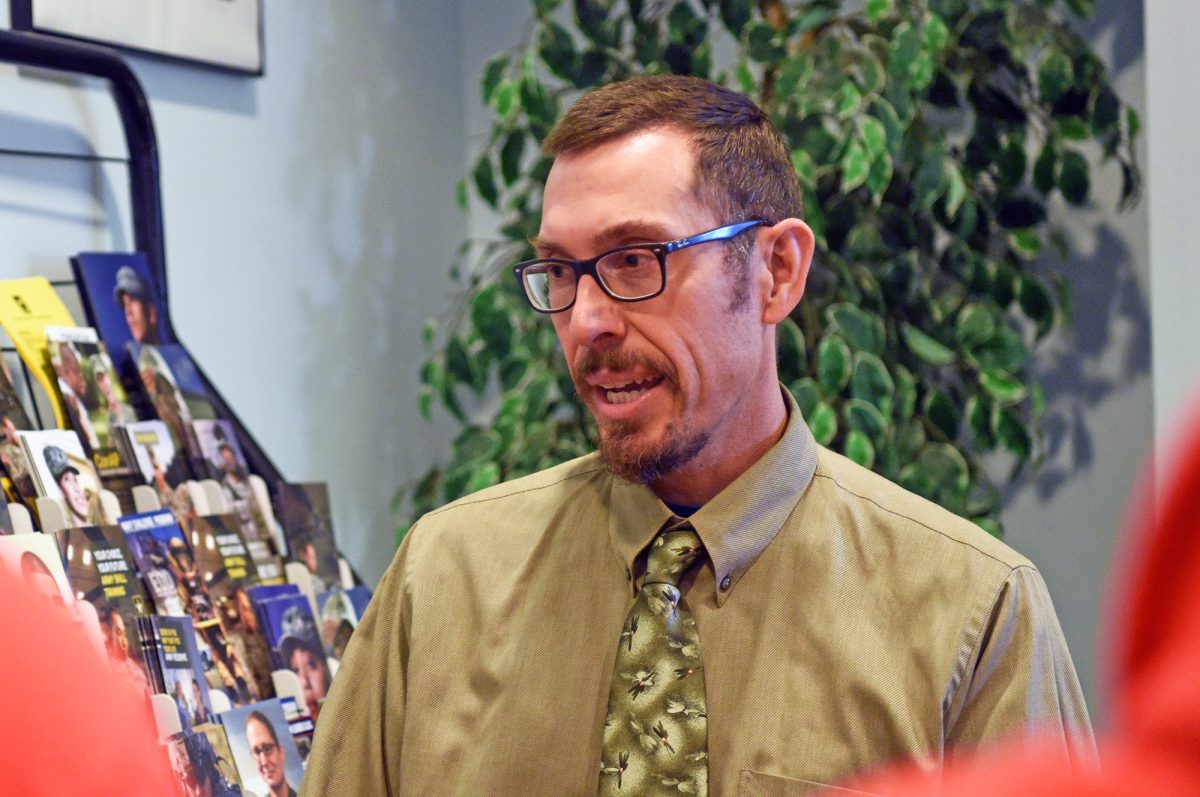
Washington & Jefferson College professor Dr. Jason Kilgore
Holly Tonini/Observer-Reporter
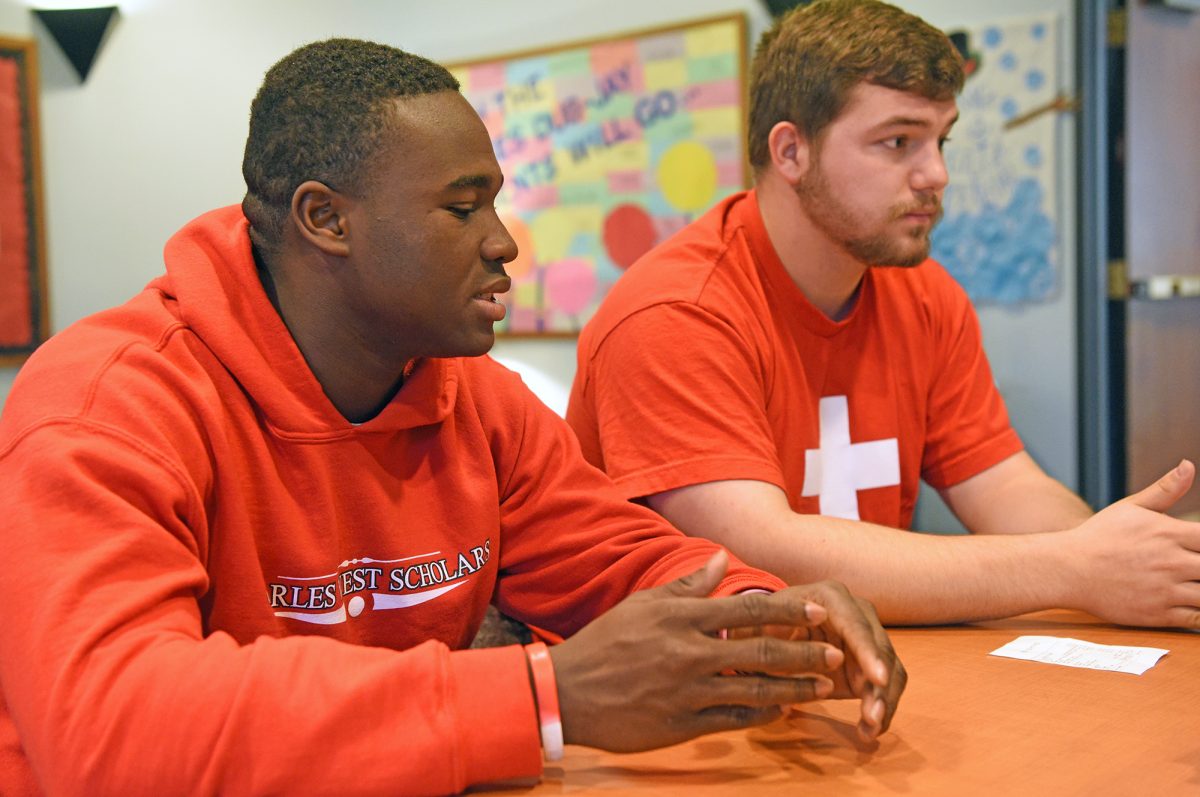
Emmanuel Mensah, left, and Dawlton Nelson talk about their experiences in the Sororan Desert.
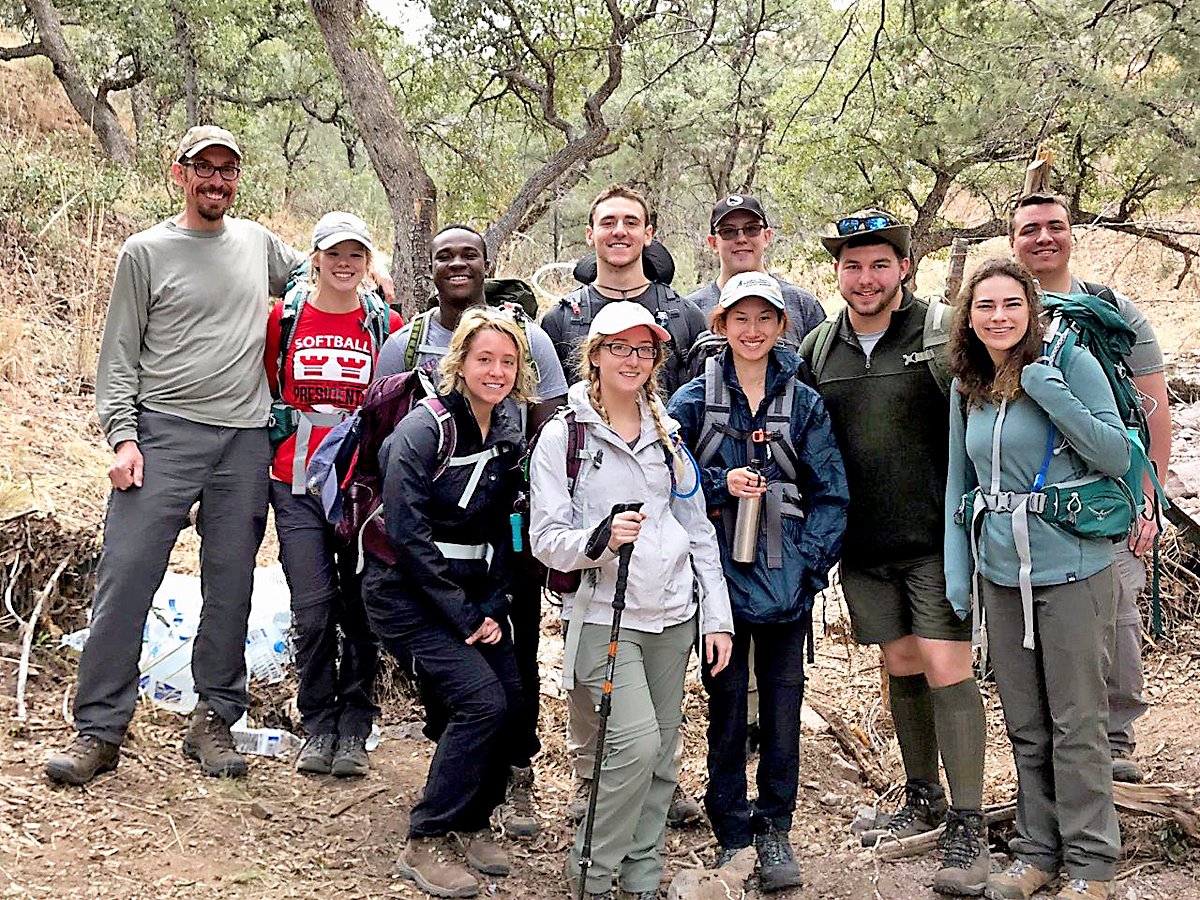
Photo courtesy of Jason Kilgore
Washington & Jefferson College professor Jason Kilgore led a group of 11 to the Sonoran Desert as part of a course on immigration and border enforcement.
Courtesy of Jason Kilgore
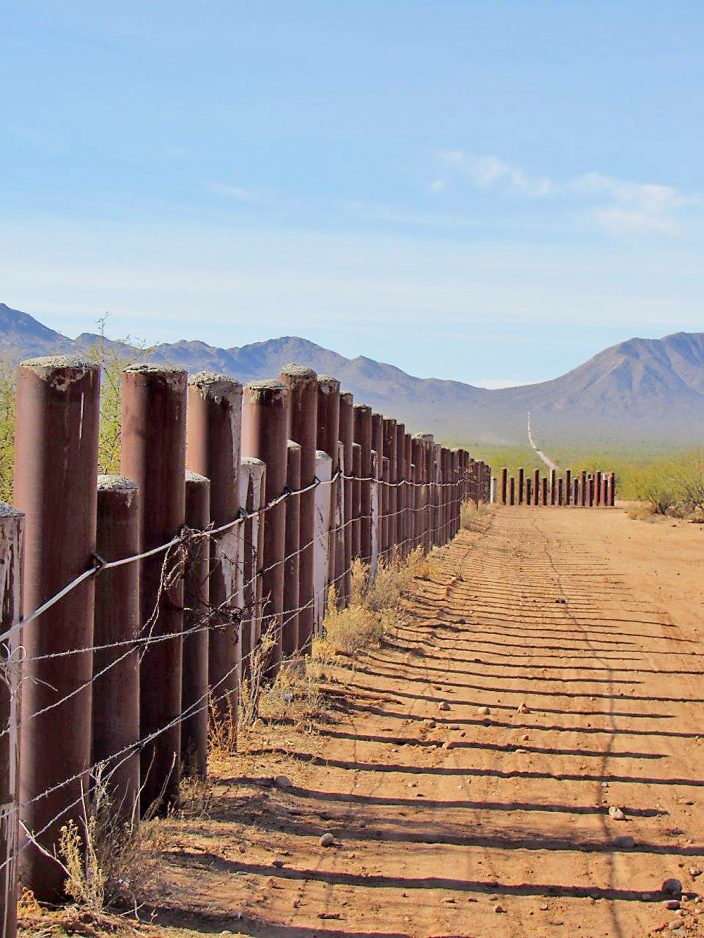
Few of the border walls in the Sonoran Desert are as elaborate as this one.
That wall, Jason Kilgore contends, is off the wall.
“The big thing we learned is no one there wants a border wall,” said the Washington & Jefferson College professor, who found out firsthand – along with eight of his students.
They, Kilgore’s son and a student from another college spent 18 days in January in the Sonoran Desert along the Arizona-Mexico border, as part of a sociology course the professor taught on immigration policy and border enforcement during the January session.
It also was a travel course, and an interdisciplinary course, which several W&J profs lead. Kilgore, who typically teaches biology, said he designed this as a sociology class “so that we could better explore the history of the land, people and immigration law/policy, as well as how the border is currently being enforced.”
This was an intense course as well, starting in early January and lasting 3 1/2 weeks. The group met initially during the fall semester, when a lengthy reading list was assigned. On the first day of class, in early January, students took an exam based on those readings, then had four days to complete a term paper. The academic reward: four credits.
“Only four?” Emmanuel Mensah, a sophomore from Chantilly, Va., said with a wry smile.
There were benefits beyond the academic, though. What they learned from the course and lengthy campout were stunning eye-openers for everyone, including Mensah, who is originally from Ghana, and Dawlton Nelson, a freshman from Huntingdon, who were interviewed for this story.
They and the other campers found out how harsh – and cheap – life is along the border; how desperate some people are to cross – illegally – into the United States; how difficult it is for some to return to Mexico to see family members.
People attempting to cross by foot face the likelihood of encountering formidable obstacles. The land is arid and rocky; heat can be unbearable during the daytime, the cold life-threatening at night; dangerous animals, including rattlesnakes; corrupt human “coyotes” who, instead of helping to smuggle them into the United States, either abandon them or turn them in to authorities; and, of course, the U.S. Border Patrol, which has a job to do.
Oh, and there are walls and fences to clear – some crudely erected with barbed wire, some impassable. The grim result of all this is a scattering of human remains across the desert.
“Hundreds and hundreds of people die crossing,” Kilgore said.
“This is a humanitarian crisis. If someone can provide water, that can stem the flow of deaths. If you are caught and deported, at least you’re alive.”
Groups such as Tucson Samaritans and Los Samaritanos provide humanitarian aid along migrant trails, leaving food and water and providing medical assistance, if necessary.
Nelson and Mensah now realize how wrong their perceptions of life along this land truly had been.
“Living on the East Coast, we’re told people from Mexico bring in drugs, take our jobs and want to harm us,” Nelson said. “No way that is actually happening. So many of these people take jobs picking fruits and vegetables (for very little money).”
Mensah said, “There’s a big difference between the Mexican and Canadian borders. People from Mexico want to come here for a better life. We also went on a reservation to speak with American Indians, and they are split (on opposite sides of the border). They need identification to cross the border of a land that they’ve owned since their ancestors.”
A major issue, according to Kilgore, is “our policies on immigration are based on excluding others.” Nelson and Mensah agreed.
Kirlgore and his entourage also spent several days with Tucson Samaritans and Los Samaritanos, interviewed Border Patrol personnel in Nogales, Ariz., and visited an immigrant detention facility.
And about that costly border wall that President Trump has proposed? Kilgore said the Border Patrol doesn’t want it for several reasons. For one, it would be “ineffective” in keeping people from crossing over illegally. “If you build a 30-foot-tall wall, they’ll build a 32-foot ladder to get over it.”
He also said a wall wouldn’t prevent marijuana from being tossed over it, and while “hard drugs wouldn’t come over the wall, there are illegal points of entry,” and transporting it “is easily done.” Kilgore added that if there is a wall, the Border Patrol “couldn’t see dangers on the other side. They couldn’t protect themselves.”
The professor, Mensah and Nelson said they were assured of safety during their trip. They spent more than two weeks in the desert with W&J students Zia Angell, Capri Backus, Lucy Elkin, Julia Schaffer, Jennifer Shearer and Vincent Orrico; Kilgore’s son, Oliver, a Washington High School sophomore; and Trevor Zitek, a student at Lorain County (Ohio) Community College.
Dr. Kilgore said his group has a few invitations “from local churches to share our story, and the W&J Library wants us to put together an exhibit with photos, vignettes and a few ‘artifacts’ from our experiences.”
Experiences that were eye-opening.