

A historic day: Area residents recall the first moonwalk
Associated Press
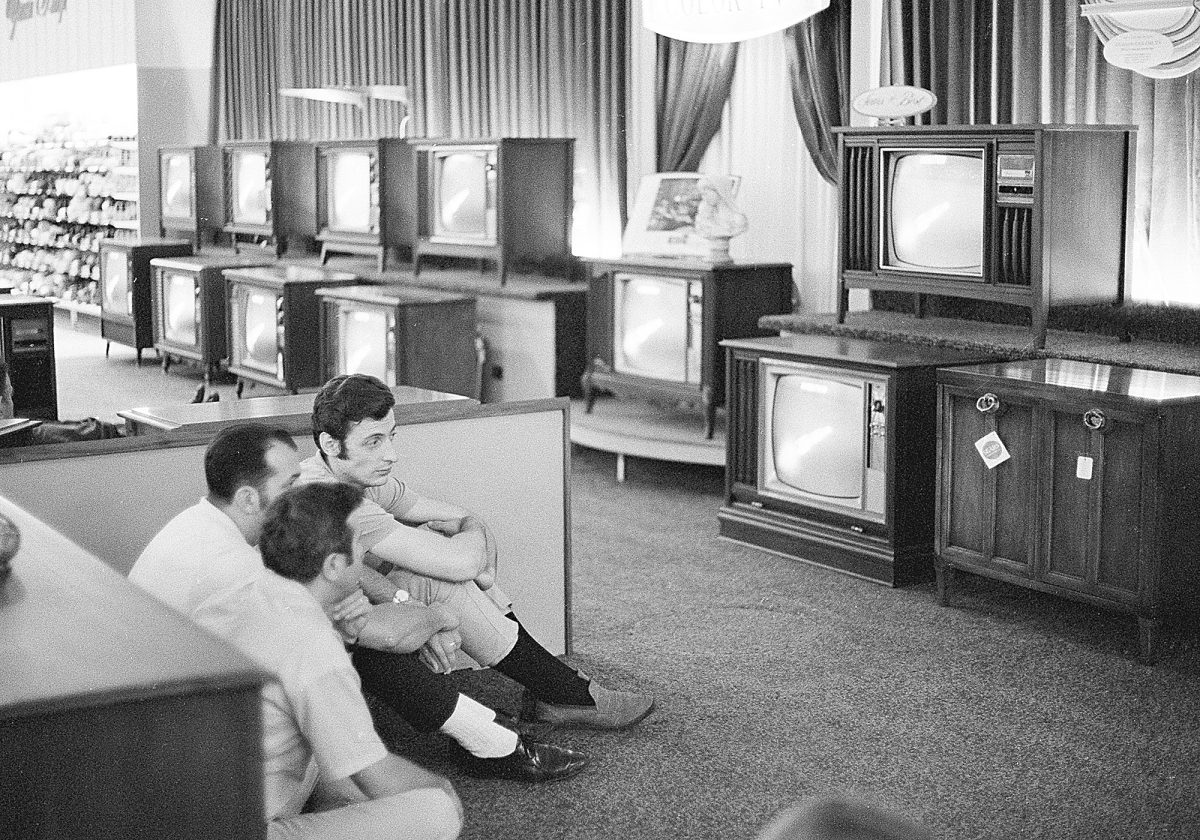
In this July 16, 1969, file photo, people watch the Apollo 11 Saturn V rocket launch on multiple TVs at a Sears department store in White Plains, N.Y.
Neil Armstrong/NASA via AP
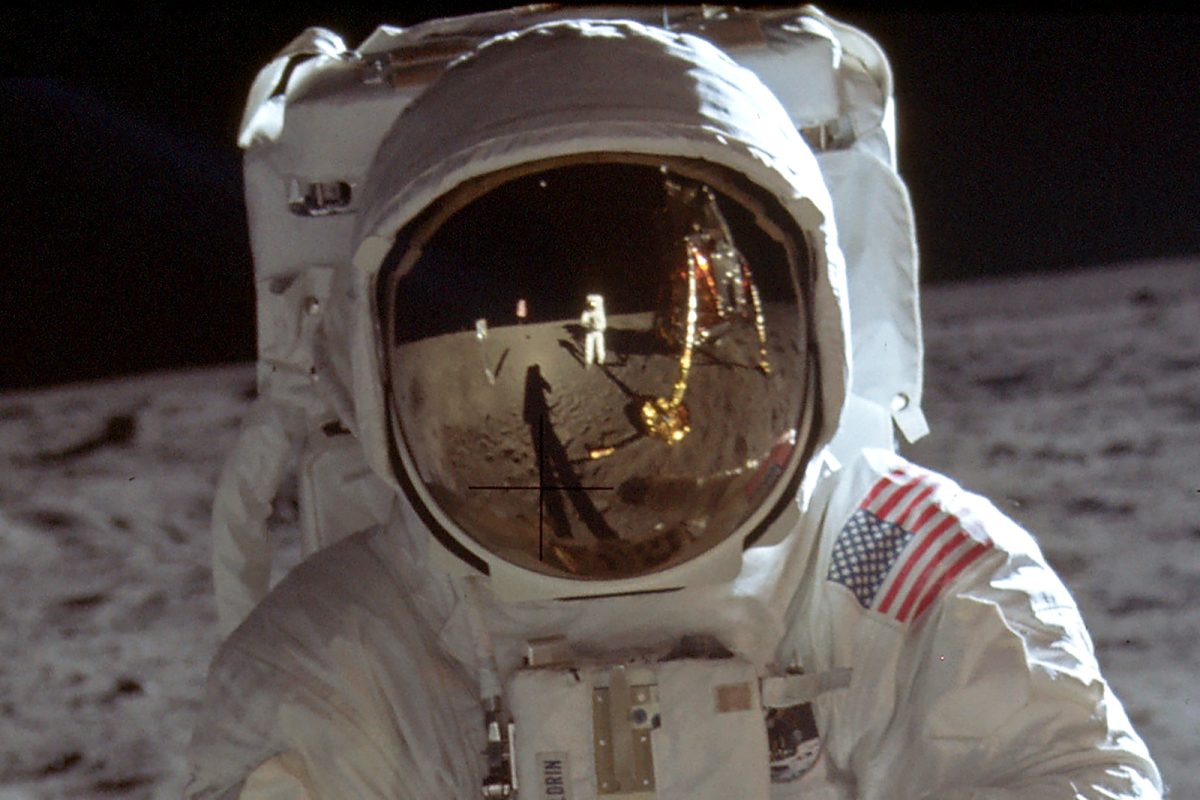
This detail of a July 20, 1969, photo made available by NASA shows astronaut Neil Armstrong reflected in the helmet visor of Buzz Aldrin on the surface of the moon.
July 20, 1969, was a Sunday, and a mild day in the Pittsburgh region. The high temperature was a comfortable 72 degrees, and there was some rain in the morning. The Pittsburgh Pirates defeated the St. Louis Cardinals at Forbes Field the day before by a 3-2 score, and were off due to the impending all-star game in Washington, D.C.
The career of U.S. Sen. Ted Kennedy appeared imperiled following reports that he drove off a bridge two nights before in Chappaquiddick, Mass., and then failed to report that a passenger in the vehicle, Mary Jo Kopechne, had drowned. Eddy Merckx of Belgium won the Tour de France, “Easy Rider,” “The Bridge at Remagen” and “How to Commit Marriage” were in movie theaters, and “My Cherie Amour” by Stevie Wonder, “Love Me Tonight” by Tom Jones and “Color Him Father” by the Winstons were hovering near the top of the pop charts.
On a Sunday night in the summer of 1969, most families would have been settling in front of their television sets to watch a rerun of “The Ed Sullivan Show” or “The Johnny Cash Show.” But, on that night, the scheduled episodes that would have included appearances by The Monkees, Blood, Sweat and Tears and Rodney Dangerfield would have to wait.
As evening fell, millions of Americans, along with millions of other people in every corner of the world, were parked in front of their television sets to see blurry, indistinct images transmitted more than 200,000 miles from their living rooms. Almost a decade after President John F. Kennedy vowed that Americans would land a man on the moon and return him safely to the Earth, the landing, at least, was happening. At 10:56 p.m. July 20, 1969, Neil Armstrong stepped out of the Apollo 11 Lunar Module, planted his boots on the surface of the moon, and proclaimed that he had made a “giant leap for mankind.”
The moonwalk will always be one of those so-called flashbulb memories, where people vividly remember where they were and how they felt when it happened.
Tom Green, now a Washington dentist, was vacationing with his family in Cape Cod, Mass., and recalls that television coverage in that part of the country shifted back and forth between Ted Kennedy’s Chappaquiddick-related travails and the moon landing.
“Since the accident occurred not too far from where we were staying, the local news had constant updates and interruptions,” Green said. “Even though the accident happened a couple of days prior, the interruptions to the live space feed were constant.”
North Strabane Township resident Dave Davis was weeks away from starting his senior year in college and staying with his grandmother in Columbus, Ohio. Then 81, Davis’ grandmother remembered the assassination of President William McKinley, and “did not believe it was God’s intention we should land on the moon,” Davis recalled.
“When she was born, there were no automobiles, let alone airplanes,” he said. His grandmother lived to be 100, and Davis wrote when she died that she had “gone from the horse and buggy to the Milky Way.”
Like Davis, many Americans who were young or middle-aged at that point watched the culmination of the Apollo 11 mission with elderly relatives who could remember news reports about the feats of Orville and Wilbur Wright at Kitty Hawk, N.C., at the start of the 20th century, while other families pulled young children out of bed, or did their best to keep them awake, so they could witness an event that was truly epochal. Watching the moonwalk, for many, was a family affair.
Ann McElhinny Dino, of Canonsburg, went with her mother and siblings to an aunt’s house in Butler County to watch the moonwalk. They were all gathered around a single television set and “the excitement in the room was electric,” she said. But, suddenly, the image flickered out. It came back after a few minutes. But went off again. Eventually, everyone realized that one of Dino’s cousins was unplugging the TV set as a joke.
“Since he was right beside the electrical outlet, he just kept unplugging the television to see us all react,” she said.
Not everyone was in front of a TV set that night. Ed Cox, a Washington resident, was returning to the United States after serving a tour of duty in Vietnam with the U.S. Air Force. Somewhere over the Pacific while traveling from Japan to Seattle, a pilot came on the intercom and told Cox and his fellow passengers to look out their windows, “and said that man had just landed on the moon.”
Fifty years after the fact, what stands out about that night for Bethel Park resident Al Sussman is the sense of wonder that he felt – that it was, in fact, actually happening.
He pointed out that almost everyone has seen the video footage of “CBS Evening News” anchor Walter Cronkite and former astronaut Walter Schirra expressing amazement and relief when the lunar module touched down on the moon, and the images of Armstrong and fellow Apollo 11 crew member Buzz Aldrin on the moon’s surface, but “it was hard to believe that man was really walking around on another planet,” Sussman said.
“That had always been the stuff of science fiction or movies. Maybe that’s why there were skeptics from the beginning who contended that the moon landing was all a stunt filmed on a soundstage.”