

Pennsylvania to fund research into fracking health impacts
Observer-Reporter
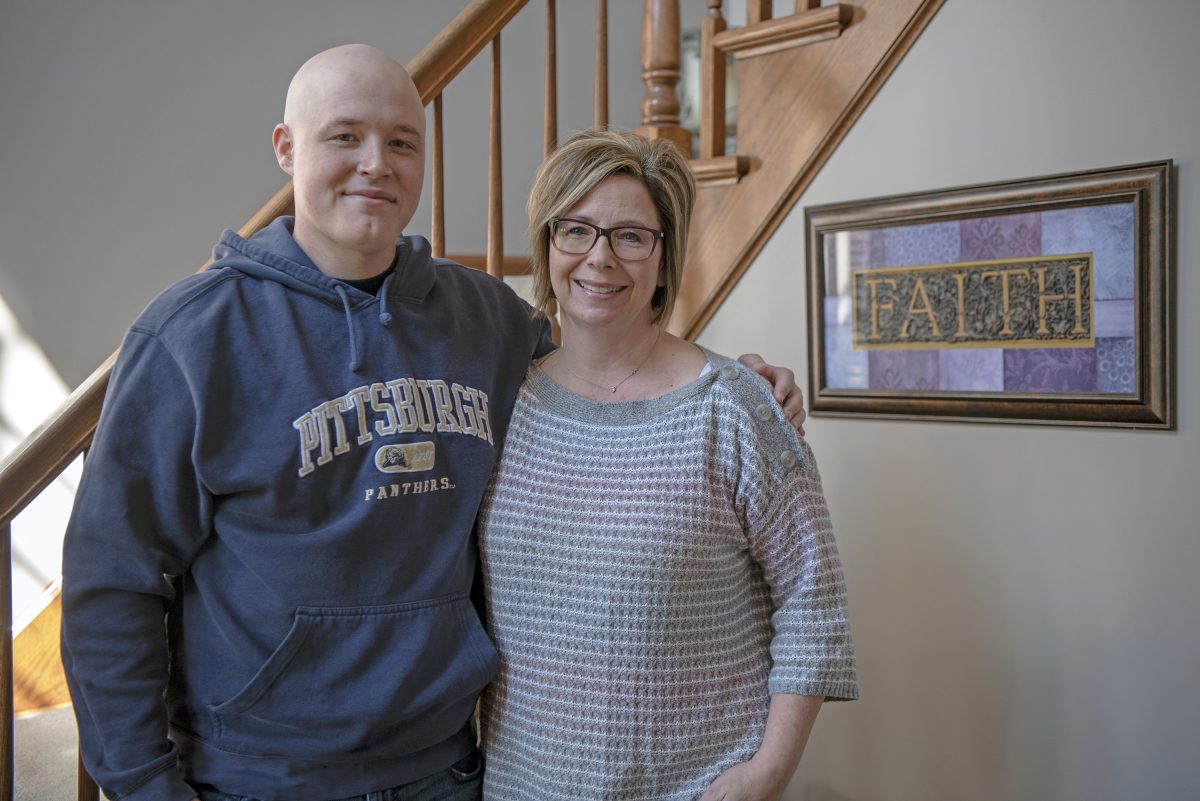
Mitch Barton poses for a photo with his mom, Christine, inside their home in North Strabane Township in March.
Holly Tonini/Observer-Reporter
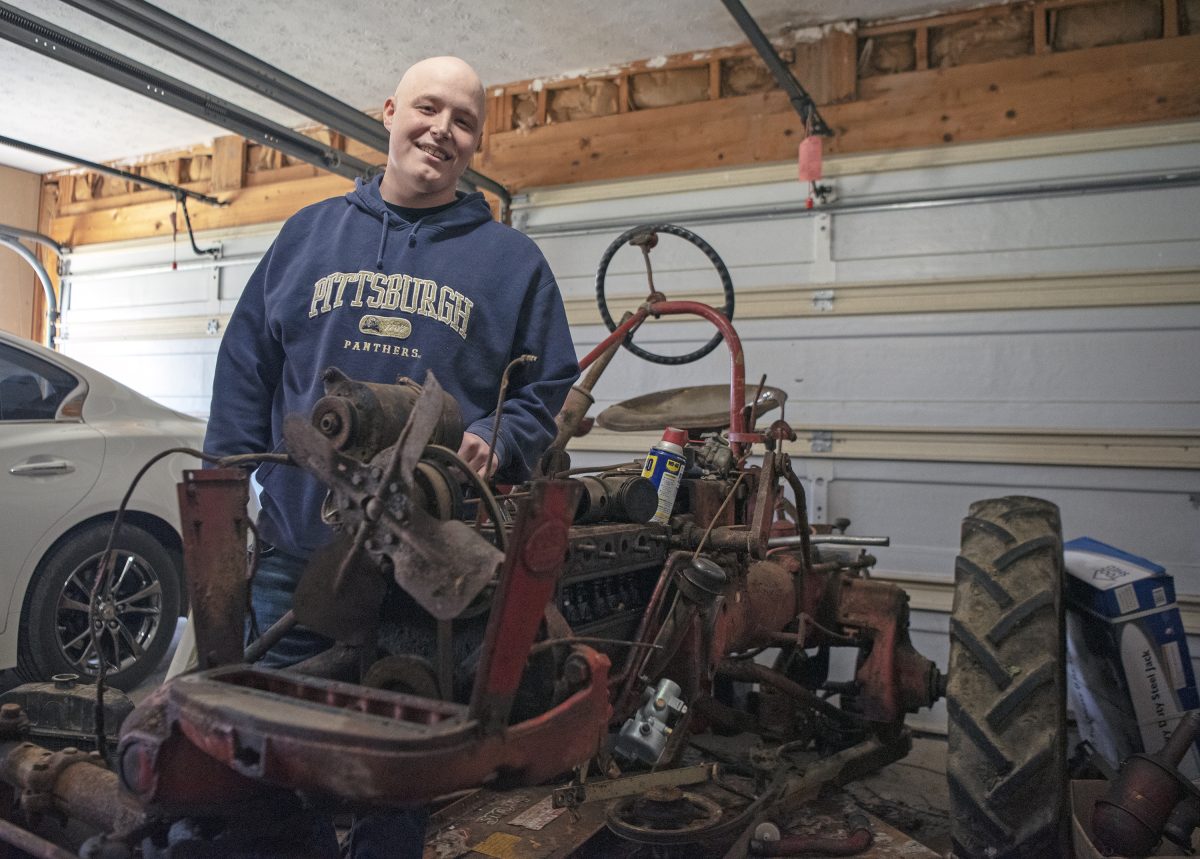
In this March photo, Mitch Barton poses with a 1959 Farmall Cub tractor he has been restoring.
Scott Beveridge/Observer-Reporter
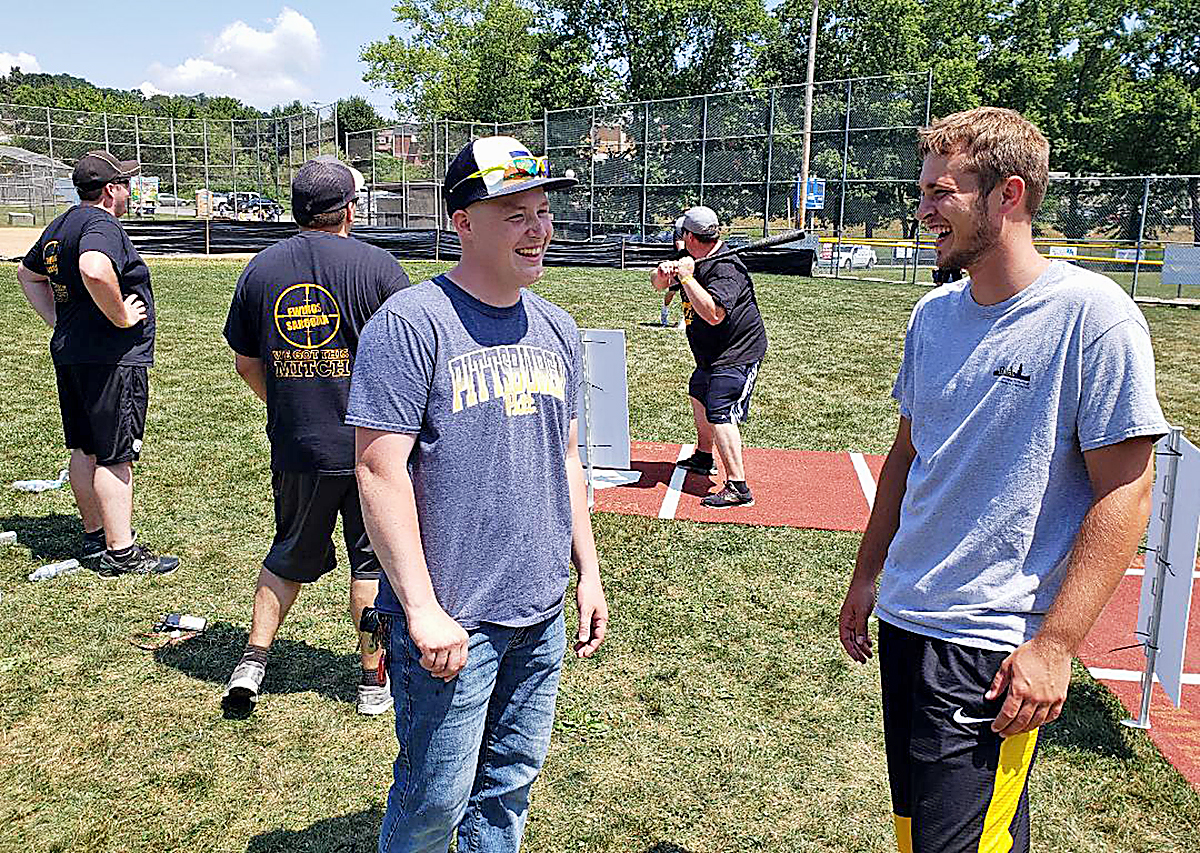
Jacob Davey, right, shares a laugh with Mitch Barton at a fundraiser in August for Barton, who is being treated for cancer.
Gov. Tom Wolf announced Friday that his administration will spend $3 million on two studies to explore potential health impacts of the natural gas industry.
The action comes after pleas from families of pediatric cancer patients who live in Southwestern Pennsylvania, the most heavily drilled region of the state.
Dozens of children and young adults have been diagnosed with Ewing sarcoma and other forms of cancer in a four-county area around Pittsburgh, where more than 3,500 wells have been drilled by energy companies since 2008.
“We’re happy to hear this. I’m just thankful and grateful that (Gov. Wolf) is listening to us,” said Christine Barton of North Strabane Township, whose son, Mitchell, was diagnosed with Ewing sarcoma in 2018.
Mitchell, along with five other people in the Canon-McMillan School District, have been diagnosed with Ewing in recent years.
The Barton family and Blanock families, along with other families whose children and loved ones have been diagnosed with Ewing sarcoma, met with Wolf in Harrisburg on Monday.
They shared their stories with Wolf, and Christine Barton pressed the governor about comments he made this summer about possibly launching an environmental investigation.
“We wanted our voices to be heard,” said Barton. “He told us something was in the works with the Health Department, and we were pleasantly surprised that it happened so quickly.”
In a statement released Friday, Wolf said, “I want to thank the families that have shared their heartbreaking stories. I understand and support the concerns of parents and desire of community members to learn more about the possible reasons for these cancer cases.”
Wolf said the research is meant to address “the concern that there is a relationship between hydraulic fracturing and childhood cancers.”
One study will use existing research that linked natural gas activity to medical conditions like asthma and, applying the same methodology, try to replicate those earlier findings in the population in Southwestern Pennsylvania.
The other study will focus specifically on rare childhood cancers, including Ewing sarcoma, with researchers looking at whether the Ewing patients were exposed to fracking more often than a control population.
Each study is projected to last three years. The state is seeking to partner with an academic research institution.
“It is essential to better understand the scientific evidence of public health issues related to hydraulic fracturing,” Dr. Rachel Levine, Pennsylvania’s health secretary, said in a statement. “These studies will provide us with a more in-depth understanding of this issue than we have been able to do with the resources at our disposal.”
About 250 cases of Ewing sarcoma cases occur each year across the country, but a study by the Pennsylvania Health Department determined no cancer cluster existed in the Canon-McMillan School District or Washington County.
However, the study only included three of the six people with ties to the Canon-McMillan School District who had been diagnosed with Ewing sarcoma.
At an October meeting held by the state Health Department at the request of Wolf, community members and families of those who had battled Ewing or are currently undergoing treatment asked the state to determine if there is a link between cancer and shale gas development.
Barton said she isn’t sure how far $3 million stretches in order to cover the studies, “but at least Gov. Wolf is getting something going.”
State Reps. Tim O’Neal and Jason Ortitay, who also favored a study, commended Gov. Wolf’s action in a press release.
The two have been working with Sen. Pat Toomey to secure grant funding that will reduce the cost of the studies, they said in the statement.
“There appears to be elevated levels of childhood cancers and asthma, so more information is critical,” they wrote. “Thanks to the studies the governor has authorized, we will have much-needed information and will be able to act accordingly to preserve the safety of all Commonwealth residents.”
State Sen. Camera Bartolotta, who has joined some of her colleagues to request and support additional state funding for Ewing Sarcoma research, also welcomed the governor’s announcement.
“I am hopeful this will help improve the outcome for individuals diagnosed with Ewing Sarcoma, as well as identify potential causes and areas of concentration,” said Bartolotta.