

Bat houses placed in local parks
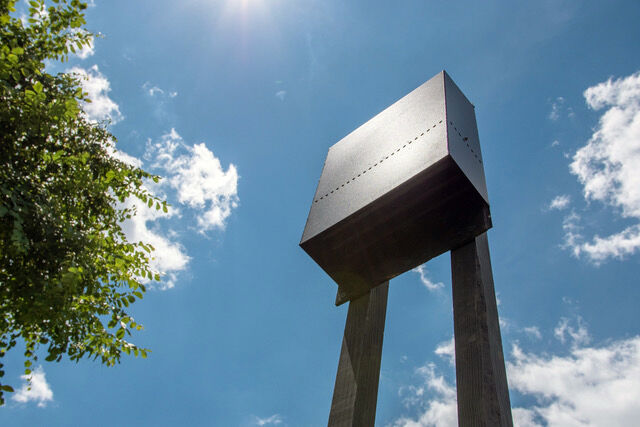
Photo courtesy of CNX
A bat house like this one has seven chambers and can accommodate more than 200 bats.
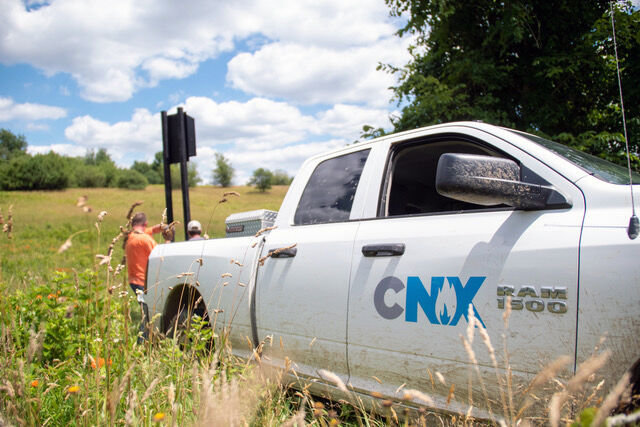
Photo courtesy of CNX
CNX is placing bat houses in area parks to increase the odds that bats will survive.
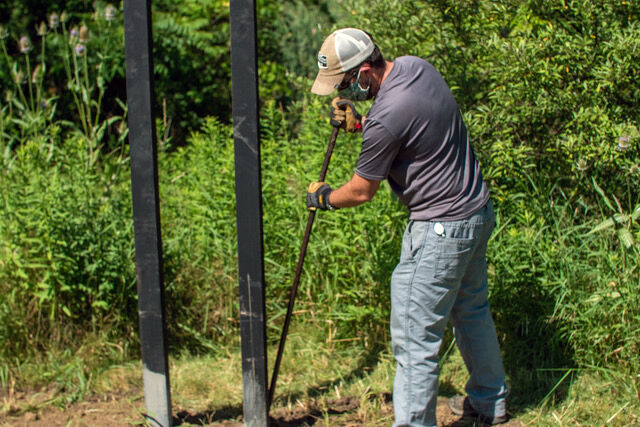
Photo courtesy of CNX
A CNX employee works on a bat house.
The thought of setting up a bat house is enough to make a lot of us develop a serious case of the creeps.
Aren’t bats “rats with wings,” after all? Who wants bats sweeping and soaring through the air, and possibly dive-bombing your hair? Haven’t we learned from scores of horror movies that where there are bats, there is evil afoot?
But bats have arguably gotten a bad rap. They’re mammals, not birds, and definitely not as attractive as blue jays or cardinals. Bats serve several purposes, though: they feast on insects, keeping populations in check that could otherwise breed out of control; they pollinate plants; and bat dung can be used as fertilizer.
To give a boost locally to the long-underappreciated bat, houses for these winged critters have been installed at Arnold Park in Chartiers Township and at Upper St. Clair’s Gilfillan and Boyce-Mayview parks. The bat houses have been installed by CNX, the Pittsburgh-area natural gas company. CNX approached several communities about placing the bat houses in their parks, and Chartiers and Upper St. Clair were the first to take the bait.
CNX has placed bat houses in areas where they have had operations before, and has put up several in Greene County. This is the first time CNX has offered to put up bat houses in areas outside their operational footprint. Dan Bitz, the director of permitting for CNX and the coordinator of the project, said the company wants do what it can to increase the odds that bats will survive.
And bats have been up against a formidable foe lately in the form of the fungus Pseudogymnoacus destructans (Pd). The fungus causes what is known as White-Nose Syndrome in bats. White-Nose Syndrome leads to a white fungus cropping up around their nose. It can cause bats to wake up more frequently, and that can lead to bats using the fat they need to survive the lean months of the winter. The end result? Bats die off and insect populations are left to thrive.
“They essentially die from waking up too much,” Bitz said.
First discovered in North America in 2006, it’s believed that bats hibernating in dark and dank places like caves are how they are picking up the fungus. Bat houses provide a place where bats can congregate in large numbers, with the added bonus being that they are not taking up residence in people’s houses or attics as an alternative.
No bat houses were in Arnold Park until CNX approached Chartiers Township, according to Jessica Walker, the township’s parks and recreation director.
“They have the stigma, and they are deeply misunderstood, but they are so crucial,” Walker said. “They are super important to keep the insects down.”
CNX had approached other communities about putting up bat houses in their parks, but they took a pass, believing the houses would draw more bats and rattle park visitors. But, Walker pointed out, “The bats are already here, whether you see them or not. You want them to live in (a bat house) rather than somewhere else.”
The houses each have seven chambers and could accommodate more than 200 bats. CNX received some tips from the Pennsylvania Game Commission about where to put the houses, so they would be near woodlands and insect-rich areas. It was also important that the houses be placed in sunny spots so they can be warmed early in the morning as the sun rises.
CNX is interested in placing bat houses in additional parks in the region, according to Bitz.
“If there are other communities that want to reach out to us, we would definitely be interested,” he said.