

Proposed rock festival 50 years ago drew the ire of residents, officials
Associated Press
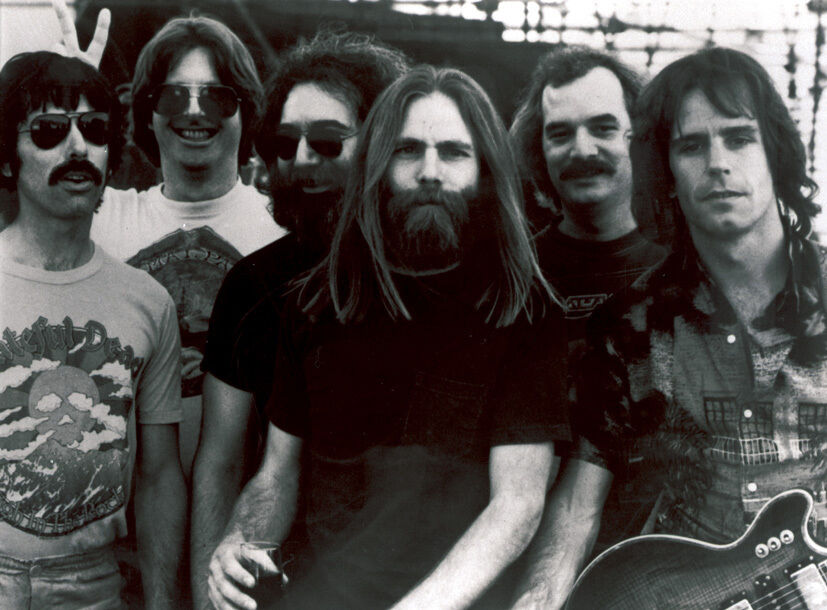
This undated photo shows Grateful Dead band members, from left, Mickey Hart, Phil Lesh, Jerry Garcia, Brent Mydland, Bill Kreutzmann and Bob Weir.
Associated Press
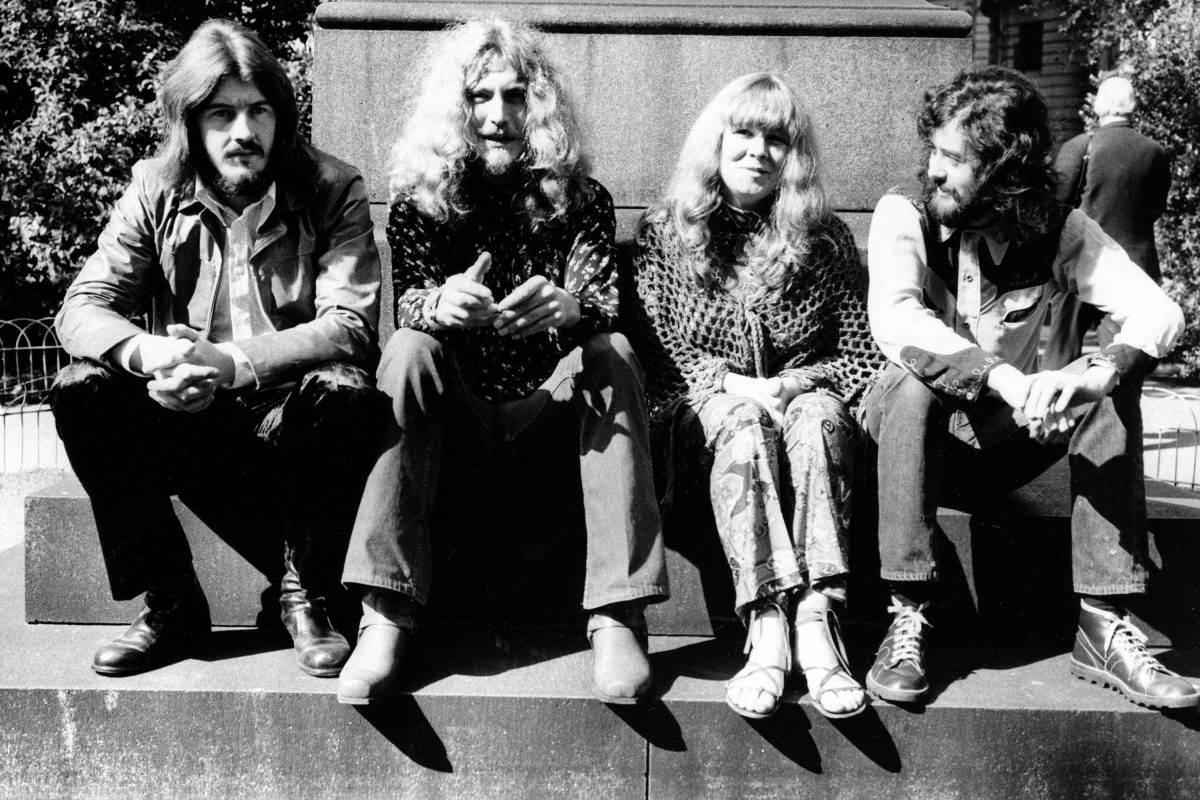
Members of Led Zeppelin, from left, John Bonham, Robert Plant and Jimmy Page, pose with singer Sandy Denny after receiving their awards in the Melody Maker Pop Poll in London, England, in Sept 1970.
Associated Press
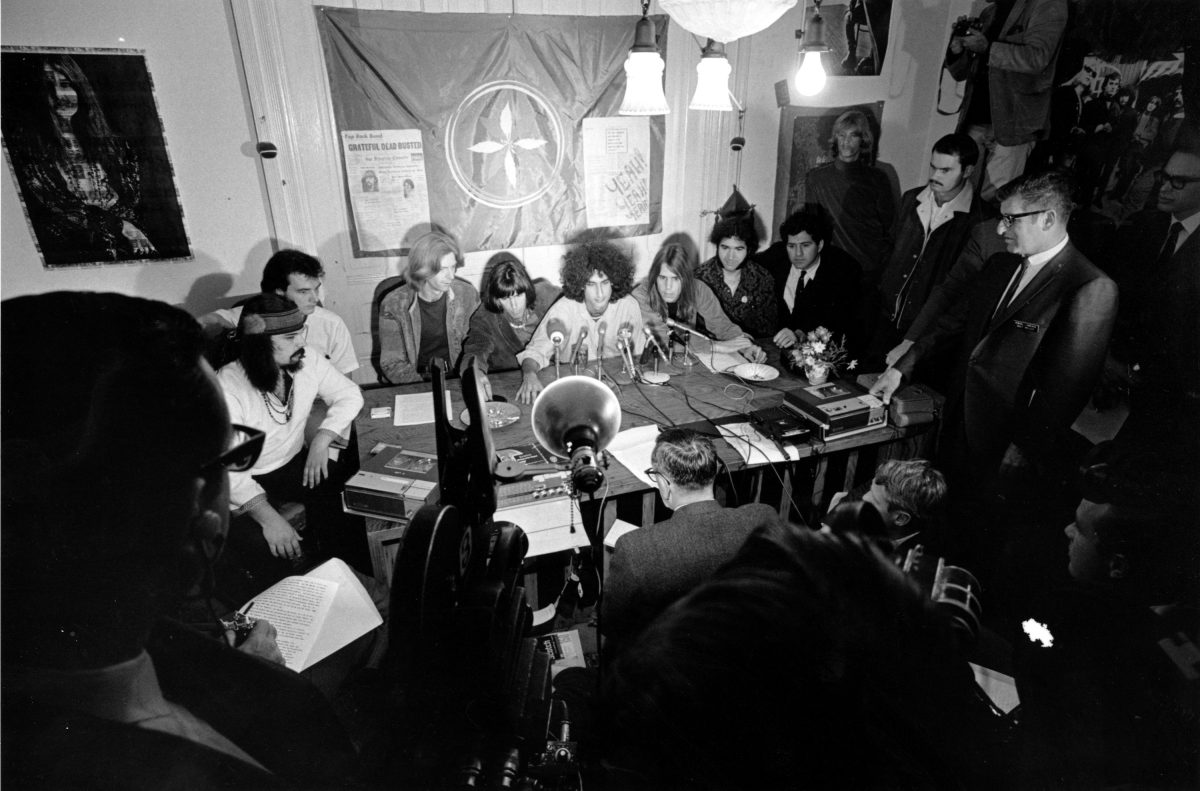
Members of the folk rock group Grateful Dead talk with reporters Oct. 5, 1967, in their home in San Francisco, Calif. From left, the group members are Ron McKernan, Bill Kreutzmann, Phil Lesh, managers Rock Scully and Dan Rifkin, Bob Weir, Jerry Garcia, attorney Michael Stepanion and equipment manager Robert Mathews.
Associated Press
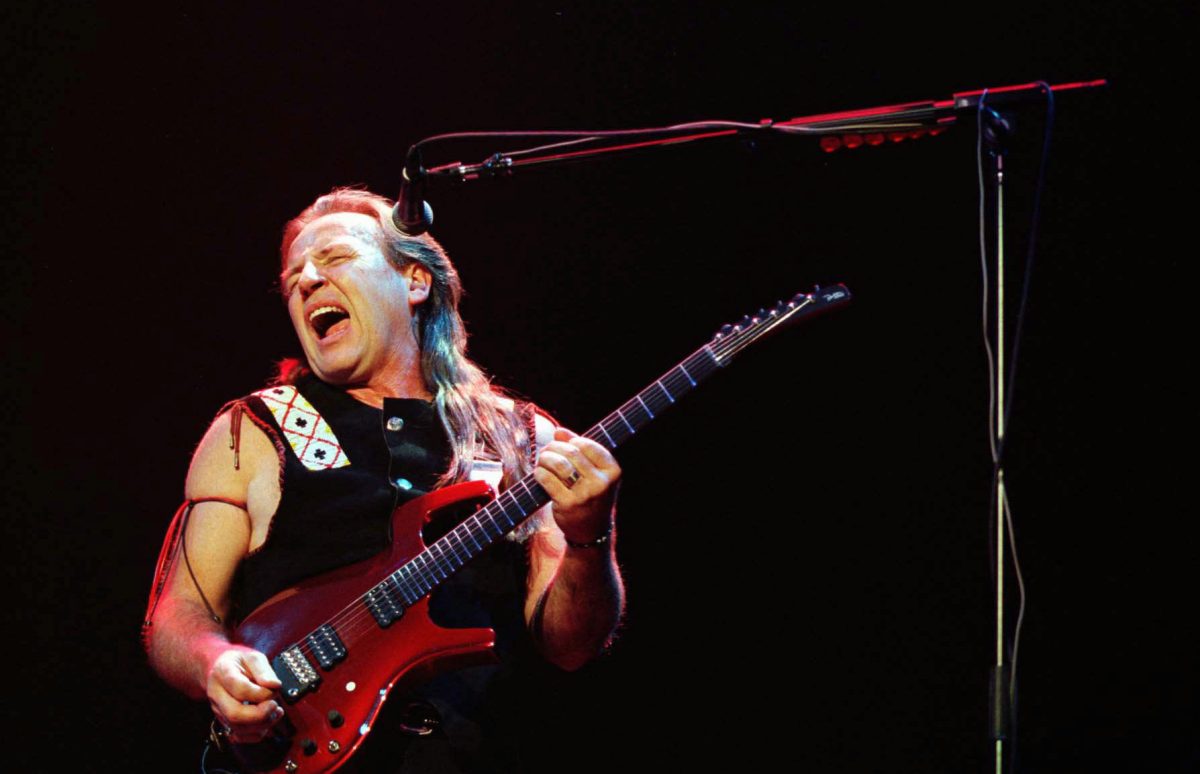
Grand Funk Railroad guitarist and vocalist Mark Farner performes at The Palace in Auburn Hills, Mich., April 20, 1997. The band, one of the most popular of the late sixties and early seventies, was in Aubrun Hills to launch its 1997 comeback world tour with a three-city concert event to benefit the Bosnian Relief Fund.
Imagine, if you will, Led Zeppelin cranking out “Whole Lotta Love” and “Dazed and Confused” on a stage in West Finley Township.
Robert Plant’s long mane of curly hair is flowing over his shoulders as his wails pierce through the night, and John Bonham’s cannon-fire drums are echoing all the way into West Virginia.
Sounds like one of those surreal dreams you have just before the alarm goes off. But 50 years ago this month, the prospect of Led Zeppelin, scores of other rock bands and hordes of unwashed hippies descending on West Finley was an all-too-real prospect for elected officials and residents of the township.
Rather than being thrilled at the prospect, they were utterly mortified.
Washington County’s rock-festival-that-never-was has become the stuff of vaguely recalled legend among those who were alive then and attuned to the music scene. It was going to happen at the Big Country Ranch and Resort – – now the Four Seasons Resort – on Aug. 28-30, 1970. Announced just a month before, marquee names like Led Zeppelin, the Grateful Dead and Grand Funk Railroad were mentioned as headliners, along with some bands knocking around the Pittsburgh music scene.
Initial estimates had it that 100,000 young music fans would be flooding into the township. In that pre-Ticketmaster epoch, an account was established at a bank in West Alexander to deposit money from ticket sales.
“Rock Festival to be held in West Finley Township” was the headline on the lower part of the Observer-Reporter’s July 31, 1970 front page.
The festival was the brainchild of Golden Freak Enterprises, a loosely-organized, Chicago-based concert promotion venture fronted by Peter Obranovich, a long-haired, 29-year-old rock fan who went by the name Pete Bobo. Obranovich and some friends had successfully pulled together a rock festival in Madison, Wisc., in April 1970 headlined by the Grateful Dead. Hoping to mine the same rich seam again, they went about finding other locations where they could set up shop.
According to a report in the Observer-Reporter, Obranovich and his friends became aware of the Big Country Ranch and Resort after hearing an ad on a Chicago radio station for a bluegrass festival that was scheduled at the resort. They approached Bob Wood, the manager of the resort who also happened to be a country musician, and he was receptive.
The festival would have happened almost one year to the day after Woodstock, which by then had already been enshrined in myth. Fans were enchanted by the notion that you could set up a stage in a farmer’s field, just like they did at Woodstock, and you could peacefully enjoy a cavalcade of A-listers like The Who, Jimi Hendrix, Creedence Clearwater Revival, Janis Joplin and Jefferson Airplane without major incident. Sure, they had to airdrop food and medical supplies at Woodstock, and toilets were few and far between, but Woodstock appeared to provide a template for others to follow.
Some festivals successfully came off in the months after Woodstock, but others either never happened or ended in chaos, thanks to slipshod planning. The Rolling Stones’ notorious free concert at the Altamont Speedway in California in December 1969 ended with a fan being murdered by members of the Hells Angels who were assigned security duties in exchange for $500 worth of beer. A proposed Canadian rock festival that would have celebrated peace and been headlined by John Lennon and Yoko Ono never came off after Lennon insisted the festival allow free admission. Another Canadian rock festival, this one traveling from city to city by train, ended up losing money and was beset by protesting fans who believed it should have been free.
Similarly, the rock festival planned for West Finley held out promises of big names and big crowds with very little in the way of logistics having been worked out in advance. Led Zeppelin’s name was bandied about even though, as it turns out, they had concerts booked in Detroit and Winnipeg, Canada, the weekend of the festival. The Grateful Dead were in Los Angeles. Organizers didn’t even present their plans to the township until a few weeks before showtime.
Word of the proposed rock festival in West Finley spread as far as Florida and Missouri, and as the word spread through Washington County, opposition grew.
County commissioners, Washington District Attorney Jess Costa and other officials were bombarded with phone calls and letters from residents expressing opposition. One owner of a general store near the resort said she would close during the festival. One unnamed resident from Lagonda was quoted in the Observer-Reporter as saying, “I don’t want things like this pushed off on the children of our country. I like music, too, but we must consider all the ramifications of having this festival here.”
William Reed, the mayor of West Alexander, also weighed in. He said he was “concerned especially for the safety of widows in the area.”
The main points of opposition were that roads in West Finley and the surrounding area would not be able to handle the volume of traffic; that concertgoers would trash the area around the festival; that there would not be adequate security or medical personnel on hand; and the young people in attendance would be flying as high as Lucy in the sky as they ingested an assortment of drugs.
County officials also pointed to a 1933 state law requiring a permit from Pennsylvania’s education department for any public concert to happen on a Sunday.
“The West Finley supervisors were alarmed,” according to Paul Carson, an East Finley resident who worked at the Observer-Reporter in 1970. “They envisioned a mass of partygoers descending on something that wasn’t even close to a church camp. There were few firefighters, all volunteers, and fewer emergency medical people in the area. And time from the site to a hospital was long enough to give any official the vapors.”
Within a week of the festival’s unveiling, the township filed an injunction seeking to block it. County commissioners did not back it, and Pennsylvania Gov. Raymond Shafer even said state officials might intervene to stop the festival. Obranovich and a lawyer gathered reporters together to say festival organizers would comply with any reasonable restrictions. Obranovich also said they would keep drugs at bay, and even set up a “narcotics museum” to show off the evils of drugs.
“We’ll even permit the authorities to come in and show movies and present other educational materials if they like,” Obranovich said.
The Observer-Reporter joined the chorus of opposition on its editorial page, saying its reasons were “numerous.” It said if the festival went forward, it would “represent a demand for the kind of permissiveness that already ignores normal standards of behavior and which is already responsible for many of the youthful excesses of the day.”
As the days proceeded, the attendance estimates began falling from 100,000 to 30,000 or 20,000, and organizers said the festival would rely primarily on regional acts. With opposition mounting, organizers tried to adopt a more sober posture, offering reassurance that the festival would not be a bacchanal and even calling Obranovich a “braggart.”
Just 10 days before the festival was due to start, however, representatives with the state’s health department said they had not yet received plans on how sanitation would be handled at the festival. George J. Scott, the sanitarian for Washington and Greene counties, said he also had not yet been given plans, though they had been promised the week before.
As the wrangling over the festival moved to Washington County Court, promoters said doctors and nurses would be there, as would a tent hospital. But then, on Aug. 19, 1970, almost three weeks after the festival was announced, promoters said they were bringing the curtain down on it and going in search of other sites.
“I’m not upset at all by the outcome,” Richard Goldstein, an attorney for the promoters, told the Observer-Reporter. “We felt a sense of responsibility to the community and festivalgoers.”
From there, the 700 tickets to the festival that were already purchased at $5 apiece were refunded. Within a couple of years, rock festivals fell out of fashion and Washington County’s answer to Woodstock faded into history.