

Washington County featured in Netflix documentary series about drug epidemic
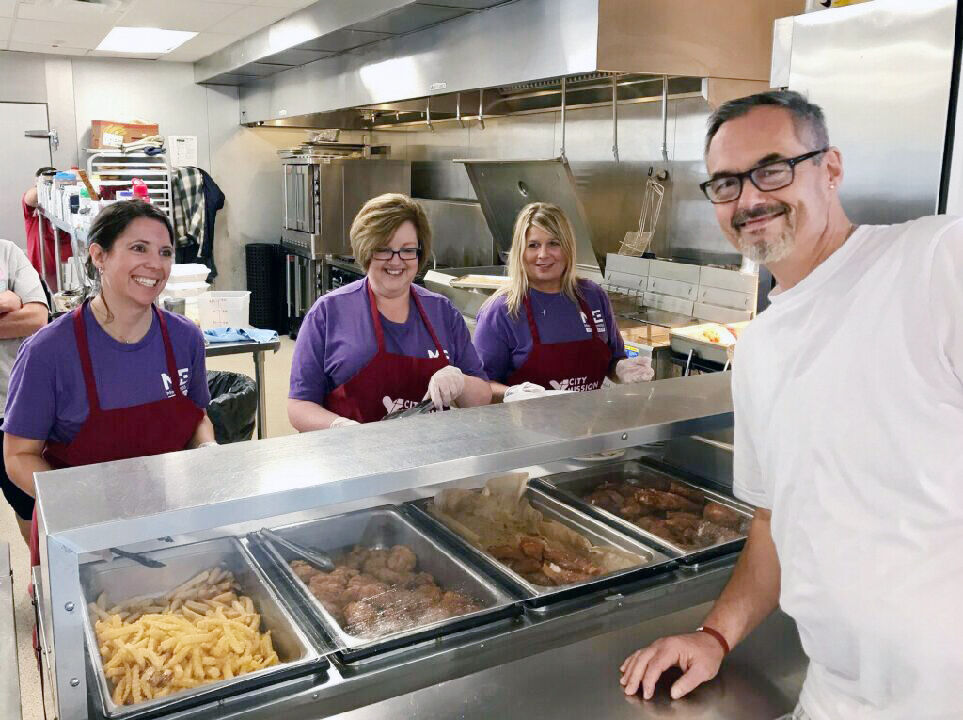
Photo courtesy of Ron Bock
On right, Ron Bock, a resident of the Washington City Mission, smiles next to volunteers about to serve a meal at the Mission.
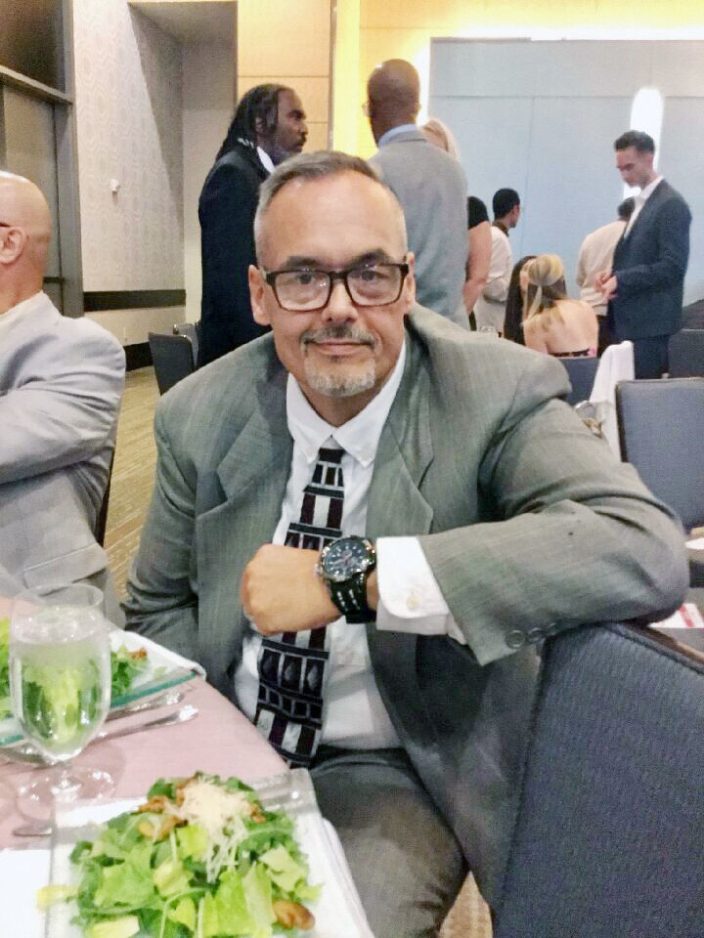
Photo courtesy of Ron Bock
Ron Bock, a Washington City Mission resident who was recently featured in a Netflix documentary, enjoys a formal dinner at the Mission.
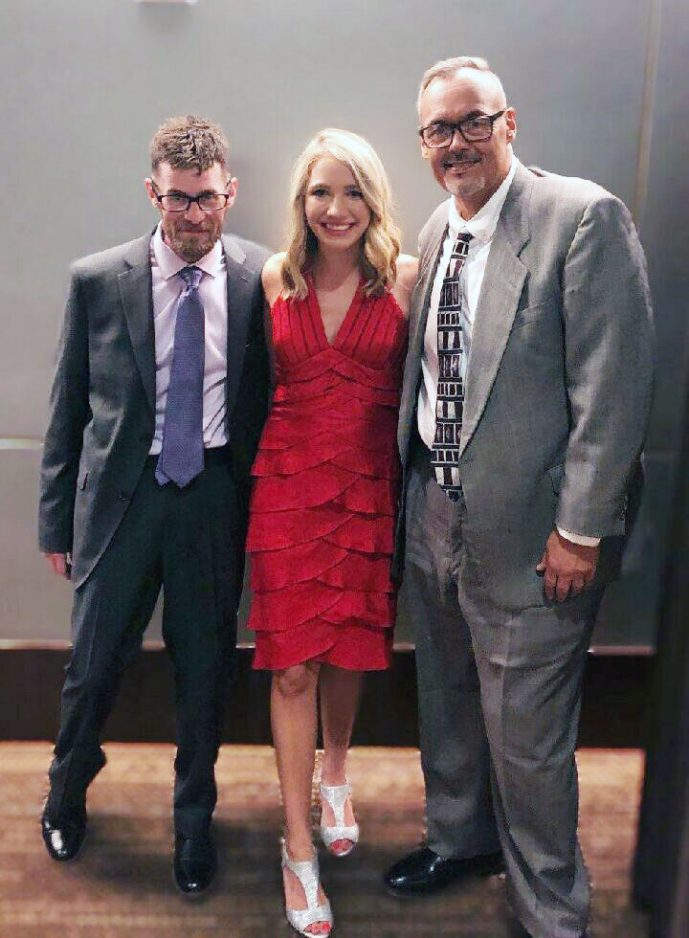
Photo courtesy of Leah Dietrich
From left, Dave Green and Leah Dietrich stand next to Ron Bock during a formal event at the Washington City Mission. Bock was recently featured on a Netflix documentary series.
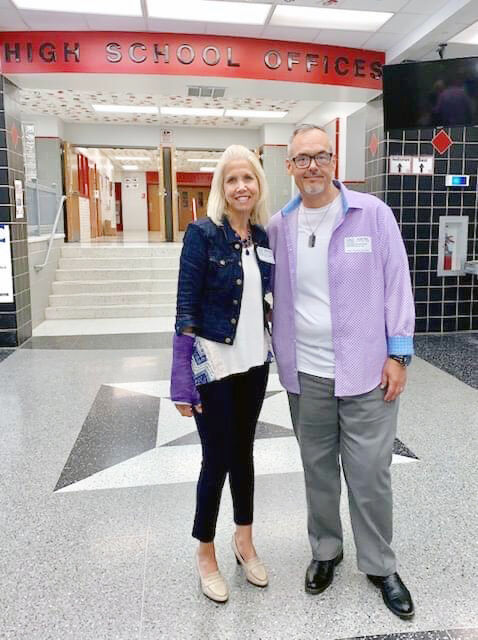
Photo courtesy of Leah Dietrich
Sheila Coquet, director of volunteers for the Washington City Mission, stands next to Ron Bock, a Mission resident, after he spoke to Peters Township students about drug use. Bock was recently featured on a Netflix documentary series.
A Netflix documentary series, which is currently trending in the top 10 across the country, features scenes about the opioid epidemic in Southwestern Pennsylvania that were filmed in Washington County.
“The Business of Drugs” was released July 14 and is hosted by journalist Amaryllis Fox, a former CIA officer. The sixth episode of the documentary series was filmed in late 2018 and the first couple months of 2019.
The episode features a scene in which Fox rides in a car with a law enforcement officer, whose face and voice are intentionally obscured. He’s identified only as an “undercover drug officer” with “Washington County Police.”
No agency by that title exists.
During the interview, the vehicle can be seen driving through the city of Washington. At one point, while driving down Houston Street, the officer tells Fox, “This section of town is ‘skid row’ basically.”
The officer tells Fox prostitution and heroin trafficking happens in that part of town “all through the night.”
“If the weather’s warm, girls will be out walking and waving, and it’s usually for heroin,” he told Fox.
Washington police Chief Robert Wilson said Monday that last week and over the weekend his department fielded some concerns from residents on Houston Street regarding this portrayal of their neighborhood.
“A resident on Houston Street was a little upset it was referred to like that,” Wilson said.
Wilson said the featured officer does not belong to his department. In a strongly worded Facebook post, the city police department reinforced that statement Saturday – that the officer does not belong to their department. The post had 245 shares.
“Although this neighborhood has experienced some problems, it is primarily made up of good honest people with families,” the Facebook post states. “There is not a problem with street prostitution in this neighborhood. No Washington Police Officer, past or present has ever referred to any Washington neighborhood as ‘skid row,’ and they never will.”
Pennsylvania State Police Trooper Robert Broadwater, public information officer for Troop B, confirmed with Harrisburg officials Monday the officer featured was not a member of the state police.
Washington County District Attorney Gene Vittone said he “didn’t even know anything about it.”
“I have no idea who it was; it certainly wasn’t anyone authorized by me,” he said.
The county’s drug task force is made up of law enforcement officers from agencies across the county, and it’s run out of Vittone’s office. When asked if he was 100% sure the featured officer wasn’t a task force officer, Vittone said he’s “not sure who it is.”
Vittone said any authorization for any such interview or ride-along would have to go through him.
“I didn’t authorize anybody to speak on behalf of the drug task force, and I certainly didn’t authorize what was said,” Vittone said Monday.
The director of that episode of the series, Jesse Sweet, could not be reached for comment Monday.
Vittone said he watched the documentary, saying it had a lot of interesting information about the drug epidemic.
“I’ve had a number of documentaries come through here because it’s a topic that garners a lot of interest,” he said.
During the interview in the car, the officer and Fox have a conversation about drug users in the city. The officer tells her a high percentage of nonviolent crimes are “driven” by people battling addictions that, in many cases, began with a prescription for pain pills.
“You talk to a user, and it’s nine times out of 10 their answer is, ‘I got injured, I was prescribed all these opioids, pill-form, and when I ran out I needed more, so I turned to heroin,'” the officer said in the documentary. “So when heroin hit the streets here, it’s affected every demographic, rich people, poor people. It doesn’t matter, it’s affecting everybody.”
It affected Ron Bock Jr. in enormous ways. The Washington City Mission resident was also featured in the episode. He discussed undergoing a surgery in the early 2000s which ultimately led to his struggles with addiction.
“It was emotional when they said ‘we want to use your story,'” Bock said in an interview Monday. “I thought about it, because do I really want to tell the world about what a scumbag I was? I wasn’t really a good person. I hurt a lot of people.”
In the documentary, Bock, 56, tells the interviewer his drug addiction led him to embezzle money from his employer and that he lost his job, his home and family because of his addiction.
“I didn’t want to put my kids through that pain again,” Bock said. “I was really afraid that if I did this documentary that they would go through the hurt again.”
In 2004, Bock faced numerous forgery and theft charges in Allegheny County. According to court records, Bock pleaded guilty to two counts of felony forgery and two counts of felony theft, and was sentenced in 2007 to nine to 23 months of incarceration followed by seven years of probation.
In one scene of the episode, Bock revisited the home in Canonsburg that he lost with Fox.
“They started with the hardest part,” Bock said Monday. “I really hurt my family, and it was difficult to watch. It was very hard to share about my family and how much I miss them and how much I hurt them.”
Bock said he drove by the house again Sunday, with hope in his heart of repairing broken relationships with his children. He’s never met his grandson.
“If I keep doing the right things, who knows where my relationship will be with my kids,” Bock said. “I don’t want to be in someone’s life if I’m going to hurt them.”
Recovery is an everyday thing, and for Bock, that’s been no exception. After that interview, he moved to Florida for a few months last year and received a two-year coin for his recovery efforts, but that’s when he started having problems.
“I stepped away from my support groups, and I stopped doing the things you do to stay clean,” he said.
He returned to Pennsylvania in March, when the COVID-19 pandemic began.
“I started drinking, and I’ve never been a drinker,” he said. “I was so depressed and lonely, and instead of reaching out for help, I almost killed myself with alcohol. It wasn’t heroin this time – it was a bottle because it was available.”
Bock went to rehab and is now back at the City Mission. When he found out the documentary was going to appear on Netflix in July, he said he “felt like such a fraud” because of his relapse. At the time of filming, he had been with the mission for a year and was preparing to move out, according to Leah Dietrich, director of residential programs for the mission.
“With addiction in general, the important thing to understand is that relapse isn’t failure,” Dietrich said in an interview Monday. “This pandemic has been stressful on everyone and especially for folks who struggle with addiction because you have less access to support. I’m glad that Ron reached out and that he’s back on track.”
The production company, Zero Point Zero, shot much of Bock’s interview inside Shorty’s Restaurant on West Chestnut Street. At the time, Bock had no idea if the interview would even air. He watched it the day it came out. He said he understands many of the conversations he and Fox had needed to be cut to fit the timetable of the episode, but there’s more to his story he wanted to share.
“My recovery has a lot to do with faith, and I really wanted that to be a part of the story,” he said. “I turn to God, I turn to the Mission, I turn to my friends.”
Since the series aired, Bock said he received lots of support from the community and many thanks for sharing his story. Painful as it was to share, Bock said if his story helps just one person, it would be worth it.
“I really think it’s going to be able to help a lot of people because I know how broken I felt,” he said. “There’s not a day goes by that I don’t fight to stay clean.”