

Toothman asks that his case be assigned to Judicial Diversion Program
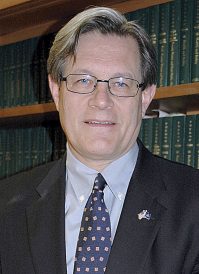
Greene County Judge Farley Toothman, through his attorneys, asked that instead of facing a public proceeding convened by the Pennsylvania Court of Judicial Discipline, he be allowed to enter the Judicial Diversion Program.
The Judicial Diversion Program is described as an alternative to formal disciplinary procedures and sanctions. Granting the admission to the program is considered a privilege, not a right, and it provides mentoring, educational, remedial and rehabilitative programs for judicial officials.
In a formal response to action brought against him last month, Toothman’s attorneys, Bethann R. Lloyd and Amy J. Coco of Pittsburgh, note that the complaint against the judge focuses on events that happened from 2015 to early 2018 when “education and mentorship were just emerging as approved” or mandated to improve the quality of the judiciary. “Prior to that, judges were on their own.”
Also, too much time has elapsed over “outdated assertions of misconduct,” he asserted.
Of the most serious charge – that Toothman retaliated against defendant Christy McCarty by jailing her after she accused his law clerk of shoplifting in 2017 – “Judge Toothman’s defense is prejudiced by the passage of time,” his lawyers wrote.
Toothman gave a deposition in the matter more than two years after it occurred, according to a footnote in the legal document, and the judge “had difficulty recalling the specifics of his interaction with the store personnel and police.”
He also claimed he lacked “significant courtroom experience” before he was nominated to fill a vacancy on the Greene County bench in January 2009. He had been county solicitor for seven years and served two terms as a county commissioner.
“Prior to his nomination,” the attorneys wrote in their pretrial motion Toothman did not have the opportunity to attend what’s known as “judge school,” which was not available to him because his appointment was outside the municipal election cycle. Neither was continuing judicial education required 11 years ago.
At the time and thereafter, his attorneys cited a litany of turmoil in Greene County Court, including “disharmony between the commissioners and the court, a change in sheriffs, no certified constables to serve a backlog of 4,700 delinquent warrants and other paperwork, lax procedures to protect confidential court matters, and concerns over the accuracy of records management.” Vacancies in magistrate’s positions resulted in the judge filling in for a time.
Toothman’s 15-page response, which appeared online Monday, also included exhibits and other documents, bringing the filing to 37 pages. One piece of 2018 correspondence from Thomas B. Darr, court administrator of Pennsylvania, is labeled “personal and confidential” and is heavily redacted.
In it, Darr wrote to Toothman, “Your personal management style and consequent interaction with staff – and possibly members of the bar – creates its own level of dysfunction that is likely counter-productive.”
His lawyers countered, “The judge reaped no personal benefit from any of the actions at issue in this matter,” and “all matters have been under some form of investigation” for approximately two years by the Administrative Office of the Pennsylvania Courts and the Judicial Conduct Board.
In 2018, the administrative office received a complaint about Toothman that had to do with the judge’s treatment of staff employed by Greene County, some of which are reflected in the Judicial Conduct Board’s findings.
The administrative office recommended that year that Toothman have a “peer advisor” – former Blair County President Judge Jolene Grubb Kopriva – and that he take several courses, including “Special Consideration for the Rural Court Judge” in Reno, Nev., offered by the National Judicial College.
Darr also recommended that Toothman complete training online to “assist in increasing awareness and promoting the prevention of any and all forms of harassment.”
The judge noted in late 2018 he earned a score of 97.4% in a 12-unit “Different Work – First Course Effective Supervision” that he completed in one week.
“The conduct at issue has not been repeated,” according to Toothman’s lawyers.
In a matter that the Judicial Conduct Board raised about Toothman closing a courtroom in a protection from abuse case, he contends that this was “not a violation of any law or duties” and none was cited in the complaint, and that two children were involved.
He asked that the allegation be dismissed, and noted that during his administration he has accomplished nearly 30 improvements in Greene County Court, including negotiating confidentiality agreements with county union personnel, formalizing an annual investiture of elected officials and a Law Day observance with students participating; creating “Standard Practice for Constable Certification,” monitoring the use of Greene County Act 13 natural gas fee in the judicial branch, meeting quarterly with a board of judges, implementing centralized booking, a specialty drug court and re-entry job training partnerships.
Toothman, 64, was appointed by Gov. Ed Rendell to fill the vacancy created by the retirement of Judge H. Terry Grimes in 2009. His father, the late Glenn Toothman, was also president judge in Greene County.
He continues to hear cases in Greene County while action by the Court of Judicial Discipline is pending, according to Court Administrator Sheila Rode.
Toothman is a graduate of the Duquesne University School of Law.