

W&J professor, students, take part in grant program looking at trees, shrubs
Courtesy of Washington & Jefferson College
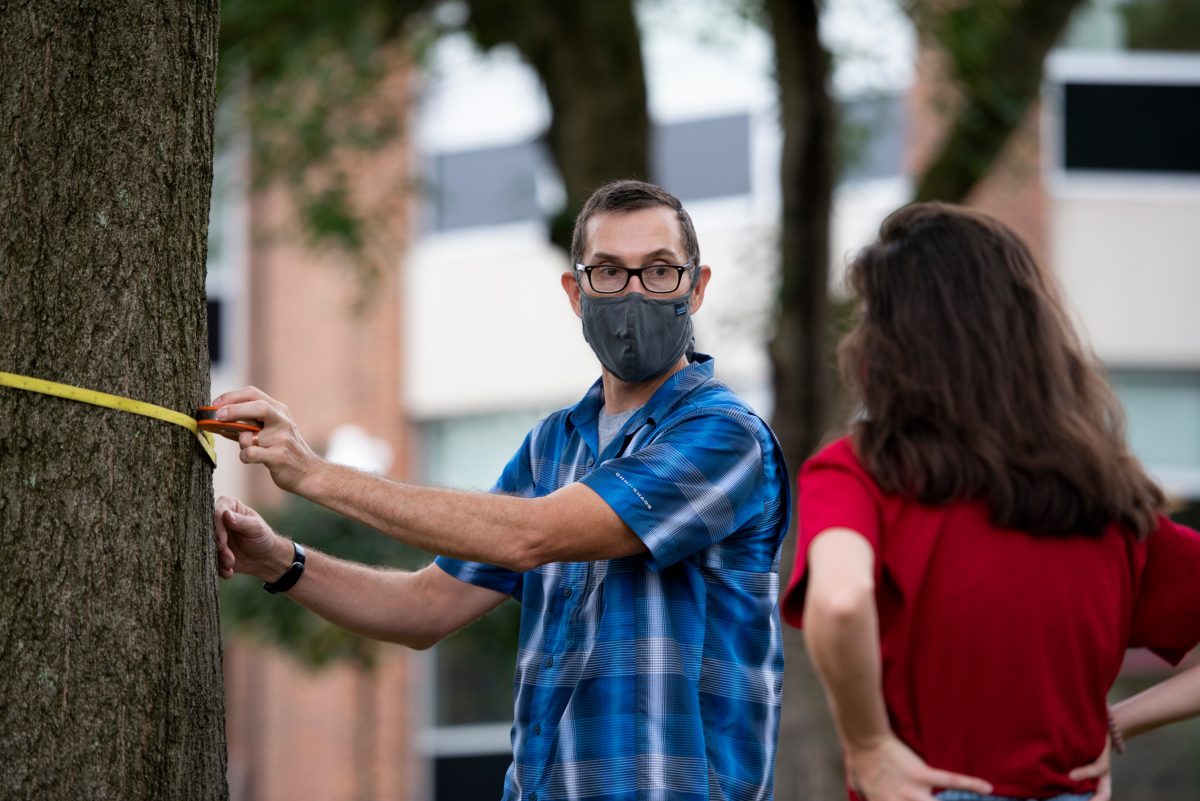
Associate professor of biology Dr. Jason Kilgore shows Cecilia MacLae how to measure the diameter of trees Aug. 28 near the Rossin Patio on the campus of Washington & Jefferson College.
Courtesy of Washington & Jefferson College
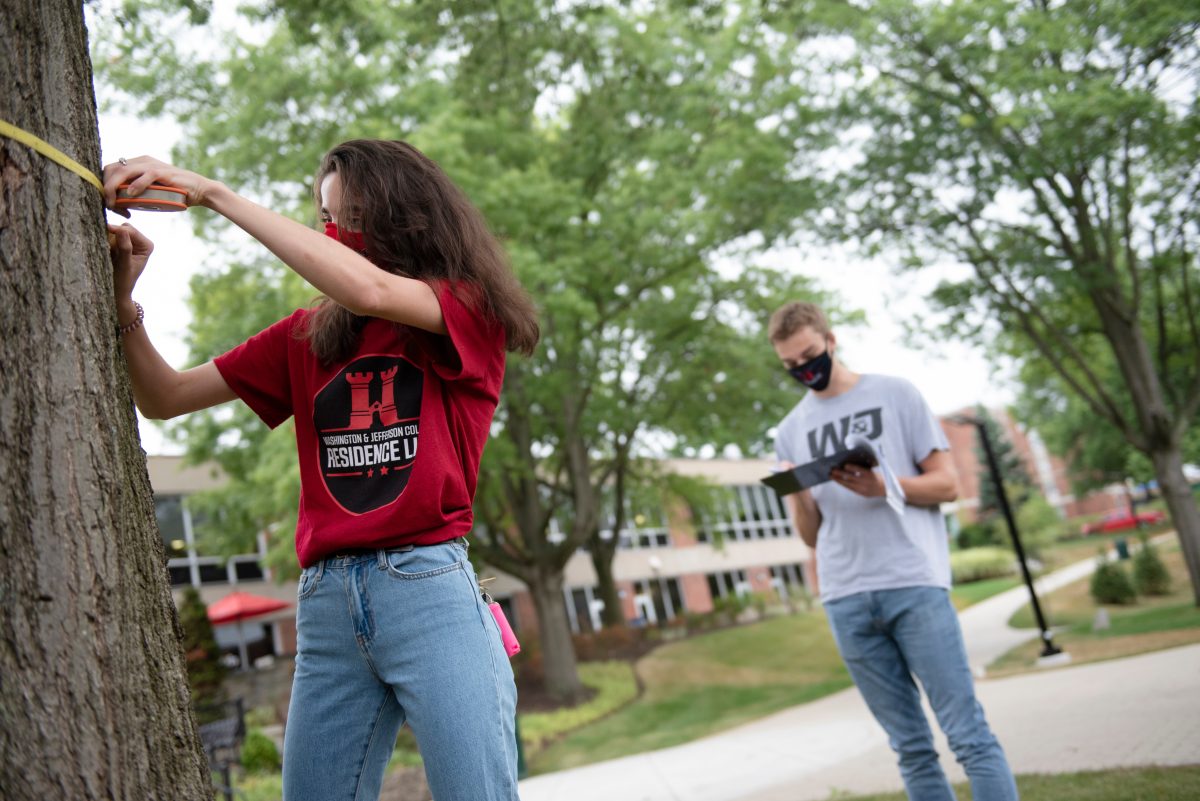
Washington & Jefferson College students Cecilia MacLae and Alexander Skowron measure the diameter of trees Aug. 28 near the campus’ Rossin Patio.
Courtesy of Washington & Jefferson College
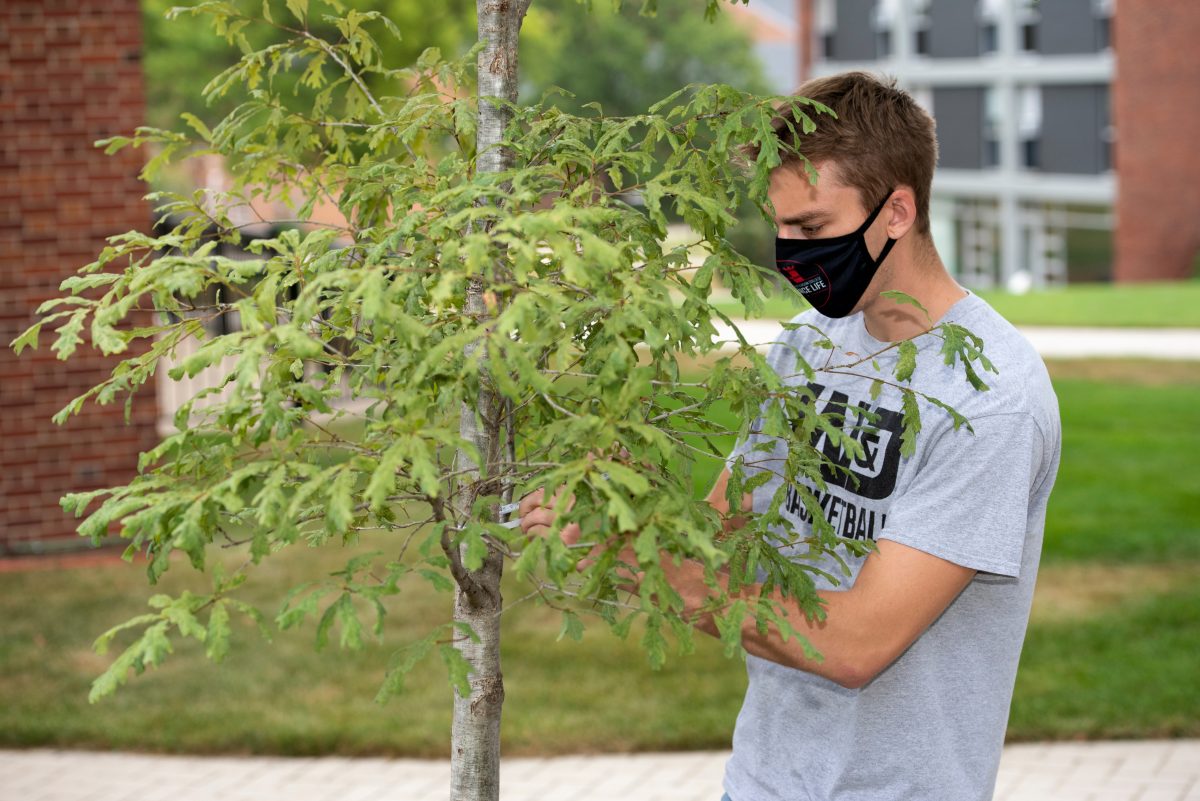
Washington & Jefferson College student Alexander Skowron measures the diameter of a tree Aug. 28 near the campus’ Rossin Patio.
Courtesy of Washington & Jefferson College
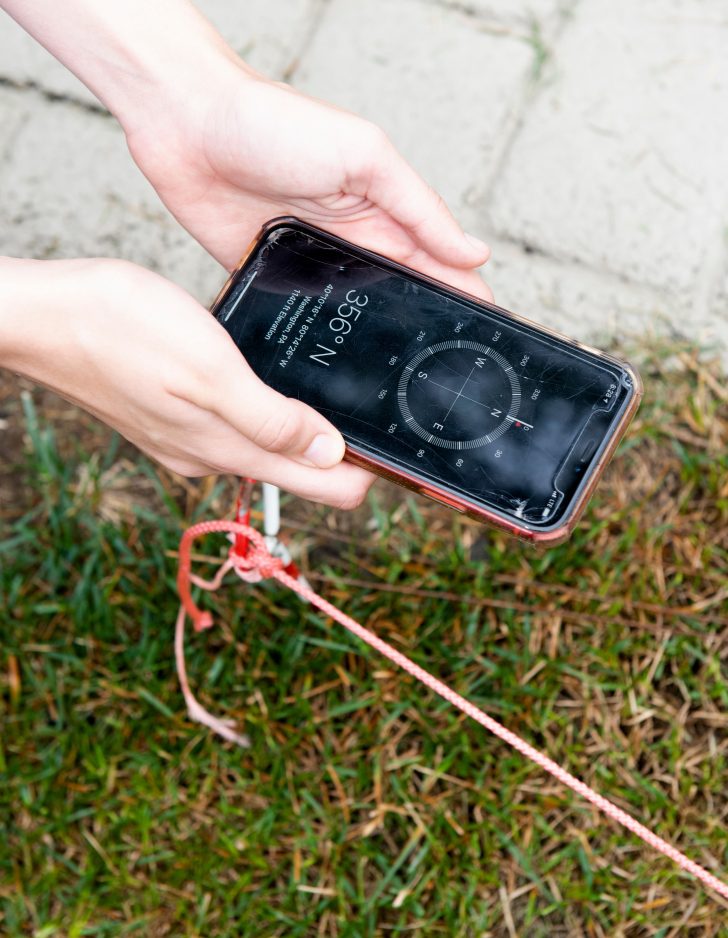
Students can use a compass app on their smartphone to determine cardinal directions so they can temporarily mark the boundaries of their plot, as Washington & Jefferson College student Cecilia MacLae demonstrates Aug. 28.
Landscapers aside, trees and shrubs are not something most of us give a whole lot of thought to.
They’re there. They serve a decorative function. Birds roost in trees and shade our homes and businesses. Shrubs prevent soil erosion. Sometimes both need to be removed.
But trees and shrubs do, in fact, serve many functions. They are much more than the equivalent of the garnish that is on the side of plates in fancy restaurants. And an instructor at Washington & Jefferson College and his students will be exploring trees and shrubs thanks to a grant they have received from the National Science Foundation.
Jason Kilgore, an associate professor of biology, will be leading a study this semester of plants “in the human-altered environment” that will have his students examine trees and shrubs “to indicate the degree to which the environment has been altered by humans.”
The students will be identifying the trees and shrubs, gauging their diversity and measuring the diameters of the trees and shrubs to, among other things, determine their carbon storage. They’ll also be examining how the environment is used around the trees and shrubs.
“They are undervalued in our society,” he said.
Students from W&J will contribute the data to a common spreadsheet, as will their counterparts at colleges and universities in Canada, Europe and Pakistan, and, according to Kilgore, “get a larger spatial understanding of woody plant biodiversity, abundance, and biomass in the spaces where we live, work and play.”
The study is one component of a one-year, $86,735 grant that has been awarded to support separate projects across several universities. W&J will be looking at trees and shrubs in conjunction with researchers and students from the University of the South in Sewanee, Tenn. Other participating universities will be looking at mosquitoes, lichen and backyard pollinators.
One of the advantages of the project, given the restrictions and uncertainties surrounding COVID-19, is students will be able to take measurements and collect data from their homes or on campus. Some of the findings will be incorporated into a course Kilgore is teaching this fall on economic botany and an introductory lab in evolution and biological diversity.
The study will ultimately demonstrate environmental changes that are happening on a broader scale.
“I think students are excited that they’re not doing a lab or report,” Kilgore explained, but making concrete research contributions.
The project is expected to last for years.
“We’ll see some revisions as we go along,” Kilgore said.