

Unabomber investigative papers donated to Cal U.
Associated Press
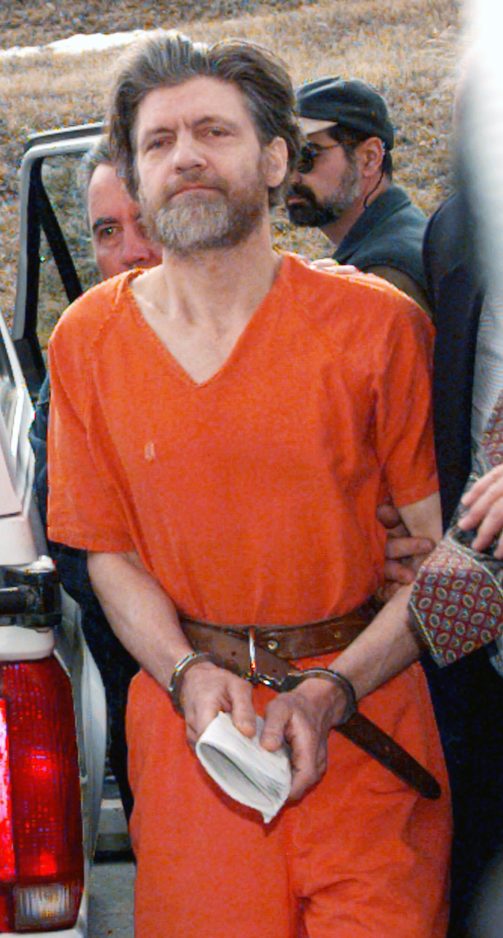
Former University of California at Berkeley math professor Theodore Kaczynski, also known as the Unabomber, is escorted into the federal courthouse in Helena, Mont, on April 4, 1996.

Associated Press
Unabomber Theodore Kaczynski’s cabin is shown April 6, 1996, in the woods of Lincoln, Mont.
Courtesy of California University of Pennsylvania
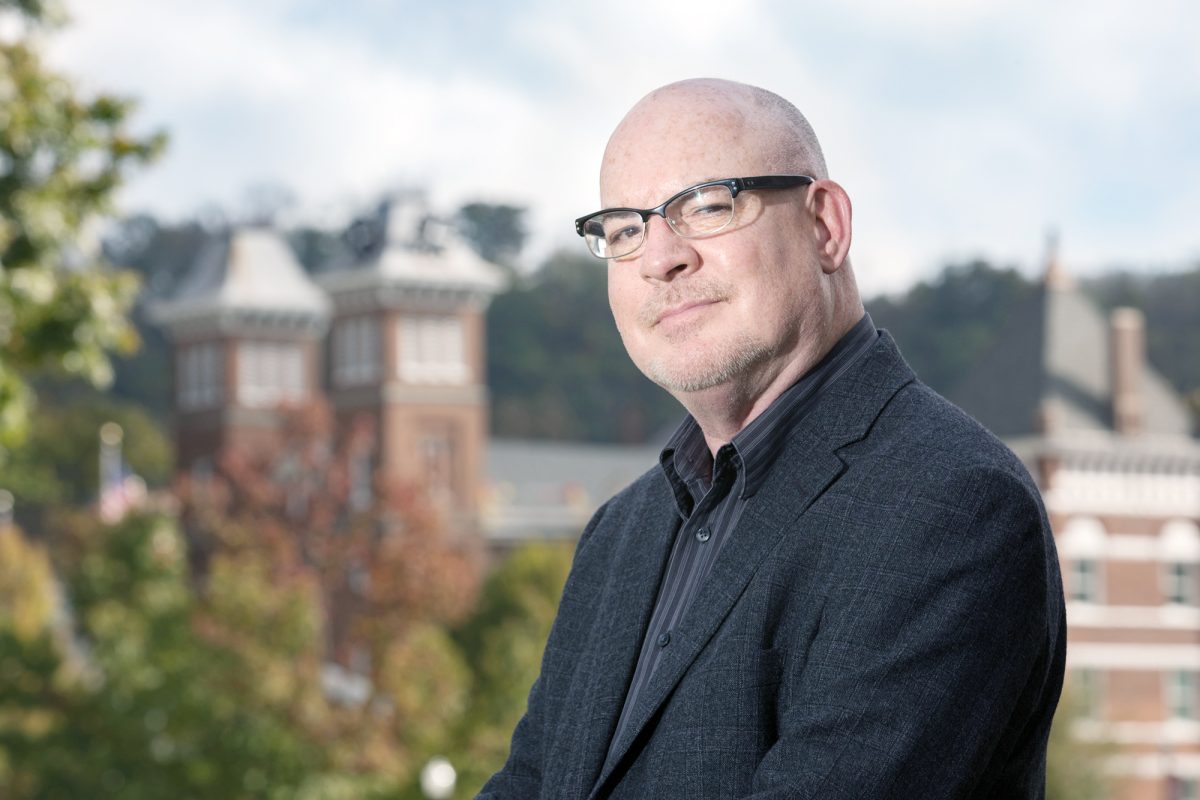
Dr. John Cencich is a California University of Pennsylvania criminal justice professor and former war crimes investigator.
Courtesy of California University of Pennsylvania
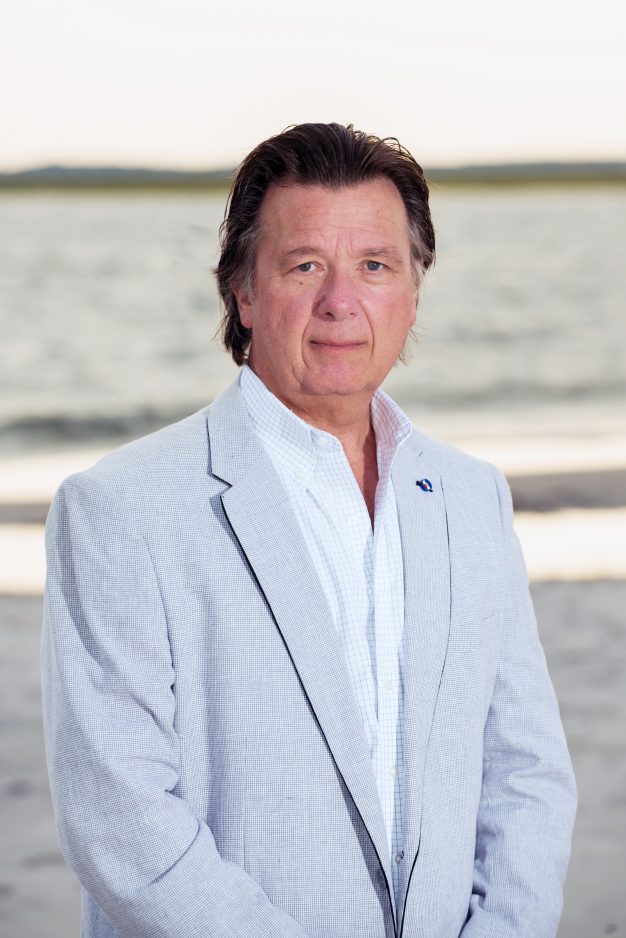
James R. Fitzgerald, an instructor in the Department of Criminal Justice and Psychology at California University of Pennsylvania, has taught courses on forensic linguistics and author profiling.
When Theodore Kaczynski was dragged out of his remote Montana cabin 25 years ago today and brought into the spotlight as the “Unabomber” who had terrorized academics and technology professionals since 1978, it turned out that what finally led investigators to the one-time mathematics professor was not DNA or some minor slip-up that blew his cover.
It was his own words.
Seven months before he was captured, The New York Times and The Washington Post printed Kaczynski’s 35,000-word manifesto, “Industrial Society and Its Future” after the still-anonymous Unabomber promised that the bombings that had already killed three people and injured 23 more would stop. To an extent, it turned out to be a win-win – Kaczynski was able to vent his spleen, and his long-winded diatribe about the evils of technology provided investigators with a bonanza of clues that eventually led to Kaczynski’s door.
First, investigators determined the Unabomber was someone who had an academic background and had dipped into a philosophy book a time or two over the years. But, more precisely, investigators were able to use sophisticated forensic analysis of the language, style and punctuation within the essay, and they determined that “Industrial Society and Its Future” had been penned by someone familiar with Chicago-area newspapers from the 1940s to the 1960s.
Bingo. Kaczynski was a Chicago native.
“It was a treasure trove of language evidence,” said James R. Fitzgerald, an instructor in the Department of Criminal Justice and Psychology at California University of Pennsylvania who has taught courses on forensic linguistics and author profiling. Fitzgerald is considered a pioneer in the field of forensic linguistics and was a member of the UNABOM Task Force that brought Kaczynski to justice.
To mark the 25th anniversary of Kaczynski’s arrest, Fitzgerald has decided to donate the papers he accumulated in the course of the investigation to the Pennsylvania Center for Investigative and Forensic Sciences at Cal U. The six overstuffed boxes of papers, totaling about 6,000 pages, are now in his New Jersey home, and includes all of Kaczynski’s writings, down to letters he wrote to his brother and mother, and Fitzgerald’s analysis of them. The material will most likely be housed at Cal U.’s Watkins Hall until they can be catalogued and digitized.
The donation of the papers came about due to the connection between Fitzgerald and Dr. John Cencich, a Cal U. criminal justice professor and former war crimes investigator.
“I just said, ‘Hey, would you guys be interested in having these?” Fitzgerald explained in a phone interview last week.
According to Cencich, “The Unabomber case captured the attention of the nation – and it was one of the first high-profile cases to bring forensic linguistics into the mainstream. We expect these documents will be of tremendous interest to researchers, historians and students of criminal justice for years to come.”
Along with donating the papers to Cal U., Fitzgerald recently launched an eight-episode podcast, “The Fitz Files – Manhunt: Unabomber,” which is available through Amazon. In addition, he has authored a three-book memoir series, “A Journey to the Center of the Mind.” Fitzgerald never spoke with Kaczynski, though he did set up an appointment to interview him at the federal supermax prison in Florence, Colo., where is serving a life sentence without the possibility of parole. Kaczynski backed out, claiming he was busy that day.
In fact, Fitzgerald only saw Kaczynski once, on the day Kaczynski was sentenced. Fitzgerald remembers Kaczynski looking at him with a long, deep unsettling stare, and Fitzgerald doesn’t doubt “if he had had a bombing device available, he would have used it.”
The Unabomber case is the most high-profile case that Fitzgerald has investigated, but he was also involved in uncovering the identity of an assistant U.S. attorney in New Orleans who was using the online comments section of the city’s Times-Picayune newspaper to rail about public figures and cases. The words that did in the loquacious prosecutor? “Dubiety,” “redoubt,” “altar of” and “coil,” all from an 1869 Robert Browning poem, and all words used by the prosecutor in legal documents.
“We pretty much ruled out Robert Browning,” Fitzgerald joked.
There are software programs available that explore writing, such as those used by scholars to determine the Elizabethan playwrights who might have collaborated with Shakespeare on his plays. Algorithms look at word choices and how frequently certain words are used. Software programs can also detect plagiarism in term papers and essays. Nevertheless, Fitzgerald believes software can’t fully replace human beings who can notice subtleties and things like sarcasm or irony.
“It still needs to have a human eye,” Fitzgerald said.