

Greene hospital auxiliary turns 100
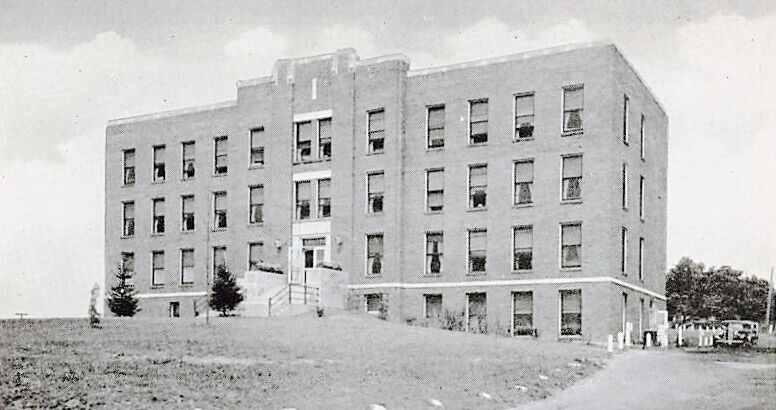
Courtesy of Washington Health System
A photo of WHS Greene before it underwent several additions to increase the hospital’s size and services offered.
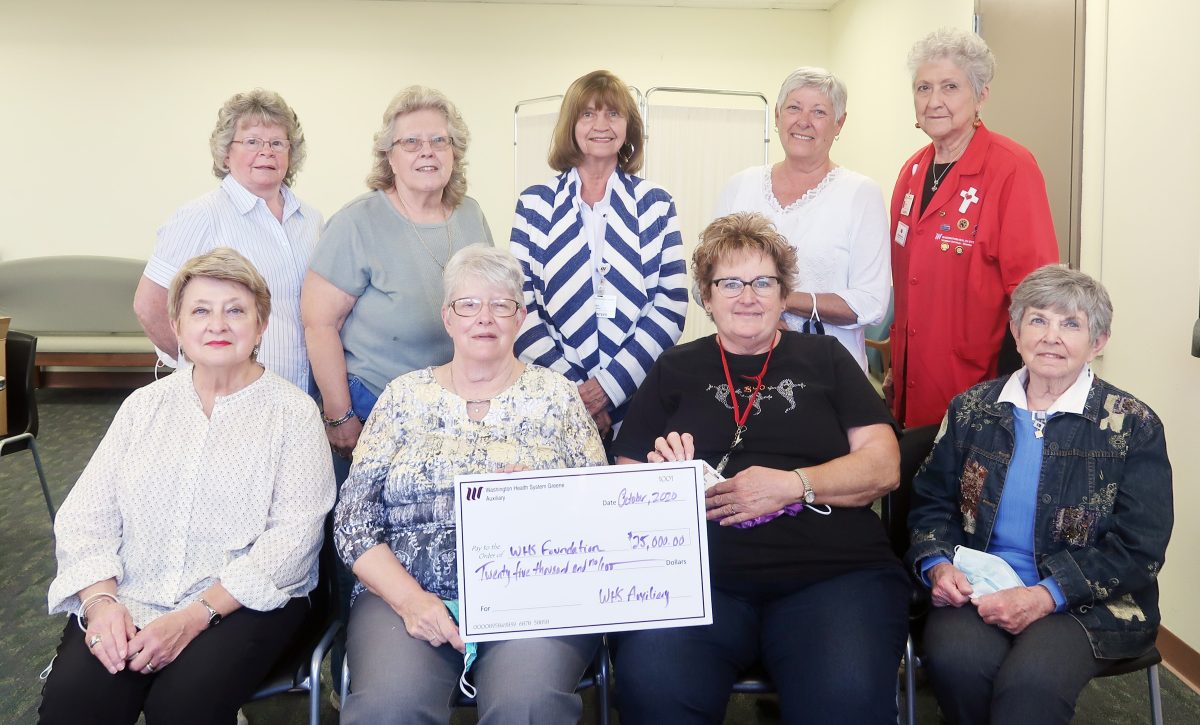
Courtesy of Washington Health System
Seated, from left, are auxiliary members Suzanne Cole, Debbie Wilson, Pam Lewis, and D.A. Neubauer. Standing, from left, are Linda Martin, Carolyn Brown, Carolyn Augustine, Valerie Cole, Joanne Todd. During the pandemic, the WHS Greene Auxiliary has continued its efforts to help the hospital and the community, including this $20,000 check presentation in October.
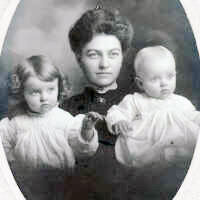
Margaret Crago, pictured with her children, was the first president of the WHS Greene Auxiliary, which was formed in 1921. She served in the role for 25 years, retiring in 1945. The auxiliary is celebrating its 100th anniversary this month.
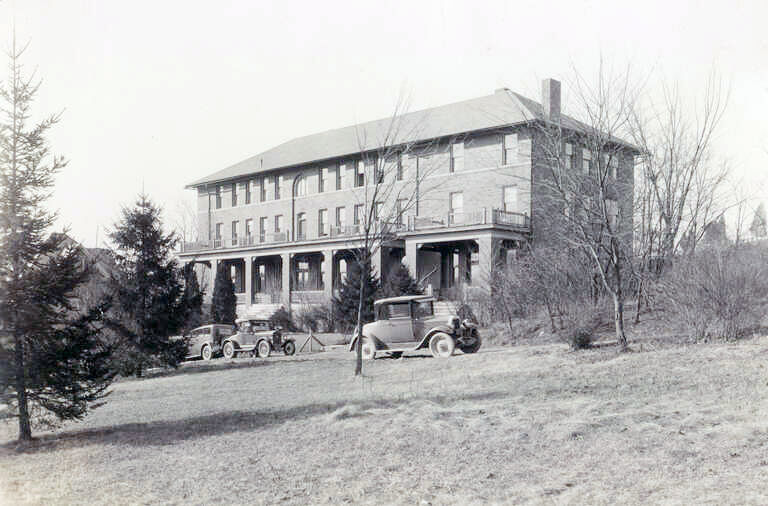
Courtesy of Washington Health System
In the early 1920s, Walton Hall on the campus of Waynesburg College served as a Greene County hospital.
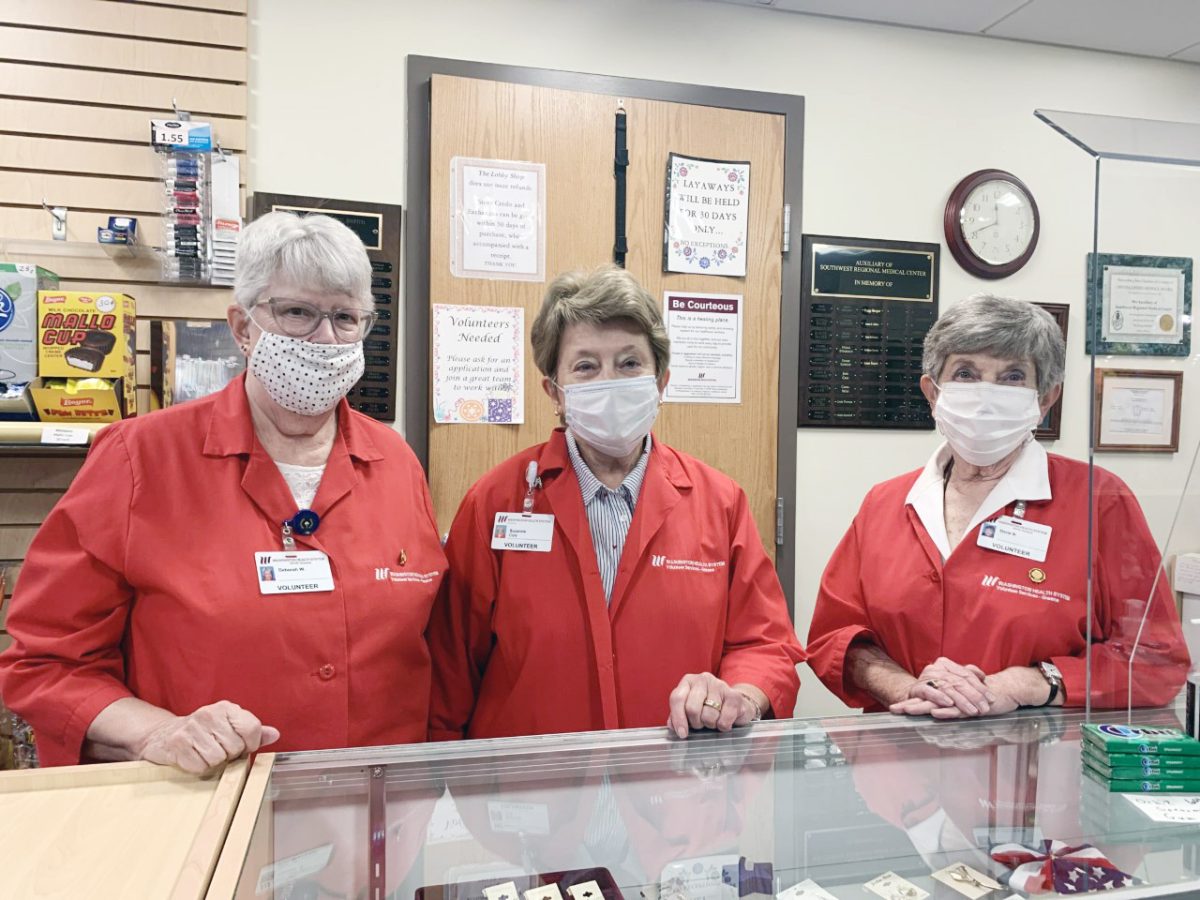
Karen Mansfield/Observer-Reporter
From left are WHS Greene Auxiliary board president Deborah Wilson, recording secretary Suzanne Cole, and board member D.A. Neubauer, in the WHS Greene Lobby Shop. The shop offers a variety of gifts, snacks, and other items.
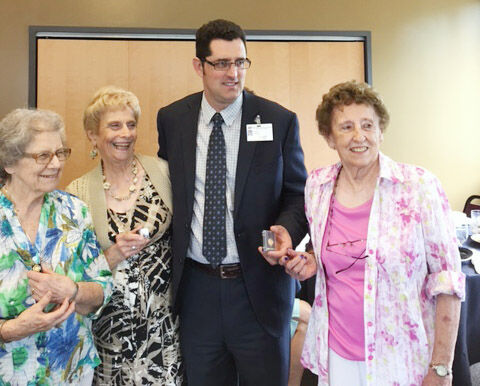
Courtesy of Washington Health System
From left, auxiliary volunteers Jean Gusic and Mary Zollars, WHS Greene President Terry Wiltrout, and auxiliary member Alice Souders.
In 1921, while Babe Ruth hit 59 home runs and Franklin D. Roosevelt contracted polio, a dozen dedicated women formed an auxiliary to raise funds for the former Greene County Memorial Hospital.
The financially strapped hospital – then located in a Waynesburg College women’s dorm room – turned to the auxiliary to help cover the costs of monthly bills and other expenses.
And the women, led by long-time president Margaret Crago, delivered, routinely donating the auxiliary’s earnings to help keep the hospital afloat.
The auxiliary celebrates its 100th anniversary in August, and a century later, the men and women who volunteer with the WHS Greene Auxiliary are still delivering.
“It is a tremendous accomplishment that this auxiliary is 100 years strong,” said Terry Wiltrout, president of WHS Greene and WHS’s vice president of operations. “I am very thankful that we have the WHSG Auxiliary to support the hospital and the community in many different ways.”
Current auxiliary board President Deborah Wilson said the volunteers are “the voice of the hospital,” and are often the first people that visitors and patients see.
Wilson, who moved to Greene County in 2005 with her husband, a retired pastor, comes from a long line of hospital volunteers.
Her grandmother was one of the Red Cross “Grey Ladies” in Philadelphia, a group that volunteered at veterans hospitals, and her mother volunteered at a hospital.
Wilson has served as a patient escort and greeter at the front desk.
“I enjoy being of help to the people. There are times when all I do is smile and say, ‘Hi, how are you?’ and it makes them feel a little more comfortable, a little better,” said Wilson.
The 33 current members, dressed in their red jackets, help the hospital, patients, and the community through a variety of services and activities.
They greet, escort and transport patients, and deliver flowers and other gifts to hospital rooms.
Over the decades, the auxiliary has held flower shows, street fairs, bazaars, bake sales, garden parties, movies, luncheons, card parties, and other events to raise money.
The auxiliary also operates the Lobby Shop, a gift shop that offers a selection of gift items, jewelry, seasonal and holiday items; and Cherry Door, a thrift shop.
Longtime auxiliary member Suzanne Cole said she enjoys spending time with community members, and also enjoys the lobby shop atmosphere.
“I like meeting people, and I like the merchandise, too,” said Cole with a laugh. “I like the items we have for sale, the jewelry especially. I enjoy everything about it – being with the people who come in and the merchandising aspect of it.”
Additionally, the organization awards at least two scholarships annually to students planning to attend Waynesburg University’s nursing program.
In the past century, the auxiliary has helped to purchase medical equipment including X-ray machines, along with hospital room furnishings, nurse station desks, uniforms, freezers, refrigerators, commercial-size washers and driers, and other items. Recently, their fundraisers were used to buy high-tech, life-like mannequins.
The auxiliary is putting together a commemorative booklet highlighting its history and accomplishments.
The booklet notes, for example, that one of the tasks of the women who served on the first auxiliary boards was too collect supplies for the hospital kitchen and patient rooms, so they planted, harvested and canned garden vegetables.
It also describes some of the unique, creative ways the auxiliary devised to raise money, including the formation of a group called the “Twigs,” which was comprised of 18 groups of card players. Eight players in each group met monthly to play bridge, with each member contributing 25 cents at the meeting.
The auxiliary plans to hold an anniversary luncheon and celebration on Sept. 14 at the Greene County Museum.
The auxiliary will honor Jean Gusic, an auxiliary member who served as a World War II nurse, and volunteers at Cherry Door, and longtime volunteers Jim and Mary Zollars.
Wilson said the auxiliary is in need of volunteers. She noted that auxiliary members come from various backgrounds, but many are former teachers.
Among them is D.A. Neubauer, who began volunteering after she reitred.
“When I taught school, I wasn’t able to do this kind of thing,” said Neubauer. “When I retired, I started volunteering with my neighbor. I’m still doing it. It’s a service and I enjoy it.”
The auxiliary members are proud to continue the mission of service that began generations before them, and recognize the contributions of those volunteers.
“It’s been rewarding to those of us who are doing it, or who did it. It is such a good thing to be involved in, helpful to the community and to the patients,” said Zollars, 86, a retired teacher and blood bank director who had been a longtime auxiliary member before recently hanging up her jacket. “(The auxiliary) has made a difference.”